A Serene Vision of Faith: Unveiling Vincenzo Foppa’s ‘Virgin and Child’
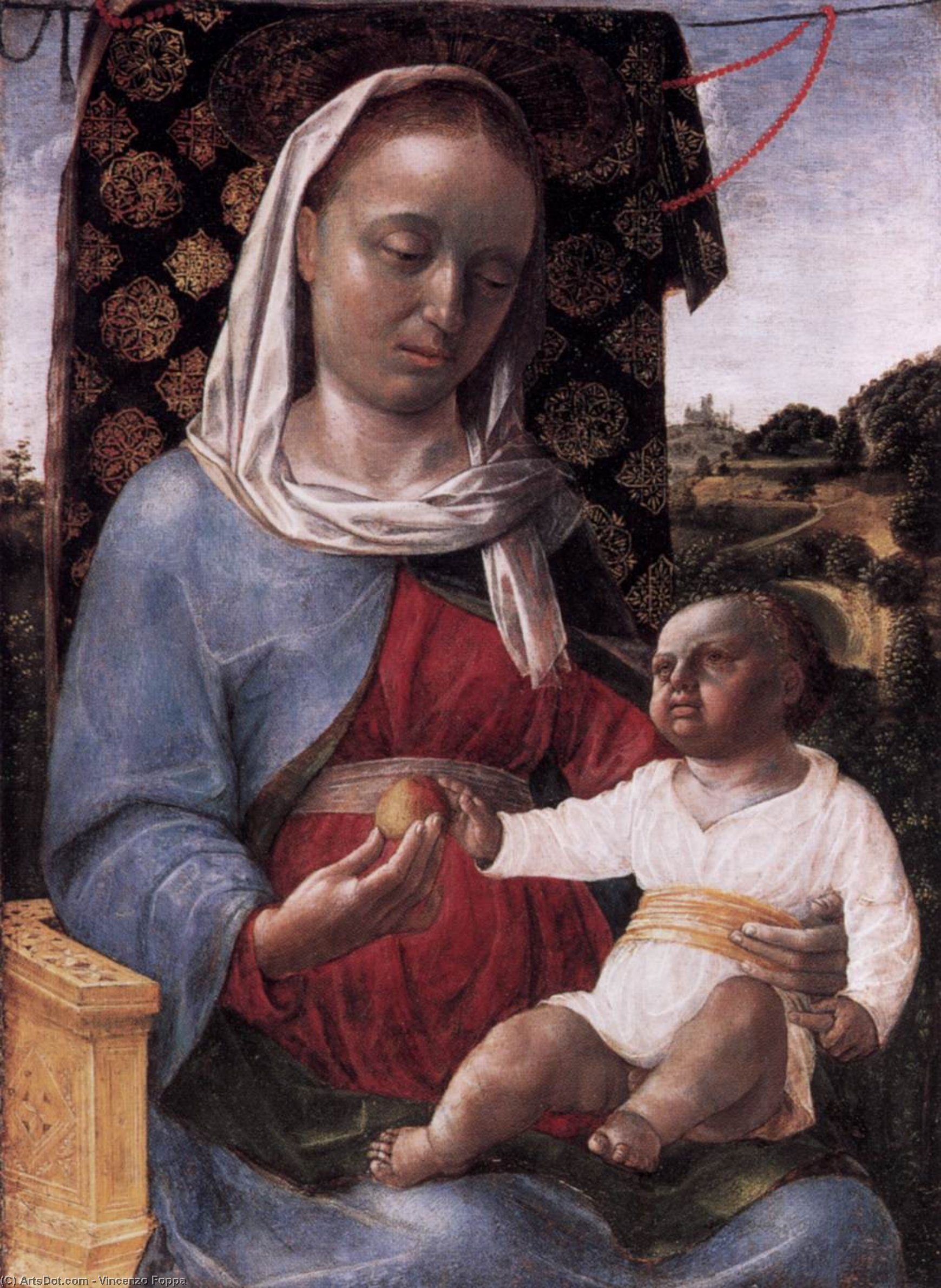
Vincenzo Foppa's “Virgin and Child,” painted around 1460, is more than just a depiction of the Madonna and Child; it’s a poignant window into the burgeoning artistic landscape of early Renaissance Lombardy. Born in Bagnolo Mella, Italy, in 1427, Foppa emerged as a pivotal figure, skillfully blending the lingering traditions of Gothic art with the nascent humanist ideals that were reshaping Europe. This particular painting, now housed at the Staatliche Museen in Berlin, offers a remarkably intimate and emotionally resonant portrayal of Mary cradling the infant Jesus – a testament to Foppa’s ability to capture both spiritual depth and human tenderness.
The work immediately draws the eye with its carefully orchestrated composition. The muted palette—dominated by earthy browns, soft greens, and subtle blues—creates an atmosphere of quiet contemplation. Foppa masterfully employs light, diffusing it gently across the scene to avoid harsh shadows, fostering a sense of serenity that permeates the entire canvas. Notice how the background landscape – a stylized depiction of trees and a distant fortress – isn’t merely decorative; it provides depth and context, suggesting a peaceful haven for this sacred family. The use of wood panel as the support material is typical of the period, lending an authentic feel to the artwork.
The Language of Symbolism: Decoding Foppa's Artistic Choices
Beyond its aesthetic beauty, “Virgin and Child” is rich in symbolic meaning. The apple held by Mary – a deliberate inclusion – has been widely interpreted as referencing the story of Adam and Eve, subtly introducing themes of temptation and salvation. However, it also carries a more immediate significance: the fruit represents the promise of life and immortality associated with the Tree of Life. The gesture of the infant Jesus reaching for the apple is not one of reckless desire but rather an innocent curiosity, hinting at his future role as the savior of humanity. The veil draped over Mary’s head isn't simply a garment; it symbolizes her purity and holiness, reinforcing her status as the Mother of God.
Furthermore, observe the details in Mary’s expression – a serene stillness that suggests prayer or deep contemplation. Her eyes are closed, inviting the viewer to share in her inner world. The way she holds Jesus, with a gentle yet firm embrace, speaks volumes about maternal love and protection. The artist's signature, “Vincenzo Foppa,” located discreetly in the lower right corner, anchors the work within its historical context and acknowledges the creator’s hand.
A Window into the Lombard Renaissance: Context and Legacy
Foppa’s “Virgin and Child” is a crucial piece of evidence illustrating the distinctive style of the early Lombard school of painting. This movement, flourishing primarily in Northern Italy during the 15th century, distinguished itself through its meticulous attention to detail, realistic portrayals of figures, and a subtle integration of Gothic and humanist elements. Unlike the more flamboyant styles prevalent in Florence or Rome at the time, the Lombard school favored a quieter, more introspective approach – qualities vividly evident in Foppa’s work.
The painting's date (1460) places it squarely within this period of transition, reflecting the growing influence of humanism while retaining elements of medieval tradition. Foppa’s patronage by the powerful Sforza family further underscores the importance of his art and its role in shaping the cultural landscape of Milanese society. His legacy extends beyond this single masterpiece; he served as a mentor to other artists, influencing the development of painting across Northern Italy for decades to come.
Bringing Foppa’s Vision Home: A High-Quality Reproduction
ArtsDot offers meticulously crafted hand-painted reproductions of Vincenzo Foppa's “Virgin and Child,” allowing you to experience the beauty and emotional depth of this iconic artwork in your own space. Our skilled artists faithfully recreate Foppa’s techniques, color palette, and compositional elements, ensuring that your reproduction captures the essence of the original while adhering to the highest standards of quality. Whether for a private collection or an interior design project, a ArtsDot reproduction provides a stunning tribute to this remarkable Renaissance master.