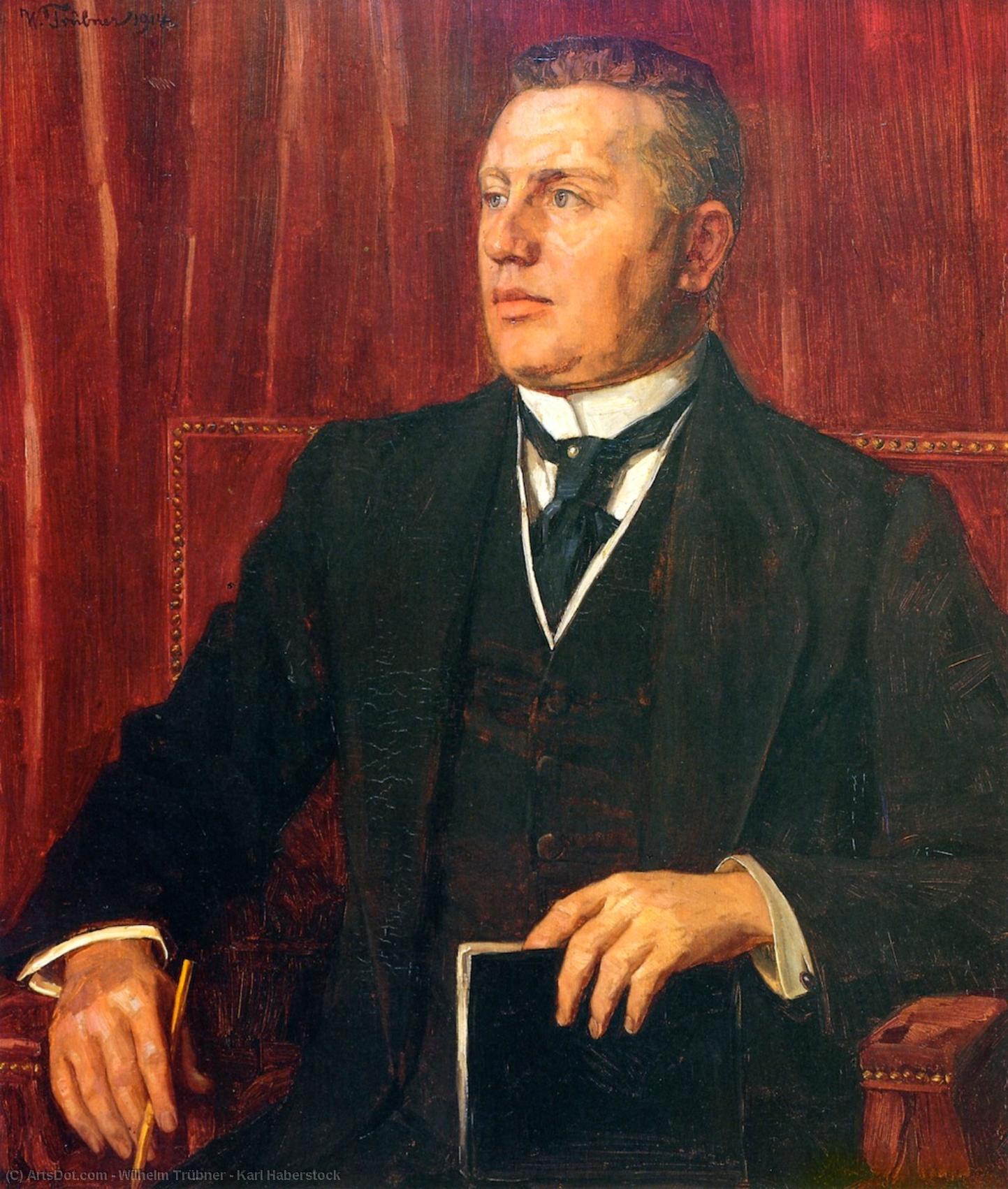
A Study in Quiet Dignity: The Soul of Karl Haberstock
In this evocative portrait from 1914, the viewer is invited into a moment of profound stillness. Wilhelm Trübner, a master of capturing the psychological depth of his subjects, presents us with Karl Haberstock, a man captured in a state of contemplative repose. Seated in a chair that anchors him to the left side of the composition, Haberstock occupies the frame with a commanding yet gentle presence. His hands are clasped together, a gesture that speaks of both patience and intense internal reflection. The painting does not merely record a likeness; it captures an atmosphere, suggesting a mind deep in thought, perhaps weighing the complexities of a world on the precipice of monumental change.
The artistry lies in the meticulous attention to the textures of reality. Trübner employs a technique that celebrates the tactile nature of the subject's existence, from the crisp, structured lines of his suit and tie to the subtle folds of fabric that suggest both weight and movement. The lighting plays a crucial role here, casting soft shadows that define the contours of the man's face and the heavy drape of his clothing. This interplay of light and shadow creates a three-dimensional quality that draws the eye inward, making the sitter feel less like a distant historical figure and more like a living, breathing presence within the room.
The Elegance of Early 20th Century Realism
Stylistically, this work serves as a magnificent example of the transition between classical portraiture and the nuanced realism of the early twentieth century. There is an intellectual weight to the piece, characteristic of the era's fascination with the individual's place in society. The composition, while balanced, avoids rigid symmetry, opting instead for a dynamic placement that allows the subject to breathe. For the discerning collector or interior designer, this painting offers a sophisticated focal point. Its muted palette and somber tones lend themselves beautifully to grand libraries, executive studies, or refined living spaces where one seeks to evoke an aura of wisdom, stability, and timelessness.
Beyond its aesthetic appeal, the portrait carries a profound emotional resonance. There is a certain melancholy in Haberstock's gaze, a quietude that invites the observer to pause their own frantic pace and engage in a moment of shared introspection. To possess a reproduction of this work is to bring more than just decor into a home; it is to invite a conversation about character, history, and the enduring power of the human spirit. It remains a breathtaking testament to Trübner's ability to transform a simple seated pose into an eternal narrative of thought and dignity.