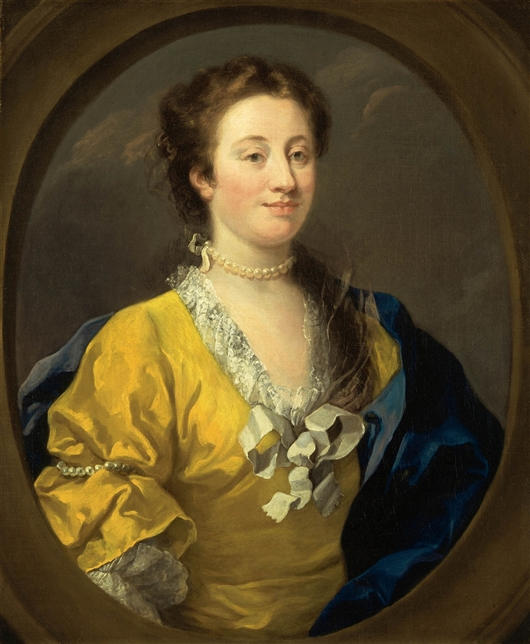
William Hogarths ‘Portrait of a Lady’: A Window into 18th Century London
The “Portrait of a Lady” by William Hogarth, painted around 1740, is not merely a depiction of a young woman; it’s a meticulously crafted snapshot of societal expectations and the subtle anxieties simmering beneath the veneer of Georgian England. Hogarth, a true chronicler of his time, used his art as both a mirror reflecting the era's values and a sharp-edged critique of its flaws. This particular portrait, often overlooked in comparison to his more sensational series like ‘Marriage A-la-Mode,’ offers a profound insight into the complexities of female identity within a rigidly defined social structure.
The painting’s power lies not in dramatic gesture or opulent display, but in its quiet observation. The lady, dressed in a deceptively simple white gown accented with delicate blue trim – a color choice that subtly echoes both innocence and restraint – sits poised in an armchair, her hands folded demurely in her lap. Her gaze is direct, almost challenging the viewer to penetrate the carefully constructed facade of composure. There’s a hint of melancholy in her expression, a suggestion of unspoken thoughts or perhaps a quiet awareness of her limited agency within the confines of her social position.
A Rococo Influence with a Critical Edge
Hogarth's style during this period represents a fascinating blend. While undeniably influenced by the prevailing Rococo aesthetic – evident in the soft lighting, the delicate rendering of fabrics, and the overall sense of elegance – he deliberately subverted its frivolousness. He wasn’t interested in mere decorative beauty; instead, he employed these elements to expose the underlying realities of his subjects' lives. The background, subtly rendered with clouds, adds a layer of depth and atmosphere, hinting at both serenity and potential turmoil—a common theme in Hogarth’s work.
Technically, the painting showcases Hogarth’s mastery of oil on canvas. Notice the meticulous detail in the rendering of the gown's texture, the subtle shading that defines her face, and the careful application of paint to capture the play of light and shadow. This level of realism was revolutionary for portraiture at the time, moving away from idealized representations towards a more honest portrayal of human appearance. Hogarth’s use of chiaroscuro – the dramatic contrast between light and dark – further emphasizes the subject's features and draws attention to her expression.
Symbolism and Social Commentary
Beyond its technical brilliance, “Portrait of a Lady” is laden with symbolic meaning. The pearls around her neck, a common accessory for women of her station, represent wealth and status – but also the constraints imposed upon them. The simple white gown, while suggesting purity and virtue, simultaneously highlights the limited choices available to women in terms of dress and appearance. Hogarth wasn’t simply painting a pretty face; he was commenting on the societal pressures that shaped a woman's life.
Consider also the pose itself: seated, composed, and seemingly passive. This posture reflects the expected behavior of ladies during this era – to be quiet observers, dutiful wives, and responsible mothers. Hogarth subtly challenges this expectation through his direct gaze and the hint of melancholy in her expression, suggesting a yearning for something beyond the prescribed roles of womanhood.
A Timeless Reflection on Human Nature
“Portrait of a Lady” remains a powerfully evocative work, offering a poignant glimpse into the social and emotional landscape of 18th-century London. It’s a testament to Hogarth's remarkable ability to capture not just outward appearances but also the unspoken complexities of human experience. A reproduction of this painting is more than just an image; it’s a portal to another time, inviting us to contemplate the enduring themes of identity, social constraint, and the quiet dignity of the individual.