The Ephemeral Grace of Movement
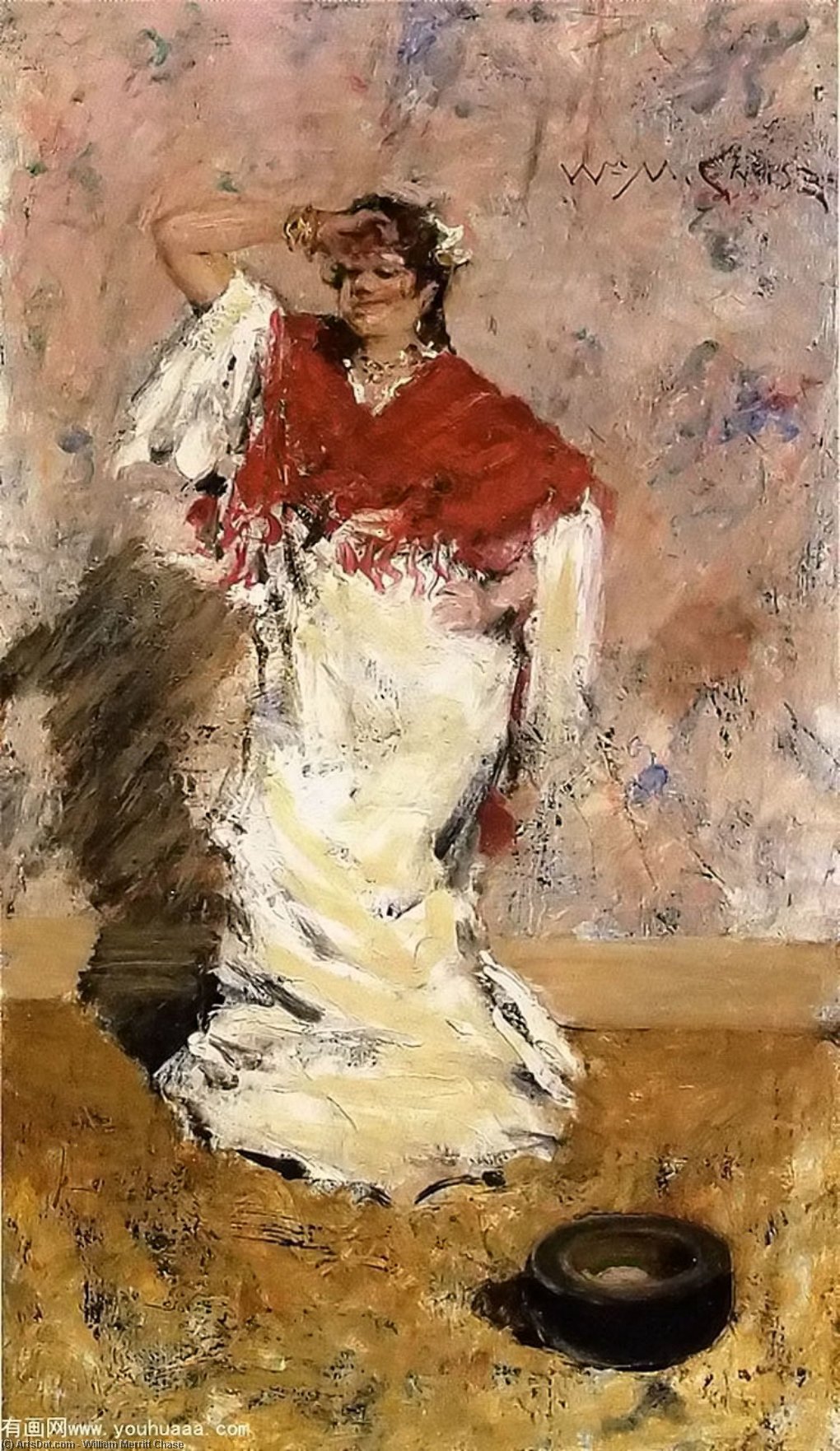
To stand before William Merritt Chase's "Dancing Girl" is to be caught in a moment suspended between breath and beat. This oil on canvas painting, executed in 1881, is far more than a mere portrait; it is an embodiment of kinetic energy captured by the masterful hand of an American Impressionist pioneer. The subject—a woman clad in a vibrant red dress—is depicted mid-motion, her arms raised as if acknowledging the rhythm that moves through her very soul. Chase possesses an unparalleled gift for rendering the human form not as static sculpture, but as living poetry. One can almost hear the music echoing from the canvas, feeling the subtle sway of fabric against skin.
A Study in Impressionistic Light and Color
Technically, "Dancing Girl" is a vibrant testament to Chase's command over light. The painting explodes with bold colors that refuse to settle into mere description; they sing. Notice how the interplay between the rich crimson of her gown and the muted, earthy tones of the background wall creates an immediate visual dialogue. Chase employs expressive brushstrokes—visible upon close inspection—that lend the entire scene a palpable sense of immediacy and life. This is not the polished finish of academic portraiture; rather, it embraces the fleeting quality of light itself, characteristic of Impressionism. The subtle play of shadow against the illuminated skin suggests volume while simultaneously dissolving into the atmosphere, giving the piece an airy, almost dreamlike depth.
Historical Resonance and Artistic Context
Created during a pivotal time in American art history, this work situates Chase at the forefront of the burgeoning Impressionist movement within the United States. William Merritt Chase was instrumental in defining what it meant to be an American master painter, blending European techniques with a distinctly American sensibility. The painting reflects a cultural fascination with performance and leisure—a celebration of life's vibrant social moments. For the collector or designer, owning this piece connects one directly to the narrative of late 19th-century artistic awakening, suggesting a sophisticated appreciation for art that moves beyond mere representation into pure feeling.
Symbolism and Emotional Echoes
The symbolism within "Dancing Girl" is wonderfully open, inviting personal contemplation. The act of dancing itself has always been a universal metaphor—a narrative of freedom, emotional release, and the ephemeral nature of joy. The red dress draws the eye like a beacon, perhaps symbolizing passion or vitality against the more subdued backdrop. Furthermore, the inclusion of the simple bowl on the brown wall anchors the ethereal movement in a tangible reality, suggesting that even moments of pure ecstasy are framed by everyday life. It speaks to the beautiful tension between wild abandon and grounded existence.
Bringing Movement Home
For those seeking an artwork to infuse a space with character and narrative depth, "Dancing Girl" offers unparalleled emotional resonance. Whether displayed in a grand salon or a more intimate drawing-room setting, its energy will elevate the surrounding décor. Acquiring a high-quality reproduction allows one to bring this captured moment of grace—this vibrant echo of movement—into your own sanctuary, making every glance at the canvas feel like an impromptu dance.