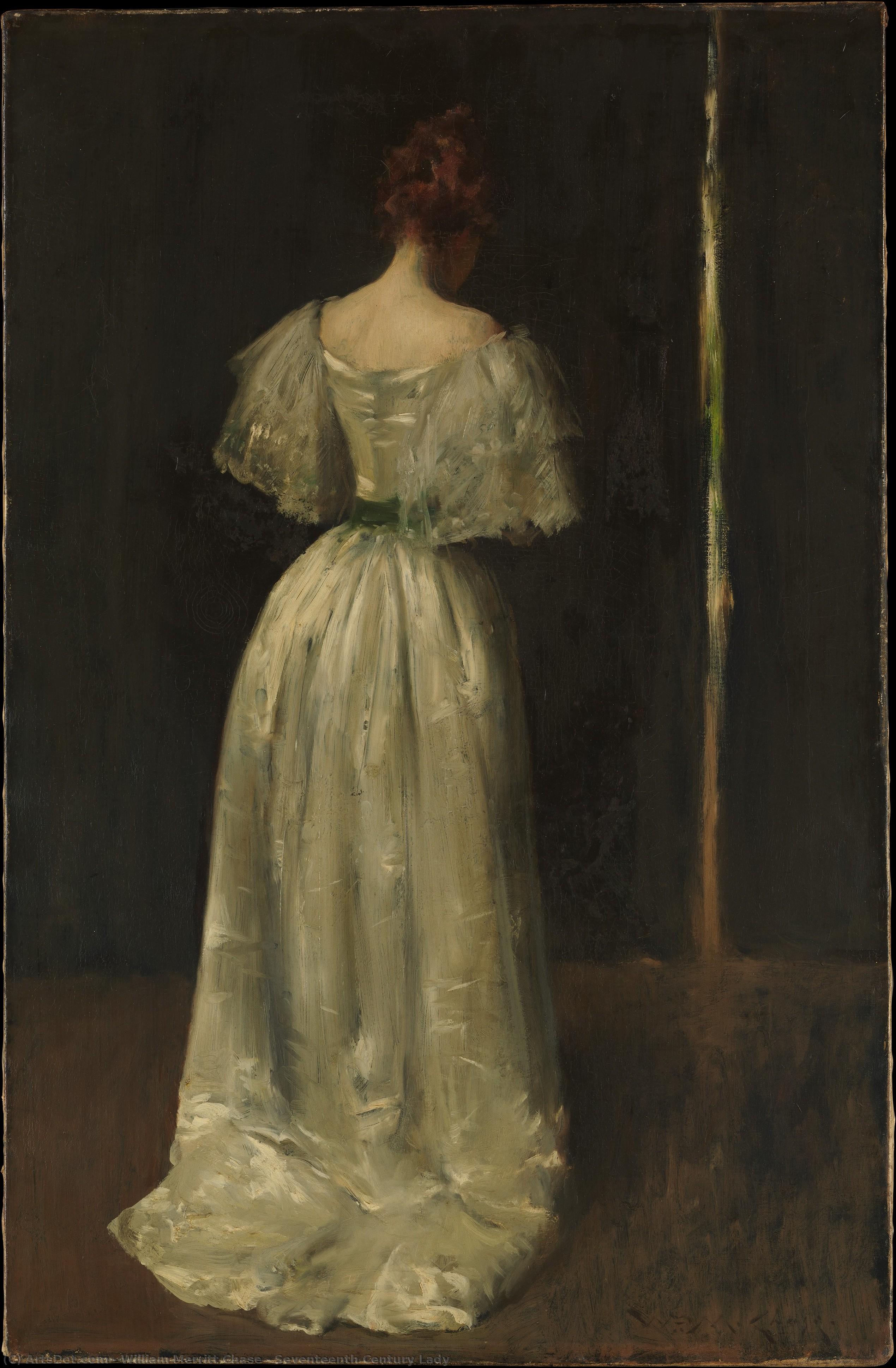
William Merritt Chase's 'Eine Dame aus dem 17. Jahrhundert' fängt die Eleganz des späten 19. Jahrhunderts ein. Eine mysteriöse Frau in weiß, umgeben von Licht und Schatten – ein Meisterwerk der amerikanischen Impressionismus.
William Merritt Chase (1849-1916): US-amerikanischer Impressionist & Pädagoge! Entdecken Sie seine lebendigen Porträts, Landschaften & das Parsons School Design. Ein Meister seines Fachs!
Entdecken Sie das Metropolitan Museum of Art! Tausende Jahre Kunst aus aller Welt – von antiken Artefakten bis zu Meisterwerken. Ein Muss für Kunstliebhaber!
Die Aura der Melancholie und des Geheimnisses
William Merritt Chase’s “Seventeenth Century Lady” (1895) is not merely a portrait; it's an exquisitely crafted meditation on perception, tradition, and the subtle dance between presence and absence. Painted during a pivotal moment in American art history – the burgeoning of Impressionism – this work transcends simple representation, inviting the viewer into a realm of quiet contemplation. The subject, presented from behind with her back turned towards us, immediately establishes an intriguing sense of mystery. We are denied direct access to her face, her emotions, and her identity; instead, we’re offered a carefully constructed tableau that speaks volumes through its details. The choice of a dark, ambiguous setting, pierced by a single, suggestive ray of light emanating from what appears to be an open doorway, creates a powerful sense of anticipation – as if the lady is about to step into another world or reveal a hidden truth. This deliberate withholding of information is characteristic of Chase’s approach and reflects a broader trend in late 19th-century art, moving away from straightforward narrative towards explorations of mood and atmosphere.
Ein Spiel mit Tradition und Moderne
Chase was a master of absorbing influences, drawing inspiration from the Old Masters – Frans Hals' vibrant brushwork, Rembrandt’s masterful use of light and shadow, and Velázquez’s ability to capture psychological depth – while simultaneously engaging with contemporary artists like Manet, Whistler, and Sargent. “Seventeenth Century Lady” exemplifies this eclecticism perfectly. The title itself is a deliberate provocation, referencing the historical period while simultaneously depicting a woman dressed in modern attire. This juxtaposition immediately raises questions about the painting’s meaning: Is it a commentary on the changing role of women? A reflection on the tension between tradition and progress? Or simply an exploration of formal elements – color, composition, and brushstroke – without overt narrative intent? Chase's focus shifts from the individual to the garment itself, rendered with expressive brushwork and delicate tones of white. The gown becomes a central element, not just as a visual object but as a symbol of elegance, refinement, and perhaps even vulnerability.
Die Technik und der Einfluss des Lichts
Chase’s technique is characterized by its loose, painterly approach – a hallmark of American Impressionism. He employed short, broken brushstrokes to capture the play of light on the fabric, creating a shimmering effect that seems almost luminous. The subtle gradations of white and grey contribute to this ethereal quality, while the dark background serves to heighten the impact of the woman’s dress. His use of light is particularly noteworthy; it's not merely illuminating the subject but also shaping the mood of the painting. The sliver of light suggests a fleeting moment, an ephemeral beauty that is both captivating and melancholic. Chase was deeply interested in capturing the effects of natural light, often working *en plein air* (outdoors) to study its nuances. This commitment to observing and rendering light directly informed his approach to color and composition.
Symbolik und emotionale Wirkung
Beyond its formal qualities, “Seventeenth Century Lady” resonates with a profound emotional depth. The woman’s averted gaze creates a sense of detachment, suggesting a quiet introspection or perhaps even sadness. The ambiguity surrounding her identity invites the viewer to project their own emotions and experiences onto the scene. The open doorway symbolizes transition, possibility, and perhaps even loss – a hint of something left unsaid. The painting's overall effect is one of understated elegance and poignant beauty, leaving a lasting impression long after the initial viewing. It’s a testament to Chase’s skill as an artist and his ability to evoke complex emotions through seemingly simple forms. A reproduction of this work offers a beautiful addition to any collection, bringing a touch of timeless grace and contemplative mood into any space.