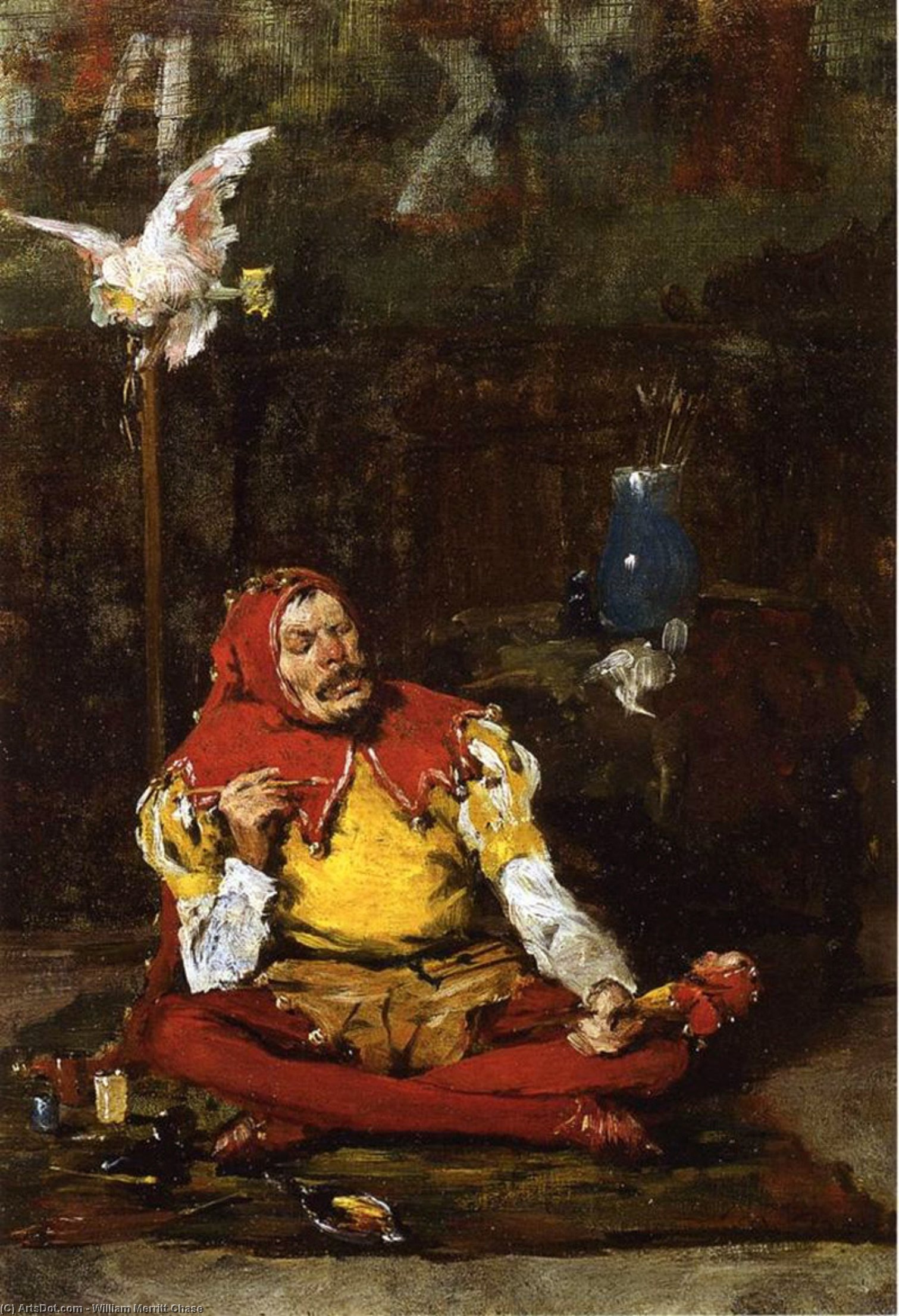
Experience William Merritt Chase's Impressionist masterpiece, "The King’s Jester," a vibrant portrait of a man in red with playful birds, capturing light and movement – discover or own this iconic artwork.
The King's Jester: A Captivating Portrait of Impressionist Play
William Merritt Chase’s “The King’s Jester,” painted in 1875, is more than just a depiction of a man in vibrant red; it’s a window into the burgeoning world of American Impressionism. This intimate oil on canvas, measuring 46 x 33 cm, radiates an energy born from Chase's masterful manipulation of light and color – hallmarks of his style that would soon define a generation of artists. The scene unfolds with a quiet drama: a figure seated casually on the ground, legs crossed, a red costume ablaze against a subtly rendered background. A single bird rests upon his shoulder, adding an element of whimsical charm and perhaps hinting at freedom or companionship.
Technique and Composition – A Dance of Brushstrokes
- Bold Brushwork: Chase’s signature technique is immediately apparent in the painting's dynamic brushstrokes. They aren’t blended to create a smooth, polished surface; instead, they are deliberately visible, conveying movement and capturing the fleeting effects of light.
- Color as Emotion: The use of vivid red – dominant in the costume and likely reflecting in the subject’s skin tones – isn't merely decorative. It injects a sense of energy, playfulness, and perhaps even a touch of theatricality into the scene.
- Subdued Background: Noticeably, the background is kept deliberately muted, allowing the viewer’s eye to be drawn immediately to the central figure and his immediate surroundings. This technique emphasizes the subject's importance and creates a sense of intimacy.
Symbolism and Context – A Courtier’s Moment
The jester, or courtier, was a complex figure in 19th-century society—a symbol of both amusement and astute observation. The presence of the bird is particularly intriguing. Birds have long been associated with freedom, joy, and even prophecy in art and mythology. Its perch on the jester’s shoulder could represent a connection to these ideals or perhaps simply an element of visual interest within the composition. The inclusion of the cup near the bottom left corner adds another layer of intrigue, possibly representing indulgence or a moment of reflection.
William Merritt Chase and the Rise of American Impressionism
"The King’s Jester" exemplifies Chase's pivotal role in establishing Impressionism within the United States. Following his training in Europe, particularly in Paris, he returned to America with a renewed vision—one that prioritized capturing immediate sensory experiences rather than adhering strictly to academic realism. His work, like this painting, helped pave the way for future American artists and cemented Chase’s legacy as a leading figure in the movement. His paintings are now held in prestigious institutions such as the Pennsylvania Academy of the Fine Arts and the Brooklyn Museum.
For exquisite, hand-painted reproductions of “The King’s Jester” and other masterpieces by William Merritt Chase, explore ArtsDot.com.