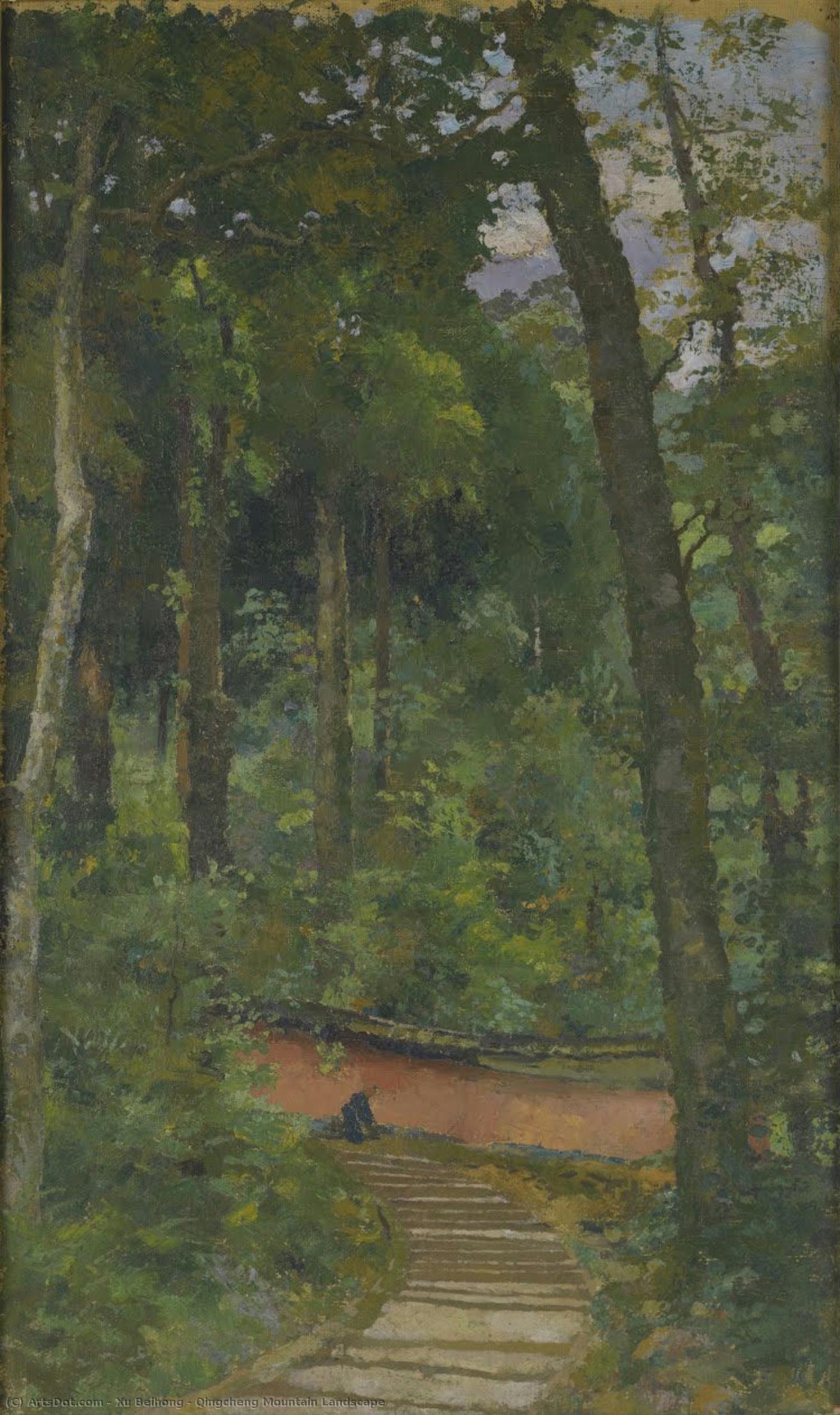
This captivating landscape portrays Qingcheng Mountain, where Xu Beihong and fellow artists embarked on a summer expedition in 1943. The artwork exemplifies Xu Beihong's masterful blend of traditional Chinese painting techniques with Western oil painting styles, reflecting his pioneering role in shaping modern Chinese art.
Qingcheng Mountain Landscape by Xu Beihong: A Symphony of Tradition and Modern Vision
Xu Beihong’s “Qingcheng Mountain Landscape,” painted in July 1943, stands as a pivotal work demonstrating the transformative influence of Western artistic principles on Chinese painting during its burgeoning modern era. Born in Yixing, Jiangsu province, Xu Shoukang (later Beihong) embarked on an extraordinary journey—one that fused classical Chinese aesthetics with groundbreaking techniques championed by European masters like Picasso and Matisse. This synthesis cemented his place as one of the “Four Pioneers” who spearheaded China’s artistic revival after decades of upheaval.
- Subject Matter: The painting captures a serene vista of Qingcheng Mountain, Guan County – a UNESCO World Heritage Site revered for its spiritual significance and breathtaking natural beauty. Xu Beihong meticulously depicted the mountain's lush foliage, winding pathways, and misty atmosphere, reflecting Qu Yuan’s Nine Songs—a collection of poems celebrating the grandeur of nature and lamenting the decline of Chu Kingdom during the Warring States Period.
- Style: Departing from traditional monochrome landscapes dominated by ink wash brushstrokes, Xu Beihong embraced oil painting – a technique previously unfamiliar to most Chinese artists. This bold decision signaled a conscious effort to assimilate Western artistic conventions while retaining the essence of Chinese cultural heritage. The resulting image possesses vibrant colors and textural depth, offering a markedly different experience compared to conventional Chinese art forms.
- Technique: Xu Beihong’s masterful application of oil paint involved layering pigments onto canvas with meticulous precision. He skillfully employed glazing techniques—applying thin translucent layers of color over previous coats—to achieve luminous effects and subtle tonal variations. This technique allowed him to capture the nuances of light and shadow, enhancing the realism of the mountain landscape and conveying a palpable sense of tranquility.
Historical Context: The painting emerged during a period of intense intellectual debate regarding China’s artistic future. Artists like Xu Beihong recognized the necessity for embracing new approaches to express national identity and cultural values in the face of Western influence. Qingcheng Mountain Landscape embodies this spirit of experimentation—a testament to Xu Beihong's conviction that Chinese art could flourish by engaging with global trends without abandoning its roots. It represents a crucial step toward establishing China as a significant player on the international artistic stage.
Symbolism: Beyond its depiction of a picturesque mountain scene, “Qingcheng Mountain Landscape” carries profound symbolic resonance. Qingcheng Mountain itself symbolizes purity and enlightenment—themes central to Taoist philosophy and deeply ingrained in Chinese culture. The pathway leading through the forest represents the journey toward spiritual understanding, mirroring Qu Yuan’s poetic reflections on morality and resilience. Xu Beihong's deliberate inclusion of these elements underscores his desire to communicate timeless values alongside a contemporary artistic vision.
Emotional Impact: Viewing “Qingcheng Mountain Landscape” evokes feelings of serenity, contemplation, and appreciation for the sublime beauty of nature. The painting’s harmonious composition and luminous colors inspire viewers to reconnect with their inner selves—to find solace in simplicity and embrace the restorative power of natural surroundings. Xu Beihong's achievement lies not merely in replicating a landscape but in conveying its emotional essence—a feat accomplished through masterful technique and unwavering dedication to artistic innovation.