 Vorschau anzeigen
 Versenden
 Teilen
 Details anzeigen

 Herunterladen
 Ähnliche Objekte
 Röntgenaufnahme
 Diashow
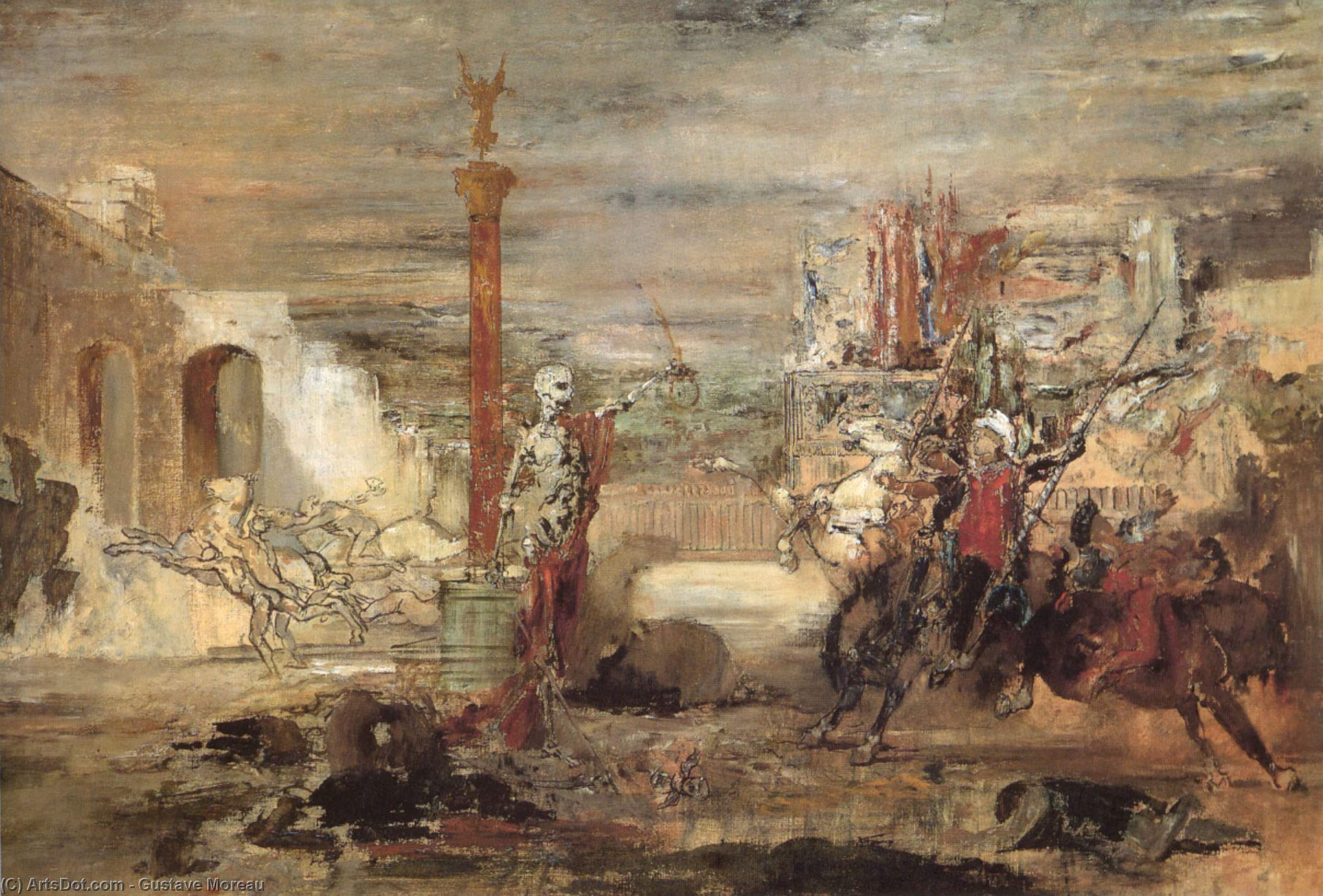
Death Offers Crowns to the Winner of the Tournament
 Oil On Canvas
- WallArt
- Symbolist Painting
 1860
1860- 19th Century
 142.0 x 92.0 cm
 Weiterlesen
Handgefertigte Ölreproduktion
Handgemaltes Ölgemälde auf Leinwand in Ihrer Wunschgröße und mit Rahmen, auf Bestellung von unseren Künstlern angefertigt. ( Druck bestellen Bild kaufen)




P118B $10

P118H $10

P118W $10

P438Z $10

P508JH $12

P508YH $12

P805H $10

P805Z $10

P919BZ $10

P919G $10

P919XJ $10

P959ZH $10

P968JZ $12

W106C $8

W218G $10

W218JH $8

W218Y $10

W307PJ $10

W316G $10

W316PJ $8

W316Y $10

W398PJ $8

W4111J $10

W500HY $15

W500JH $15

W692G $12

W849H $8

W940BG $15

W953PJ $8




Wählen Sie aus unseren vordefinierten Formaten, die den ursprünglichen Proportionen des Kunstwerks entsprechen.

Sie können Ihre eigenen Maße eingeben, um einen bestimmten Rahmen oder Platz auszufüllen. Wenn die gewählte Größe nicht den Proportionen des Originalbildes entspricht, werden wir das Kunstwerk entweder beschneiden oder das Gemälde durch zusätzliche, handgemalte Elemente erweitern. Ein digitales Mockup wird Ihnen zur Genehmigung zugesandt, bevor die Produktion beginnt.
Bitte beachten Sie, dass die Bildschirmvorschau nicht die tatsächliche Beschneidung oder Erweiterung widerspiegelt. Nur das Mockup zeigt die endgültige Komposition exakt an.
Obwohl Sondermaße verfügbar sind, empfehlen wir, eine Größe aus der vordefinierten Liste zu wählen, um die ursprünglichen Proportionen beizubehalten.
Nach der Bestellung wird das ArtsDot.com-Team dem Kunden Anweisungen per E-Mail zusenden und eine Mockup-Vorschau bereitstellen.
Weltweiter Versand () in nur 3 bis 4 Wochen statt der üblichen 5 Wochen. (1 September). Keine Kompromisse bei der Qualität.

Kostenloser weltweiter Expressversand

Hochwertige Leinenleinwand

Umfassender Versicherungsschutz beim Versand

Zollgebühren-Rückerstattungsgarantie

Garantie für exakte Farbtreue

60 Tage Rückgaberecht (nur bei Mängeln)

100% Geld-zurück-Garantie

Mengenrabatt verfügbar
 Die Glasoption ist nur für Größen unter 110 cm verfügbar.

Death Offers Crowns to the Winner of the Tournament
Art der Reproduktion
Format der Reproduktion
-


Gesamtpreis
$ 263
A Vision of Triumph and Mortality
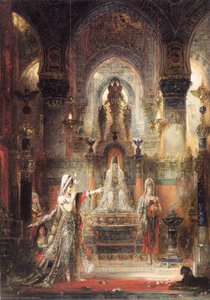
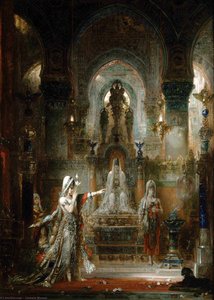
In the grand tapestry of nineteenth-century art, few works possess the haunting, ethereal magnetism of Gustave Moreau’s "Death Offers Crowns to the Winner of the Tournament." Painted around 1860, this monumental canvas serves as a profound cornerstone of the Symbolist movement, a period defined by its rejection of the gritty realism and fleeting light of Impressionism in favor of the unseen, the subconscious, and the spiritual. As one gazes upon this masterpiece, the boundaries between the tangible world and the realm of dreams begin to dissolve, replaced by an atmosphere thick with mythic weight and melancholic beauty. It is not merely a depiction of a historical or legendary battle; it is an elaborate allegory that invites the viewer into a sacred space where life and death perform their eternal dance.
The composition is a masterclass in dramatic orchestration, pulling the eye through a swirling landscape of conflict and celestial light. At the heart of this tempest stands a central protagonist, a warrior figure poised near a towering pillar, bathed in a luminous glow that seems to emanate from within the paint itself. While the scene is populated by knights engaged in fierce combat and horses charging through the fray, there is a profound stillness held within the hero's gaze. He looks toward the viewer with an aura of solemn contemplation, as if caught in the fleeting moment between the adrenaline of victory and the realization of its ultimate cost. Moreau’s ability to balance the kinetic energy of the battlefield with this quiet, introspective gravity creates a tension that is both captivating and deeply unsettling.
The Language of Symbols and Myth
To understand this work is to delve into the rich mythological lexicon that Moreau so masterfully employed. Drawing inspiration from the epic traditions of Homer’s Iliad, the artist utilizes the figure of Death not as a terrifying specter, but as a regal, almost ceremonial presence. The act of offering crowns—emblems of both earthly honor and eternal immortality—serves as a poignant reminder of the duality of triumph. In Moreau's vision, every jewel-toned pigment and intricate detail whispers of ancient legends and spiritual longing. The crowns represent the fleeting nature of glory; even the greatest victor in the tournament must eventually face the sovereign reality of mortality.
This symbolic depth makes the painting an extraordinary piece for collectors and enthusiasts of fine art who seek more than mere decoration. It is a work that demands intellectual engagement, offering layers of meaning that reveal themselves upon repeated viewing. For the interior designer, such a piece acts as a profound focal point, bringing a sense of historical gravitas and narrative complexity to any space. Whether placed in a quiet study or a grand salon, the painting’s ability to evoke mystery and contemplation provides an unparalleled emotional resonance, transforming a room into a sanctuary for thought and reflection.
Technique and Lasting Legacy
Moreau’s technical prowess is evident in the meticulous detail of his brushwork, which lends a tactile quality to the swirling clouds and the metallic sheen of armor. His use of light is particularly noteworthy; he does not merely illuminate the scene but uses light to sculpt form and define the psychological atmosphere. The interplay between deep, shadowed recesses and brilliant, ethereal highlights creates a sense of depth that draws the viewer into the very heart of the struggle. This mastery of texture and luminosity ensures that the painting retains its vitality, appearing as a living window into a lost era of romanticism and myth.
As a pioneer of Symbolism, Moreau’s influence can be felt across generations of artists who sought to explore the human psyche through visual metaphor. Owning or displaying a high-quality reproduction of this work allows one to participate in this enduring legacy. It is an invitation to inhabit a world where the boundaries of reality are fluid, and where every stroke of the brush serves as a portal to the sublime. For those drawn to art that speaks to the soul, "Death Offers Crowns to the Winner of the Tournament" remains an inexhaustible source of inspiration, beauty, and profound existential truth.
Ähnliche Kunstwerke

Über den Künstler
**frühes Leben und Ausbildung**
Gustav Moreau, ein französischer Künstler, wurde am 6. April 1826 in Paris geboren. Er erhielt eine traditionelle akademische Ausbildung in der Malerei an der École des Beaux-Arts und zeigte von frühester Kindheit eine Begabung für Zeichnen.**Die Symbolismusbewegung**
Moreaus Werk, das durch allegorische und mythologische Themen geprägt ist, machte ihn zu einem führenden Symbolistenmaler, insbesondere in den 1890er Jahren. Seine Kunst (und der Symbolismus im Allgemeinen) verlor an Beliebtheit, wurde aber seit den 1960er Jahren neu bewertet und Moreau gilt heute als einer der wichtigsten Symbolistenmaler.**Bekannte Werke und Ausstellungen**
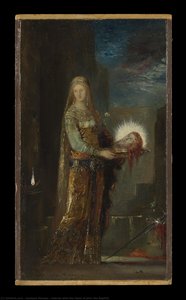
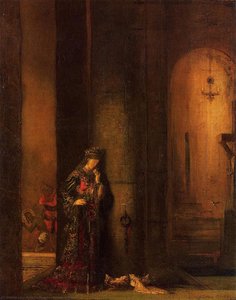
* Salomé im Gefängnis (Gemälde von 'Gustav Moreau') ist ein bemerkenswertes Beispiel für seine Arbeit und zeigt seine Meisterschaft im Symbolismus. * Das Selbstporträt (Gemälde von 'Gustav Moreau') ist eine weitere kraftvolle Darstellung des Künstlers selbst.**Musée Gustave Moreau**
Das Nationalmuseum Gustave Moreau (Musée Gustave Moreau Paris, Frankreich) in Paris ist dem Werk Moreaus gewidmet und beherbergt über 1.200 Gemälde, Aquarelle und Zeichnungen. Das Museum ist ein Zeugnis seines künstlerischen Erbes.**Vermächtnis und Einfluss**
Moreaus Einfluss auf die Symbolismusbewegung ist unbestreitbar. Er lehrte an der École des Beaux-Arts und beeinflusste namhafte Künstler wie Henri Matisse und Georges Rouault. Seine zurückgezogene Art hat seinen Einfluss auf die Kunstwelt nicht gemindert.- Entdecken Sie mehr über das Leben und Werk von Gustav Moreau auf ArtsDot.com
- Erkunden Sie das Nationalmuseum Gustave Moreau und seine beeindruckende Sammlung von Kunstwerken auf Musée Gustave Moreau Paris, Frankreich
- Erfahren Sie mehr über die Symbolismusbewegung und ihre Bedeutung für die Kunstgeschichte auf die Symbolismus-Kunstbewegung
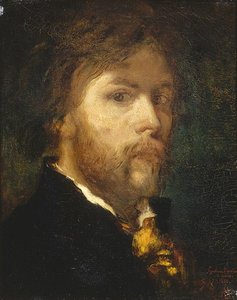
Gustave Moreau
1826 - 1898 , Frankreich
Kurzinfos
- Beeinflusste Künstler:
- Henri Matisse
- Georges Rouault
- Bemerkenswerte Werke:
- Salomé im Gefängnis
- Selbstporträt
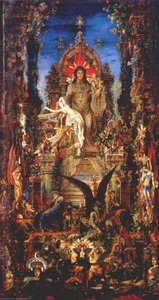
- Jupiter und Semele
- Orpheus
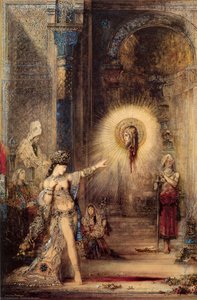
- Die Erscheinung
- Geburtsdatum: 6. April 1826
- Geburtsort: Paris, Frankreich
- Künstlerische Einflüsse:
- Eugène Delacroix
- Michelangelo
- Leonardo da Vinci
- Künstlerischer Stil: Symbolismus
- Nationalität: Französisch
- Sterbedatum: 1898
- Vollständiger Name: Gustave Moreau
Ähnliche Artikel

Gustav Klimt: Die 25 Meisterwerke des Wiener Jugendstils | ArtsDot
Entdecken Sie die 25 ikonischsten Gemälde von Gustav Klimt! Tauchen Sie ein in die Welt der Wiener Secession, des Jugendstils und der goldenen Phase. Hochwertige Reproduktionen & Inspiration für Ihr Zuhause auf ArtsDot.com.
Gustave Moreau: Der Enigmatische Visionär des Symbolismus und Wegbereiter moderner Fantasy-Kunst
Entdecken Sie das faszinierende Werk Gustave Moreaus, des wichtigsten Vertreters des Symbolismus! Analysen, Biografien und Einblicke in seine mythologischen Gemälde. Jetzt lesen!
Meisterwerke des Hochmittelalters: 10 Kunstwerke für Ihr Zuhause | ArtsDot
Entdecken Sie die 10 bedeutendsten Meisterwerke des Hochmittelalters! Erfahren Sie Geschichten von Romanik, Gotik & berühmten Künstlern. Finden Sie hochwertige Reproduktionen für Ihr Zuhause auf ArtsDot.com.
Echoes of Olympus: Mythological Narratives in Western Art Through the Ages
Explore the captivating history of mythological narratives in Western art! From ancient Greece to modern masterpieces, discover iconic artworks & symbolism. Expert analysis and high-quality reproductions at ArtsDot.
Spätmittelalterliche Meisterwerke: 10 Kunstwerke für Ihr Zuhause | ArtsDot
Entdecken Sie die 10 bedeutendsten Meisterwerke des Spätmittelalters! Erfahren Sie die Geschichten hinter Jan van Eyck, Rogier van der Weyden & mehr. Hochwertige Kunst Reproduktionen für Ihr Zuhause – jetzt auf ArtsDot.com!