

 Vorschau anzeigen
 Versenden
 Teilen
 Details anzeigen

 Herunterladen
 Ähnliche Objekte
 Röntgenaufnahme
 Diashow
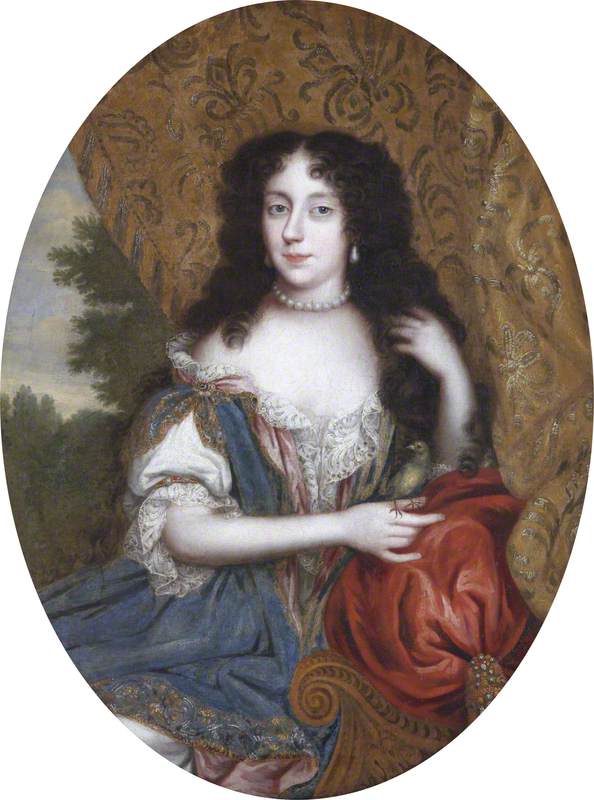
Lady Anne Fitzgerald, Mrs Francis Robartes
 1686
1686 104.0 x 82.0 cm
 National Trust
 Weiterlesen
Handgefertigte Ölreproduktion
Handgemaltes Ölgemälde auf Leinwand in Ihrer Wunschgröße und mit Rahmen, auf Bestellung von unseren Künstlern angefertigt. ( Druck bestellen Bild kaufen)




































Wählen Sie aus unseren vordefinierten Formaten, die den ursprünglichen Proportionen des Kunstwerks entsprechen.

Sie können Ihre eigenen Maße eingeben, um einen bestimmten Rahmen oder Platz auszufüllen. Wenn die gewählte Größe nicht den Proportionen des Originalbildes entspricht, werden wir das Kunstwerk entweder beschneiden oder das Gemälde durch zusätzliche, handgemalte Elemente erweitern. Ein digitales Mockup wird Ihnen zur Genehmigung zugesandt, bevor die Produktion beginnt.
Bitte beachten Sie, dass die Bildschirmvorschau nicht die tatsächliche Beschneidung oder Erweiterung widerspiegelt. Nur das Mockup zeigt die endgültige Komposition exakt an.
Obwohl Sondermaße verfügbar sind, empfehlen wir, eine Größe aus der vordefinierten Liste zu wählen, um die ursprünglichen Proportionen beizubehalten.
Nach der Bestellung wird das ArtsDot.com-Team dem Kunden Anweisungen per E-Mail zusenden und eine Mockup-Vorschau bereitstellen.
Weltweiter Versand () in nur 3 bis 4 Wochen statt der üblichen 5 Wochen. (24 August). Keine Kompromisse bei der Qualität.

Kostenloser weltweiter Expressversand

Hochwertige Leinenleinwand

Umfassender Versicherungsschutz beim Versand

Zollgebühren-Rückerstattungsgarantie

Garantie für exakte Farbtreue

60 Tage Rückgaberecht (nur bei Mängeln)

100% Geld-zurück-Garantie

Mengenrabatt verfügbar
 Die Glasoption ist nur für Größen unter 110 cm verfügbar.

Lady Anne Fitzgerald, Mrs Francis Robartes
Art der Reproduktion
Format der Reproduktion
-


Gesamtpreis
$ 263
Ähnliche Kunstwerke





Über den Künstler
The Splendor of the Baroque: The Life and Art of Henri Gascars
In the grand, theatrical tapestry of the seventeenth century, few painters captured the shimmering superficiality and underlying drama of courtly life as vividly as Henri Gascars. Born in Paris around 1635, Gascars emerged from a lineage of artistic endeavor, likely the son of Pierre Gascar, a painter and sculptor of modest renown. His early years were shaped by the vibrant pulse of French artistry, yet his spirit was far too expansive to be confined to a single capital. As a young man, he journeyed to Rome in 1659, an experience that would inevitably infuse his work with the classical grandeur and dramatic light characteristic of the Italian Baroque. This formative period allowed him to absorb the monumental scale of Roman masters, preparing him for a career that would eventually bridge the cultural landscapes of France, England, and Italy.
The true zenith of Gascars’s influence was reached not in the halls of Paris, but within the opulent, often scandalous courts of Restoration England. Around 1674, drawn by the magnetic pull of patronage, he arrived in London. He was famously championed by Louise de Keroualle, the Duchess of Portsmouth, one of the most powerful and celebrated mistresses of King Charles II. This connection provided him with unparalleled access to the highest echelons of English society. In an era where the monarchy was rebuilding its prestige following the austerity of Cromwell’s Commonwealth, Gascars’s arrival was a breath of much-needed continental flair. He brought with him a style that was unapologetically flamboyant, offering a striking contrast to the more somber and stolid English portraiture of the time.
A Master of Opulence and Ornamentation
To observe a Gascars portrait is to witness a celebration of texture, light, and social theater. While some critics of his era noted a certain lack of rigorous anatomical precision in his likenesses, they were quick to commend his ability to render the sumptuous draperies and tawry adornments that defined the era's fashion. His oeuvre embodies the refined aesthetic sensibilities of the Baroque era, characterized by meticulous detail, luminous color palettes, and an acute understanding of psychological portraiture. He possessed a unique talent for capturing the essence of prominent ladies at court—including Barbara Villiers, the Duchess of Portsmouth herself—and several other members of Charles II's entourage.
His technique often prioritized the sensory experience of wealth over strict realism. The viewer is drawn into a world of:
- Luminous Silks: The way light dances across heavy, expensive fabrics.
- Intricate Lace: A meticulous rendering of the delicate textures that signaled high status.
- Dramatic Lighting: Utilizing the chiaroscuro influences of his Roman training to create depth and mood.
- Symbolic Grandeur: Using ornamentation to reflect the political and social power of his subjects.
Legacy and Final Journeys
Gascars's career was a nomadic journey through the most influential courts of Europe. After his period of immense success in England, where he is said to have amassed a significant fortune, he eventually returned to Paris. His life came full circle as he moved through the artistic epicenters of the continent, eventually relocating to Rome. It was there, amidst the very classical influences that had shaped his youth, that he passed away in January 1701.
The historical significance of Henri Gascars lies in his role as a cultural bridge. He brought the sophisticated, flamboyant elegance of French and Italian Baroque traditions to an English audience hungry for continental prestige. His portraits remain enduring windows into the Restoration era, capturing not just the faces of the nobility, but the very atmosphere of an age defined by luxury, intrigue, and the dazzling spectacle of royal life.
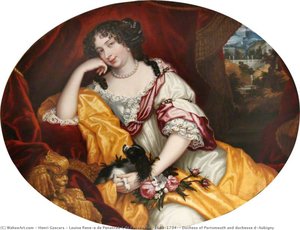
henri gascars
1635 - 1701
Kurzinfos
- Artistic Movement Or Style: Baroque
- Artists Or Movements Influenced By This Artist: ['Louis XIV']
- Artists Who Influenced This Artist: ['Pierre Mignard']
- Date Of Death: 1701
- Full Name: Henri Gascars
- Nationality: French
- Notable Artworks: ['Portrait of Lady Norton']
- Place Of Birth: Paris

