

 Vorschau anzeigen
 Versenden
 Teilen
 Details anzeigen

 Herunterladen
 Ähnliche Objekte
 Röntgenaufnahme
 Diashow
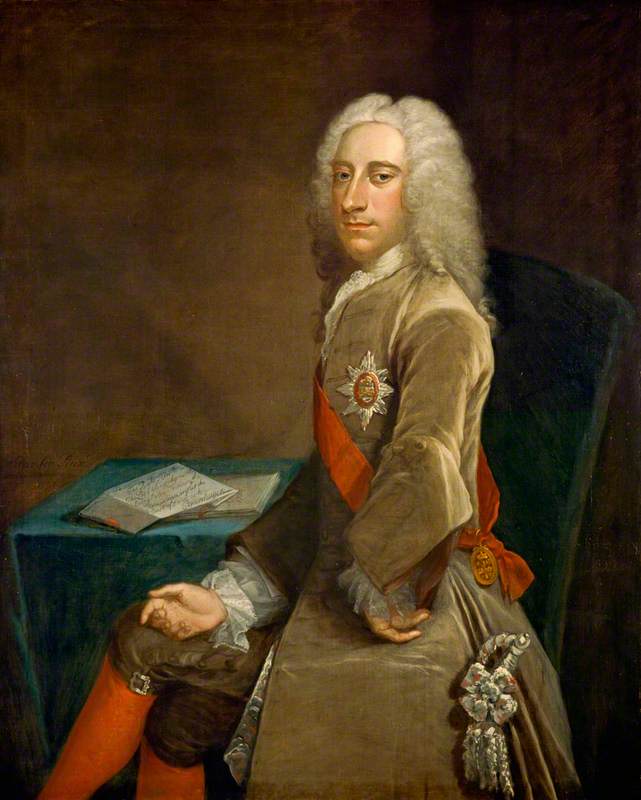
John Campbell (1696–1782), 3rd Earl of Breadalbane, Statesman and Diplomat
 1730
1730 127.0 x 102.0 cm
 Weiterlesen
Handgefertigte Ölreproduktion
Handgemaltes Ölgemälde auf Leinwand in Ihrer Wunschgröße und mit Rahmen, auf Bestellung von unseren Künstlern angefertigt. ( Druck bestellen Bild kaufen)




































Wählen Sie aus unseren vordefinierten Formaten, die den ursprünglichen Proportionen des Kunstwerks entsprechen.

Sie können Ihre eigenen Maße eingeben, um einen bestimmten Rahmen oder Platz auszufüllen. Wenn die gewählte Größe nicht den Proportionen des Originalbildes entspricht, werden wir das Kunstwerk entweder beschneiden oder das Gemälde durch zusätzliche, handgemalte Elemente erweitern. Ein digitales Mockup wird Ihnen zur Genehmigung zugesandt, bevor die Produktion beginnt.
Bitte beachten Sie, dass die Bildschirmvorschau nicht die tatsächliche Beschneidung oder Erweiterung widerspiegelt. Nur das Mockup zeigt die endgültige Komposition exakt an.
Obwohl Sondermaße verfügbar sind, empfehlen wir, eine Größe aus der vordefinierten Liste zu wählen, um die ursprünglichen Proportionen beizubehalten.
Nach der Bestellung wird das ArtsDot.com-Team dem Kunden Anweisungen per E-Mail zusenden und eine Mockup-Vorschau bereitstellen.
Weltweiter Versand () in nur 3 bis 4 Wochen statt der üblichen 5 Wochen. (24 August). Keine Kompromisse bei der Qualität.

Kostenloser weltweiter Expressversand

Hochwertige Leinenleinwand

Umfassender Versicherungsschutz beim Versand

Zollgebühren-Rückerstattungsgarantie

Garantie für exakte Farbtreue

60 Tage Rückgaberecht (nur bei Mängeln)

100% Geld-zurück-Garantie

Mengenrabatt verfügbar
 Die Glasoption ist nur für Größen unter 110 cm verfügbar.

John Campbell (1696–1782), 3rd Earl of Breadalbane, Statesman and Diplomat
Art der Reproduktion
Format der Reproduktion
-


Gesamtpreis
$ 263
Ähnliche Kunstwerke










Über den Künstler
The Luminous Legacy of Jeremiah Davison
In the grand, sweeping tapestry of eighteenth-century British art, certain names shine with an eternal brilliance, while others exist as subtle, exquisite threads that provide depth and texture to the era's cultural fabric. Jeremiah Davison (c. 1695–1745) belongs to this latter, more intimate category. A painter of profound technical skill and quiet dignity, Davison’s life and work offer a window into the aristocratic splendor of the Georgian age. Though much of his personal biography remains shrouded in the mists of time—reconstructed primarily through probate records and contemporary accounts—his artistic presence is undeniably felt through the regal countenances he immortalized on canvas.
Born in England to Scottish parents, Davison’s early development was shaped by a rigorous engagement with the masters who preceded him. He did not merely observe the works of Sir Peter Lely; he studied them deeply, absorbing the fluid grace and sophisticated elegance that defined the late Stuart portraiture style. Furthermore, his apprenticeship or study under Joseph van Aken provided him with a specialized, highly sought-after mastery: the ability to render the shimmering, tactile reality of satin and silk. This technical facility would become a hallmark of his oeuvre, allowing him to capture not just the likeness of his subjects, and their social standing, but the very luxury of their existence.
A Journey Through Patronage and Prestige
The trajectory of Davison’s career was intimately tied to the corridors of power and the influential circles of the British nobility. His connection to the 2nd Duke of Atholl, forged through a Masonic lodge, proved to be a pivotal moment in his professional life. Under the generous patronage of the Duke and Duchess, Davison traveled to Scotland, establishing a significant presence in Edinburgh. This movement between the vibrant art scene of London and the aristocratic circles of Scotland allowed him to cultivate a diverse clientele, ranging from high-ranking military officials to members of the royal family.
His ability to convey an aura of authority and grace made him a preferred choice for those seeking to project their status through portraiture. Notable achievements in his career include:
- Royal Commissions: His 1730 portrait of Frederick, Prince of Wales, stands as a testament to his standing within the highest echelons of society.
- Military and Naval Tributes: The full-length portrait of Admiral George Byng, 1st Viscount Torrington, housed at Greenwich Hospital, showcases his ability to handle large-scale, commanding compositions.
- Aristocratic Documentation: His work capturing the Earl of Morton and his family in the Scottish National Portrait Gallery serves as a vital historical record of the era's landed gentry.
Technique, Light, and the Art of Presence
Davison’s approach to portraiture was characterized by a meticulous attention to detail and a sophisticated use of light. While later artists like Reynolds would move toward more dramatic, idealized landscapes, Davison remained dedicated to the psychological and physical accuracy of the individual. He utilized chiaroscuro—the dramatic interplay of light and shadow—to sculpt the features of his subjects, imbuing them with a sense of three-dimensional presence and inner life. His technique of layering thin, translucent glazes over toned canvases allowed for a luminous quality that seemed to radiate from within the skin of his sitters.
Beyond the mere recording of features, Davison’s work captured the essence of the Georgian era: a period defined by a tension between classical restraint and opulent display. Whether it was the serene elegance found in his depiction of Elizabeth Macdonald of Largie or the regal poise in his portrait of Augusta of Saxe Gotha, his brushwork translated the textures of wealth—the heavy velvet, the delicate lace, and the lustrous satin—into a language of permanence. Through his eyes, we see a world of dignified repose, where every fold of fabric and every subtle shadow contributed to a larger narrative of power, grace, and historical continuity.
jeremiah davison
1695 - 1745
Kurzinfos
- Artistic Movement Or Style: Portraiture Art
- Date Of Death: 1745
- Full Name: Jeremiah Davison
- Nationality: British
- Notable Artworks: ['Frederick, Prince of Wales']

