

 Vorschau anzeigen
 Versenden
 Teilen
 Details anzeigen

 Herunterladen
 Ähnliche Objekte
 Röntgenaufnahme
 Diashow
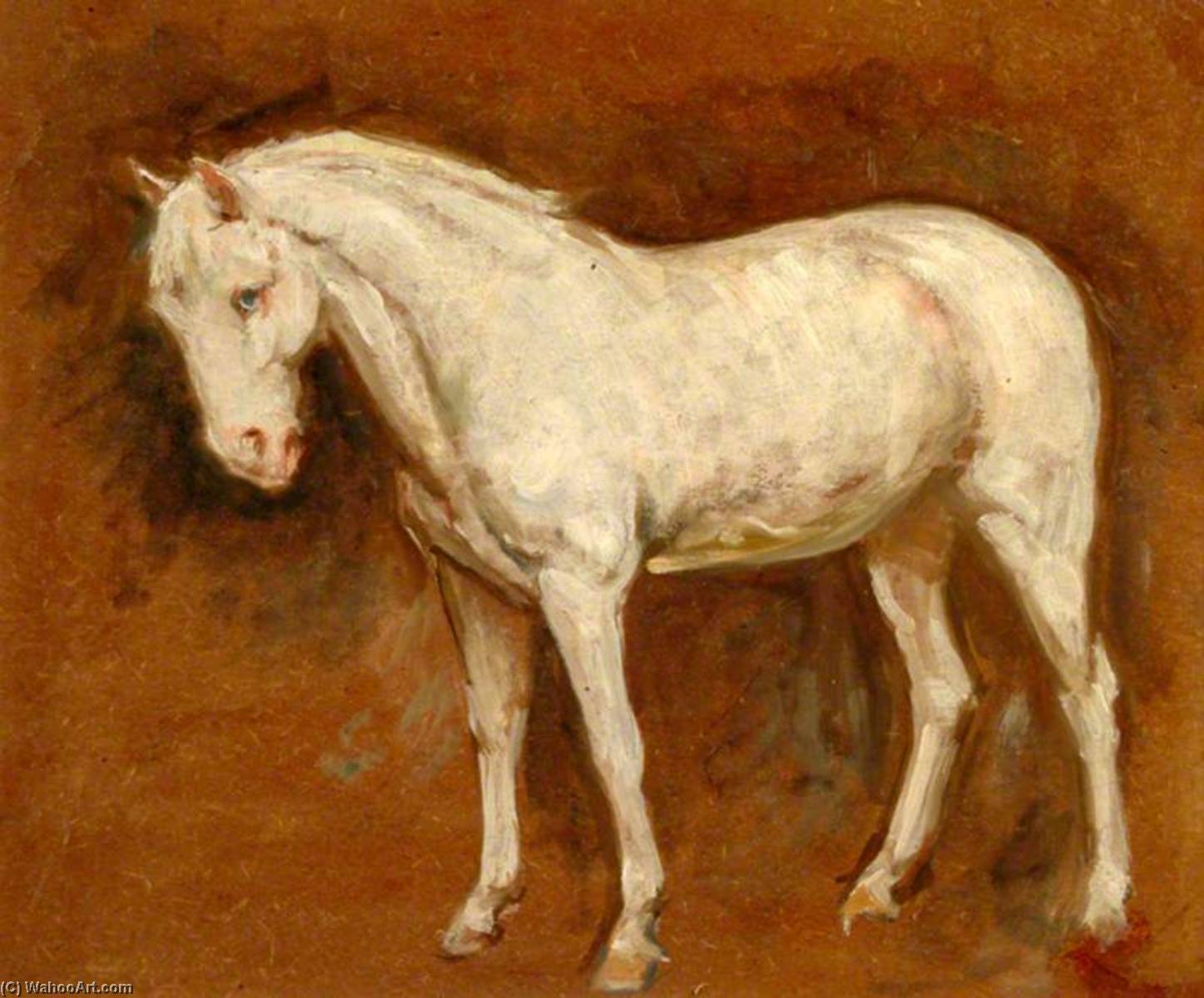
The Grey Horse (recto)
 1944
1944 31.0 x 38.0 cm
 Weiterlesen
Handgefertigte Ölreproduktion
Handgemaltes Ölgemälde auf Leinwand in Ihrer Wunschgröße und mit Rahmen, auf Bestellung von unseren Künstlern angefertigt. ( Druck bestellen Bild kaufen)




































Wählen Sie aus unseren vordefinierten Formaten, die den ursprünglichen Proportionen des Kunstwerks entsprechen.

Sie können Ihre eigenen Maße eingeben, um einen bestimmten Rahmen oder Platz auszufüllen. Wenn die gewählte Größe nicht den Proportionen des Originalbildes entspricht, werden wir das Kunstwerk entweder beschneiden oder das Gemälde durch zusätzliche, handgemalte Elemente erweitern. Ein digitales Mockup wird Ihnen zur Genehmigung zugesandt, bevor die Produktion beginnt.
Bitte beachten Sie, dass die Bildschirmvorschau nicht die tatsächliche Beschneidung oder Erweiterung widerspiegelt. Nur das Mockup zeigt die endgültige Komposition exakt an.
Obwohl Sondermaße verfügbar sind, empfehlen wir, eine Größe aus der vordefinierten Liste zu wählen, um die ursprünglichen Proportionen beizubehalten.
Nach der Bestellung wird das ArtsDot.com-Team dem Kunden Anweisungen per E-Mail zusenden und eine Mockup-Vorschau bereitstellen.
Weltweiter Versand () in nur 3 bis 4 Wochen statt der üblichen 5 Wochen. (24 August). Keine Kompromisse bei der Qualität.

Kostenloser weltweiter Expressversand

Hochwertige Leinenleinwand

Umfassender Versicherungsschutz beim Versand

Zollgebühren-Rückerstattungsgarantie

Garantie für exakte Farbtreue

60 Tage Rückgaberecht (nur bei Mängeln)

100% Geld-zurück-Garantie

Mengenrabatt verfügbar
 Die Glasoption ist nur für Größen unter 110 cm verfügbar.

The Grey Horse (recto)
Art der Reproduktion
Format der Reproduktion
-


Gesamtpreis
$ 263
Ähnliche Kunstwerke








Über den Künstler
Percy Harland Fisher: A Pioneer of Robotic Art and Surgical Innovation
Percy Harland Fisher (1867-1944) remains a curiously compelling figure in the annals of 20th-century art, a British innovator whose legacy extends far beyond conventional artistic boundaries. Often described as a “robotic artist,” Fisher’s work wasn't merely about creating sculptures; it was an exploration into the intersection of mechanics, artistry, and nascent medical technology – a visionary pursuit that foreshadowed developments in surgical robotics decades before their widespread adoption. His career, though relatively short, is marked by a relentless drive to integrate intricate mechanical systems with artistic expression, resulting in a body of work both profoundly unique and remarkably prescient.
Born in Surrey, England, Fisher’s early life offered little indication of the extraordinary path he would forge. Details regarding his formal education are scarce, suggesting a self-taught approach deeply rooted in observation and experimentation. However, anecdotal evidence points to a fascination with clockwork mechanisms and automata from a young age – interests that would become central to his artistic philosophy. Fisher’s work began to gain recognition in the late 19th century, initially through miniature robotic figures and intricate mechanical devices displayed at exhibitions. These early creations weren't simply decorative; they demonstrated an uncanny ability to mimic human movement and behavior, hinting at a deeper understanding of biomechanics.
The TMINI System: A Leap into Surgical Applications
Fisher’s most significant contribution lies in the development of the TMINI system – a remarkably sophisticated miniature robotic arm designed for surgical applications. This wasn't a product of grand technological leaps, but rather a gradual accumulation of knowledge and painstaking refinement over several decades. The genesis of the TMINI can be traced back to Fisher’s observations of surgeons in action, coupled with his own mechanical expertise. He recognized the potential for robotic assistance to enhance precision, minimize invasiveness, and ultimately improve patient outcomes.
Unlike contemporary robotics that relied on bulky machinery, Fisher's design prioritized miniaturization and dexterity. The TMINI consisted of a series of interconnected gears, levers, and actuators – all meticulously crafted from brass, steel, and other precision metals. Crucially, Fisher integrated feedback mechanisms allowing the robot to respond to subtle movements initiated by the surgeon, effectively extending their own hand with unparalleled accuracy. While the system was never fully realized in clinical practice during his lifetime due to technological limitations of the era, its conceptual framework – a miniature robotic arm controlled by human intention – anticipated key advancements in surgical robotics that would emerge in the late 20th century.
Artistic Style and Influences
Fisher’s artistic style defies easy categorization. While undeniably influenced by Victorian-era mechanical art, his work transcends mere imitation. His creations possess a distinctly anthropomorphic quality – figures imbued with a sense of personality and emotion through subtle gestures and facial expressions. The meticulous detail evident in each component, from the intricate gears to the delicately sculpted limbs, speaks to a profound respect for craftsmanship and an unwavering commitment to realism.
Beyond mechanical influences, Fisher’s work demonstrates a sensitivity to classical sculpture and portraiture. His miniature figures often resemble idealized human forms, reminiscent of ancient Greek statues – a testament to his appreciation for timeless beauty and enduring artistic principles. Furthermore, the use of muted color palettes and soft lighting in many of his pieces evokes a sense of nostalgia and quiet contemplation, mirroring the emotional depth found in traditional oil paintings.
Legacy and Historical Significance
Despite facing skepticism and resistance from the established art world, Percy Harland Fisher’s work has garnered increasing recognition in recent decades. His pioneering efforts in robotic art are now viewed as remarkably prescient, foreshadowing developments in fields ranging from medical robotics to industrial automation. The TMINI system, though never fully implemented during his lifetime, stands as a testament to Fisher's visionary thinking and technical ingenuity.
Fisher’s legacy extends beyond the purely artistic realm. His work serves as a powerful reminder of the potential for art to inspire innovation and challenge conventional boundaries. He was not simply an artist; he was a mechanical engineer, a sculptor, and a futurist – a truly unique individual whose contributions continue to resonate with artists and scientists alike. Further research into his life and works is ongoing, promising to reveal even greater insights into the mind of this extraordinary pioneer.

percy harland fisher
1867 - 1944
Kurzinfos
- Artistic Movement Or Style: Miniature robotics art
- Artists Or Movements Influenced By This Artist: ['TMINI Robotic System']
- Artists Who Influenced This Artist: ['Admiral Scott']
- Date Of Birth: 1867
- Date Of Death: 1944
- Full Name: Percy Harland Fisher
- Nationality: British
- Notable Artworks:
- Mrs Hudson
- The Italian Donkey
- Dog With His Master's Dinner
- Place Of Birth: WahooArt, USA

