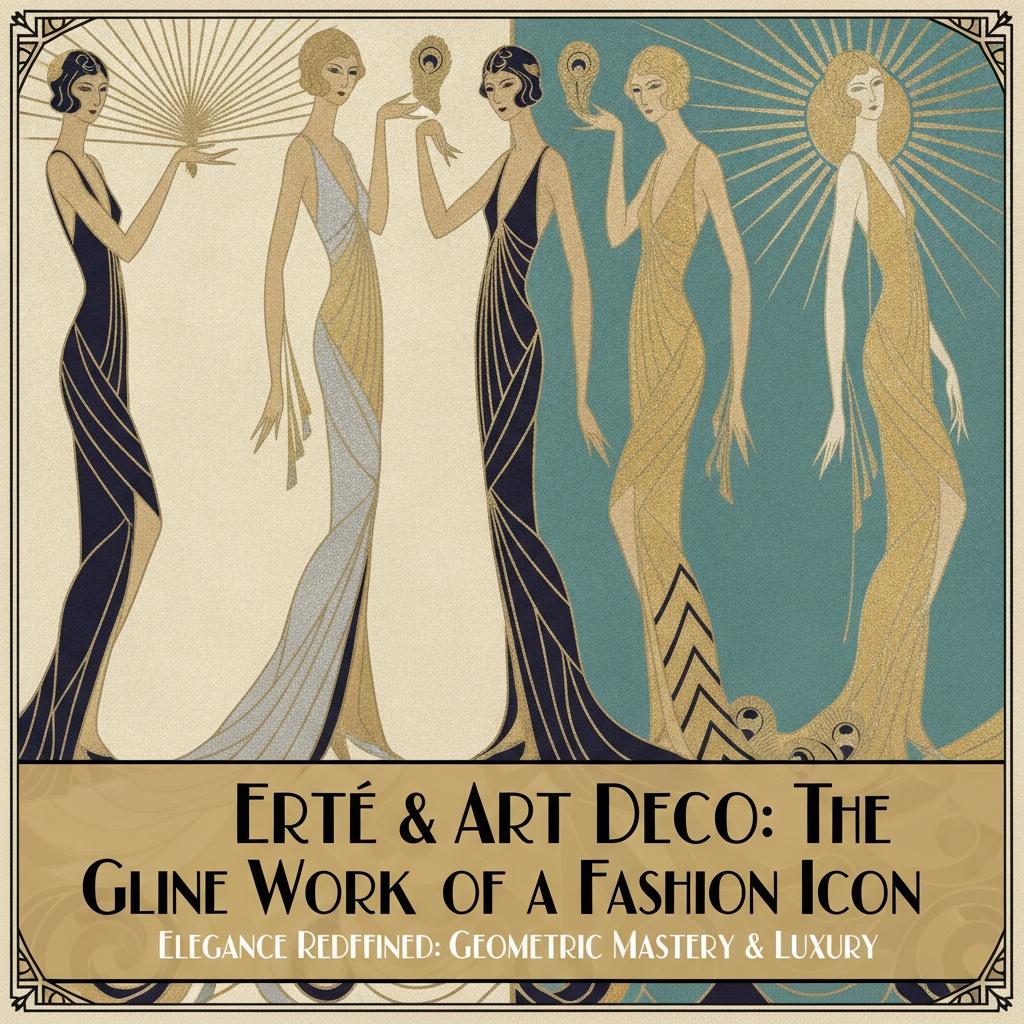
The Genesis of Glamour: From Art Nouveau Whimsy to Art Deco Precision
 Erté and Art Deco: The Architect of Glamour, Fashion, and the Geometric Soul of Modernity
The Genesis of Art Deco: From Parisian Expositions to Global Modernity Art Deco in Paris The Art Deco movement of architecture and design appeared in Paris in about 1910–12, and continued until the beginning of World War II in 1939. It took its name ...
To understand the shimmering allure of the early twentieth century, one must look toward Paris, where the seeds of a revolution in taste were sown. As the world transitioned into modernity, the soft, swirling whimsy of Art Nouveau—with its organic vines, asymmetrical flowers, and undulating curves—began to yield to something far more resolute and disciplined. This was not merely a change in fashion, but a profound shift in the collective psyche of a world moving toward an age of unprecedented technological progress and social liberation.
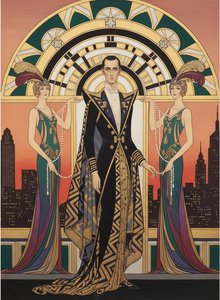
The Art Deco movement, emerging in the 1910s and flourishing through the 1930s, served as a visual manifesto for this new era. It sought strength in the structured, the rhythmic, and the geometric. While its predecessor found beauty in the unpredictable movements of nature, Art Deco embraced the clarity of the machine age. This aesthetic celebrated a new sense of luxury that was both decadent and modern, where the organic chaos of the past was replaced by a sophisticated, streamlined elegance that symbolized an unshakeable faith in the future.
This transition reached its definitive zenith during the landmark 1925 International Exposition of Modern Decorative and Industrial Arts in Paris. It was here that the movement found its name and its global stage, showcasing a style that permeated everything from the soaring heights of skyscrapers to the intimate elegance of fine jewelry. It was an era where rare materials like ebony and ivory met the industrial promise of chrome and stainless steel, creating a timeless language of luxury that continues to inspire high-end design today.
Romain de Tirtoff: The High Priest of the Decorative Arts
 The Glamour of Erté: Discovering the Art Deco Elegance and Geometric Mastery of Romain de Tirtoff
From Organic Whimsy to Structured Splendor: The Birth of the Art Deco Aesthetic Art Deco Art Deco, short for the French Arts décoratifs (lit. 'Decorative Arts'), is a style of visual arts, architecture, and product design that first appeared in Paris...
At the heart of this revolution stood a visionary whose name became synonymous with the very essence of glamour: Romain de Tirtoff. Known universally by his pseudonym, Erté, he was far more than a mere illustrator; he was the high priest of the Art Deco movement. Born in St. Petersburg and later finding his creative soul in Paris, Erté possessed an unparalleled ability to breathe life into the rhythmic patterns of a changing world.
To step into the world of Erté is to surrender oneself to a dream of perpetual elegance. His work acted as a bridge between the fine arts and the decorative arts, elevating fashion illustration to a level of high artistry previously reserved for oil paintings and sculptures. Through his meticulous line work and theatrical sensibility, he captured the spirit of the "Années Folles"—the Roaring Twenties—with a grace that felt both contemporary and eternal. He did not simply draw clothing; he choreographed movement through ink and gouache.
Erté’s influence extended far beyond the pages of fashion magazines. His aesthetic vision shaped the visual identity of an entire generation, influencing costume design, set decoration, and even the way luxury goods were presented to the public. He was an architect of glamour, constructing a world where every silhouette told a story of sophistication and every detail whispered of opulence.
The Geometry of Elegance: Mastering Line, Rhythm, and Form
 Art Deco
Art Deco, short for the French Arts décoratifs (lit. 'Decorative Arts'), is a style of visual arts, architecture, and product design that first appeared in Paris in the 1910s just before World War I and flourished internationally during the 1920s to ...
The true genius of Erté lay in his mastery of the line. In his hands, the line was not merely a boundary for color but a dynamic force capable of conveying weight, motion, and emotion. His work synthesized the bold colors of Fauvism with the geometric rigor of Cubism, creating a unique visual language that felt both structured and fluid. This was the "geometric soul" of modernity—a way of seeing the world through patterns, symmetry, and rhythmic repetition.
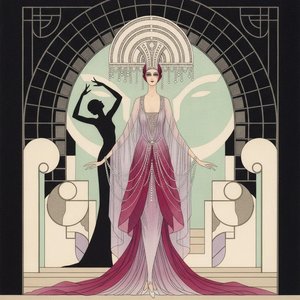
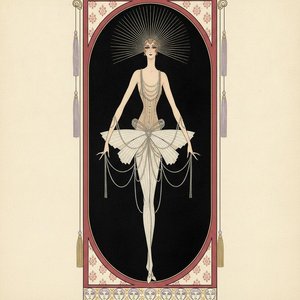
In an Erté composition, one finds a mesmerizing balance between structure and grace. He utilized bold geometric forms to anchor his figures, yet infused them with a sense of organic movement that prevented the work from feeling static. This tension between the rigid and the flowing is what gives Art Deco its enduring charm. The use of repetitive motifs—sunbursts, zigzags, and stylized floral elements—created a sense of visual music, where each element played its part in a larger, harmonious symphony of design.
This mastery of form allowed for a highly stylized decoration that became the hallmark of the era. It was an art of precision, where every curve was intentional and every angle served to direct the eye toward a central point of elegance. For the modern enthusiast, this geometric discipline offers a sense of order and sophistication that remains incredibly effective in contemporary interior styling.
Fashion as Fine Art: Erté’s Influence on the Modern Silhouette
 Theatrical Elegance: The Art Deco Genius of Erté and the Era of Fashion Illustration
The Genesis of Art Deco: From Parisian Expositions to Global Modernity Art Deco in Paris The Art Deco movement of architecture and design appeared in Paris in about 1910–12, and continued until the beginning of World War II in 1939. It took its name ...
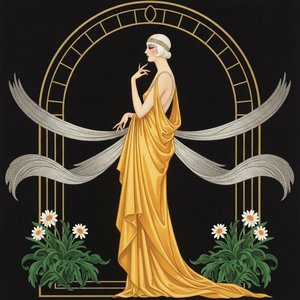
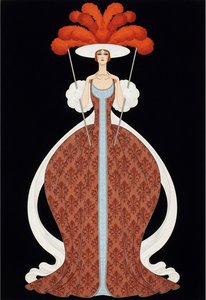
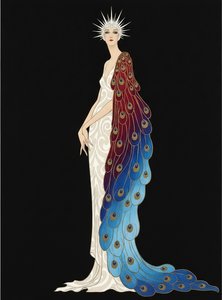
Erté’s most profound legacy is perhaps found in his reimagining of the human form. Through his illustrations, fashion became a medium for fine art. He moved away from the restrictive, heavy garments of the Victorian and Edwardian eras, instead championing silhouettes that celebrated the liberation of the female body. His designs featured flowing fabrics, intricate beadwork, and dramatic capes that emphasized a streamlined, elongated aesthetic.
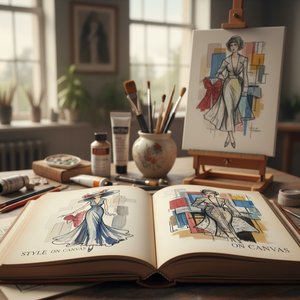
His illustrations often felt like theatrical performances captured in a single moment. He had an uncanny ability to use drapery and texture to suggest the weight of silk or the shimmer of sequins, making the viewer feel the tactile luxury of the garments. This approach transformed fashion illustration from a commercial necessity into a collectible art form, where the garment was merely a vehicle for exploring light, shadow, and movement.
This era of fashion illustration, epitomized by Erté, left an indelible mark on the history of design. The silhouettes he popularized—characterized by dropped waists, shorter hemlines, and bold accessories—became the visual shorthand for modern womanhood. Even today, when we look at the sleek lines of modern couture, we see the echoes of his visionary hand.
A Legacy in Gold and Gouache: The Textures of an Era
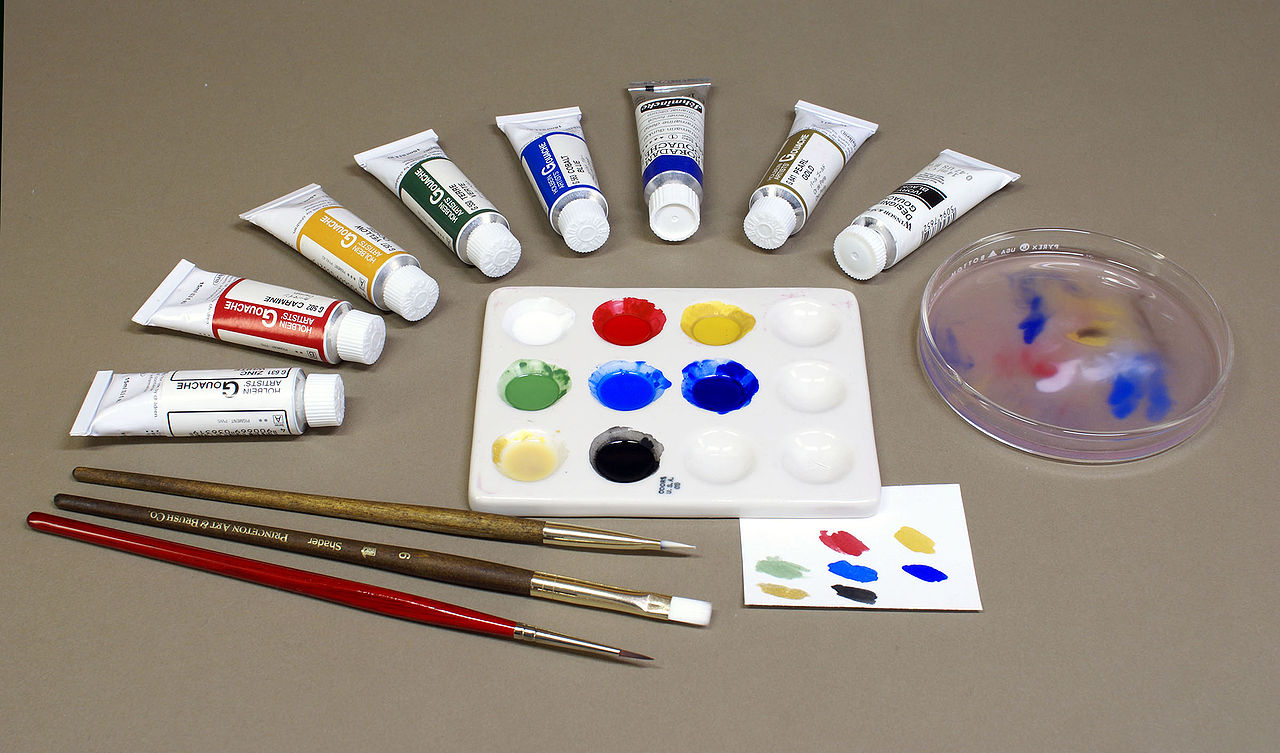 Gouache
Gouache (; French: [ɡwaʃ]), body color, or opaque watercolor is a water-medium paint consisting of natural pigment, water, a binding agent (usually gum arabic or dextrin), and sometimes additional inert material. Gouache is designed to be opaque. Gou...
The sensory experience of Erté’s work is deeply tied to his choice of medium. He frequently utilized gouache—an opaque watercolor that allowed for rich, saturated colors and a matte finish that could be layered to create incredible depth. This technique enabled him to achieve the "shimmering allure" characteristic of Art Deco, using metallic paints to mimic the glint of gold, silver, and platinum.
The interplay of light and texture in his work is nothing short of magical. By layering opaque pigments, he could create surfaces that appeared as smooth as polished marble or as textured as fine embroidery. This ability to manipulate light through paint allowed him to capture the decadence of the era—the way a spotlight might hit a sequined gown or how moonlight reflects off a silk slip. It was an art of surface and substance, where the material itself contributed to the narrative of luxury.
This dedication to texture is why reproductions of his work, particularly those rendered in hand-painted oils on canvas, continue to captivate collectors. The visible brushstrokes and the depth of color found in a physical painting bring a tactile dimension to his geometric precision, allowing the "human warmth" of the artist to meet the structured beauty of the Art Deco movement.
Bringing the Roaring Twenties Home: Curating Art Deco for Modern Interiors
 Self-Portrait in the Green Bugatti
Discover Tamara de Lempicka’s ‘Self-Portrait in the Green Bugatti’! A stunning Art Deco masterpiece showcasing sleek lines & vibrant colors. Own a timeless piece of 1920s elegance.
For the contemporary art enthusiast, integrating the Art Deco aesthetic into a modern home is an exercise in curated luxury. The beauty of this style lies in its versatility; it can serve as a bold, singular statement piece or as a subtle thread of elegance woven throughout a room. When decorating with Art Deco-inspired works, one should look to balance the bold geometric forms with softer, contemporary elements to avoid overwhelming the space.
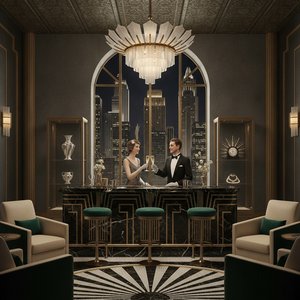
Consider using multi-panel canvas sets to create a sense of architectural grandeur on wide walls or staircases. The rhythmic flow of a three or five-panel arrangement can mirror the structured energy of the movement itself. Furthermore, pairing these works with modern textures—such as velvet upholstery, metallic accents, or dark wood furniture—can recreate that exquisite tension between rare, classical materials and sleek, industrial modernity.
Whether you are drawn to the vibrant colors of a fashion-focused print or the deep, soulful textures of a hand-painted oil reproduction, the goal is to create an environment of meaningful discovery. By embracing the glamour of Erté and the structured splendor of Art Deco, you can transform a contemporary living space into a timeless sanctuary of sophistication and style.