The Great Shift: Moving from Renaissance Harmony to Baroque Emotion
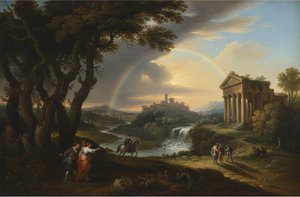 Shadow, Light, and Spectacle: The Dramatic Evolution of Baroque Landscape Painting
The Great Rupture: Transitioning from Renaissance Order to Baroque Emotion Drama in Nature: The Captivating Grandeur of Baroque Landscapes and the Art of Emotional Spectacle The Seismic Shift: From Renaissance Harmony to Baroque Emotion The Visceral ...
To understand the breathtaking intensity of the Flemish Baroque, one must first remember the quietude that preceded it. For generations, the Renaissance reigned supreme, offering a world defined by rationality, balance, and mathematical harmony. It was an era of clarity, where every horizon line felt measured and every figure placed with surgical precision, inviting intellectual contemplation rather than visceral reaction. However, as Europe grappled with the profound religious and political uphelamps of the seventeenth century—most notably the Counter-Reformation—the art world underwent a seismic shift. The calm, symmetrical compositions of the past were no longer sufficient to express the intense spiritual fervor and the burgeoning power of absolute monarchies.
The Baroque movement emerged not as a rejection of Renaissance principles, but as an exuberant, visceral expansion upon them. In the Southern Netherlands, particularly in the vibrant artistic nexus of Antwerp, this transition manifested as a move away from static, idealized vistas toward scenes that felt alive, unpredictable, and deeply immersive. This was a period where art ceased to be merely a window into a perfect world and became a stage for human emotion and divine spectacle. For the modern enthusiast, this era represents the moment when art began to breathe with the very pulse of a changing, often turbulent, world.
Chiaroscuro & Contrast: The Art of Light and Shadow
 Chiaroscuro
In art, chiaroscuro (English: kee-AR-ə-SKOOR-oh, -SKURE-, Italian: [ˌkjaroˈskuːro]; lit. 'light-dark') is the use of strong contrasts between light and dark, usually bold contrasts affecting a whole composition. It is also a technical term used by a...
At the heart of this dramatic evolution lies a technical marvel known as
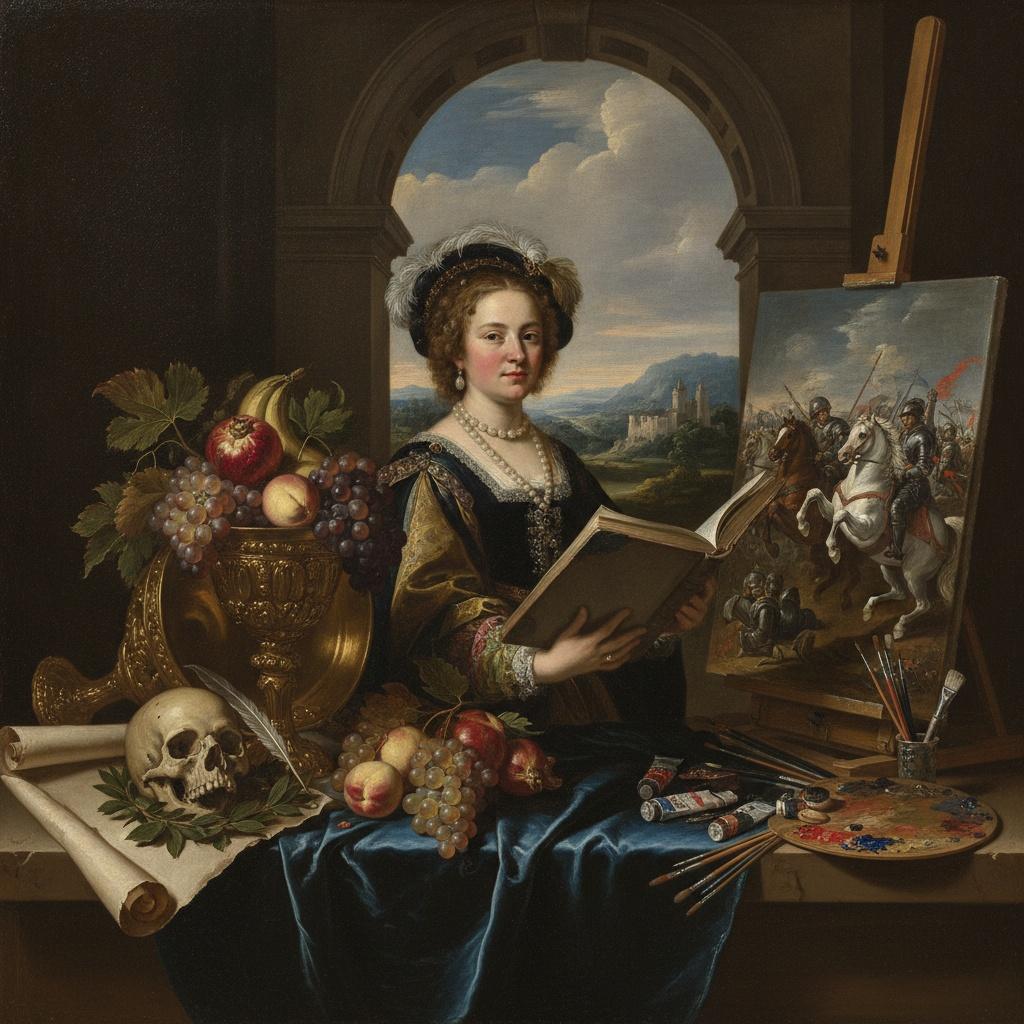
chiaroscuro. Derived from the Italian words for light and dark, this technique involves the use of strong, bold contrasts to achieve a sense of volume and three-dimensional presence. In Flemish Baroque painting, chiaroscuro does more than just create depth; it acts as a cinematic tool, sculpting figures out of deep, velvety shadows and casting a theatrical glow upon central subjects to signify importance or divine intervention.
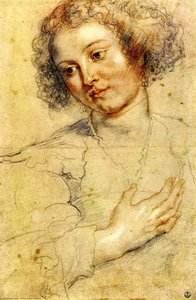
When you gaze upon a masterpiece from this era, you are witnessing a deliberate manipulation of atmosphere. The interplay of light and dark heightens the drama, creating a sense of mystery and weight. This technique allows the artist to focus the viewer's eye with precision, pulling them into the heart of the narrative. Whether it is the luminous skin of a portrait subject or the dramatic illumination of a biblical scene, the mastery of shadow lends a tactile, almost sculptural quality to the canvas that continues to captivate collectors today. It is this very tension between the seen and the unseen that gives Baroque art its enduring, soulful resonance.
Titans of the Canvas: Exploring Rubens, Van Dyck, and Jordaens
 Flemish Baroque painting
Flemish Baroque painting was a style of painting in the Southern Netherlands during Spanish control in the 16th and 17th centuries. The period roughly begins when the Dutch Republic was split from the Habsburg Spain regions to the south with the Span...
No exploration of Flemish grandeur would be complete without acknowledging the undisputed titans who defined the age.
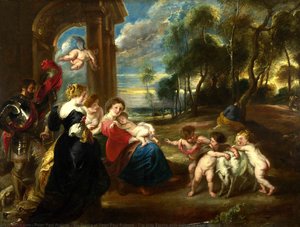
Peter Paul Rubens stands as the monumental figure of this era, a painter whose works possess a colossal energy that commands any space they inhabit. His ability to weave complex tapestries of movement and color—seen in epic works like
The Triumph of Juliers—serves as a masterclass in theatricality. Rubens did not merely paint history; he breathed vitality into it, using sweeping compositions and rich, emotive palettes to celebrate both political victory and spiritual ascendancy.
Following in his wake was the elegant
Sir Anthony van Dyck, whose brushwork brought a new level of sophistication and grace to the art of portraiture. While Rubens captured the epic, Van Dyck mastered the soul, capturing not just a likeness but the very essence of the aristocracy with an unparalleled sense of poise. Alongside them, artists like Jacob Jordaens contributed to this golden age, ensuring that Antwerp remained the cultural capital of Europe. These masters, through their distinct yet interconnected styles, created a visual language of power, faith, and human dignity that would influence European art for centuries to come.
Beyond the Frame: The Dramatic Landscapes and Triumphant Narratives
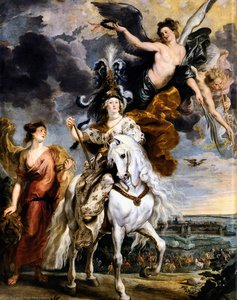 The Triumph of Juliers, 1st September 1610
A Grand Spectacle of Baroque Triumph To behold Peter Paul Rubens’s The Triumph of Juliers, 1st September 1610 is to be swept into the very heart of a seventeenth-century epic. This colossal masterpiece, measuring an imposing 394 x 295 cm, does not me...
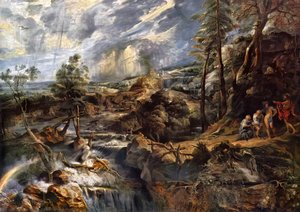
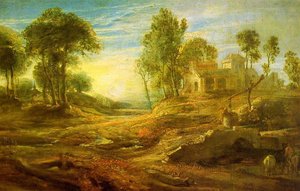
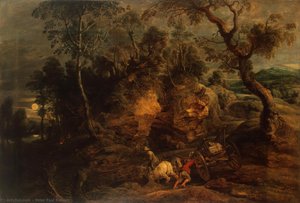
The Baroque spirit extended far beyond the confines of portraiture and religious altarpieces, spilling into the very fabric of the natural world. In the realm of landscape painting, the movement abandoned static, idealized vistas in favor of
emotional spectacle. These landscapes became much more than mere backdrops; they were living, breathing entities characterized by atmospheric drama, unpredictable weather, and a sense of grand scale. The goal was to capture the captivating grandeur of nature, making the viewer feel as though they were standing amidst the swirling clouds or beneath the heavy canopy of an ancient forest.
This era also excelled in the creation of triumphant narratives—large-scale works designed to celebrate dynastic glory and historical milestones. These paintings often functioned as much as political instruments as they did fine art, utilizing complex symbolism and choreographed motion to immortalize moments of victory. From the soaring eagles of imperial power to the celestial angels descending from the heavens, every element was strategically placed to guide the eye through a landscape of motion, ensuring that the sense of triumph was felt not just visually, and intellectually, but with profound emotional impact.
Bringing History Home: Decorating with Flemish Baroque Grandeur
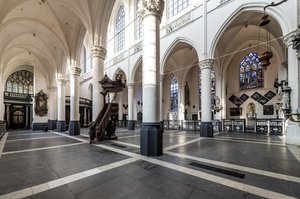 Sint-Jacobskerk
Sint-Jacobskerk: Antwerp’s Baroque Masterpiece – A Symphony of Faith and Art Sint-Jacobskerk, nestled in the heart of Antwerp’s historic center, stands as an unparalleled example of architectural fusion—a Gothic cathedral magnificently transformed by...
For the contemporary art lover, integrating the essence of the Flemish Baroque into a modern interior is an exercise in creating meaning and depth. The beauty of this style lies in its ability to provide a "soul" to a room, offering a sense of history and weight that modern minimalism often lacks. Because these works are defined by such intense texture and color, they serve as magnificent focal points in any space. A high-quality reproduction, with its visible brushstrokes and deep tonal range, can transform a contemporary living area into a sanctuary of classical elegance.
When decorating, consider the
mood and color palette of your room. The rich, warm tones of a Rubens-inspired piece pair exquisitely with deep wood finishes like espresso or natural oak, while the dramatic shadows of a Van Dyck portrait can add a layer of sophisticated mystery to a study or library. For those looking to make a bold architectural statement, we even offer large-format murals and multi-panel layouts that allow the sweeping motion of Baroque compositions to flow across wide walls or staircases. By embracing these historical textures, you are not just decorating; you are curating an atmosphere of timelessness and enduring beauty.
This article was brought to you by ArtsDot.com — The Welcoming Discovery Store. Whether you are looking to transform a personal photo into a masterpiece or find the perfect classical reproduction for your home, we are here to guide your journey into the world of extraordinary art.