
The Essence of Memento Mori: Understanding the Art of Remembrance
--- title: Memento mori | Tate url: https://www.tate.org.uk/art/art-terms/m/memento-mori hostname: tate.org.uk description: Tate glossary definition for momento mori: An artwork designed to remind the viewer of their mortality and of the shortness an...
To step into the presence of a memento mori is to enter into a silent, profound dialogue with the inevitable. The Latin phrase, translating to "remember you must die," serves as more than a mere morbid observation; it is an invitation to live with intention. In the grand tapestry of art history, particularly during the transformative eras of the Renaissance and the Baroque, this concept functioned as a spiritual compass. It was not intended to inspire fear, but rather to foster a deep sense of humility and a heightened appreciation for the fleeting beauty of the present moment. For the modern collector, engaging with these works offers a rare opportunity to pause the frantic pace of contemporary life and reconnect with the eternal truths that transcend generations.
This artistic tradition invites us to look beyond the surface of our daily existence. When we encounter a painting designed as a memento mori, we are being asked to contemplate the fragility of human life and the shortness of our earthly journey. It is an art of presence, urging the viewer to find value in the ephemeral. By acknowledging the end, we paradoxically learn how to truly begin each day with clarity and purpose. This contemplative depth is what makes such pieces so enduringly relevant, providing a soulful anchor for any space dedicated to reflection and peace.
Symbols of Transience: From Skulls to Extinguished Candles
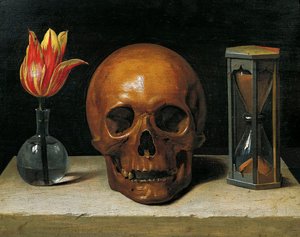 Still-Life with a Skull
A Memento Mori in Oil: The Haunting Beauty of Philippe de Champaigne In the quiet, contemplative depths of Still-Life with a Skull , we encounter one of the most profound meditations on mortality ever captured on panel. Created by the master of the F...
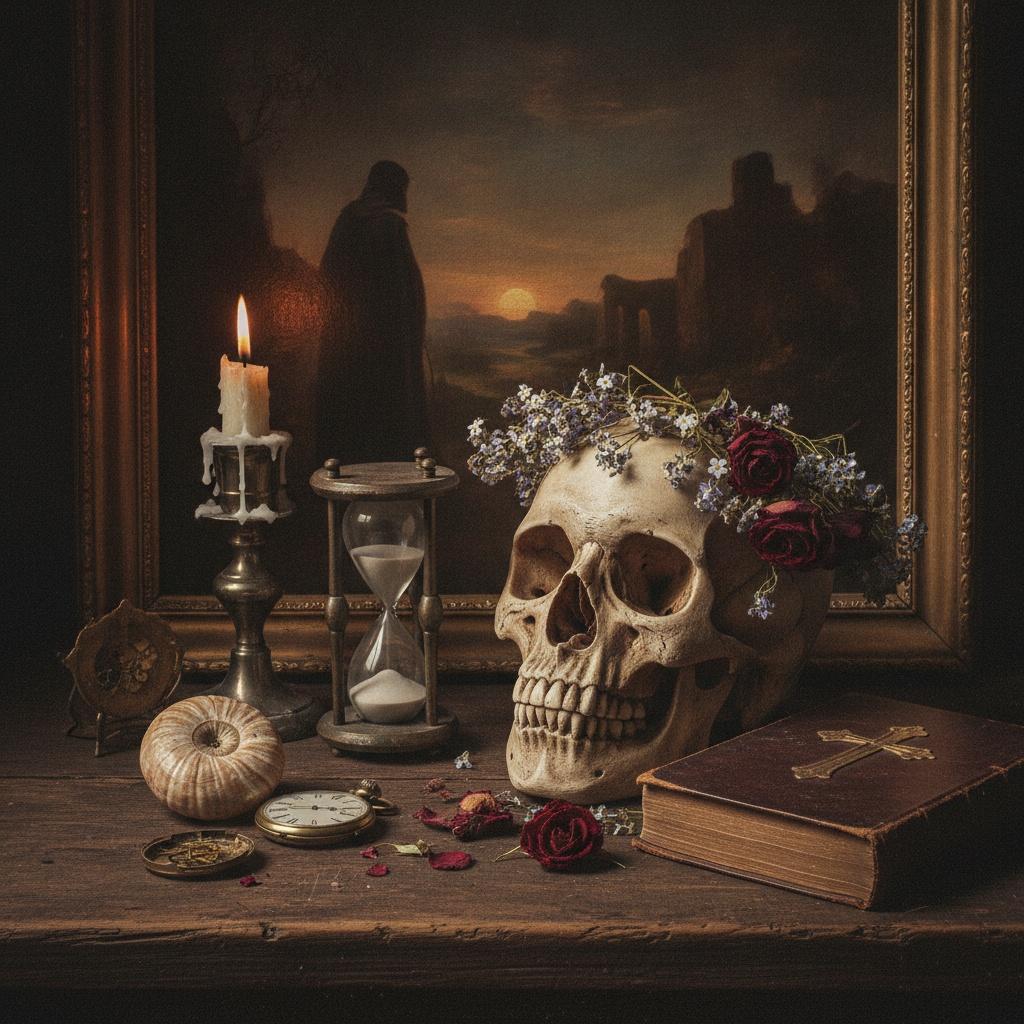
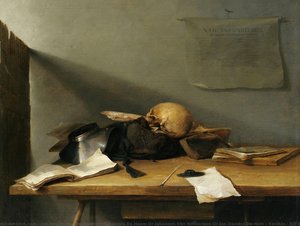
The language of mortality in art is written through a carefully curated vocabulary of symbols, each acting as a poetic metaphor for the passage of time. The most striking and unmistakable of these is, of course, the human skull. In the hands of masters like Philippe de Champaigne, the skull becomes a stark, ivory anchor within a composition, inviting a visceral confrontation with our own finitude. Yet, the memento mori narrative is rarely composed of shadows alone; it is often balanced by symbols of vitality that serve as poignant counterpoints. A single, vibrant red flower or a delicate vase of blossoms reminds us of the lushness of life, even as their wilting petals whisper of coming decay.
Beyond the skeletal remains, other objects weave this intricate web of meaning. An hourglass or a ticking clock represents the relentless, unidirectional march of time that waits for no one. Extinguished or guttering candles signify the sudden departure of the soul or the fading of life's light. We also find vanitas elements—fruit that is beginning to bruise, musical instruments whose melodies have ceased, and even books that may eventually turn to dust. These symbols work in harmony to remind us of the "vanity" of worldly pleasures, a concept rooted in the biblical Ecclesiastes, encouraging us to seek meaning in things that are lasting rather than those that are merely transient.
Baroque Grandeur and the Drama of Mortality: Masters of Light and Shadow
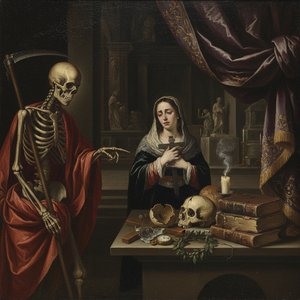 Juan de Valdés Leal: Baroque Realism, Memento Mori & Theatricality of Spanish Grief
Introduction: The Dramatic World of Juan de Valdés Leal Juan de Valdés Leal, a name perhaps less immediately recognizable than Murillo or Velázquez, nevertheless occupies a crucial and compelling position within the pantheon of Spanish Baroque master...
The Baroque era provided the perfect theatrical stage for these meditations on death. This was a period defined by movement, contrast, and an exuberant use of chiaroscuro—the dramatic interplay between deep shadow and brilliant light. In the works of Spanish masters like Juan de Valdés Leal, we see an unflinching gaze at the realities of grief and mortality. His art does not shy away from the unsettling; instead, it uses a heavy, theatrical realism to draw the viewer into a world where the spiritual and the physical collide. Unlike the more tranquil works of his contemporary Murillo, Valdés Leal’s compositions are visceral experiences that demand an emotional response.
In contrast, the French Baroque style, exemplified by de Champaigne, often approaches these themes with a quiet, luminous intensity. Through masterful oil techniques on panel, he achieves a sense of three-dimensional weight, where the light catches the smooth surface of bone and the soft texture of a petal with equal reverence. This era of art, supported by the grandeur of institutions like the Jesuit order and seen in the breathtaking architecture of churches such as St. Ignatius of Loyola in Győr, used scale and ornamentation to inspire awe. Whether through the sweeping, energetic brushstrokes of Rubens or the somber, intimate still lifes of the North, the Baroque masters utilized the tension between light and dark to illuminate the profound mystery of existence.
Finding Modern Meaning: Integrating Timeless Reflections into Contemporary Spaces
 Baroque
The Baroque (UK: bə-ROK, US: bə-ROHK, French: [baʁɔk]) is a Western style of architecture, music, dance, painting, sculpture, poetry, and other arts that flourished from the early 1600s until the 1750s. It followed Renaissance art and Mannerism and p...
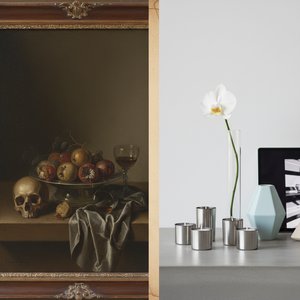
In our modern, fast-paced world, bringing memento mori elements into a contemporary interior is not about introducing gloom, but about adding layers of intellectual and emotional depth. For the thoughtful decorator, these pieces serve as sophisticated conversation starters that ground a room. Imagine a large-scale, multi-panel canvas featuring a classical still life acting as a focal point in a minimalist hallway, or a smaller, intimate portrait with symbolic elements placed in a quiet study. The key is to balance the gravity of the subject with the aesthetic of the room, using the artwork to create a "sanctuary of light and shadow."
Modern design often leans toward the bright and the airy, yet the introduction of darker, more textured works can provide much-needed visual weight. A beautifully framed reproduction of a Baroque masterpiece can harmonize with modern textures like velvet, dark wood, or even industrial metals. By selecting pieces that resonate with your personal color palette—perhaps through the deep ochres and rich umbers found in historical oils—you can create a space that feels both curated and deeply personal. It is about using art to transform a house into a home that reflects not just style, but a well-considered philosophy of life.
Curating a Legacy: How to Choose Art that Inspires Deep Contemplation
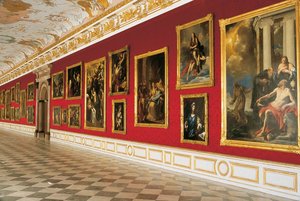 Staatsgalerie Schleissheim
A Baroque Masterpiece: The Soul of Schleissheim Nestled within the breathtaking grandeur of the New Schleißheim Palace near Munich, the Staatsgalerie Schleissheim offers far more than a mere viewing of canvases; it provides an immersive descent into ...
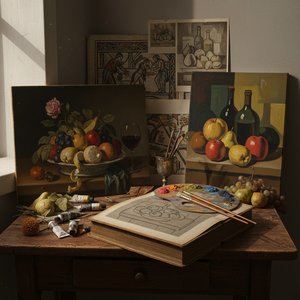
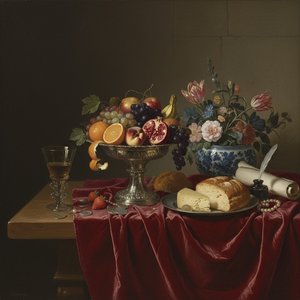
Choosing art that carries such profound weight requires a discerning eye and an appreciation for craftsmanship. When selecting a piece for your collection, consider the medium and the "soul" of the work. A Handmade Oil Reproduction offers a tactile depth that a simple print cannot replicate; the visible brushstrokes and the way light interacts with the impasto texture bring a sense of life to the inanimate subjects. For those looking to personalize this journey, the ability to "remix" history—perhaps by requesting a custom color match or even transforming a personal photograph into a classical style—allows you to create a legacy that is uniquely yours.
As you curate your collection, think about the emotional journey you wish your guests and yourself to undertake. Do you seek the quiet, meditative stillness of a French still life, or the dramatic, sweeping energy of a Flemish masterpiece? Whether you are exploring through color palettes or seeking expert consultation to see how a piece might look on your specific wall, remember that art is a lasting memory. By investing in works that celebrate both the beauty and the fragility of life, you are not merely decorating a room; you are building an environment of enduring significance.
At ArtsDot.com, we are dedicated to making these profound historical moments accessible to everyone. From bespoke oil paintings commissioned from master artists to high-quality museum prints, our mission is to help you discover and preserve the beauty of human creativity in your own home.