



The Foundation of Trust: Defining Authenticity and Provenance in the Art Market
In the high-stakes arena of fine art acquisition, the distinction between a priceless masterpiece and a clever imitation rests upon a single, invisible pillar: truth. To the discerning collector, an artwork is far more than a mere arrangement of pigment on canvas; it is a vessel of historical significance, a tangible link to a specific moment in human creativity. Authenticity, therefore, is not merely a label but a rigorous verification of identity. It is the process of confirming that a work is indeed the product of the hand, mind, and era it claims to represent. This certainty provides the essential bedrock upon which the entire global art market is built, ensuring that the immense capital and cultural passion invested in these objects are anchored in reality.
Closely intertwined with authenticity is the concept of provenance, a term derived from the French provenir, meaning to come forth. Provenance serves as the chronological biography of an object, tracing its journey through time from its original creation to its current location. It encompasses the sequence of ownership, custody, and exhibition history that defines a painting's life. For the professional collector or procurement manager, a robust provenance acts as a chain of custody, providing circumstantial evidence that supports the work's legitimacy. Without this documented lineage, even the most visually stunning painting remains a mystery, vulnerable to questions of origin and legal validity, particularly in an era where the restitution of looted or illegally exported art has become a paramount ethical and legal concern.
Connoisseurship: The Role of the Expert Eye and Stylistic Analysis
Before the advent of modern laboratory science, the primary defense against forgery was connoisseurship—the highly refined, subjective discipline of the expert eye. This practice relies on an intimate, almost intuitive familiarity with an artist's unique visual language. A true connoisseur does not merely look at a painting; they read it, identifying the subtle nuances of brushwork, the specific way an artist handles light and shadow, and the characteristic rhythm of their compositions. They understand the "hand" of the master, recognizing how a particular artist might execute a drapery fold or a facial expression with a signature precision that is nearly impossible to replicate without detection.
<This method of analysis extends into the study of technique and material usage within a specific historical context. During the Renaissance, for instance, authentication often involved understanding the hierarchical structure of workshops, where masters and apprentices worked in close proximity. An expert must be able to distinguish between the confident, decisive strokes of a master like Titian and the more hesitant or derivative marks of a talented pupil. While connoisseurship is inherently subjective and can be challenged by increasingly sophisticated forgeries, it remains an indispensable first line of defense, providing the qualitative context that scientific data alone cannot capture.
The Paper Trail: Deciphering Exhibition Records, Catalogues, and Ownership History
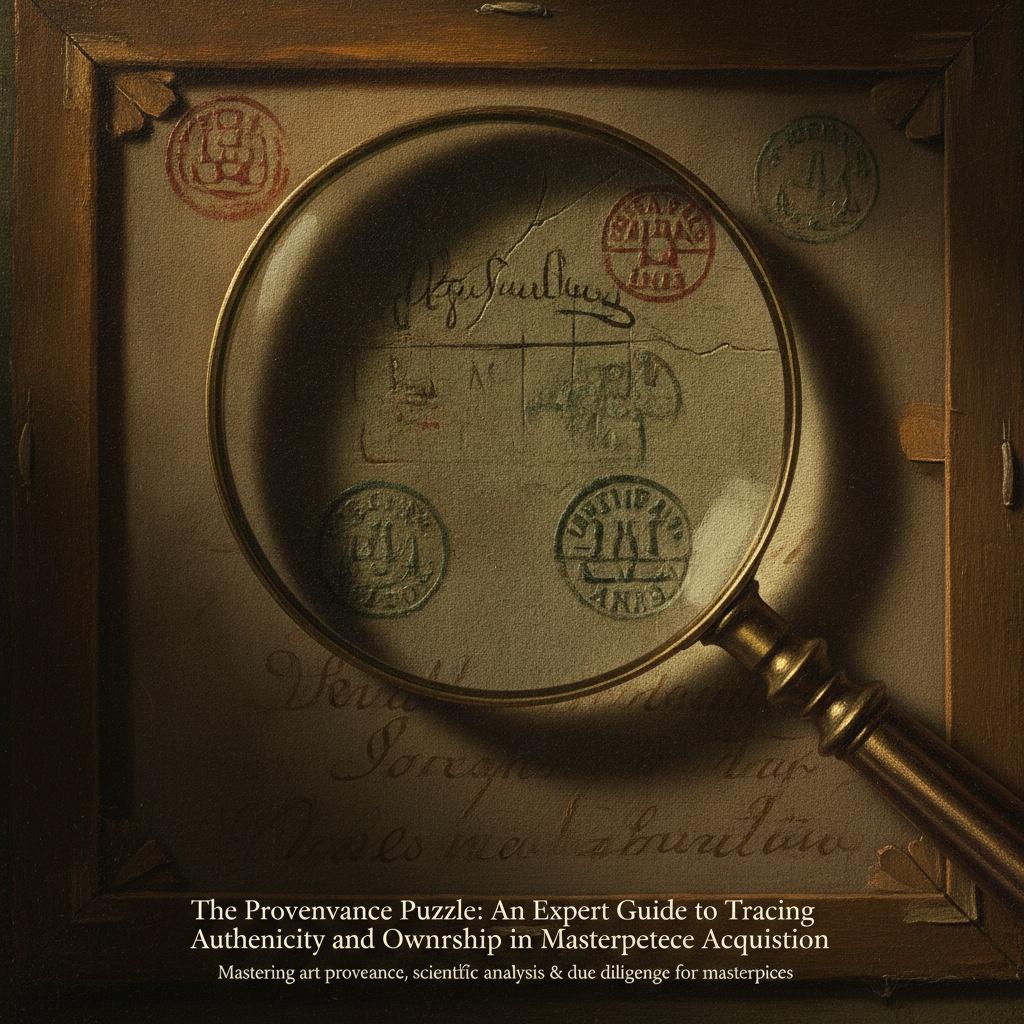
If connoisseurship provides the visual intuition, then documentation provides the empirical evidence. The search for truth often leads researchers into the dusty archives of museums, auction houses, and private estates, hunting for the paper trail that validates a work's journey. This process involves a meticulous examination of exhibition catalogues, salon records, and gallery inventories. When a painting is listed in a 19th-century catalogue raisonné—a comprehensive, annotated listing of all known works by an artist—it gains a level of authoritative weight that is difficult to dispute.
Beyond official catalogues, the detective work continues through the scrutiny of letters, invoices, and even estate inventories. Correspondence between collectors and dealers can reveal much about a painting's movement and its perceived value at a specific point in history. However, this paper trail is not without its perils; historical records can be manipulated, and gaps in ownership—often caused by periods of conflict or social upheaval—can create shadows where doubt may reside. The modern researcher must act as an art historian and an investigator simultaneously, cross-referencing disparate sources to reconstruct a seamless narrative of ownership that withstands the scrutiny of the most rigorous due diligence.
Scientific Forensics: Modern Technologies in Pigment and Material Analysis
In the contemporary era, the subjective eye is increasingly augmented by the objective precision of forensic science. The landscape of art authentication has been revolutionized by technologies that allow us to peer beneath the surface of the paint itself. X-radiography, for example, enables experts to see through layers of varnish and pigment to reveal underdrawings or previous compositions hidden beneath, often exposing the structural "skeleton" of a work. This can reveal whether a painting was executed on an older, repurposed canvas—a common tactic in sophisticated forgeries.
Furthermore, chemical analysis of pigments and binders provides undeniable evidence regarding the era of a work's creation. The presence of a synthetic pigment that was not commercially available until the late 19th century can instantly debunk a painting purported to be from the High Renaissance. Techniques such as infrared reflectography and scanning electron microscopy allow for the microscopic examination of canvas weaves and the chemical composition of oils, providing a layer of empirical certainty that complements traditional connoisseurship. This marriage of tradition and technology creates a multi-faceted approach to authentication, making it increasingly difficult for even the most audacious forgers to deceive the modern market.
Navigating Challenges: Identifying Forgeries and Managing Restored Works
The pursuit of authenticity is an ongoing battle against the evolution of forgery. As scientific methods advance, so too does the sophistication of those attempting to mimic them. Modern forgers are often well-versed in the very analytical techniques used to detect them, employing aged materials and period-accurate pigments to bypass chemical scrutiny. This creates a perpetual arms race between the art detective and the counterfeiter, requiring experts to remain at the absolute forefront of both historical knowledge and technological innovation.
A significant challenge in this process is distinguishing between intentional forgery and the natural effects of time and restoration. Over centuries, paintings undergo physical changes: varnish yellows, pigments may fade, and cracks, known as craquelure, develop across the surface. Furthermore, many masterpieces have undergone extensive restorations to preserve their integrity. An expert must be able to differentiate between a much later addition that obscures the original intent and a well-executed restoration that preserves the artist's vision. Understanding the history of a painting's conservation is essential, as excessive or improper intervention can alter the work's character and complicate its authentication.
The Collector's Protocol: Due Diligence and Verification for High-Value Acquisitions
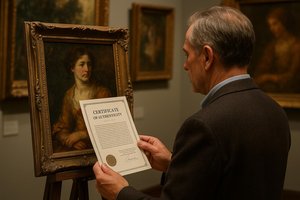
For the professional collector, the procurement manager, or the institutional buyer, the responsibility of verification is paramount. Acquiring art is an investment of significant capital, and the cost of error can be catastrophic. A disciplined protocol of due diligence is therefore non-negotiable. This begins with a thorough investigation of the artwork's provenance, ensuring that every link in the ownership chain is documented and verifiable. It involves requesting certificates of authenticity and examining all supporting documentation with a critical eye.
A robust acquisition strategy also includes the utilization of expert services for independent appraisal and authentication. Relying solely on the seller's assertions is a risk no serious collector should take. Engaging certified appraisers and utilizing scientific analysis when necessary provides the necessary layers of protection. In an increasingly globalized market, where works move rapidly across borders, maintaining a rigorous standard of verification ensures that every acquisition is not only a triumph of aesthetic taste but also a secure and legitimate addition to one's collection or corporate portfolio.
At ArtsDot.com, we understand the profound importance of authenticity and the meticulous care required to preserve the integrity of art history. Whether you are seeking a hand-painted oil reproduction of an Old Master or commissioning a bespoke portrait, our commitment to academic excellence and transparent processes ensures that every piece meets the highest standards of quality. We invite professionals and collectors alike to explore our vast library of 465,000 paintings and experience a service built on reliability, expertise, and a passion for the enduring truth of art.