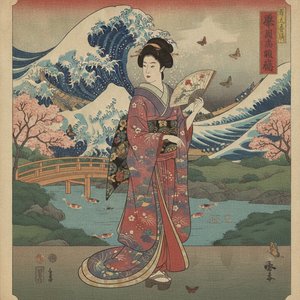
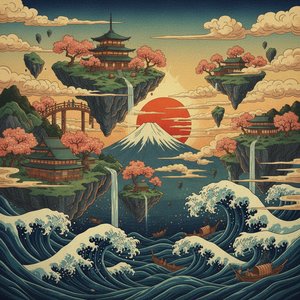
The Essence of Ukiyo-e: Understanding the 'Floating World' for Modern Interiors
 Ukiyo-e
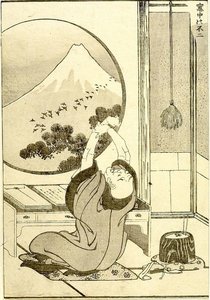
Ukiyo-e (浮世絵) is a genre of Japanese art that flourished from the 17th through 19th centuries. Its artists produced woodblock prints and paintings of such subjects as female beauties; kabuki actors and sumo wrestlers; scenes from history and folk tal...
To step into a space adorned with Japanese landscape painting is to enter the
"floating world," or
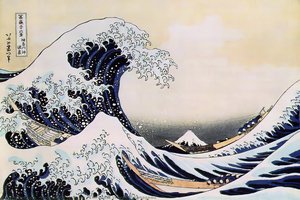
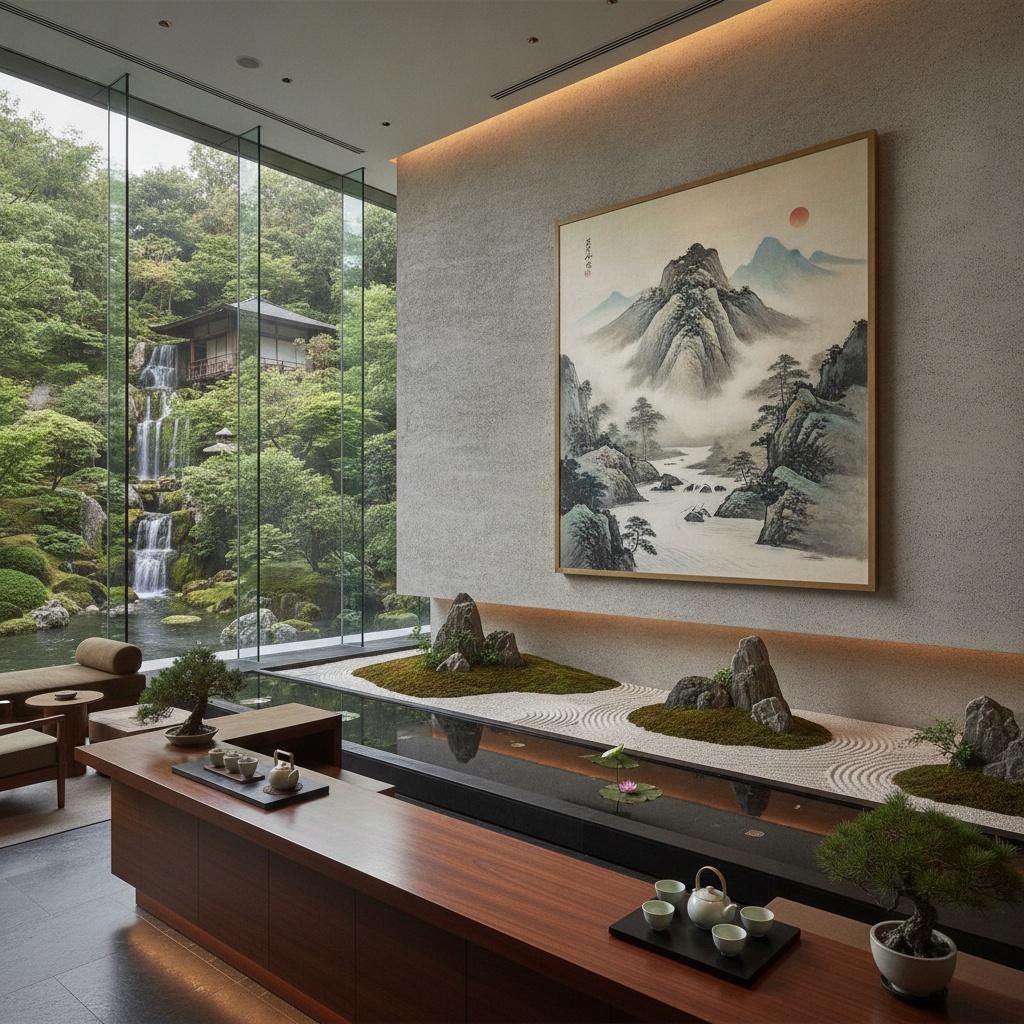
ukiyo-e, a concept that transcends mere decoration to offer a profound psychological shift. Emerging from the vibrant Edo period, this genre was never intended to be static or heavy; rather, it captures the ephemeral beauty of life’s fleeting moments—the gentle drift of snow at Shinagawa, the rhythmic surge of a wave, or the quiet vitality of a riverside waterfall. For the modern hotel designer, integrating these works offers more than an aesthetic choice; it provides a narrative anchor for guests seeking respite from the frantic pace of contemporary life. These prints and paintings do not demand attention through grandiosity but invite contemplation through their ability to freeze time, making them ideal for lobbies and lounges where atmosphere is paramount.
The historical weight of
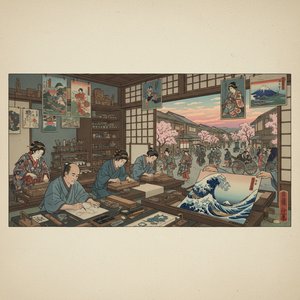
ukiente lies in its connection to the rise of the merchant class, a period when art moved from the exclusive domain of the elite into the hands of those celebrating everyday joys. This democratization of beauty means that these landscapes are inherently relatable, featuring scenes of travel, nature, and community that resonate across cultures. When selecting pieces for a hospitality project, one is not merely choosing an image but adopting a philosophy of presence. By utilizing the bold outlines and flat, vibrant color planes characteristic of woodblock masters, designers can introduce a sense of structured serenity that balances the complex textures of modern architectural materials.
Core Zen Principles: Integrating Wabi-Sabi and Yūgen into Hospitality Spaces
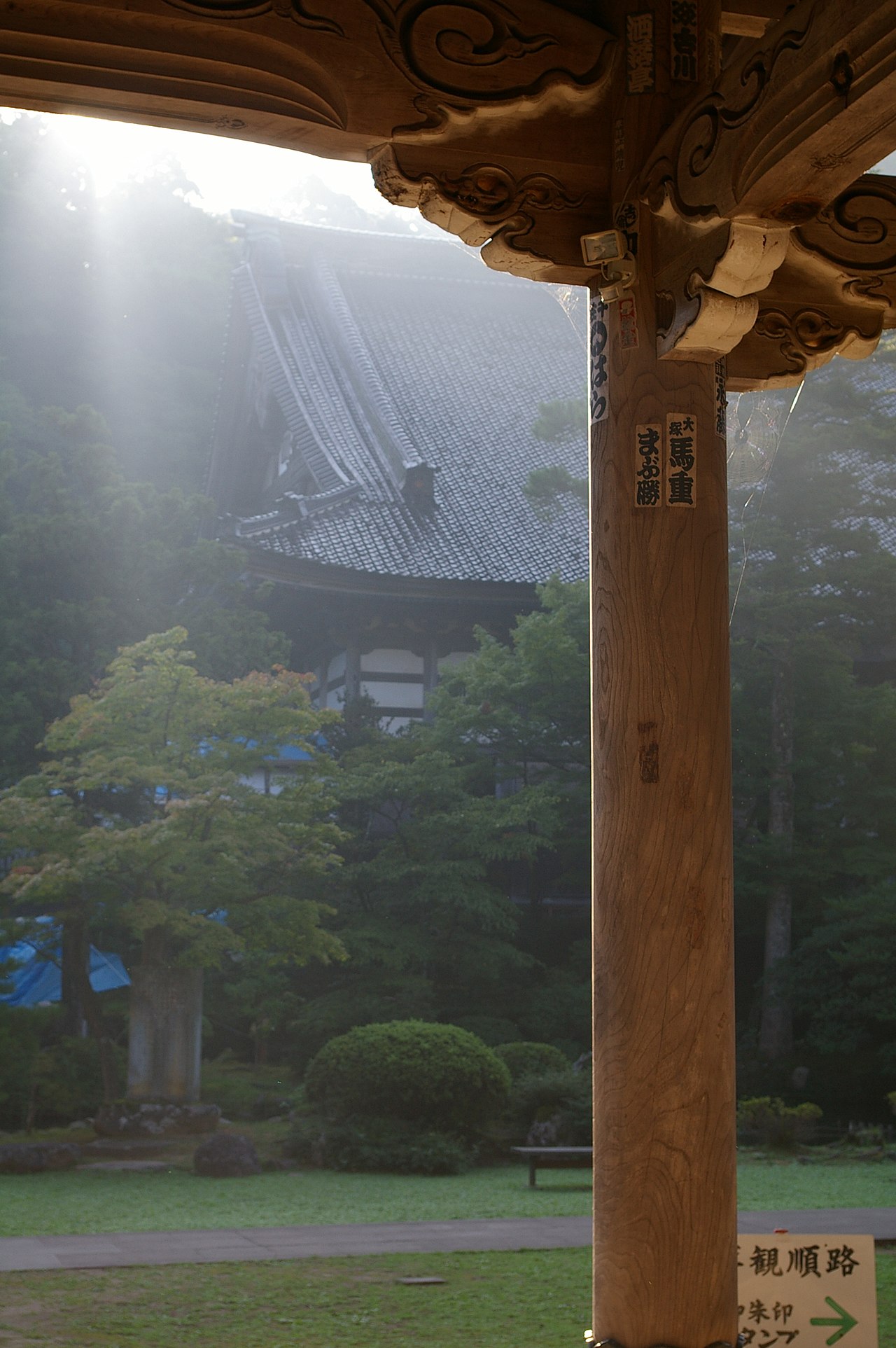 Japanese aesthetics
Japanese aesthetics comprise a set of ancient ideals that include wabi (transient and stark beauty), sabi (the beauty of natural patina and aging), and yūgen (profound grace and subtlety). These ideals, and others, underpin much of Japanese cultural ...
The true power of Japanese landscape art in professional interior curation lies in its adherence to ancient aesthetic ideals:
wabi,
sabi, and
yūgen. These are not merely artistic styles but foundational pillars of Zen philosophy that can transform a sterile corporate environment into a soulful sanctuary.
Wabi celebrates the beauty found in simplicity and imperfection, while
sabi finds grace in the natural patina of aging and the passage of time. In a luxury hotel setting, incorporating artworks that evoke these principles—such as a landscape featuring weathered rocks or a muted, wintry scene—adds a layer of perceived history and authenticity to a new build.
Furthermore, the concept of
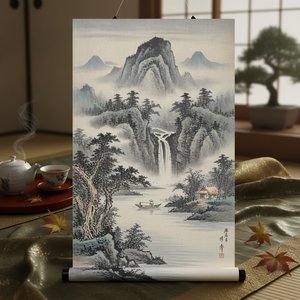
yūgen—a profound, mysterious grace—is achieved through the subtle use of depth and shadow in Japanese compositions. It is the art of suggesting more than what is visible, much like the way Hokusai might use mist or water to partially obscure a mountain peak. For a designer, this translates to creating "visual breathing room." By placing works that embody
yūgen in transitional spaces like corridors or elevator foyers, you can create an atmosphere of quiet intrigue, encouraging guests to slow their gait and engage more deeply with their surroundings. This subtle manipulation of mood is what separates standard decor from high-end, curated art direction.
Mastering Composition: Utilizing Hokusai and Hiroshige for Large-Scale Wall Features
 Hokusai's Masterpieces: 25 Iconic Prints & Paintings for Art Lovers | ArtsDot
Introduction To embark on a journey through the 25 most celebrated artworks of Katsushika Hokusai is to enter a world where ink blossoms into waves, mountains breathe with life, and everyday scenes resonate with profound beauty. These pieces aren’t m...
When addressing expansive architectural canvases, such as grand hotel lobbies or feature walls in fine-dining establishments, the works of
Katsushika Hokusai and
Ando Hiroshige offer unparalleled compositional strength. Hokusai’s genius lies in his ability to balance immense natural energy with meticulous detail; his iconic waves and mountains possess a kinetic power that can command a room without overwhelming it. His use of bold, decisive lines provides a structural framework that complements modern, minimalist architecture, acting as a focal point that draws the eye through the space.
In contrast, Hiroshige offers a more poetic, atmospheric approach, often focusing on the seasonal transitions and the soft light of different times of day. His landscapes are masterclasses in perspective, utilizing foreground elements to lead the viewer’s gaze into a distant, tranquil horizon. For large-scale installations, designers can utilize
multi-panel layouts—splitting a single landscape across three, four, or even five panels. This "multi-panel" trend is particularly effective for wide walls or staircases, as it breaks the visual weight of the artwork while maintaining a cohesive, modern architectural flow. Such large-format works, whether rendered as massive canvas rolls or meticulously stretched oil reproductions, allow the landscape to become an immersive environment rather than just a hung object.
Materiality and Texture: Selecting Between Hand-Painted Oils and Archival Giclée Prints
Glossary of ukiyo-eThis is a list of terms frequently encountered in the description of ukiyo-e (浮世絵)-style Japanese woodblock prints and paintings. For a list of print sizes, see below. Aizuri-e (藍摺絵); "blue picture" Aka-e (赤絵); "red picture" Aratame (改); "examined" c...
A critical decision for any procurement manager or designer is the choice of medium, as the tactile quality of the art dictates the perceived value of the space.
Hand-painted oil reproductions offer a level of prestige that digital prints cannot replicate. Because these works are created by hand on 100% cotton canvas, they possess visible brushstrokes and an impasto texture that catches the light, creating a dynamic surface that changes as guests move through the room. The depth of color in an oil painting—achieved through the careful layering of pigments and the use of protective damar varnish—provides a richness that is essential for high-end, luxury branding.
For projects with different budgetary constraints or rapid installation timelines, archival Giclée prints serve as a highly reliable alternative. These are not mere posters; they are high-fidelity reproductions using 12-color archival inks that boast a longevity rating of up to 100 years. While they lack the physical relief of oil paint, they offer incredible precision in capturing the delicate gradations of color found in original woodblock prints. For designers, the choice often hinges on the specific "soul" required for the room: use hand-painted oils for primary focal points like reception desks to signal luxury, and utilize high-quality Giclée prints for secondary spaces where a consistent, clean aesthetic is required across multiple rooms.
Strategic Implementation: Curating Multi-Panel Landscapes for Hotel Corridors and Lobbies
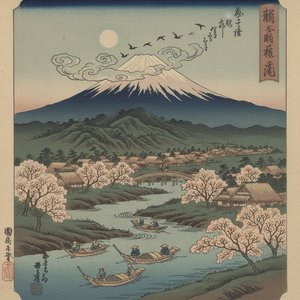 Ukiyo-e's Poetic Visionary: Hiroshige Ando & the Transformation of Landscape in 19th-Century Japan
The Floating World: Contextualizing Ukiyo-e and Edo Period Japan Wikipedia: Ukiyo-e Ukiyo-e (浮世絵) is a genre of Japanese art that flourished from the 17th through 19th centuries. Its artists produced woodblock prints and paintings of such subjects as...
All professional art procurement and custom reproduction services described in this guide are provided by ArtsDot.com. We specialize in high-volume, museum-quality reproductions for the hospitality and corporate sectors, offering everything from large-scale murals to bespoke oil paintings tailored to your specific interior design requirements.