
The Roots of Observation: From Ancient Herbals to Scientific Realism
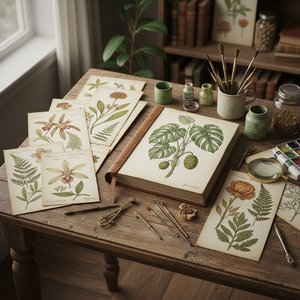 The Flourishing Canvas: A Historical & Artistic Exploration of Botanical Illustration
The Roots of Observation: Early Botanical Depictions & Medicinal Herbals Wikipedia: Botanical illustration Botanical illustration is the art of depicting the form, color, and details of plant species. They are generally meant to be scientifically des...
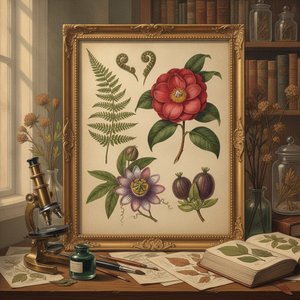
To wander through the annals of art history is to witness a profound, ancient dialogue between humanity and the verdant world. Long before the advent of sophisticated scientific tools or the clarity of the camera lens, our understanding of the plant kingdom was inextricably linked to the skill and patience of the artist. The earliest glimpses into this relationship are not found in modern textbooks but are etched into the walls of ancient tombs and temples, where stylized depictions of flora served as symbolic elements within a broader cosmological framework. These early works, while perhaps lacking the rigorous anatomical accuracy we demand today, reveal a fundamental human impulse to categorize and interpret the natural world through visual storytelling.
As centuries progressed, this impulse evolved from symbolism toward a burgeoning need for utility and survival. During the medieval period, monasteries became vital centers for preserving botanical knowledge. Within these cloistered gardens, monks cultivated plants not merely for sustenance but for their medicinal properties. Their herbals—illustrated compendiums detailing plant uses—became essential resources for healing. While works like the 12th-century Circa Instans relied heavily on copied woodcuts and artistic conventions that often prioritized symbolic meaning over strict realism, they laid the groundwork for a more disciplined approach to observation. This era marked the transition from art as myth to art as a tool for human advancement, setting the stage for the Renaissance revolution in naturalism.
Masters of the Brush: The Legacy of Kerner, Fitch, and Eaton
 johann simon von kerner
Johann Simon von Kerner: A Pioneer of Botanical Illustration Born in Kirchheim bei Teck, Germany, in 1755, Johann Simon von Kerner’s life was inextricably linked to the burgeoning world of botany and scientific illustration. His legacy rests primaril...
The golden age of botanical illustration arrived when the artist’s eye became indistinguishable from the scientist’s lens. Johann Simon von Kerner, a pioneer born in 1755, epitomizes this era of dedication. His monumental twelve-volume work, Hortus Sempervirens, stands as a testament to meticulous observation and an unwavering commitment to capturing the very essence of plant life. Kerner did not merely paint; he documented, striving to bring the complexity of the botanical world within reach of a wider, curious audience during a period of unprecedented scientific advancement.
Following this lineage of precision, the 19th century introduced figures who transformed the genre through sheer technical virtuosity. Walter Hood Fitch, a Scottish master, brought an extraordinary eye for detail honed from his early experience in fabric printing. His ability to render botanical specimens with such accuracy revolutionized scientific study and public appreciation alike. Similarly, the delicate intersection of scientific precision and pure aesthetic grace is found in the works of Mary Emily Eaton. Her watercolor compositions, such as her Illustrations of multiple cactus species, serve as a window into a world where the rugged, resilient textures of the desert meet an ethereal touch. In her hands, the prickly spines of the Echinocereus sciurus are rendered with such care that one can almost feel their texture, transforming a scientific plate into a curated botanical narrative.
The Intersection of Science and Aesthetics: Precision as Artistry
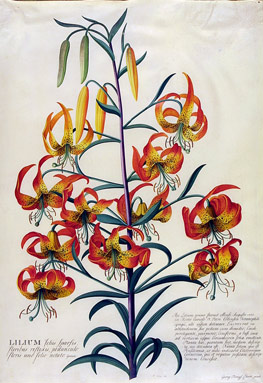 Botanical illustration
Botanical illustration is the art of depicting the form, color, and details of plant species. They are generally meant to be scientifically descriptive about subjects depicted and are often found printed alongside a botanical description in books, ma...
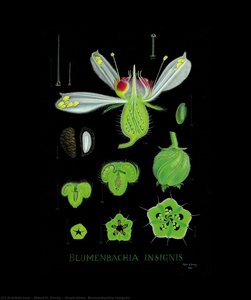
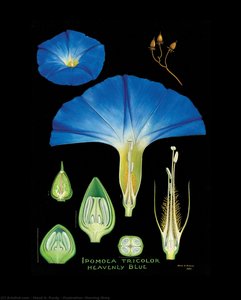
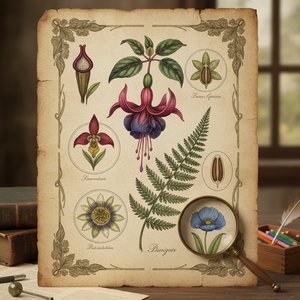
At its most profound level, botanical illustration exists in the delicate space where scientific description meets pure aesthetic grace. It is an art form defined by morphology—the study of form, color, and structural detail. A successful botanical illustration must satisfy the rigorous demands of taxonomists while maintaining a visual harmony that captivates the soul. This requires more than just talent; it requires an understanding of plant anatomy, from the delicate veins of a petal to the complex arrangement of a seed pod. The creation of such works often involves a collaborative spirit, where illustrators work in consultation with scientific authors to ensure every stroke serves a dual purpose: to inform and to enchant.
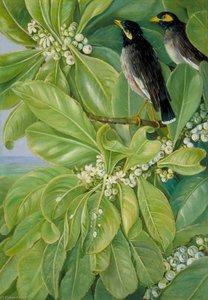
This duality is perhaps best observed in the use of medium. While many illustrations utilize the translucent, glowing qualities of watercolor to capture the light within a bloom, others employ oils or ink to emphasize structural rigidity. The goal remains the same: to achieve a level of realism that allows the viewer to perceive the life cycle and habitat of the subject. When executed with mastery, these works transcend mere documentation; they become objects of contemplation, where the interplay of light and shadow breathes life into various forms, turning a specimen into a living, breathing ecosystem on the page.
Botanical Landscapes: From Medicinal Compendities to Living Museums
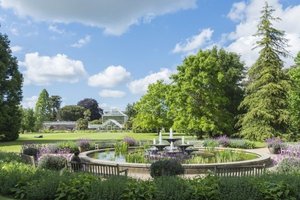 Cambridge University Botanic Garden
A Living Chronicle of Botanical Artistry Nestled within the historic heart of Cambridge, the Cambridge University Botanic Garden serves as much more than a mere horticultural display; it is a living, breathing masterpiece where scientific inquiry mee...
The history of botanical art is also a history of the spaces that nurtured it. The evolution from small-scale medicinal herbals to sprawling, institutionalized gardens reflects a growing global interest in natural history. The Cambridge University Botanic Garden, established in 1762, serves as a living chronicle of this artistry. It is a place where scientific inquiry meets profound aesthetic grace, a sanctuary where the footsteps of intellectual giants like Charles Darwin once resonated. Here, the landscape itself is a masterclass in intentional composition, blending phylogenetic organization with the breathtaking allure of a romantic landscape.
In a similar vein, the Museo Botanico of Florence offers a glimpse into the Renaissance legacy of botanical patronage. Founded by Cosimo I de’ Medici as the Giardino dei Semplici, this historic garden reflects the profound interest of the Medici family in knowledge and beauty. Such institutions demonstrate that botanical art is not merely found on paper but is lived within the very architecture of our gardens. These spaces, with their historic greenhouses and carefully orchestrated pathways, mirror the order and complexity found within nature itself, providing a sensory experience that is both intellectually stimulating and deeply moving.
Preserving Nature's Detail: Techniques in Watercolor and Oil Illustration
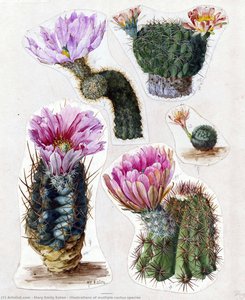 Illustrations of multiple cactus species
A Botanical Symphony in Watercolor In the delicate intersection of scientific precision and pure aesthetic grace lies Mary Emily Eaton’s Illustrations of multiple cactus species . This exquisite watercolor composite serves as a window into a world wh...
The enduring beauty of botanical art lies in the technical mastery required to capture nature’s true essence. The choice of medium is critical to the final impact of the work. Watercolor, as seen in the works of Mary Emily Eaton, allows for a luminous quality where colors seem to glow from within the paper, particularly effective for capturing the soft, velvety petals of desert blooms. This transparency allows for a layered depth that mimics the organic translucency of living flora.
< Precisely rendered details—the minute spines of a cactus or the subtle gradients of a leaf—require an artist to possess both a steady hand and a deep understanding of pigment behavior. In contrast, oil-based illustrations can offer a more robust, textured approach, emphasizing the structural complexity and physical presence of a specimen. Whether through the delicate washes of watercolor or the rich, impasto textures of oil, the objective remains the preservation of detail. These techniques ensure that the artwork serves as a permanent record, protecting the fleeting beauty of a bloom against the passage of time, much like the archival inks and high-quality canvases used in modern professional reproductions to ensure these historical masterpieces continue to inspire generations.