Introduction
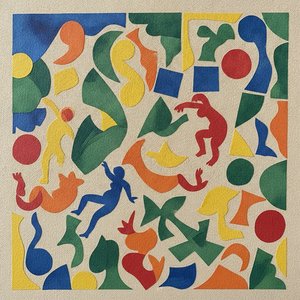
To step into the world of Henri Matisse is to abandon the constraints of reality and surrender to the pure, unadulterated power of color. His work does not merely represent the world; it reinterprets it through a lens of vibrant emotion and rhythmic movement. As we prepare to journey through his top twenty-five masterpieces, we are not just looking at canvases, but witnessing the evolution of a man who transformed a period of physical convalescence into a lifelong revolution of the senses.
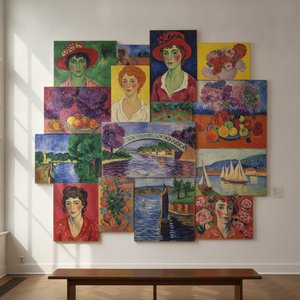
Born in the quiet French town of Le Cateau-Cambrésis, Matisse’s early life was far removed from the avant-garde circles of Paris. Yet, following a transformative bout with illness, he discovered that pigments could speak more eloquently than any legal brief. He emerged as the leader of the Fauves —the 'wild beasts'—a group of artists who shocked the art world by using non-naturalistic, explosive hues to convey feeling rather than strict imitation. From the intense, saturated palettes of his early Fauvist period to the fluid, lyrical simplicity of his later cut-outs, Matisse’s trajectory redefined the boundaries of modern art.
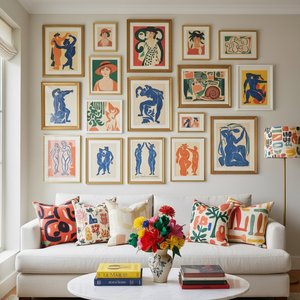
These works remain profoundly meaningful today because they tap into a universal human desire for joy and vitality. In an era of complexity, Matisse offers a return to essence—the way light dances on a Mediterranean shore, the way a single line can suggest the grace of a dancer, or how a bold splash of red can command an entire room. His ability to balance structural discipline with expressive freedom continues to inspire designers, decorators, and collectors alike.
In the following selection, we will explore the milestones of his career. We will move from the daring, thick brushstrokes of his early oil paintings to the masterful compositions that define his legacy, offering you a curated guide to the most impactful moments in the history of color.
Harmony in Red - Henri Matisse
 Harmony in Red - Henri Matisse
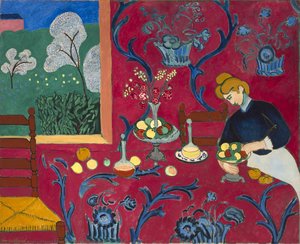
In Harmony in Red by Henri Matisse, the lines aren’t merely drawn; they are choreographed . This is not a simple composition of a domestic interior; it is a dance frozen in time . As one of the most significant entries in our collection of the top 25 artworks of Henri Matisse, this piece demonstrates how the artist liberated color from reality to create pure emotion.
The canvas is an explosion of saturated crimson and deep magenta, where the wallpaper and tabletop merge into a single, rhythmic pulse. Matisse uses bold, flattened forms to depict a woman peeling fruit, turning a quiet moment of domesticity into a vibrant symphony of light and pattern. The interplay of warm reds against cool greens creates a visual tension that feels both energetic and serene. What if your living room could hold that same balance? What if your walls could breathe rhythm ? This masterpiece invites you to experience a world where color provides the structure, making even the most complex visual chaos feel like perfect harmony.
Le bonheur de vivre (The Joy of Life) - - Henri Matisse
 Le bonheur de vivre (The Joy of Life) - - Henri Matisse
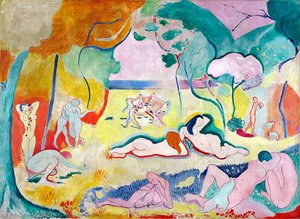
Step into a sun-drenched dreamscape where the boundaries between humanity and nature dissolve into pure, radiant light. In 1906, Henri Matisse unveiled Le bonheur de vivre (The Joy of Life), a monumental masterpiece that redefined the possibilities of color. This work does not merely depict a scene; it radiates an atmosphere of uninhibited freedom and rhythmic vitality. Through the lens of Fauvism, Matisse utilizes bold, non-naturalistic hues—vibrant yellows, lush greens, and soft pinks—to create a landscape that feels more like a memory of happiness than a literal place.
The composition flows with an energetic, almost musical cadence, as simplified figures dance and recline amidst stylized foliage. The thick, expressive brushwork and flattened perspective invite the viewer to abandon logic and embrace pure emotion. For any modern interior, integrating such a legendary piece from the top 25 artworks of Henri Matisse offers more than decoration; it brings a transformative energy. Its luminous palette and sense of pastoral peace can breathe life into corporate lounges or private collections, serving as a constant, inspiring reminder of life's inherent beauty and boundless joy.
Woman with a Hat - Henri Matisse
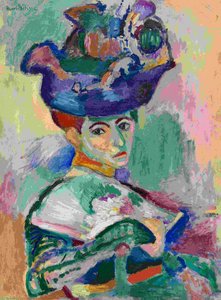 Woman with a Hat - Henri Matisse
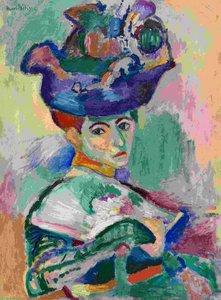
In Woman with a Hat , the lines of Matisse’s brush aren’t merely drawn; they are choreographed in a riot of spontaneous energy. This 1905 masterpiece, a portrait of his wife Amélie, serves as the definitive manifesto of Fauvism. Here, color is not a tool for description but a language of pure emotion. The composition is a dance frozen in time , where vibrant, non-naturalistic hues—electric greens, startling violets, and sun-drenched yellows—collide to shatter traditional perspective.
The subject’s elaborate hat, adorned with textures that suggest movement and life, acts as the focal point of this chromatic revolution. Matisse uses thick, gestural impasto to create a surface that feels alive, inviting the viewer to experience the weight and rhythm of every stroke. As one of the top 25 artworks of Henri Matisse , this piece challenges the boundaries of modern art by replacing realism with raw, subjective intensity. What if your walls could breathe rhythm ? This painting proves that even in a sea of visual chaos, Matisse finds a profound, harmonious balance.
Dance (II), Eremitaget - Henri Matisse
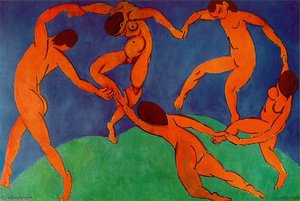 Dance (II), Eremitaget - Henri Matisse
In Dance (II), Eremitaget by Henri Matisse, the composition achieves a profound structural harmony through its rhythmic, circular geometry. The arrangement of simplified, nude figures creates a continuous loop of motion, where bold, angular lines and organic shapes intersect to establish a sense of timeless perfection. This balance is not merely aesthetic; it is foundational, anchoring the work within the top 25 artworks of Henri Matisse by capturing a primal, universal energy.
The striking interplay between the intense orange figures and the deep, saturated blue background offers a masterclass in color theory. This high-contrast palette, paired with the grounded green landscape, mirrors the principles of modern minimalist design. The flattened perspective and reduction of detail create a clean, contemporary aesthetic that effortlessly integrates into sophisticated, modern interiors. For collectors and decorators, this piece serves as a powerful focal point, where the internal equilibrium of Matisse's vision provides a sense of stability and enduring elegance to any curated space.
Blue Nude III - Henri Matisse
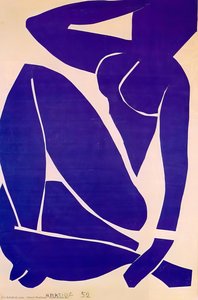 Blue Nude III - Henri Matisse
A profound, deep purple-blue dominates Blue Nude III by Henri Matisse, establishing a mood of quiet introspection and nocturnal serenity. This masterpiece, a pinnacle of his late-career cut-paper technique, showcases a masterful command of color where the stark silhouette interacts with negative space to create a sense of weightless grace. The high contrast between the saturated indigo tones and the light, neutral background is precisely why this work remains a cornerstone among the top 25 artworks of Henri Matisse .
For professionals managing large-scale interior projects, such as hotel lounges or modern corporate suites, this piece offers unparalleled versatility. The cool, monochromatic palette can be used to anchor a room's emotional lighting, providing a sophisticated focal point that complements minimalist or contemporary decor. Integrating this level of abstract form into a dining room or gallery space introduces an atmosphere of calm and intellectual depth, making it an essential selection for those seeking to curate spaces defined by modern elegance and timeless tranquility.
Luxe, Calme, et Volupté (compositional study) - Henri Matisse
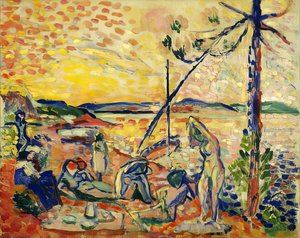 Luxe, Calme, et Volupté (compositional study) - Henri Matisse
To step before Luxe, Calme, et Volupté (compositional study) by Henri Matisse is to witness the exact moment the foundations of modern art began to shift. Painted in 1904, this work serves as a vital bridge between the structured traditions of the past and the explosive, emotive freedom of the Fauvist movement. The canvas vibrates with a coastal symphony, where sun-drenched hues and rhythmic, thick brushstrokes capture a sense of profound leisure and warmth.
As one of the top 25 artworks of Henri Matisse, this study is essential for its exploration of color theory; it moves away from mere representation toward a subjective, emotional reality. The palette is a rich tapestry of intense, warm tones that reflect a sunset's glow, creating a textured surface where light and shadow dance across organic forms. This piece stands out not just for its historical significance, but for its ability to evoke a sense of tranquility and vitality. Even today, integrating such a masterpiece into a professional or residential space offers an unparalleled way to transform a room into a vibrant, soulful sanctuary.
Portrait of Mme. Matisse - Henri Matisse
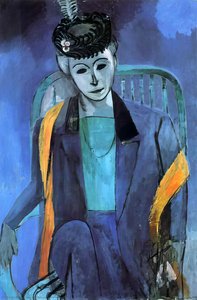 Portrait of Mme. Matisse - Henri Matisse
Acquiring a piece like Portrait of Mme. Matisse by Henri Matisse is more than an aesthetic choice; it is a profound investment in the legacy of modernism and a testament to refined taste for any discerning collector. As one of the top 25 artworks of Henri Matisse, this 1905 masterpiece captures the precise moment the artist began to dismantle traditional representation in favor of emotional truth. The painting serves as a cornerstone of Fauvist history, showcasing a revolutionary use of color where a vibrant orange shawl clashes dramatically against deep indigos and cool purples.
The visible impasto and gestural brushwork create a tactile depth that commands attention, offering a window into the intimate, contemplative world of Amélie Matisse. For those curating high-end corporate spaces or luxury hospitality interiors, this work provides unparalleled aesthetic authority. A high-quality, hand-painted reproduction of this caliber brings the same commanding presence and historical prestige to a modern room, acting as a sophisticated focal point that bridges the gap between early 20th-century innovation and contemporary architectural elegance.
Landscape viewed from a Window - Henri Matisse
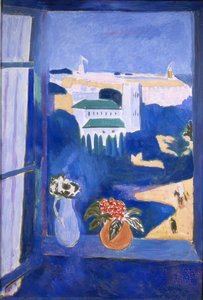 Landscape viewed from a Window - Henri Matisse
In Landscape viewed from a Window (1913), Matisse invites us to step through a portal where the boundaries between domestic intimacy and the vast, sun-drenched world dissolve. This masterpiece serves as a profound study of color and atmosphere, capturing the essence of a coastal vista through a deep blue window frame that acts as both a border and a bridge. The composition is anchored by vibrant floral arrangements—one bursting with crisp white blossoms and another with fiery red—which mediate the space between the viewer and the Mediterranean light.
Reflecting the transformative influence of his Moroccan travels, Matisse utilizes bold, flattened planes and energetic brushstrokes to prioritize emotional resonance over literal representation. The cool blues of the landscape and the simplified forms of distant buildings create a sense of airy openness, characteristic of his Fauvist mastery. Owning this work is not merely a purchase; it is an inheritance of a lineage of taste. Through ArtsDot.com, this legacy of Matisse’s revolutionary vision becomes part of your own walls, allowing you to experience the rhythmic movement and tranquil light of a true modern icon.
Basket with Oranges - Henri Matisse
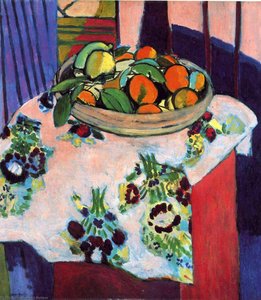 Basket with Oranges - Henri Matisse
To encounter Basket with Oranges by Henri Matisse is to witness the very moment color breaks free from the constraints of reality. As one of the most vital entries in our collection of the top 25 artworks of Henri Matisse, this 1913 masterpiece serves as a radiant testament to the Fauvist spirit. The canvas vibrates with an intense, non-naturalistic energy, where the sun-drenched citrus tones of oranges and lemons collide with deep, expressive shadows and a richly patterned floral cloth.
Matisse utilizes thick, gestural brushstrokes that lend a tactile, sculptural quality to the fruit, creating a sense of abundance and vitality that feels almost palpable. For the discerning collector or professional decorator, this piece offers more than mere decoration; it provides a focal point of modernist elegance. Its bold, simplified forms and high-contrast palette bring a sophisticated warmth and a sense of historical prestige to luxury interiors, making it an enduring icon of 20th-century innovation and timeless aesthetic beauty.
Goldfish - Henri Matisse
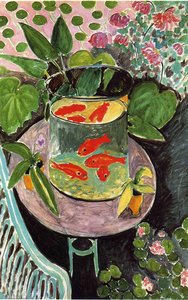 Goldfish - Henri Matisse
There is a profound, quiet magic in Goldfish by Henri Matisse that transcends the boundaries of a simple still life. It captures that universal moment of stillness found when one gazes into a tranquil corner of a home, finding a world of movement within a glass bowl. As one of the most essential pieces among the top 25 artworks of Henri Matisse, this 1911 masterpiece stands as a pinnacle of Post-Impressionist mastery. Matisse utilizes a vibrant, emotive palette—bright reds against lush, verdant greens—to create an indoor oasis that feels both intimate and expansive.
The painting’s enduring influence lies in its ability to use flattened perspective and bold, expressive brushstrokes to evoke deep emotional resonance. The way the light interacts with the water and the surrounding flora invites a sense of contemplation and peace. At ArtsDot.com, we honor this legacy through our high-quality, hand-painted oil reproductions. Our artists meticulously recreate the thick impasto textures and the rhythmic flow of Matisse’s lines, allowing you to bring this iconic symbol of vitality and serenity into your own professional or personal space with absolute fidelity to the original's soul.
L'Atelier rouge Huile sur Toile - (181x219) - Henri Matisse
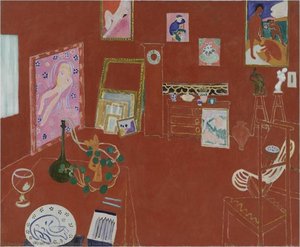 L'Atelier rouge Huile sur Toile - (181x219) - Henri Matisse
What if I told you that L'Atelier rouge Huile sur Toile - (181x219) by Henri Matisse was born from a moment of rebellion—a stroke of defiance against the ordinary? This masterpiece is not merely a depiction of a studio; it is a manifesto of color and form. Its inclusion in our top 25 artworks of Henri Matisse is demanded by its revolutionary approach to space, where the boundaries between object and atmosphere dissolve into a rich, reddish-brown symphony.
In this work, Matisse utilizes the fragmented geometry of Synthetic Cubism and the vibrant energy of Fauvism to transform a cluttered interior into a harmonious, rhythmic experience. The eye wanders through layers of decorative panels, vases, and soft shapes, finding beauty in the organized chaos of creation. At ArtsDot.com, we believe such profound energy should not be confined to museums. By offering high-quality, hand-painted reproductions, we bring this historical rebellion into your professional or personal sanctuary. Imagine this commanding piece hanging in a corporate lobby or a refined home office—turning every glance into a powerful statement of creativity and timeless sophistication.
corner of studio - Henri Matisse
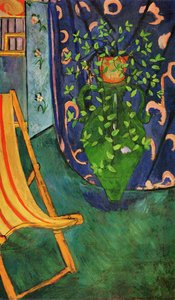 corner of studio - Henri Matisse
In Corner of Studio , Matisse invites us into a private sanctuary where color functions as the primary protagonist. This 1912 masterpiece is more than a mere depiction of an interior; it is a vibrant portal into the Fauvist soul. As you observe the composition, there is a rhythmic energy that follows your gaze—not with judgment, but with a profound sense of artistic vitality . The painting acts as a mirror to the creative spirit, utilizing a daring palette of deep blues, lush greens, and sun-drenched oranges to transform a simple corner into an emotional landscape.
The texture of the work, characterized by thick, unblended brushstrokes, creates a tactile depth that makes the scene feel immediate and alive. A large chair with an orange cushion sits anchored against walls adorned with delicate floral patterns, while a central green vase overflows with verdant foliage. Within this arrangement, Matisse achieves a perfect balance between chaos and harmony. To possess such a piece is to bring a piece of modern art history into your space, reminding you that even the most quiet corners can hold infinite, colorful life.
Auguste Pellerin II - Henri Matisse
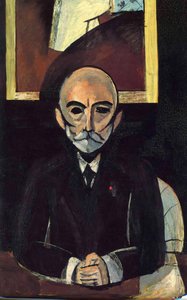 Auguste Pellerin II - Henri Matisse
In the vast landscape of modern art, Auguste Pellerin II by Henri Matisse stands as a profound study of character and the dawn of the Fauvist movement. This portrait is far more than a mere likeness; it is an invitation into a world where color begins to breathe with its own emotional life. Matisse moves away from traditional realism, utilizing simplified, almost geometric forms to anchor the seated figure in a state of quiet, dignified contemplation.
The composition is masterfully balanced, using dramatic lighting and sharp, expressive angles to accentuate the subject's features against a muted, dark background. While the palette avoids the explosive, non-naturalistic hues seen in his later works, there is an unmistakable departure from academic precision. Instead, we see the emergence of a technique focused on building form through bold color application and structural depth. To possess such a piece is to bring a sense of introspective calm and historical weight into your space—transforming a simple wall into a gallery of the soul where wisdom and melancholy meet.
The lute - Henri Matisse
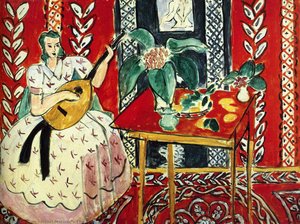 The lute - Henri Matisse
In the quiet resonance of 1943, The Lute by Henri Matisse emerges as a sanctuary of light and rhythm, frozen in a moment of profound musical serenity. As one of the top 25 artworks of Henri Matisse, this masterpiece stands immortalized for its ability to transform a simple scene of musical devotion into a vibrant symphony of color. The canvas breathes with the energy of the Fauvist tradition, where bold, fiery reds and lush greens do not merely represent objects but vibrate with an emotional frequency that mimics the strings of the instrument itself.
The composition is a masterclass in decorative harmony; the delicate floral motifs on the subject's white attire weave seamlessly into the surrounding botanical elements, creating a sense of ordered abundance. For the modern collector or professional decorator, this work offers more than historical significance—it provides a sophisticated focal point that brings a sense of rhythmic calm and structural elegance to contemporary interiors. Matisse’s ability to balance intense color with peaceful ornamentation makes The Lute an enduring icon of artistic tranquility.
untitled (2092) - Henri Matisse
 untitled (2092) - Henri Matisse
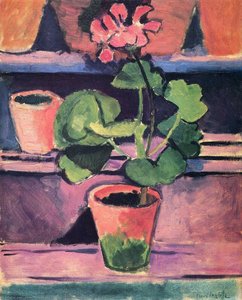
To stand before a masterpiece is to witness the moment color broke free from the constraints of reality. In untitled (2092) by Henri Matisse , we encounter a profound meditation on the power of pigment. This work stands as a vital entry in our collection of the top 25 artworks of Henri Matisse because it perfectly encapsulates the rebellious spirit of the Fauvist movement. The composition, centered around lush purple flowers and verdant leaves, bypasses intellectual observation to speak directly to the senses.
Matisse utilizes thick, tactile brushstrokes that create a sculptural depth, where deep violets and warm ochre tones exist in a state of vibrant tension. There is no attempt at traditional shading; instead, the unmodulated hues and heavy application of paint bring a pulse of spiritual energy to the scene. For the modern collector or professional decorator, this piece offers more than historical significance—it provides an emotional anchor. The way the light seems to breathe within the pigments ensures that this work continues to transform contemporary spaces, bringing a timeless, sophisticated vitality to any curated environment.
The Three O'Clock Sitting - Henri Matisse
 The Three O'Clock Sitting - Henri Matisse
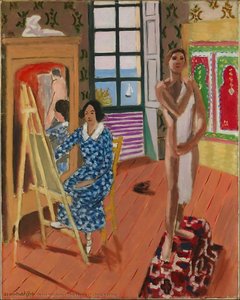
Owning The Three O'Clock Sitting by Henri Matisse isn’t merely a purchase; it is an inheritance of the Fauvist spirit. As one of the most significant pieces in our collection of the top 25 artworks of Henri Matisse, this 1924 masterpiece invites you into a sun-drenched studio in Nice, where color becomes a language of its own. The scene captures a profound moment of domestic tranquility, featuring three women amidst a vibrant arrangement of furniture and Mediterranean light. Matisse utilizes a bold, expressive palette—rich reds, deep blues, and luminous yellows—to create a sensory experience that transcends simple representation.
The composition is masterfully orchestrated; as the figure gazes into a mirror, the painting explores themes of introspection and self-awareness. Through textured brushstrokes and the inclusion of patterned textiles, Matisse weaves a lineage of taste that connects the viewer to the dawn of modernism. With ArtsDot.com, this legacy of light and emotion is no longer confined to museum walls—it is available to become a cornerstone of your own architectural space.
L'Algerienne - Henri Matisse
 L'Algerienne - Henri Matisse
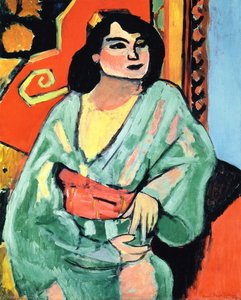
In the pantheon of the top 25 artworks of Henri Matisse , L'Algérienne (1909) stands as a definitive masterclass in the Fauvist revolution. This piece transcends simple portraiture, acting as a vibrant gateway into the artist's exploration of North African influence and emotional color theory. The striking tension between the aggressive, pulsating red background and the serene green of the subject's dress creates a visual energy that remains as impactful today as it was at the turn of the century.
Matisse’s decision to present the subject with an averted gaze invites a profound sense of mystery, forcing the viewer to engage not just with her form, but with the silent narrative of her introspection. This work earns its prestigious placement through its sheer mastery of color as emotion , moving beyond representation toward pure feeling. For the modern collector or interior designer, integrating such a bold, high-contrast masterpiece into a curated space offers more than mere decoration; it introduces a timeless conversation about light, depth, and the enduring power of the human spirit.
Woman in Blue, or The Large Blue Robe and Mimosas - Henri Matisse
 Woman in Blue, or The Large Blue Robe and Mimosas - Henri Matisse
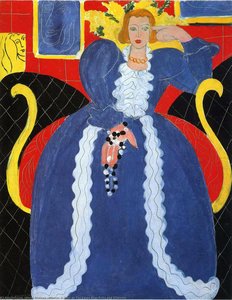
In Woman in Blue, or The Large Blue Robe and Mimosas , Henri Matisse invites us into a sanctuary of pure sensation, where the boundaries between portraiture and atmosphere dissolve. This masterpiece stands as a cornerstone among the top 25 artworks of Henri Matisse because it captures a profound psychological stillness through the sheer power of pigment. The dominant, pulsating blue of the robe acts not merely as fabric, but as an emotional anchor, enveloping the subject in a luminous, dreamlike aura that feels both intimate and infinite.
As you observe the delicate mimosas and the subject's contemplative pose, you witness the height of Matisse's ability to use color as a language of feeling. In today’s modern interiors, where bold, monochromatic accents and minimalist textures drive contemporary design, this painting remains a vital cultural touchstone. It speaks to our enduring desire for spaces that offer serenity through visual impact, proving that Matisse’s revolutionary Fauvist spirit continues to resonate in the most sophisticated curated collections.
Music - Henri Matisse
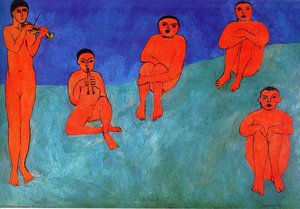 Music - Henri Matisse
Acquiring "Music" by Henri Matisse represents a profound investment in the legacy of modernism and an uncompromising statement of refined taste for the discerning collector. As one of the top 25 artworks of Henri Matisse, this 1910 masterpiece serves as a rhythmic cornerstone of the Fauvist movement, famously commissioned by the visionary Sergey Shchukin. The painting’s market significance is anchored in its ability to translate auditory rhythm into a visual symphony of saturated reds and deep blues, marking a decisive departure from Impressionist subtlety toward raw, emotive power.
The composition captures a primal, collective joy through fluid contours and intertwined figures, where the vibration of a violin or the pulse of a drum is felt through bold, non-naturalistic color. For professionals managing high-end hospitality or luxury residential projects, a high-quality oil reproduction of this work provides an unparalleled focal point. It injects a high-voltage energy and aesthetic authority into modern interiors, offering the same prestigious atmosphere as the original through its masterful depiction of movement and light.
Japanese Woman at the Seashore (also known as Woman beside the Water) - Henri Matisse
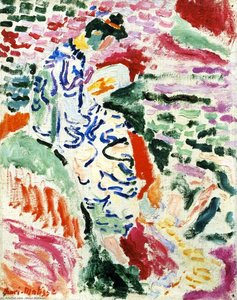 Japanese Woman at the Seashore (also known as Woman beside the Water) - Henri Matisse
In Japanese Woman at the Seashore , Matisse invites us into a vibrant manifesto of Fauvist energy, where color serves as a language of pure emotion. This 1905 masterpiece is far more than a coastal scene; it is a breathtaking intersection of Western innovation and Eastern aesthetic grace. As you stand before this work, you are met with an audacious explosion of reds, oranges, and yellows that defy naturalism to capture the very pulse of a summer day.
The composition breathes with the influence of Japanese Ukiyo-e woodblock prints, utilizing flattened perspectives and simplified, rhythmic forms. A central figure, draped in cool blues, gazes toward the horizon, her presence anchored by the decorative patterns and symbolic birds that dance through the frame. Matisse masterfully weaves a sense of quiet contemplation with wild, uninhibited pigment. To possess such a piece is to invite a transformative energy into your space, turning a simple wall into a profound gallery of the soul where light and tradition converge.
La tristesse du roi - Henri Matisse
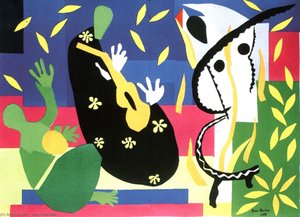 La tristesse du roi - Henri Matisse
In La Tristesse du Roi , Matisse does not merely capture a scene; he composes an emotional atmosphere where color acts as the primary narrator. This 1907 masterpiece is a profound exploration of melancholy, achieved through the radical Fauvist language that defines his most iconic works. As you gaze upon the tableau, you feel the weight of the seated figure’s vulnerability, his raised hands signaling a quiet, internal sorrow that transcends the vibrant landscape.
The light in this piece is not reflected from a sun, but invented through bold, non-naturalistic swathes of crimson, yellow, and deep blue. Matisse uses flattened planes and loose brushstrokes to create a rhythmic tension between the figures—the protective presence of the woman with her umbrella and the melodic isolation of the musician. It is this ability to use intense, emotive pigments to invent a new reality that secures its place among the top 25 artworks of Henri Matisse. To bring this piece into your space is to invite a portal of sophisticated, soulful energy that transforms any wall into a window of modern history.
Reader on a Black Background - Henri Matisse
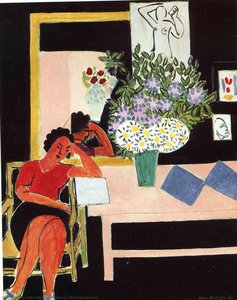 Reader on a Black Background - Henri Matisse
Imagine a sudden hush falling over a crowded room, leaving only the sound of a turning page and the soft weight of a quiet thought. This is the atmosphere Matisse evokes in Reader on a Black Background . In this 1939 masterpiece, we are invited into a private sanctuary of introspection. The stark, obsidian void of the background does not feel empty; rather, it acts as a protective cocoon, pushing the vibrant pinks and delicate floral accents toward the viewer with startling clarity.
The figure, caught in a moment of profound repose with her head resting against a chair, embodies the universal human need for retreat. As one of the top 20 artworks of Henri Matisse , this piece earns its place through its masterful balance of Fauvist color and structural simplicity. It captures that fleeting transition from intellectual engagement to soulful stillness. Integrating such a powerful study of light and shadow into a modern interior can transform a corporate or residential space, replacing daily chaos with a sense of enduring serenity and contemplative grace.
The girl with green eyes - Henri Matisse
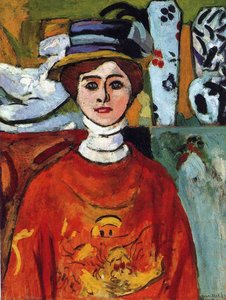 The girl with green eyes - Henri Matisse
To gaze into The Girl with Green Eyes is to encounter a moment of pure, uninhibited emotion. In this 1908 masterpiece, Henri Matisse does not merely paint a portrait; he orchestrates a symphony of color that captures the very essence of vitality. The subject’s striking green eyes serve as luminous anchors amidst a sea of bold, Fauvist reds and vibrant accents, creating a psychological depth that feels both intimate and revolutionary. This work earns its place among the top 25 artworks of Henri Matisse because it represents the definitive break from tradition, where color was liberated to express feeling rather than reality.
The composition—featuring a delicate bird, scattered vases, and an enigmatic clock—creates a dreamlike atmosphere that continues to captivate collectors today. At ArtsDot.com, we honor this legacy through our hand-painted oil reproductions . Our artists meticulously recreate Matisse’s thick, expressive brushstrokes and intense tonal range on 100% cotton canvas, allowing you to bring the transformative power of Fauvism and the soul of modern art into your own professional or private space.
Asia - Henri Matisse
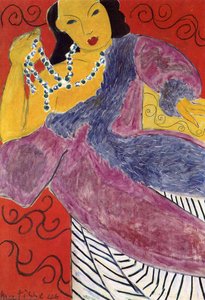 Asia - Henri Matisse
In the pantheon of the top 25 artworks of Henri Matisse , Asia (1946) stands as a profound testament to the artist's late-career mastery over color and emotional resonance. This masterpiece transcends simple portraiture, acting as a symbolic bridge between the vibrant energy of his Fauvist roots and a more meditative, serene maturity. The painting’s striking use of a fiery, pulsating red background creates a sensory immersion that forces the viewer to confront the raw power of pigment.
The work earns its prestigious placement through its unparalleled ability to balance intense, non-naturalistic hues with a dignified, tranquil subject. As the woman sits draped in cool blues and purples, adorned with delicate pearls, Matisse captures an essence of inner strength that remains deeply moving today. For collectors and decorators looking to infuse a space with character, Asia offers more than just visual impact; it provides a timeless conversation piece. Its rhythmic brushstrokes and bold color relationships serve as an inspiration for modern environments, proving that true beauty lies in the harmonious tension between light, shadow, and soul.
Still life (10) - Henri Matisse
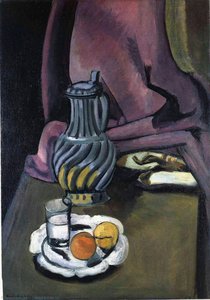 Still life (10) - Henri Matisse
In Still Life (10) , Henri Matisse invites the viewer into a world of quiet contemplation, where the simple arrangement of everyday objects becomes a profound meditation on balance and light. There is an immediate sense of tranquility found in the way the vibrant oranges of the fruit punctuate a sophisticated palette of muted pinks, soft greens, and cool grays. This work does not rely on complex realism; instead, it captures a universal emotional resonance through the rhythmic interplay of simplified geometric forms—circles, cylinders, and rectangles—that dance across the canvas.
As one of the top 25 artworks of Henri Matisse , this piece exemplifies the Fauvist mastery of color as an independent language of feeling. The flattened perspective and bold, intuitive brushstrokes strip away the noise of the outside world, leaving only a pure, sensory experience. Integrating such a masterpiece into your interior can transform a corporate lounge or a private study into a sanctuary of calm elegance, offering a space for deep reflection amidst the vibrant, glowing energy of Matisse’s legendary color theory.
Conclusion
As the light fades on this retrospective journey through Matisse’s vision, we are left with more than just a memory of vibrant pigments and bold contours. To walk through the world of Henri Matisse is to realize that his canvases are not merely relics of a bygone era or static museum treasures; they are living, breathing forces of nature. Even as the sun sets on our exploration, the rhythmic energy of his Fauvist colors and the serene simplicity of his later works continue to pulse with a life that defies time. His mastery reminds us that art is not a window into the past, but a mirror held up to the enduring human spirit—a way to capture the joy, the movement, and the profound emotional truths that define our existence.
These masterpieces remain active participants in our modern world, quietly transforming the spaces we inhabit and the moods we cultivate. Whether through the striking intensity of a single canvas or the sweeping grace of a large-scale composition, Matisse’s legacy invites us to see the beauty in every curve and the emotion in every hue. We invite you to continue this dialogue with color and form by exploring our full collection , where the timeless vitality of his work can find a permanent home within your own surroundings, keeping the flame of his creative revolution burning bright.