Introduction
To step into the world of Max Ernst is to abandon the safety of the rational and surrender to the beautiful, unsettling logic of the subconscious. His work does not merely sit upon a canvas; it breathes with the restless energy of dreams, inviting us to navigate landscapes where the boundaries between the organic and the mechanical, the human and the monstrous, begin to dissolve. As we prepare to journey through his top 25 artworks , we are not just looking at paintings, but entering a psychological labyrinth designed by one of the most profound architects of the Surrealist movement.
Born in Brühl, Germany, Ernst’s creative spirit was forged in the crucible of early 20th-century upheaval. Having witnessed the fragmentation of society during World War I, he found himself at the heart of the Dada movement, using absurdity to protest a world gone mad. His subsequent migration to Paris and integration into the Surrealist circle led him to pioneer revolutionary techniques such as frottage and grattage —methods that allowed chance and texture to dictate form. Through these processes, Ernst bypassed the conscious mind, tapping directly into the primal imagery of the human psyche.
These masterpieces remain profoundly meaningful today because they mirror our own modern complexities. In an era of rapid technological change and shifting realities, Ernst’s ability to find meaning in the irrational and the unexpected resonates with a contemporary audience seeking depth beyond the surface. His works serve as a reminder that there is a hidden, vibrant truth residing just beneath the veneer of everyday life.
In the following selection, we will explore the evolution of his vision—from the chaotic disruptions of Dada to the haunting, dream-drenched compositions that define his legacy. Each piece in this list represents a milestone in art history, offering a window into the enduring power of the Surrealist imagination.
The Elephant Celebes - Max Ernst
 The Elephant Celebes - Max Ernst
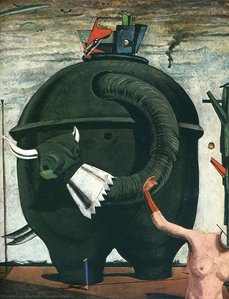
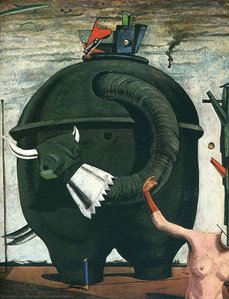
In The Elephant Celebes , Max Ernst delivers a profound masterclass in the unsettling beauty of the subconscious. Created in 1921, this pivotal work stands as a cornerstone of Surrealist imagery, blending the chaotic energy of Dada with a deeply symbolic, dreamlike logic. The composition is dominated by a massive, dark, elephantine figure—a mechanical and organic hybrid that commands the viewer's attention with its heavy, textured presence.
As you observe the piece, the eye wanders through a landscape of illogical juxtapositions: a small red cat perched atop the central mass, and fragmented human forms that evoke feelings of vulnerability and existential mystery. Ernst utilizes a muted yet evocative palette, where deep shadows and soft, diffused light create a sense of disorientation. The thick, impasto-like textures and visible brushstrokes lend a tactile, sculptural quality to the canvas, transforming the painting from a mere image into a visceral experience. To display this work is to invite a sense of profound intrigue and intellectual depth into your space, turning any room into a curated gallery of the human psyche.
Europe after the Rain II - Max Ernst
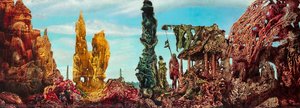 Europe after the Rain II - Max Ernst
There is a gaze in Europe after the Rain II by Max Ernst that follows you—not with judgment, but with understanding . This isn’t merely a landscape; it is a mirror reflecting the profound psychological shifts of a world in upheaval. As one of the most significant entries in our collection of the top 25 artworks of Max Ernst, this 1942 masterpiece captures a surreal, post-apocalyptic vision where organic rock formations and architectural ruins bleed into one another.
The palette is an intense symphony of warm ochres, deep reds, and burnt oranges, contrasted against a piercing blue sky. Through his pioneering use of texture, Ernst creates a world that feels both ancient and alien, where nature aggressively reclaims the remnants of civilization. To hang this piece in a corporate suite or a private gallery is to invite a sense of profound mystery into your space. It does not just watch you; it reminds you that even amidst destruction, there is a breathtaking, transformative beauty waiting to emerge from the wreckage.
Of This Men Shall Know Nothing - Max Ernst
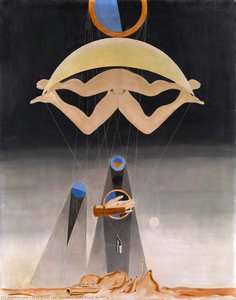 Of This Men Shall Know Nothing - Max Ernst
In the pantheon of Surrealism, Of This Men Shall Know Nothing stands as a profound psychological threshold. Created in 1923, this masterpiece captures Max Ernst at a pivotal transition from the chaotic disruption of Dada to the structured dreamscapes of Surrealism. The painting presents an unsettling yet hypnotic vision: elongated figures suspended by celestial strings, tethered to mysterious blue spheres that glow against a muted, earthy palette of beige and charcoal.
This work earns its place among the top 25 artworks of Max Ernst through its masterful use of symbolic tension and technical depth. The interplay between the heavy, grounded figure and the weightless, floating forms invites us to contemplate the boundary between our conscious reality and the vast, unknowable subconscious. For the discerning collector or interior designer, integrating this piece into a curated space offers more than mere decoration; it introduces a timeless conversation about vulnerability and the infinite. Its haunting textures and enigmatic light serve as a sophisticated focal point, bringing the quiet prestige of historical avant-garde innovation into the modern architectural environment.
Napoleón en el desierto - Max Ernst
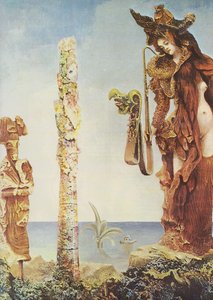 Napoleón en el desierto - Max Ernst
In Napoleón en el desierto by Max Ernst, a dominant palette of warm ochres and weathered earth tones establishes a profound sense of antiquity and psychological depth. This mastery of muted, organic hues is precisely why this piece remains a cornerstone among the top 25 artworks of Max Ernst ; it does not merely depict a scene but evokes a palpable atmosphere of decay and transformation. The way the light diffuses across the fragmented columns and turbulent waters creates a dreamlike, contemplative mood that transcends the canvas.
For the discerning decorator or professional curator, this artwork serves as an unparalleled anchor for sophisticated interior design. The earthy color scheme can be used to harmonize with modern living spaces or formal dining rooms, providing a neutral yet intellectually stimulating foundation. By integrating such a surrealist masterpiece, one can curate an environment of emotional complexity, where the subtle shadows and symbolic textures invite quiet introspection and serve as a powerful conversation piece within any high-end architectural setting.
The Robing of the Bride - Max Ernst
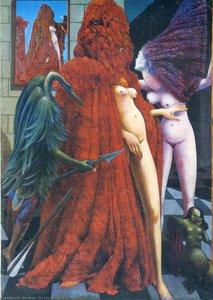 The Robing of the Bride - Max Ernst
While many view Surrealism as mere fantasy, for Max Ernst, it was a psychological necessity born from the chaos of a world at war. In The Robing of the Bride (1940), Ernst achieves a profound conceptual leap, moving beyond simple dreamscapes into a visceral, symbolic ritual. The composition is dominated by an unsettling, voluminous red figure that looms over nude female subjects, creating a tension between vulnerability and overwhelming authority. One can almost feel the heavy, impasto texture of the crimson drapery and the striking contrast of the woman's vibrant, volcanic purple hair against pale, natural skin tones.
The technical mastery lies in his ability to use bold, angular lines and dramatic lighting to evoke a sense of profound mystery and even dread. This piece stands as a cornerstone among the top 25 artworks of Max Ernst because it captures the very essence of the subconscious struggle. Integrating such a powerful, intellectually stimulating work into a modern study or executive office provides more than just decor; it fosters an atmosphere of deep reflection, sophistication, and the creative courage required to confront complex ideas.
Les dieux obscurs (Dark Gods) - Max Ernst
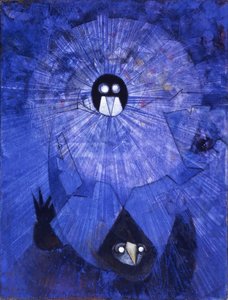 Les dieux obscurs (Dark Gods) - Max Ernst
In Les dieux obscurs (Dark Gods), the viewer is immediately met by the unsettling, watchful gaze of a colossal, shadowy entity that seems to pulse with an ancient, oppressive weight. This masterpiece by Max Ernst serves as a profound psychological mirror, capturing the tension between a looming, humanoid presence and a vulnerable, bird-like figure nestled beneath its form. The interplay of deep blues, blacks, and radiating lines creates a sense of expansion and confinement, pulling the observer into a dreamscape where the boundaries of the conscious mind dissolve.
As one of the top 20 artworks of Max Ernst , this piece exemplifies his ability to use impasto textures and expressionistic shadows to explore themes of power and primal anxiety. Integrating such a powerful work into your collection can transform a personal sanctuary or corporate lounge into a space for profound reflection. The dramatic emotional resonance of these Surrealist masterpieces invites a quiet, contemplative atmosphere, making it an essential selection for those seeking art that speaks to the deeper, more mysterious layers of the human experience.
Stratified Rocks, Nature's Gift of Gneiss Lava Iceland Moss… - Max Ernst
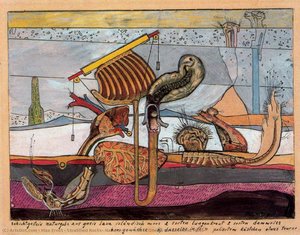 Stratified Rocks, Nature's Gift of Gneiss Lava Iceland Moss… - Max Ernst
The visceral power of Stratified Rocks, Nature's Gift of Gneiss Lava Iceland Moss… by Max Ernst lies in its rugged, tactile surface. Upon close inspection, the heavy layering of paint and jagged, visible brushstrokes create a relief-like texture that mimics the very volcanic terrain it depicts. This technique is central to why this piece remains one the top 25 artworks of Max Ernst ; he uses the physical materiality of the medium to bridge the gap between Expressionist anxiety and Surrealist dreamscapes, turning a small 19 x 24 cm canvas into an expansive, primordial world of ritualistic dread.
At ArtsDot.com, our mission is to honor this profound materiality. We specialize in hand-painted oil reproductions that capture the tactile, three-dimensional quality of Ernst’s impasto and the complex, layered shadows of his distorted figures. For the serious collector or decorator, we ensure that the depth, tonal range, and physical presence of these historical masterpieces are preserved, bringing the unsettling beauty of the Surrealist movement into a contemporary professional space with uncompromising accuracy.
untitled (8351) - Max Ernst
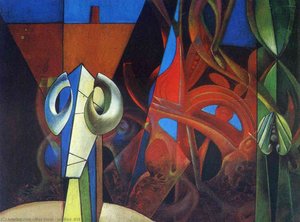 untitled (8351) - Max Ernst
In the haunting landscape of untitled (8351) , Max Ernst invites us into a realm where the boundaries between the organic and the architectural dissolve. This masterpiece stands as a profound pillar among the top 25 artworks of Max Ernst , capturing a moment of pure Surrealist tension. The canvas is dominated by an imposing, amorphous monolith that rises from a desolate plain of ochre and bruised violet, surrounded by fragmented figures and a solitary, watchful bird. It is a visual manifestation of the subconscious, where the stability of form yields to the fluidity of dreams.
Ernst’s use of spontaneous textures and layered compositions reflects a psychological depth that continues to resonate in contemporary design. In today's curated spaces, the unsettling beauty of this work serves as a powerful cultural talking point, mirroring our modern fascination with the surreal and the abstract. By bypassing rational logic through his pioneering techniques, Ernst created a timeless narrative of anxiety and wonder, ensuring this piece remains an essential study for any serious collector of 20th-century modernism.
The Forest - Max Ernst
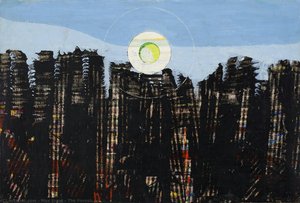 The Forest - Max Ernst
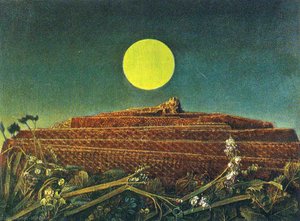
Imagine standing at the edge of a dream, where the boundary between the waking world and the subconscious dissolves into a cool, nocturnal mist. In Max Ernst’s 1927 masterpiece, The Forest , this transition is palpable. The air feels heavy with mystery as a luminous moon casts an ethereal glow over a distorted cityscape, where buildings rise like strange, silent monoliths amidst encroaching shadows. This work is a profound exploration of the tension between urban existence and the primal, untamed psyche.
As one of the top 25 artworks of Max Ernst , this painting earns its place through its ability to evoke deep psychological resonance. It captures the unsettling beauty of the Surrealist movement, using a palette of deep blues and muted greens to invite contemplation of our own hidden anxieties. Bringing such a piece into a modern space does more than decorate a wall; it introduces a window into the infinite, offering a moment of quiet, intellectual depth and a transformative atmosphere of wonder to any professional or residential environment.
Le Petite Tortue - Max Ernst
 Le Petite Tortue - Max Ernst
In Le Petite Tortue , Max Ernst moves away from the chaotic textures of his earlier Dadaist works toward a profound, minimalist stillness. This 1967 sculpture, carved from polished black marble, does not merely occupy space; it commands it through a masterful composition of geometric abstraction. The work is built upon three interconnected forms—a substantial base supporting an inverted bowl-like structure, which in turn cradles a delicate, pointed apex.
To experience this piece is to witness the artist composing light itself. The high-sheen surfaces act as a mirror for the surrounding environment, catching directional highlights that dance across sharp, precise edges. It is a study in the tension between solid mass and negative space, where the voids become just as vital as the stone. For collectors seeking a centerpiece of stability and sophistication, this sculpture offers a meditative encounter with balance. It transforms any modern interior into a gallery of contemplation, inviting the viewer to find beauty in the silent interplay of shadow, light, and eternal form.
Moonmad - Max Ernst
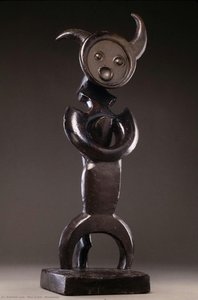 Moonmad - Max Ernst
In the presence of Moonmad by Max Ernst, one does not merely observe a sculpture; one encounters a visceral fragment of the subconscious. As you move through this gallery of Surrealist mastery, this piece arrests your attention with its profound psychological weight. The bronze-like form captures a moment of pure, unadulterated shock—an open mouth frozen in an eternal gasp, as if witnessing the sudden intrusion of a dream into the waking world.
Ernst, a pioneer of the Dada and Surrealist movements, utilizes this stylized visage to explore the tension between vulnerability and terror. The metallic texture and the stark, expressive gesture serve as a window into the Freudian landscapes he so famously navigated. To possess such a work is to invite a transformation of your environment; it ceases to be a mere room and becomes a sanctuary for contemplation. In the context of the top 25 artworks of Max Ernst , Moonmad stands as a haunting testament to the artist's ability to sculpt the very essence of human anxiety and wonder.
Illustration to "A Week of Kindness" - Max Ernst
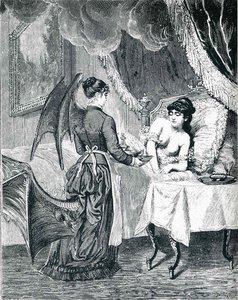 Illustration to "A Week of Kindness" - Max Ernst
In the 1934 illustration for "A Week of Kindness," Max Ernst does not merely depict a scene; he orchestrates a psychological descent. The light in this monochrome masterpiece is not an external force but a language of shadow, meticulously composed through intricate hatching and cross-hatching to build a world that feels palpably tactile. As you gaze upon the bedroom interior, the boundaries between domestic stability and a surrealist nightmare begin to dissolve.
The composition centers on a hauntingly beautiful tension: a reclining figure rests amidst heavy, undulating fabrics, while beside her, a second figure emerges with startling, bat-like wings. This sudden, fantastical intrusion disrupts the mundane reality of the furniture, signaling that we have entered a realm governed by the logic of dreams. Every fine line and deep pocket of darkness serves to pull the viewer deeper into this claustrophobic, gothic landscape. It is this precise collision of the recognizable with the monstrous that secures its place among the top 25 artworks of Max Ernst, offering a portal of profound mystery for any collector.
Temptation of St. Anthony - Max Ernst
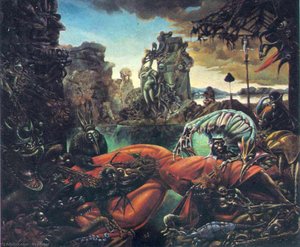 Temptation of St. Anthony - Max Ernst
In Temptation of St. Anthony , the lines of Max Ernst’s vision aren’t merely drawn; they are choreographed . This 1945 masterpiece is not a static composition but a dance frozen in time , where the boundaries between the spiritual and the visceral dissolve into a dreamscape of unsettling beauty. As one of the most profound entries in our collection of the top 25 artworks of Max Ernst, it captures a psychological landscape where heavy impasto and fragmented textures collide.
The scene presents a visceral plunge into the subconscious, using a deliberate layering of colors to depict the saint’s struggle against insidious symbols of decay—beetles, butterflies, and distorted figures that emerge from the shadows. The composition is intentionally unbalanced, mirroring the instability of the human psyche through strong diagonals and surreal perspectives. What if your corporate space or hotel lobby could hold that same tension? What if your walls could breathe rhythm by hosting such a complex, textured exploration of desire and reality?
Paysage avec lac et chimères - Max Ernst
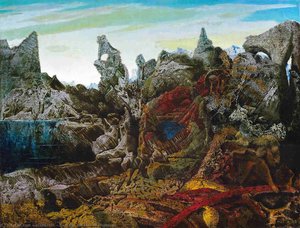 Paysage avec lac et chimères - Max Ernst
In Paysage avec lac et chimères , Max Ernst masterfully manipulates a muted, ethereal light to bridge the gap between reality and the subconscious. The illumination appears to emanate from within the landscape itself, casting a soft, diffused glow across the tranquil lake and the jagged rock formations. This delicate play of light and shadow—achieved through his pioneering decalcomania technique—creates a sense of atmospheric depth that was revolutionary for its time. By pressing thinned paint to create spontaneous, Rorschach-like textures, Ernst allows light to catch on unexpected ridges, making the mythical chimeras feel as though they are emerging from a dream.
As one of the top 25 artworks of Max Ernst , this piece captures the profound psychological tension of the 1940s. The way the pale blue sky reflects in the water provides a serene counterpoint to the unsettling, fragmented figures. When reproduced as a high-quality oil painting, the visible brushstrokes and tonal range bring this chiaroscuro effect to life, offering a sophisticated focal point that adds intellectual depth and a sense of historical luxury to any professional or residential interior.
Ubu Imperator - Max Ernst
 Ubu Imperator - Max Ernst
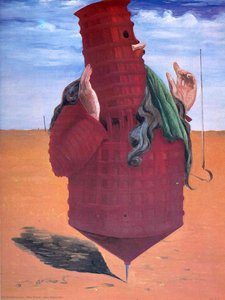
To stand before “Ubu Imperator” is to enter a fever dream where the boundaries of reality dissolve into a hauntingly beautiful chaos. Max Ernst captures that universal, unsettling feeling of encountering the unknown, presenting a scene that pulsates with a hidden, restless energy. This masterpiece earns its place among the top 25 artworks of Max Ernst due to its revolutionary use of texture and its profound psychological depth, bridging the gap between the absurdity of Dadaism and the dream-logic of Surrealism.
The composition—featuring a tyrannical figure seated upon a throne of interwoven branches alongside a precariously perched bird—serves as a poignant meditation on power and fragility. Through his pioneering frottage technique, Ernst creates a tactile landscape that feels alive, inviting the viewer to explore the layers of the subconscious. At ArtsDot.com, we honor this complex legacy by offering hand-painted oil reproductions that meticulously preserve these essential brushstrokes and organic textures. Our museum-quality recreations allow you to bring the profound emotional resonance and visionary spirit of Ernst’s most iconic works into your own professional or private space.
Scène - Max Ernst
 Scène - Max Ernst
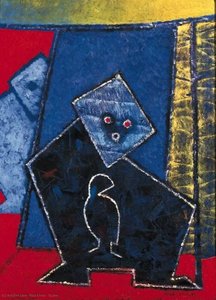
To encounter “Scène” by Max Ernst is to step directly into a meticulously constructed dreamscape where the boundaries of reality dissolve. As one of the most profound entries in our collection of the top 25 artworks of Max Ernst, this piece commands attention through its masterful use of psychological tension and tactile depth. The composition centers on an enigmatic avian figure, poised in predatory contemplation before a striking blue box accented with sharp red trim—a visual metaphor for the tension between curiosity and containment.
Ernst’s pioneering technique creates a rugged, organic texture reminiscent of paper pulp and burlap, inviting a sensory engagement that transcends mere sight. For the discerning collector or professional decorator, this work offers more than just surrealist intrigue; it provides a sophisticated focal point for modern luxury interiors. The deep blues and vibrant punctuations of red create a moody, atmospheric presence that resonates with refined, contemporary aesthetics. In “Scène,” Ernst achieves a timeless beauty, utilizing automatism to bridge the gap between the subconscious mind and the physical elegance of high-end art curation.
Everyone Here Speaks Latin - Max Ernst
 Everyone Here Speaks Latin - Max Ernst
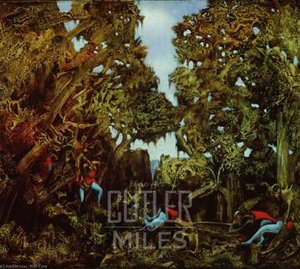
Max Ernst’s 1943 masterpiece, Everyone Here Speaks Latin , stands as a profound pillar within the top 25 artworks of Max Ernst, offering a hauntingly beautiful window into the Surrealist subconscious. The painting captures a moment suspended in time, where the dense, textured thicket of a primordial forest meets the fragmented presence of humanity. Through the use of automatism and heavy, tactile impasto , Ernst creates a landscape that feels less like a depiction and more like a living, breathing dreamscape. The interplay of ambiguous figures, an isolated umbrella, and a distant boat evokes a sense of transition and existential mystery.
For the modern collector or interior designer, this work provides an unparalleled atmospheric depth. Its complex layers of organic textures and enigmatic symbolism offer a sophisticated focal point for contemporary spaces, bridging the gap between historical Dadaist disruption and modern aesthetic intrigue. Integrating such a powerful piece into a curated collection allows one to invite the profound, psychological tension of the mid-century avant-garde into the home, creating an environment of deep contemplation and intellectual prestige.
Dibujo al natural - Max Ernst
 Dibujo al natural - Max Ernst
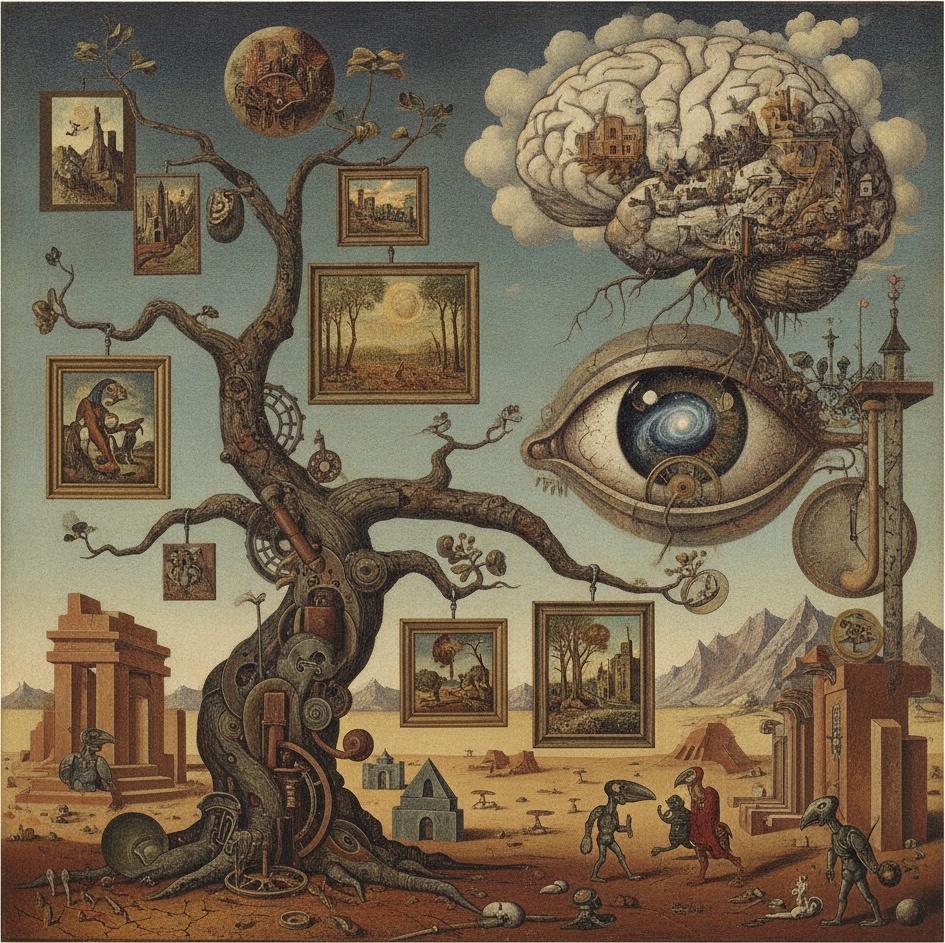
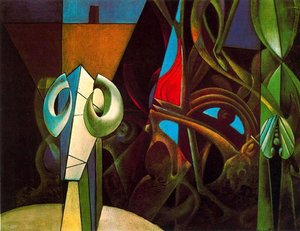
To step into the world of Dibujo al natural by Max Ernst is to surrender to a dreamscape where the boundaries between reality and the subconscious dissolve into a singular, haunting vision. This work earns its place among the top 25 artworks of Max Ernst through its profound ability to manipulate scale and symbolism, presenting a surrealist dialogue that transcends mere illustration. The composition draws the eye into a labyrinth of strange, unsettling objects—from the watchful presence of an eye to the rhythmic placement of clocks—creating a sense of temporal distortion that is quintessential to the Surrealist movement.
The piece stands as a testament to Ernst’s mastery of psychological depth, using unexpected juxtapositions to evoke a mood of quiet mystery and intellectual intrigue. Its influence on visual culture remains immense, offering a blueprint for how art can explore the hidden layers of the human psyche. For the modern collector, the power of this masterpiece lies in its ability to serve as a focal point of contemplation; through high-fidelity reproductions, you can bring this transformative, dreamlike presence into your home or professional space, inviting a sense of profound wonder and historical prestige into any interior.
Barbarians Marching to the West - Max Ernst
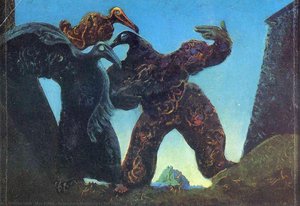 Barbarians Marching to the West - Max Ernst
Step into a visual fever dream with “Barbarians Marching to the West,” one of the most hauntingly evocative works in the top 25 artworks of Max Ernst. Created in 1937, this masterpiece captures the visceral dread of a world on the precipice of war. The composition is dominated by two colossal, predatory birds locked in an unsettling dance of instinct and aggression, their forms emerging from a desolate, otherworldly terrain where reality and nightmare collide.
Ernst’s technical mastery is on full display through his pioneering use of grattage . By scraping paint to reveal textured, geological layers, he creates a surface that feels as rugged as ancient bone. This tactile depth provides a profound sensory experience; the scarred, uneven landscape invites deep reflection. For those looking to curate a space with intellectual weight, this piece offers more than mere decoration—it brings a commanding, cinematic atmosphere of mystery and historical gravity, making it an unforgettable focal point for any sophisticated collection.
Pieta or Revolution by Night - Max Ernst
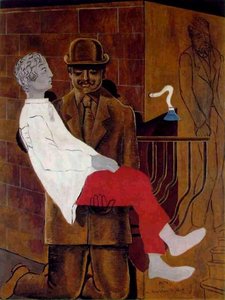 Pieta or Revolution by Night - Max Ernst
In Pieta or Revolution by Night by Max Ernst, the composition is anchored by a heavy, somber geometry that commands immediate attention. The structural balance of the piece relies on a stark, vertical arrangement: the central figure in formal attire creates a strong, stabilizing axis, while the slumped, lifeless form he cradles introduces a diagonal tension that disrupts the stillness. This interplay of rigid lines and organic, collapsing shapes creates a sense of timeless perfection, a characteristic that secures its place among the top 25 artworks of Max Ernst .
The painting’s internal equilibrium offers a profound parallel to modern minimalist design; the way Ernst utilizes dark, negative space and a concentrated focal point provides a grounding element for clean, contemporary aesthetics. For professionals furnishing sophisticated corporate or hospitality spaces, the work's disciplined use of shadow and form acts as a powerful architectural anchor. It does not merely decorate a room but introduces an intellectual weight, where the somber palette and balanced silhouettes harmonize perfectly with high-end, minimalist interiors.
It's a Highway to Heaven - Max Ernst
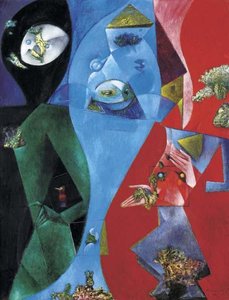 It's a Highway to Heaven - Max Ernst
To encounter "It's a Highway to Heaven" is to witness the very moment where the boundaries of identity dissolve into the subconscious. As one of the most profound entries in our collection of the top 25 artworks of Max Ernst , this piece stands as a monumental achievement in Surrealist exploration. Ernst masterfully presents a visual paradox: a central, monumental figure that reveals itself to be a complex, kaleidoscopic tapestry of superimposed faces and fragmented visages.
This work transcends mere portraiture; it is a psychological labyrinth that reflects the era's fascination with Freud and the hidden depths of the human psyche. Through his innovative use of texture and layered imagery—incorporating unexpected elements like birds and shifting color palettes—Ernst invites us to contemplate the layers of memory and dream that constitute our existence. For the discerning collector or professional decorator, this masterpiece offers more than aesthetic value; it provides a transformative focal point for modern environments, sparking a timeless conversation between historical Surrealism and contemporary architectural design.
Forêt et soleil - Max Ernst
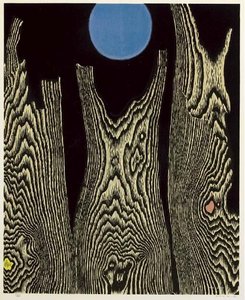 Forêt et soleil - Max Ernst
In the hauntingly beautiful Forêt et soleil , Max Ernst invites us to step beyond the veil of reality and into a nocturnal dreamscape where the boundaries between nature and the psyche dissolve. As one of the most profound entries in our collection of the top 25 artworks of Max Ernst, this piece serves as a masterclass in Surrealist atmosphere. The forest is not merely a collection of timber, but a dense, labyrinthine manifestation of the unconscious mind, where distorted trunks and textured bark pulse with hidden life.
Under the luminous, watchful gaze of the moon, a sense of profound stillness settles over the canvas, broken only by the fragile presence of a solitary bird. Ernst utilizes light and shadow to create a dramatic tension, using meticulous layering to evoke a world that feels both ancient and hallucinatory. To possess such a work is to invite a gallery of the soul into your space, transforming a mere room into a sanctuary for contemplation and surrealist wonder.
Landscape with Wheatgerm - Max Ernst
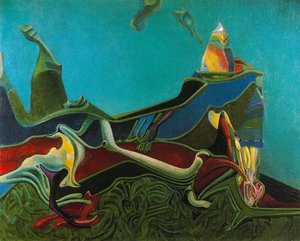 Landscape with Wheatgerm - Max Ernst
Max Ernst’s 1936 masterpiece, Landscape with Wheatgerm , stands as a profound pillar within the top 25 artworks of Max Ernst, offering a hauntingly beautiful window into the depths of the human psyche. This work transcends traditional landscape painting, replacing pastoral reality with a dreamscape where the rational world dissolves into imagery that taps into our most primal instincts. Through a masterful use of mixed media and layering, Ernst creates a textured surface that feels like a recovered memory, where light and shadow dance across botanical fragments and surreal forms.
The composition captures a delicate tension between fertility and fragility; while the wheatgerm symbolizes embryonic potential, the presence of solitary birds amidst rugged outcrops introduces a note of profound vulnerability. For modern collectors and interior decorators, this painting provides an incredible opportunity for visual storytelling. Its rich, sculptural presence and complex emotional resonance make it an ideal anchor for sophisticated, contemporary spaces, bringing a sense of quiet prestige and intellectual depth to any curated environment.
Les prunes - Max Ernst
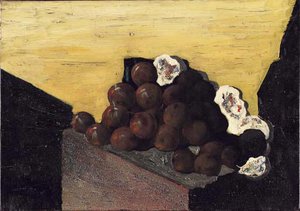 Les prunes - Max Ernst
What if I told you that Les prunes by Max Ernst was born from a moment of rebellion—a stroke of defiance against the ordinary? This work is far more than a simple still life; it is a masterful distillation of Surrealist principles, where commonplace chocolate pralines and delicate white flowers are transformed into symbols of subconscious desire. Its inclusion in our top 25 artworks of Max Ernst is essential because it showcases his pioneering use of frottage , creating a grainy, ethereal texture that pulls the viewer into a dreamlike state.
The tension within the composition—the vibrant, almost unsettling yellow background juxtaposed with the indulgence of the sweets—captures the very essence of the Surrealist movement's reaction to a fractured world. At ArtsDot.com, we believe such profound historical statements belong in modern environments. Imagine this piece as a focal point in a corporate lounge or a private study; it turns a standard wall into a psychological landscape. Bringing this masterpiece into your space ensures that your decor is not just an arrangement of objects, but a continuous dialogue with the history of human emotion and artistic innovation.
Abstract Composition - Max Ernst
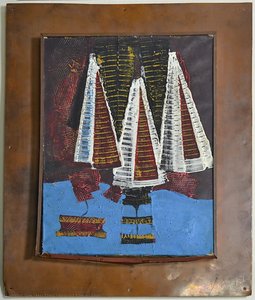 Abstract Composition - Max Ernst
In Abstract Composition , Max Ernst invites the viewer into a serene yet psychologically charged realm where the boundaries between reality and the subconscious dissolve. Painted in 1940, this work stands as a profound entry among the top 25 artworks of Max Ernst , capturing a delicate dance between chance and intentional vision. The canvas presents a tranquil blue expanse where two sailboats glide toward one another, accompanied by scattered birds that evoke a sense of spiritual transcendence and freedom.
Ernst’s mastery is found in his revolutionary use of grattage —a technique of scraping pigment to reveal hidden textures—which imbues the piece with a tactile, layered depth. The inclusion of a subtle clock adds a layer of temporal mystery, reminding us of the fleeting nature of time. In contemporary interior design, such abstract motifs serve as sophisticated focal points, offering a meditative calm that resonates with modern minimalist aesthetics while maintaining the intellectual weight of Surrealist history.
Conclusion
To wander through the visual landscape of Max Ernst is to step beyond the boundaries of the known world and into the profound architecture of the subconscious. These twenty-five masterpieces do more than merely document the evolution of Surrealism; they serve as enduring portals, inviting us to confront the beautiful, often unsettling, depths of our own imaginations. As we conclude this journey through his most iconic works, we are reminded that great art is never truly static. It does not belong solely to the era of its creation or the museums that house it; rather, it exists as a living presence, breathing alongside us in the modern age.
Every textured surface and dreamlike silhouette carries a timeless conversation between the artist’s hand and the admirer’s eye. Whether through the tactile mystery of his frottage techniques or the jarring brilliance of his collages, Ernst’s work continues to shape our contemporary interiors and stir the creative impulses within us. These paintings bridge centuries and souls, proving that the human fascination with the irrational and the unseen is a permanent thread in our collective history. To bring these works into your own space is to invite that same sense of wonder and psychological depth into your daily life, ensuring that the dialogue between the master and the viewer remains eternally unbroken.
We invite you to continue your exploration of his surrealist legacy by browsing our full collection , where the spirit of Ernst’s innovation is preserved in every hand-painted stroke.