
The Stencil Revolution: How Banksy Rewrote the Rules of Urban Rebellion
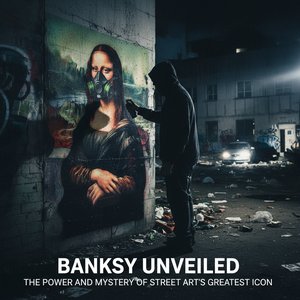
In the gritty, rain-slicked streets of Bristol, a new kind of visual language was being forged, one that didn't require a gallery invitation or a velvet rope. Before the auction houses were scrambling to capture his shadow, Banksy was operating in the underground, utilizing the rapid-fire efficiency of stencils to claim the urban landscape. This wasn''t just about marking territory; it was about a tactical strike on the collective consciousness. By adopting the stencil technique, an artist capable of leaving behind complex, biting social commentary in mere seconds, Banksy transformed the act of vandalism into a sophisticated form of visual communication. The speed of the stencil allowed for a level of precision and detail that traditional freehand graffiti lacked, enabling the creation of characters that felt both hauntingly human and starkly iconic.
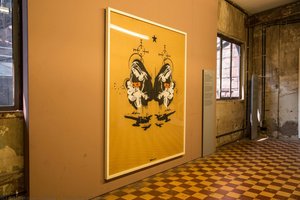
This revolution was built on the idea that art should be unavoidable. Unlike the curated silence of a museum, Banksy’s work demanded attention through its placement—on weathered concrete, near political landmarks, or amidst the decay of industrial zones. Pieces like Old Skool serve as a testament to this layered approach, where the very texture of the city becomes part of the masterpiece. This era marked a shift from the ego-driven tags of early graffiti culture toward a more narrative-driven, subversive movement that prioritized the message over the maker’s name. It was a period of high-stakes creativity, where every stroke of spray paint carried the weight of defiance.
Beyond the Mask: Decoding the Political Edge in Iconic Street Murals
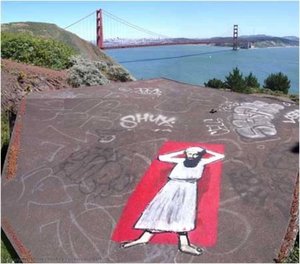
To look at a Banksy piece is to engage in a dialogue with power itself. The anonymity that defines his persona is not merely a shield against legal repercussions; it is a powerful artistic tool that forces the viewer to focus entirely on the work’s satirical sting. His imagery often functions as a mirror, reflecting the absurdities of modern governance, consumerism, and warfare. Consider the striking visual dissonance in Osama sunbathing, where the juxtaposition of a global figurehead against the backdrop of urban decay and the Golden Gate Bridge creates an unsettling commentary on political presence and permanence. There is no room for ambiguity in his critiques; they are sharp, punchy, and designed to provoke.
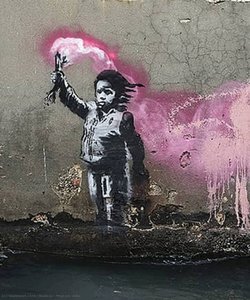
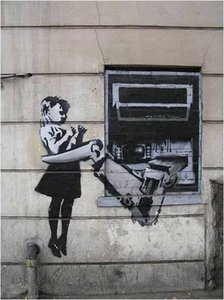
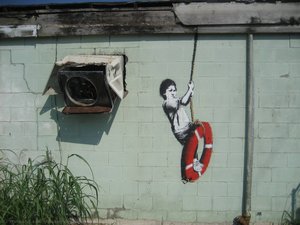
The symbolism extends into the most intimate corners of human experience. In Mobile Lovers, we see a grayscale stencil that captures the profound isolation found within our hyper-connected digital age, depicting modern relationships through the lens of technology. Even more poignant is the way he handles themes of innocence and resilience, as seen in Migrant Child or the gritty, heartbreaking beauty of Swinger. These works do not just observe social hardship; they humanize it, using the stark contrast of black-and-white stencils to strip away the noise of the world and leave only the raw, emotional truth. This is the true power of his unmasked rebellion: the ability to make the global feel deeply personal.
From Vandalism to High Art: The Commercial Evolution of the Underground
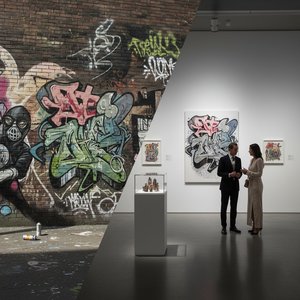
The trajectory of Banksy’s career represents one of the most radical shifts in art history, moving from the fringes of legality to the center of the high-stakes secondary market. What was once considered a nuisance by city officials is now celebrated as a cultural milestone, with works fetching eight figures at major auction houses. This evolution has sparked intense debate among collectors and critics alike: does the commercialization of street art strip it of its rebellious soul? While some argue that the transition into galleries dilutes the impact, there is no denying that this movement has redefined the very definition of "fine art."
The market for Banksy’s work has become a playground for serious investors and pop-culture enthusiasts. His ability to manipulate the art world—through stunts like the self-shredding painting or unauthorized installations in the Louvre—has turned his very existence into a performance piece. This commercial gravity has paved the way for a broader acceptance of urban aesthetics in the luxury sector. We are witnessing a moment where the grit of the street is being polished for the penthouse, yet the core DNA of the work remains rooted in its ability to subvert convention and challenge the status quo.
The Aesthetic of Anarchy: Why Banksy’s Visual Language Dominates Pop Culture
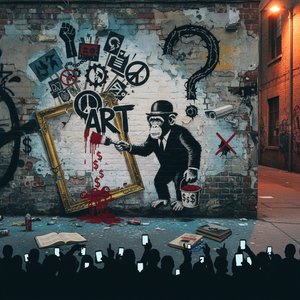
Banksy has achieved something rare: he has created a visual shorthand that is instantly recognizable across the globe. His aesthetic—characterized by high-contrast stencils, dark humor, and unexpected juxtapositions—has permeated everything from streetwear design to digital media. This "aesthetic of anarchy" resonates with a generation that values authenticity and edge over traditional polish. It is a style that feels at home in a gaming interface, a graphic novel, or a high-end fashion campaign. The use of vibrant, singular pops of color against monochromatic backgrounds, such as the striking Gorilla Pink Mask, creates a visual impact that is both modern and timeless.
This dominance is driven by the relatability of his themes. In an era of information overload, Banksy’s ability to distill complex geopolitical issues into a single, punchy image is unparalleled. He speaks the language of the digital age—memetic, shareable, and unapologetically bold. This visual literacy allows his work to transcend borders, making him not just an artist, of a movement, but a global cultural icon whose influence can be felt in every corner of contemporary design.
Trend Forecast: The Future of Street Art in Modern Interior Design
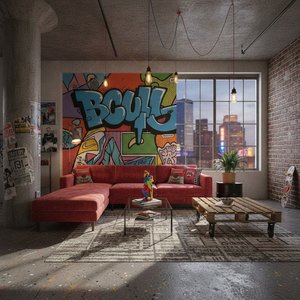
As we look toward the future of interior aesthetics, the influence of street art is set to expand far beyond the urban alleyway. We are seeing a significant trend where the bold, high-impact energy of stencil art is being integrated into sophisticated, modern living spaces. The "street" is moving indoors, not as literal graffiti, but as curated, powerful statements that provide a focal point for design-conscious professionals. This isn't about replicating chaos; it’s about capturing the spirit of rebellion and using it to inject character into minimalist or industrial interiors.
The future lies in the "remixing" of these urban textures. We anticipate a rise in large-scale, multi-panel installations that bring the scale of a mural into the home, creating architectural depth through graphic storytelling. Whether through high-quality prints or custom-painted reproductions that mimic the tactile depth of stencil layers, the goal is to create spaces that feel alive and culturally literate. For the modern collector, art is no longer just about decoration; it is about identity, and there is no stronger way to signal a bold, forward-thinking perspective than through the enduring legacy of street art rebellion.
At ArtsDot.com, we celebrate this intersection of culture and design. Whether you are looking to transform your personal space with high-impact contemporary works or seeking to commission a custom masterpiece that reimagines history through a modern lens, our mission is to make exceptional art accessible. From professional digital mockups to hand-painted oil reproductions that capture every essential brushstroke, we provide the tools for you to curate a collection as bold and unique as the streets themselves.