The Canvas of Conflict: The Socio-Political Origins of Mexican Muralism
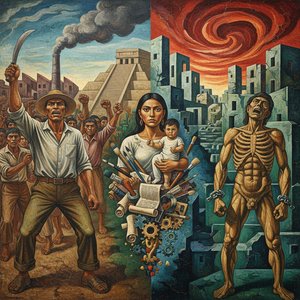
To understand the sweeping grandeur of Mexican Muralism, one must first look beneath the vibrant pigments to the smoke and upheaval of the Mexican Revolution. This was not merely an aesthetic movement; it was a visceral response to a nation in flux. Following decades of dictatorship and the bloody struggle for land reform and social justice, Mexico found itself at a crossroads of identity. The revolution had fractured the old colonial hierarchies, leaving a profound need for a new, unified national narrative—one that could speak to the illiterate and the elite alike.
The walls of public buildings became the battlegrounds of memory. As the government sought to consolidate a post-revolutionary identity, art was drafted into the service of the state, yet it remained fiercely subversive in spirit. The movement emerged from a desire to reclaim the Mexican landscape from Eurocentric perspectives, turning instead toward the indigenous roots and the struggles of the working class. It was an era where the brushstroke served as a manifesto, and every fresco was a testament to the resilience of a people rising from the ashes of conflict.
The Big Three: Rivera, Orozco, and Siqueiros as Visual Revolutionaries
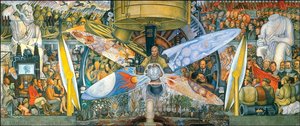
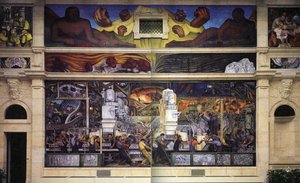
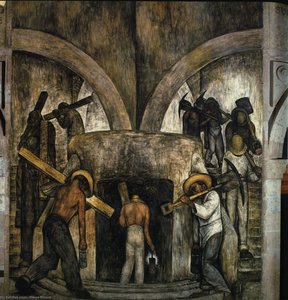
At the heart of this movement stood three titans, often referred to as Los Tres Grandes, whose distinct voices created a polyphonic symphony of social commentary. Diego Rivera, perhaps the most internationally recognized, brought a monumental sense of rhythm and a deep, lyrical connection to pre-Columbian aesthetics. His works, such as the legendary Detroit Industry, masterfully blended the mechanical pulse of modern labor with the ancient soul of Mexico, creating a layered narrative that celebrated both progress and heritage.
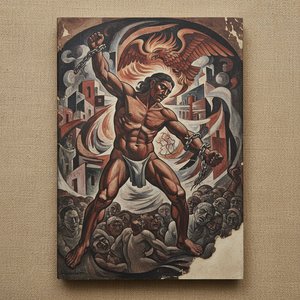
In stark contrast stood José Clemente Orozco, whose palette was often darker, more brooding, and deeply humanistic. While Rivera looked toward a structured utopia, Orozco captured the raw, agonizing cost of revolution, focusing on the tragedy and the cyclical nature of human suffering. Completing this triumvirating force was David Alfaro Siqueiros, the most politically radical of the group. His technique was as revolutionary as his ideology; experimenting with industrial materials like pyroxylin and airbrushes, he pushed the boundaries of what a mural could be, injecting a sense of kinetic energy and aggressive dynamism into the very fabric of the walls.
Social Realism and the Narrative Power of the Fresco Technique
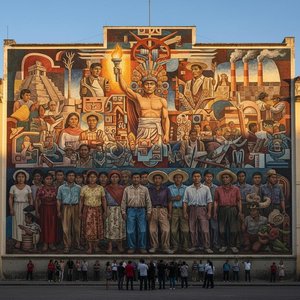
The choice of medium was as intentional as the subject matter. The fresco technique, an ancient method involving pigment applied to wet lime plaster, allowed the art to become physically inseparable from the architecture itself. This permanence was crucial for a movement intended to endure alongside the institutions it critiqued. Through social realism, these artists transformed public corridors into epic chronicles, where the struggle of the peasant and the triumph of the laborer were rendered with a tactile, monumental weight.
This style rejected the "art for art's sake" philosophy of much of the Western world, opting instead for a heavy, grounded realism that emphasized the physical reality of existence. The scale was intentionally overwhelming, designed to envelop the viewer and demand engagement. In works like Rivera’s Dream of a Sunday Afternoon in Alameda Park, the sheer density of characters—over four hundred figures from various eras of Mexican history—creates a dizzying, immersive experience that forces the spectator to navigate a labyrinth of historical memory and cultural significance.
Iconography of Identity: Indigenous Heritage and Industrial Progress
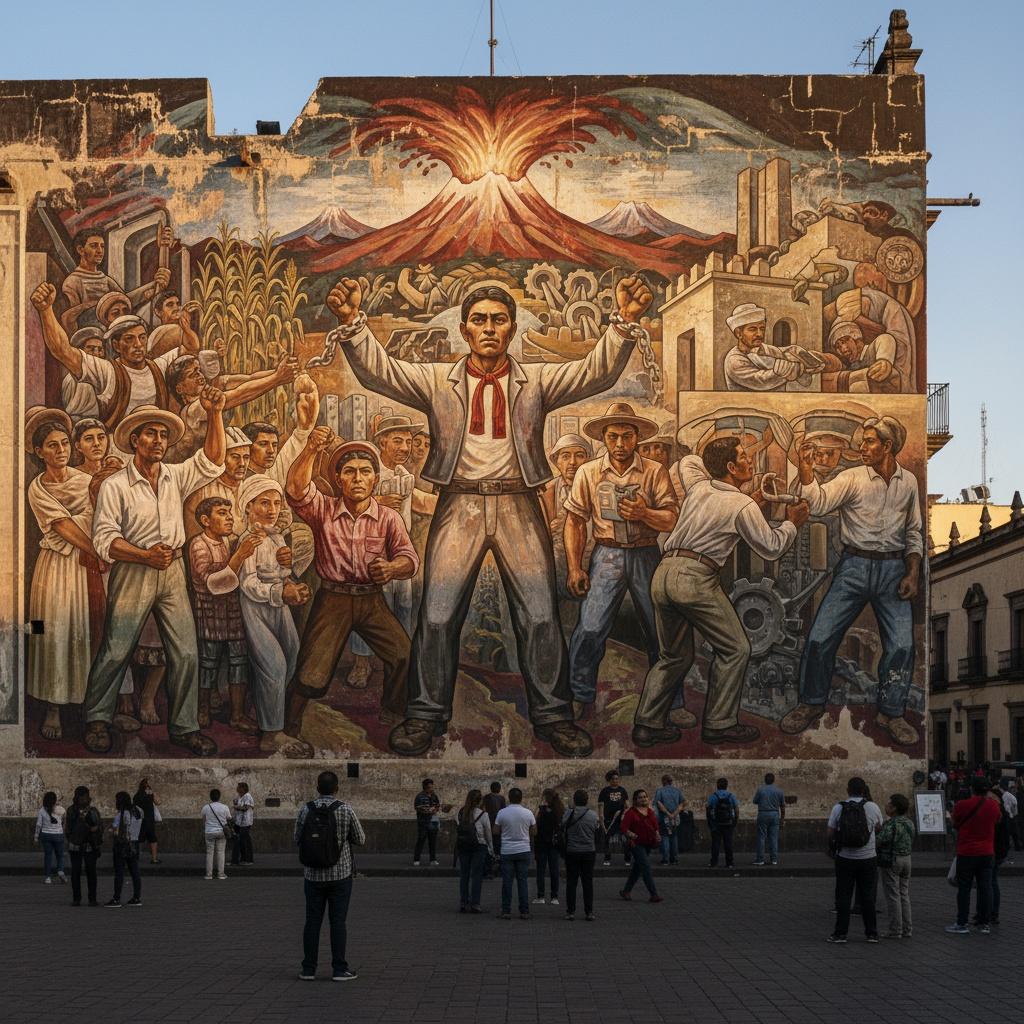
The visual language of Mexican Muralism is a complex tapestry of symbols designed to foster a sense of Mexicanidad. Central to this was the reclamation of indigenous iconography. The muralists resurrected the grandeur of Aztec and Mayan motifs, integrating them into modern compositions to bridge the gap between a glorious past and an uncertain future. This was not mere nostalgia; it was a political act of decolonization, placing the indigenous face at the center of the national consciousness.
Yet, this reverence for the past did not preclude an engagement with the contemporary. The movement captured the tension of a nation caught between agrarian traditions and the encroaching industrial age. The imagery of gears, pistons, and steel intertwined with corn, earth, and ancient deities. This duality created a powerful visual dialectic, portraying the worker as both a descendant of ancient builders and the architect of a new, mechanized era. It was through this synthesis that the muralists articulated a vision of a modern Mexico that remained anchored in its ancestral soil.
The Enduring Echo: How Muralism Shaped Modern Global Street Art
The legacy of the Mexican muralists extends far beyond the borders of Mexico and the era of the revolution. Their influence can be traced through the lineage of global social realism and, most vibrantly, into the heart of contemporary street art and urban muralism. The concept of using public space as a democratic canvas—a place where art is accessible to all, regardless of socioeconomic status—is a direct inheritance from Los Tres Grandes.
Modern muralists across the globe, from the political graffitists of the Middle East to the community-driven street artists in North America, utilize the same fundamental principles: scale, narrative, and social provocation. The movement proved that art could be a powerful tool for community building and political resistance, establishing a blueprint for how visual culture can shape the identity of a city and the spirit of its people.
Bringing History Home: Preserving the Spirit of Muralism through Fine Art Reproduction
While the original frescoes remain anchored to their historic walls, the profound emotional impact of these masterpieces continues to inspire collectors and history enthusiasts worldwide. At ArtsDot.com, we believe that the grandeur of this revolutionary era should not be confined to public halls alone. We specialize in bringing the soul of art history into the modern home through meticulous, hand-painted oil reproductions.
Our master artists, trained in the highest academic traditions, work to capture the very essence of these works—the heavy impasto, the dramatic tonal ranges, and the sweeping narratives that define Mexican Muralism. Whether you seek a large-scale tribute to Rivera’s industrial visions or a custom piece that reimagines historical themes for your personal space, our commitment is to preserve the integrity of the original masters. Through our professional services, from digital mockups to bespoke framing, we ensure that the powerful legacy of the muralists continues to breathe life into contemporary interiors.