The Dawn of the Wild Beasts: Defining the Fauvist Revolution
At the dawn of the twentieth century, a seismic shift occurred within the Parisian art scene, one that would forever alter the trajectory of modern aesthetics. It was an era of profound experimentation, where the rigid structures of academic tradition began to crumble under the weight of new, unbridified creative impulses. This period saw the emergence of a group of artists so radical in their approach that they were famously branded as Les Fauves—the Wild Beasts. This moniker, originally intended as a critique by the critic Louis Vauxcelles, was embraced by the movement's protagonists as a badge of honor, signaling their intent to tear away the veil of mimetic representation and replace it with raw, unadulterated emotion.
The Fauvist revolution was not merely a change in subject matter but a fundamental reimagining of the canvas itself. Unlike the Impressionists, who sought to capture the fleeting nuances of light and atmosphere, the Fauves were interested in the structural power of color. They sought to strip art of its descriptive obligations, moving away from the necessity of depicting the world as it appears to the eye and instead presenting it as it is felt by the soul. This movement served as a vital bridge between the late nineteenth-century fascination with perception and the twentieth-century obsession with abstraction, setting the stage for the avant-garde movements that would follow.
Chromatic Rebellion: The Liberation of Color from Reality
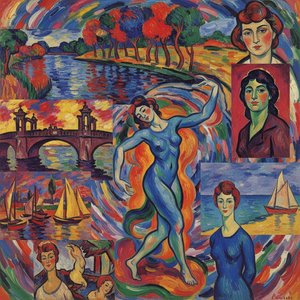
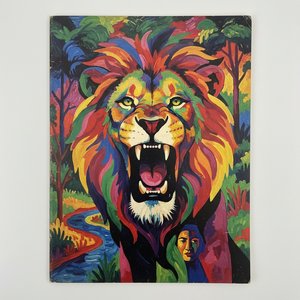
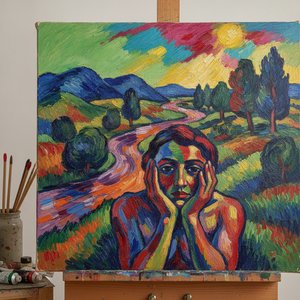
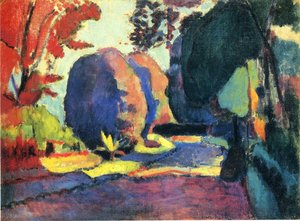
To understand Fauvism is to witness the liberation of color. For centuries, the artist's palette was bound by the laws of nature; a tree was green, a sky was blue, and skin possessed specific, fleshy tones. The Fauves shattered these constraints, treating color as an independent, expressive force rather than a descriptive tool. In their hands, a landscape could erupt in shades of vermilion and cadmium orange, while a portrait might feature a face slashed with strokes of emerald or cobalt. This was not a lack of skill, but a deliberate chromatic rebellion designed to provoke a visceral response in the viewer.
Masters of the Palette: Analyzing Matisse and the Fauve Vanguard
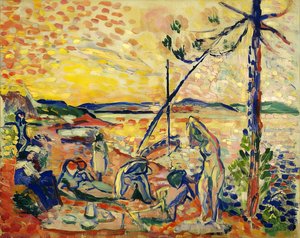
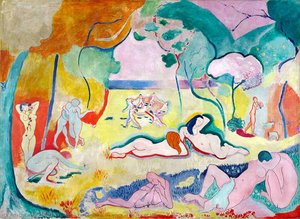
At the heart of this movement stood Henri Matisse, a figure whose genius lay in his ability to balance exuberant color with a profound sense of compositional harmony. In masterpieces such as Le Thé dans le jardin, one observes how Matisse utilizes a bold palette to capture the grace and serenity of everyday life. While the colors may appear startling, they are orchestrated with a rhythmic precision that guides the eye through the scene. His work often embodies a certain decorative elegance, where the interplay of shapes and hues creates a cohesive, almost musical atmosphere that transcends the literal subject matter.
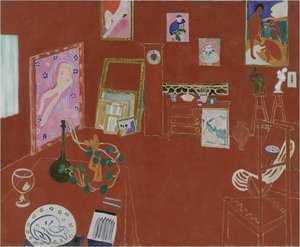
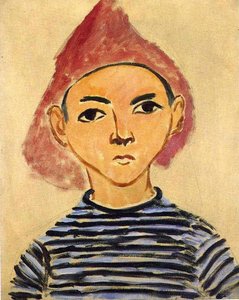
Beyond Matisse, the Fauvist vanguard included artists who brought their own unique temperaments to the movement. In works like La Table noire, we see the continued exploration of the relationship between figure and environment through intense, saturated tones. These artists shared a common goal: to use the canvas as a site of energetic construction. Whether through the sun-drenched watercolors of coastal scenes or the heavy, opaque oils of interior studies, the masters of this era utilized the tension between contrasting colors to create a sense of depth and movement that felt entirely new to the modern eye.
Technique and Texture: The Impact of Expressive Brushwork
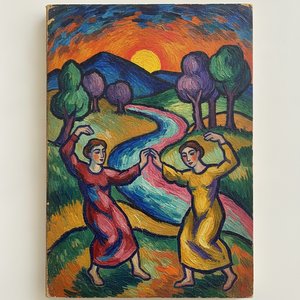
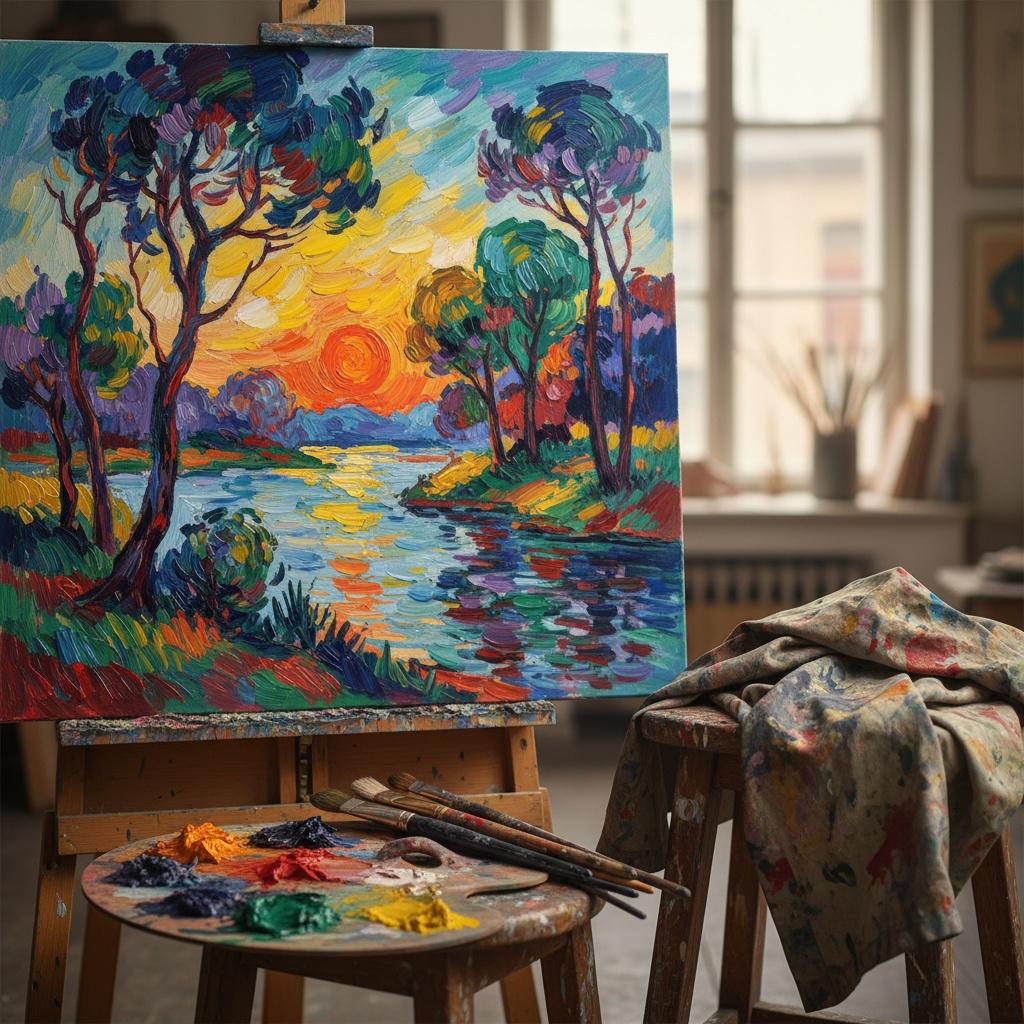
The visual impact of Fauvism is inseparable from its tactile quality. The brushwork of the Fauves was often characterized by a sense of urgency and spontaneity, leaving behind visible traces of the artist's hand. This technique, often bordering on the impasto style, added a sculptural dimension to the flat surface of the canvas. There was no attempt to hide the process; instead, the thick, energetic application of paint became part of the narrative itself. Each stroke served as a testament to the physical act of creation, contributing to the overall sense of vitality and raw energy that defines the movement.
This emphasis on texture allowed for a fascinating interplay between light and pigment. The uneven surfaces created by heavy brushstrokes caught the light in unpredictable ways, adding a shimmering, kinetic quality to the works. This approach rejected the polished, "licked" finish of academic painting in favor of something much more rugged and honest. By celebrating the materiality of the paint, the Fauvists invited the viewer to engage with the artwork as a physical object, reinforcing the idea that art is an act of construction—a building of emotion through the medium of texture and tone.
Fauvism’s Legacy: From Early Modernism to Contemporary Expression
Though the movement itself was relatively short-lived, its influence on the trajectory of modern art is immeasurable. The Fauvist emphasis on color autonomy paved the way for German Expressionism, where the emotional weight of color was pushed to even more extreme, often darker, psychological depths. Furthermore, the movement's reduction of form and focus on the flat decorative surface provided a crucial foundation for the development of Cubism and, eventually, pure Abstraction. The radical idea that an artist could invent their own visual language, independent of the natural world, remains one of the most significant legacies of the twentieth century.
Today, we see the echoes of Fauvism in contemporary art that prioritizes expressive color and gestural mark-making. The movement's spirit lives on in any work that dares to use color as a primary vehicle for meaning. For the modern collector and enthusiast, studying Fauvism is an invitation to rediscover the joy of pure sensation. It reminds us that art does not need to mirror our world to be true; it only needs to capture the vibrant, often chaotic, and deeply colorful essence of what it means to feel.
At ArtsDot.com, we celebrate this enduring legacy of human creativity. Our mission is to make the profound beauty of movements like Fauvism accessible to everyone through our exquisite, hand-painted reproductions. Whether you are drawn to the rhythmic colors of Matisse or seeking a custom masterpiece that reimagines your own memories through an expressionist lens, our master artists are dedicated to preserving the soul of art history on every canvas we create.