Introduction
Imagine stepping into a space where the air feels heavy with detail, where every microscopic glint of light and every textured thread of velvet pulls you deeper into a hidden narrative. The Northern Renaissance wasn't just an era; it was a visual revolution that traded Italian idealism for a raw, hyper-real obsession with the world as we actually see it. While the South was perfecting human proportions, the masters of the North—stretching across the Netherlands, Germany, and France—were busy mastering the alchemy of oil paint to capture the impossible: the way light dances on a single pearl or the heavy, somber weight of a silk robe.
These works remain vital because they pioneered the very concept of visual impact . They understood that truth lives in the details, in the textures, and in the layers. Today, as we navigate an age of digital hyper-realism and high-definition imagery, the DNA of these masterpieces is everywhere—from the precision of modern graphic design to the immersive depth of contemporary street art. We are still chasing the same magic they unlocked centuries ago.
In this exploration, we are stripping back the layers of time to revisit ten definitive works that redefined the boundaries of art. Prepare to witness the pieces that transformed canvas into a window of breathtaking, textured reality.
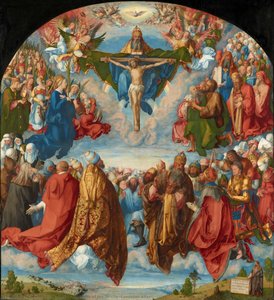
Adoration of the Trinity (Landauer Altar) - Albrecht Dürer
 Adoration of the Trinity (Landauer Altar) - Albrecht Dürer
Imagine standing before a monumental expanse of divine light and human history, where the boundaries between heaven and earth dissolve. This is the experience of witnessing the Adoration of the Trinity (Landauer Altar) by Albrecht Dürer .
Painted in 1511, this masterpiece marks a pivotal breakthrough in the Northern Renaissance , as Dürer traded heavy Gothic traditions for a vibrant, Venetian-inspired naturalism. The composition is a breathtaking symphony of scale and detail; you are drawn into a grand, architectural hall bathed in an ethereal glow that illuminates everything from the regal gold trim of saints to the humble textures of peasants at work. Within this sacred space, the symbols of the Passion surround Christ, creating a profound emotional depth that bridges the gap between the celestial and the mundane. Dürer’s ability to weave popes, monks, and laborers into one cohesive, perspectival marvel is why this work remains a definitive pillar of art history. Even in our modern era, the painting’s commanding presence serves as a reminder that true art possesses the power to transform any space into a sanctuary of reflection.
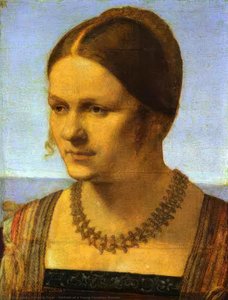
Portrait of a Young Venetian Woman - Albrecht Dürer
 Portrait of a Young Venetian Woman - Albrecht Dürer
In Portrait of a Young Venetian Woman by Albrecht Dürer , the composition achieves a profound structural harmony through the interplay of organic shapes and centered stability. The soft, rounded contours of the subject’s face are balanced against the rhythmic, flowing lines of her drapery, creating a geometric equilibrium that feels both effortless and eternal. This precise arrangement is a cornerstone of why this work remains a definitive masterpiece of the Northern Renaissance . Much like the principles of modern minimalist design, Dürer utilizes a focused, shallow perspective and a restrained palette of warm ochres, golds, and deep shadows to eliminate unnecessary noise, grounding the viewer in pure, essential form. The soft, diffused light captures the delicate textures of skin and fabric, weaving a narrative of quiet melancholy and introspective beauty. It is this seamless blend of mathematical precision and emotional depth that ensures the painting’s enduring resonance in any curated collection.
Young Hare - Albrecht Dürer
 Young Hare - Albrecht Dürer
What story does the invisible, silent landscape surrounding Albrecht Dürer’s Young Hare tell? In this 1502 masterpiece, the environment isn't a backdrop; it is the intense, focused gaze of the artist himself. Emerging at the peak of the Northern Renaissance , this work shattered the era's reliance on grand religious allegories, opting instead for a radical, hyper-realistic devotion to nature. Dürer’s mastery of pen and ink allows every strand of fur and the delicate twitch of an ear to vibrate with life.
Beyond its historical significance, this piece serves as a perfect "visual escape" for the modern collector. The muted ochres, russets, and soft shadows offer a calming, organic texture that anchors contemporary interiors, providing a sense of quiet permanence amidst urban chaos. It is more than just an animal portrait; it is a masterclass in observation that brings a sophisticated, tactile energy to any curated space.
The Battle between Lent and Carnival - pieter bruegel the younger
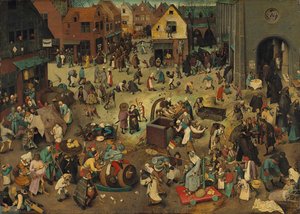 The Battle between Lent and Carnival - pieter bruegel the younger
The Battle between Lent and Carnival by Pieter Bruegel the Younger is pure, unadulterated sensory overload. It captures the raw, pulsing energy of a village caught in a high-stakes tug-of-war between two worlds: the wild, hedonistic indulgence of Carnival and the somber, disciplined restraint of Lent. As a definitive masterpiece of the Northern Renaissance , this work stands out for its incredible narrative density; it is a sprawling, chaotic microcosm where every corner of the canvas reveals a new layer of human folly, from feast-driven gluttony to the quiet tension of religious devotion.
Beyond its historical weight, the painting offers a masterclass in maximalist storytelling . Its rich, earthy palette—dominated by deep ochres, burnt umbers, and muted reds—provides an unparalleled anchor for contemporary urban interiors. Whether you are styling a moody, dark-walled study or a high-impact loft, this piece brings a textured, graphic complexity that resonates with today's design-conscious aesthetic. It is more than just art; it is a bold, historical statement piece that invites viewers to find beauty within the beautiful chaos of life.
The Mocking of Christ - matthias grünewald
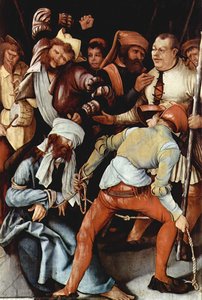 The Mocking of Christ - matthias grünewald
Close your eyes. Can you feel the light in Matthias Grünewald’s “The Mocking of Christ” ? It is not merely illumination; it is a language . The artist did not simply paint light—he composed it, like a musician crafting a haunting sonata of shadows and revelation. This is why this work defines the Northern Renaissance: it does not just reflect light; it invents it to articulate the raw, visceral tension of human cruelty.
As you observe the gritty realism of the crowded composition, notice how the highlights pierce through earthy tones to expose the profound vulnerability of Christ against the rough textures of binding ropes and heavy fabrics. Grünewald uses light to sculpt psychological depth, turning a moment of historical betrayal into an immersive sensory experience. Now, open your eyes. That dramatic interplay of light and shadow is waiting to spill into your home, turning your walls into portals of profound inspiration and historical intensity.
Christ Among the Doctors - Albrecht Dürer
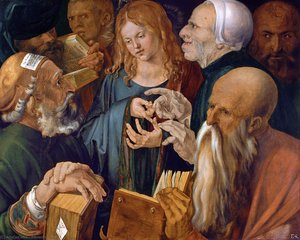 Christ Among the Doctors - Albrecht Dürer
Unveiling Christ Among the Doctors by Albrecht Dürer is like discovering a hidden, sacred dialogue between the divine and the human. This 1506 masterpiece stands as a cornerstone of the Northern Renaissance, capturing the electric moment where youthful wisdom confronts established scholarship with startling clarity. Dürer’s technical brilliance shines through his meticulous rendering of textures—from the heavy, tactile folds of drapery to the weathered, expressive faces of the scholars. The dramatic lighting, casting deep shadows across an earthy palette of ochre and crimson, creates a sense of intense, focused intimacy that draws the viewer into the heart of the debate.
Beyond its theological weight, the painting’s profound psychological depth and masterful use of light offer an unparalleled sense of intellectual gravity. For the modern connoisseur, integrating such a work into a curated space brings a layer of historical prestige and soulful contemplation. It is a piece that does not merely decorate a room but commands it, offering a timeless anchor of beauty and strength for any sophisticated, design-conscious interior.
Peasant wedding - Pieter Bruegel the Elder
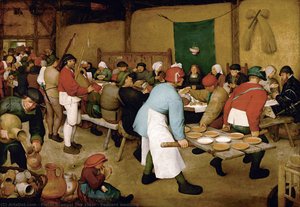 Peasant wedding - Pieter Bruegel the Elder
Imagine the sudden roar of a crowded room—the rhythmic clinking of pottery, the scent of rustic feasts, and the unfiltered energy of a community in celebration. In Peasant Wedding , Pieter Bruegel the Elder captures this raw, beautiful chaos with unmatched intensity. This isn't your typical idealized Renaissance scene; it is a gritty, vibrant snapshot of 16th-century life, where earthy ochres and muted reds bring the bustling festivities to life.
This masterpiece earns its place in the Top 10 because Bruegel dared to find the profound within the ordinary. By focusing on the textures of everyday existence—the heavy wooden beams, simple white aprons, and shared joy—he redefined the boundaries of Northern Renaissance art. For the modern collector, integrating such a high-impact, narrative piece into a contemporary space provides an instant injection of soul. It transforms a room from a mere living area into a curated gallery of human history.
Double Portrait of Jean de Dinteville and Georges de Selve (also known as The Ambassadors) - Hans Holbein the Younger
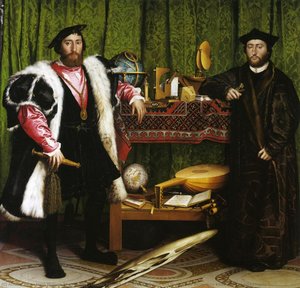 Double Portrait of Jean de Dinteville and Georges de Selve (also known as The Ambassadors) - Hans Holbein the Younger
What if I told you that Double Portrait of Jean de Dinteville and Georges de Selve by Hans Holbein the Younger was born from a moment of intense, calculated tension? This is not just art; it’s a manifesto . Its place in the Top 10 is not just earned; it’s demanded by history. Holbein uses hyper-realistic textures—the heavy weight of fur and the gleam of scientific instruments—to capture the very pulse of the Northern Renaissance.
The painting is packed with high-impact symbolism, from a broken lute string signaling discord to that legendary, distorted skull acting as a chilling memento mori . Now, imagine this level of prestige hanging above your desk, turning every glance into a reminder: your space is not just a room. It’s a statement. By bringing this masterpiece into your home or office, you transform your personal sanctuary into a curated gallery of profound, modern identity.
The Hunters in the Snow (Winter) - Pieter Bruegel the Elder
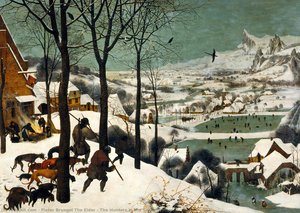 The Hunters in the Snow (Winter) - Pieter Bruegel the Elder
The lines in The Hunters in the Snow aren’t just drawn; they are choreographed—a dance frozen in time. Bruegel doesn't offer a single place to rest your eyes; instead, he invites you into a sprawling, rhythmic movement across a landscape gripped by the Little Ice Age. From the weary diagonal of the hunters and their dogs in the foreground to the distant, hazy figures skating on frozen ponds, every element contributes to an immense sense of atmospheric depth.
You can almost feel the biting chill through the muted greys, whites, and deep browns. It is a masterpiece of controlled chaos, where the textures of fur, bark, and frost create a sensory experience that pulls you directly into the 16th century. This isn't just a painting; it’s a study in balance. What if your own space could hold that same breathtaking harmony? What if your walls could breathe with this kind of rhythmic, historical soul?
Adam and Eve - Lucas Cranach the Elder
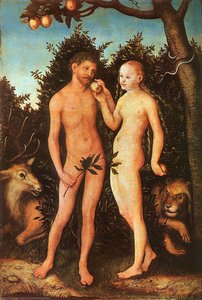 Adam and Eve - Lucas Cranach the Elder
The lines in Adam and Eve by Lucas Cranach the Elder aren’t merely drawn; they are choreographed . This isn't just a biblical scene; it is a dance frozen in time, where every organic curve of the figures and every intricate detail of the surrounding wildlife moves in a rhythmic, silent harmony. Within this 1531 masterpiece, Cranach captures the very pulse of the Northern Renaissance, blending meticulous botanical precision with profound spiritual tension.
The palette breathes with life—warm ochres, deep forest greens, and the startling, symbolic red of the apple that signals the end of innocence. As you gaze upon the smooth, flowing forms of Adam and Eve amidst their animal companions, you feel the weight of the moment: the transition from primordial peace to the complexity of human history. It is a composition where chaos finds its balance, inviting the viewer to witness the precise second before the world changed forever.
Conclusion
As we conclude our journey through the profound depths of the Northern Renaissance, we find that these works are far more than mere historical milestones. They are living, breathing presences that continue to pulse with meaning, shaping the atmosphere of our contemporary interiors and igniting the creative fires within us all. These paintings do not belong solely to the past; they exist in a continuous dialogue with the present, offering a window into a shared human experience that remains as vibrant today as it was centuries ago. At ArtsDot.com , we seek to bridge this gap between the historic and the tangible, ensuring that every masterpiece can be reborn as a hand-painted reproduction, meticulously crafted by skilled artists who honor the original's soul, texture, and profound detail. We invite you to rediscover these legends within our full collection .