Early Life & Artistic Foundations: From Law to Luminosity
 Wikipedia: Christian Krohg
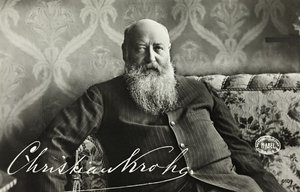
Christian Krohg (13 August 1852 – 16 October 1925) was a Norwegian naturalist painter, illustrator, author and journalist. Krohg was inspired by the realism art movement and often chose motifs from everyday life. He was the director and served as the...
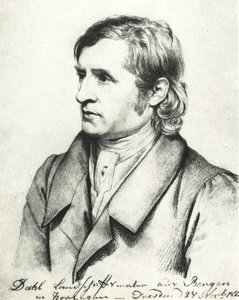
Christian Krohg’s journey toward becoming a defining voice of Norwegian realism was not predetermined. Born in 1852 into a family steeped in intellectual pursuits – his father, Georg Anton Krohg, was a journalist and author – the expectation initially leaned towards a career in law. He dutifully pursued studies at the University of Oslo, earning his *cand.jur.* degree in 1873. However, the rigid structures of legal study proved ill-suited to a spirit already attuned to observation, nuance, and the subtle complexities of human experience. A nascent artistic inclination, nurtured by early lessons with Johan Fredrik Eckersberg and further exploration at art schools in Karlsruhe and Berlin, began to exert its pull. This wasn’t merely a shift in profession; it was a fundamental reorientation towards a way of seeing – a commitment to capturing the world not as it *should* be, but as it *was*. The early works reveal a struggle between academic formality and an emerging desire for authenticity, foreshadowing the naturalist path he would so powerfully forge.
The Skagen Colony & The Embrace of Naturalism
Impressionism was a 19th-century art movement characterized by visible brush strokes, open composition, emphasis on accurate depiction of light in its changing qualities (often accentuating the effects of the passage of time), ordinary subject matter...
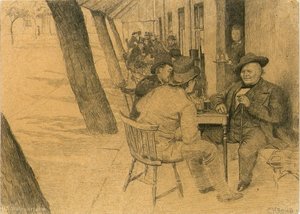
A pivotal moment arrived with Krohg’s encouragement from Frits Thaulow to visit the artists' colony in Skagen, Denmark, in 1879. This wasn’t simply a change of scenery; it was an immersion into a revolutionary artistic ethos. The Skagen painters, captivated by the unique light and rugged beauty of the Jutland coast, prioritized direct observation and plein air painting – capturing fleeting moments with bold brushstrokes and a focus on natural effects. Krohg found kinship in this pursuit, abandoning studio conventions for the immediacy of working outdoors. He returned repeatedly to Skagen throughout the 1880s, absorbing the colony’s spirit and developing his signature naturalist style. His paintings from this period – depictions of fishermen, coastal scenes, and everyday life – are characterized by a raw honesty and an empathetic portrayal of working-class subjects. The influence wasn't merely technical; Skagen instilled in Krohg a deep respect for the dignity of labor and the power of unvarnished truth.
Social Commentary & 'Albertine': Painting the Unseen Realities
 Wikipedia: Norwegian new realism
The Norwegian new realism was a literary movement that dominated Norwegian literature in the first half of the 20th century. Prominent examples include Knut Hamsun's later work, Sigrid Undset, Johan Falkberget, and Olaf Bull. Both Knut Hamsun and Sig...
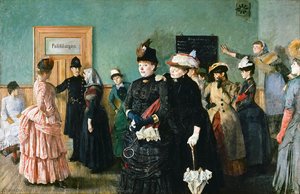
Krohg’s artistic vision extended beyond mere representation; he sought to use his art as a vehicle for social commentary. This commitment culminated in his most controversial – and arguably, most significant – work: the series surrounding prostitution in Christiania (Oslo). Driven by a desire to expose the harsh realities of poverty and exploitation, Krohg embarked on a deeply unsettling project. He interviewed women working in the city’s red-light district, meticulously documenting their lives and experiences. The resulting paintings, culminating in the large-format canvas *Albertine*, were shocking for their time. He even employed prostitutes as models, further challenging societal norms. Accompanying these images was his novel *Albertine* (1886), which unflinchingly depicted the plight of a young woman forced into prostitution after being raped. The work sparked outrage and censorship attempts, but it also ignited a crucial public debate about social injustice and the vulnerability of women. Albertine wasn’t simply a painting; it was an act of defiance, a visual manifesto demanding attention to the marginalized.
Krohg's Parisian Influences and Pictorial Modernity
While deeply rooted in Norwegian life, Krohg’s artistic development wasn’t isolated. His time in Paris during the 1880s exposed him to the burgeoning Impressionist movement and the work of artists like Gustave Courbet and Édouard Manet. He didn't adopt Impressionism wholesale; rather, he synthesized its techniques – particularly its emphasis on light and composition – with his own naturalist sensibilities. The influence is visible in his increasingly dynamic compositions, audacious framings, and a willingness to embrace unconventional perspectives. Krohg’s motto, “It’s all a question of framing,” encapsulates this approach. He believed that the way an artist chose to present a subject was as important as the subject itself – a principle that infused his work with a sense of immediacy and psychological depth. This pursuit of pictorial modernity, combined with his social consciousness, set him apart from many of his contemporaries.
A Professor and a Pioneer: Shaping Norwegian Art Education
Krohg’s influence extended beyond his own canvases; he played a crucial role in shaping the next generation of Norwegian artists. In 1909, he became the director – and first professor – of the Norwegian Academy of Arts. He revolutionized art education, advocating for a more progressive curriculum that emphasized individual expression and critical thinking. He encouraged students to engage with contemporary social issues and to challenge traditional artistic conventions. His approach was often unconventional, prioritizing experimentation and personal vision over rigid technical training. Krohg’s tenure at the academy fostered a vibrant artistic community and helped establish Norway as a center for innovative art. He believed that art should be accessible to all, not just an elite few, and he worked tirelessly to democratize the art world.
Legacy and Enduring Impact: Krohg’s Contribution to Scandinavian Art
Christian Krohg died in 1925, leaving behind a legacy as one of Norway's most important artists. His paintings continue to resonate today for their raw honesty, empathetic portrayal of human experience, and unwavering commitment to social justice. He wasn’t merely a painter; he was a storyteller, a journalist, an activist, and a pioneer who challenged societal norms and redefined the boundaries of Norwegian art. His influence can be seen in the work of subsequent generations of Scandinavian artists, particularly those who sought to address social issues through their art. The People of the North, as his subjects are often described, remain powerfully present in his canvases – a testament to his enduring ability to capture the dignity and resilience of the human spirit. Discover more about Christian Krohg’s captivating work and explore reproductions available at ArtsDot.