

The Shifting Sands: Economic & Social Currents Shaping 1873
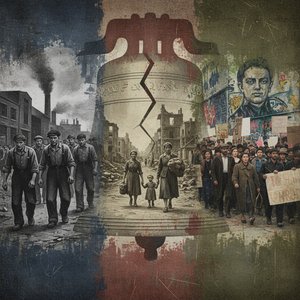
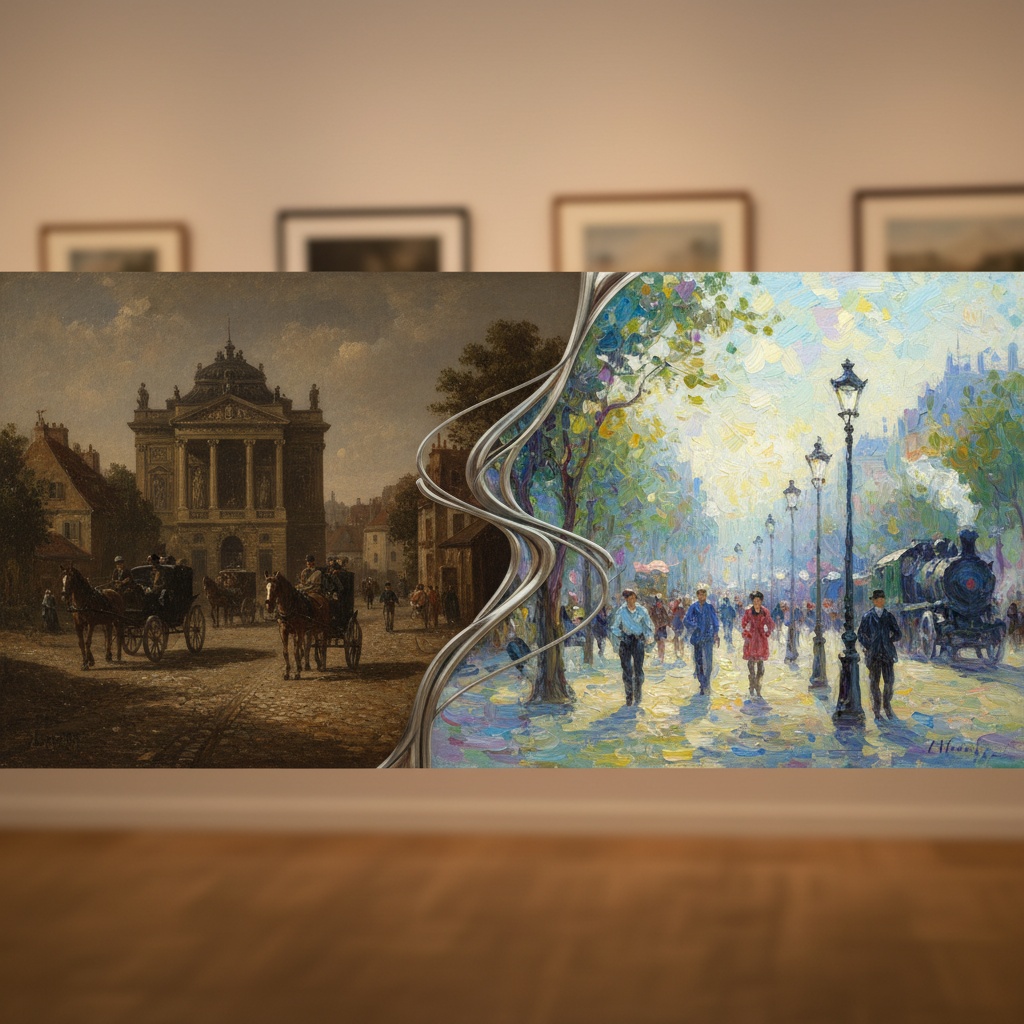
The year 1873 often feels like a quiet pivot point, a subtle tremor before the earthquake of modernity fully reshaped the European landscape. While not marked by immediate revolution in artistic style, it was a year steeped in transition – a moment where the foundations of established order began to crack under the weight of industrial expansion, financial speculation, and evolving social consciousness. The Long Depression, triggered by the Panic of 1873, cast a long shadow, impacting everything from the patronage system that supported artists to the very subject matter deemed worthy of representation. The Second Industrial Revolution was in full swing, irrevocably altering daily life and creating a new class structure—one increasingly defined not by lineage but by capital. This burgeoning middle class sought art that reflected their aspirations and anxieties, moving away from the grand historical narratives favored by the aristocracy towards scenes of contemporary existence.
The Belle Époque was nascent, its glittering promise still tempered by underlying uncertainties. Paris, though already a magnet for artists and intellectuals, hadn’t yet fully embraced the carefree spirit that would define the coming decades. A sense of realism – not merely as an artistic style but as a philosophical response to rapid change – permeated intellectual circles. Émile Zola's naturalism was gaining traction in literature, advocating for unflinching portrayals of life, however harsh. This desire for authenticity, for a direct engagement with the present moment, would profoundly influence the visual arts.
Realism's Last Stand: Bastien-Lepage, Caillebotte, and the Pursuit of Authenticity
Realism, Realistic, or Realists may refer to: == In the arts == Realism (arts), the general attempt to depict subjects truthfully in different forms of the arts Arts movements related to realism include: == In philosophy == Philosophical realism ...
The late 1870s witnessed a fascinating tension between the waning power of Realism and the burgeoning force of Impressionism. Artists like Jules Bastien-Lepage represented a final, powerful expression of the realist tradition. His work, characterized by meticulous detail and a somber palette, sought to capture the dignity and hardship of rural life. Paintings such as “The Woodcutters” (1875) weren’t simply depictions of labor; they were social commentaries, imbued with a sense of moral weight. However, even Bastien-Lepage's realism was evolving, incorporating elements of psychological depth that foreshadowed later movements.
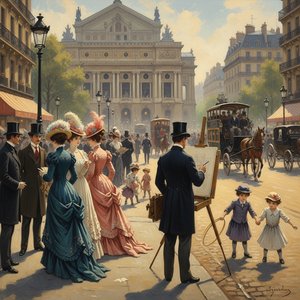
Gustave Caillebotte, though often associated with Impressionism due to his participation in their exhibitions, occupies a unique position. His paintings, like “Paris Street; Rainy Day” (1877), are meticulously rendered and possess a distinctly realist sensibility. Caillebotte’s focus on the urban environment, coupled with his precise observation of light and shadow, created scenes that were both strikingly modern and deeply rooted in the tangible world. He wasn't interested in fleeting impressions but rather in capturing the solidity and complexity of Parisian life. His work reveals a fascination with the new bourgeois class and their experiences.
Impressionism’s Ascent: Capturing Modern Life in Fleeting Moments
While Realists wrestled with social commentary, a younger generation was turning towards a different approach – one focused on capturing the ephemeral qualities of light and atmosphere. The Impressionists, initially rejected by the official Salon, began to forge their own path through independent exhibitions. Claude Monet’s “Impression, soleil levant” (1872) gave the movement its name, albeit derisively at first. The emphasis shifted from detailed representation to subjective perception – how light *felt* rather than how things objectively *looked*.
Artists like Renoir and Degas explored different facets of modern life. Renoir’s depictions of Parisian cafes and social gatherings celebrated leisure and beauty, while Degas focused on the dynamism of urban spaces—ballet dancers, racehorses, laundresses—capturing movement and fleeting moments with remarkable precision. The rejection of traditional academic techniques – smooth brushstrokes, carefully blended colors – was a deliberate act of rebellion, signaling a new era in artistic expression.
Beyond France: Echoes of Change Across Europe – Belgium & Beyond
The ripples of change weren’t confined to the French art world. Belgium, with its vibrant artistic community and proximity to Paris, played a crucial role in disseminating these new ideas. Artists like James Ensor, though developing his own unique style—a precursor to Expressionism—was initially influenced by both Realism and Impressionism. His early works reveal a fascination with the everyday lives of ordinary people, painted with a meticulous attention to detail reminiscent of Bastien-Lepage.
Across Europe, artists were grappling with similar questions: how to represent the rapidly changing world around them? The rise of industrialization, urbanization, and social unrest prompted new forms of artistic inquiry. While Impressionism found its most fervent adherents in France, its influence extended far beyond its borders, inspiring artists to experiment with light, color, and subjective perception.
The Salon System Challenged: New Avenues for Artistic Expression
The traditional art establishment – the Académie des Beaux-Arts and the annual Salon de Paris – struggled to accommodate these new artistic currents. The rejection of Impressionist works fueled a growing sense of alienation among artists, leading them to establish their own independent exhibitions. These exhibitions provided a vital platform for showcasing innovative work and challenging the established norms.
The rise of art dealers like Paul Durand-Ruel was also crucial. Durand-Ruel championed the Impressionists, providing financial support and actively promoting their work to collectors. He understood that these artists represented the future of painting, even if it wasn’t immediately apparent to everyone. The emergence of new galleries and private salons offered alternative venues for exhibiting and selling art, further undermining the authority of the Salon.
Collecting the Era: Building a Legacy of 1873's Masterpieces
The collectors of this era were often bold visionaries who recognized the potential of these emerging artists. They weren’t necessarily drawn to grand historical narratives or idealized beauty but rather to works that captured the spirit of their time. Building a collection during this period required courage and discernment, as many of these artists faced initial skepticism and financial hardship.
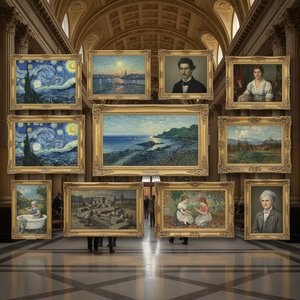
Today, the paintings produced in and around 1873 represent some of the most iconic images of the modern era. From the meticulous realism of Bastien-Lepage to the fleeting impressions of Monet and Renoir, these works offer a fascinating glimpse into a world on the cusp of transformation. At ArtsDot.com, we are dedicated to making these masterpieces accessible to all, offering high-quality reproductions that capture the beauty and nuance of the original artworks. Explore our collection today and discover the enduring legacy of 1873’s artistic revolution – or commission a custom reproduction of your favorite piece! We also offer free art consultation services to help you select the perfect artwork for your home or office.