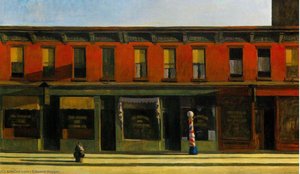

The Shadow of Economic Crisis: Setting the Stage for Artistic Change
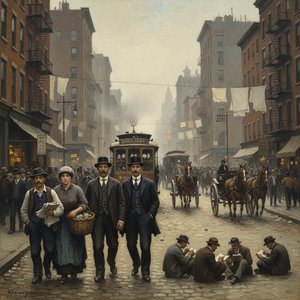
The decade of the 1930s stands as a stark reminder of societal fragility, an era indelibly marked by the Great Depression. The catastrophic Wall Street crash of 1929 wasn’t merely a financial event; it was a rupture in the collective psyche, shattering illusions of prosperity and ushering in a period of widespread unemployment, poverty, and disillusionment. This profound economic upheaval served as the crucible from which a new artistic sensibility would emerge – one deeply concerned with social realities, human suffering, and the precariousness of modern life. Prior to the crash, the “Roaring Twenties” had fostered a spirit of exuberance, reflected in the burgeoning popularity of Art Deco’s sleek lines and optimistic designs. However, as fortunes evaporated and breadlines lengthened, artists began to grapple with a very different narrative – one demanding honest representation rather than escapist fantasy. The cultural landscape shifted dramatically, moving away from purely aesthetic concerns towards a more engaged and politically charged form of expression.
Social Realism Emerges: Documenting Hardship and Inequality
Social realism is work produced by painters, printmakers, photographers, writers, filmmakers and some musicians that aims to draw attention to the real socio-political conditions of the working class as a means to critique the power structures behind...
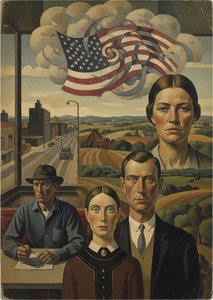
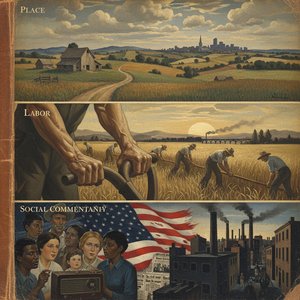
From the ashes of economic ruin arose Social Realism, an artistic movement dedicated to portraying the lives of working-class people and exposing the systemic inequalities that fueled their struggles. Unlike earlier forms of realism focused on objective observation, Social Realism carried a clear ideological weight – it was art with a purpose, intended to critique power structures and advocate for social justice. Artists like Ben Shahn became synonymous with this approach, his starkly honest depictions of migrant workers and the unemployed capturing the raw desperation of the era. His work wasn’t simply about *showing* poverty; it was about bearing witness to human dignity in the face of unimaginable hardship. The movement drew inspiration from earlier European traditions, but found its unique voice in the American context, often focusing on specific regional experiences and the plight of marginalized communities. It sought to make art accessible – not confined to elite galleries, but speaking directly to the lives of those it depicted.
Beyond Representation: The WPA and Art as Public Service
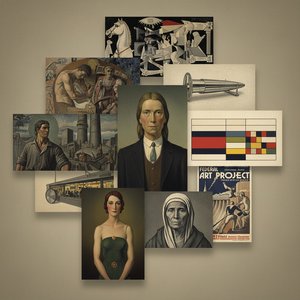
Perhaps no single initiative had a greater impact on American art during the 1930s than the Works Progress Administration (WPA). Established in 1935 as part of President Franklin D. Roosevelt’s New Deal, the WPA provided employment for millions of unemployed Americans, including artists, writers, musicians, and actors. The Federal Art Project, a division of the WPA, aimed to “art for the millions,” commissioning murals, paintings, sculptures, and prints that adorned public buildings – post offices, schools, hospitals, and libraries. This wasn’t simply about providing jobs; it was a radical experiment in democratizing art, bringing cultural expression directly into the lives of everyday citizens. The WPA fostered a diverse range of artistic styles, but Social Realism became particularly prominent, with artists using their government funding to create powerful visual narratives of American life. Prints were especially significant, allowing for wide dissemination of images and political messages.
Contrasting Visions: Art Deco's Optimism Amidst Uncertainty
Art Deco, short for the French Arts décoratifs (lit. 'Decorative Arts'), is a style of visual arts, architecture, and product design that first appeared in Paris in the 1910s just before World War I and flourished internationally during the 1920s to ...
While Social Realism dominated the artistic discourse surrounding the Depression, it’s crucial to acknowledge the concurrent presence of Art Deco. Emerging in the 1920s, this style celebrated modernity, industrial progress, and luxury – a stark contrast to the grim realities faced by many during the economic downturn. The Chrysler Building, with its iconic spire, embodies the spirit of Art Deco: sleek, geometric, and unapologetically optimistic. However, even as the Depression deepened, Art Deco continued to flourish, albeit often in modified forms. It represented a desire for escape, a yearning for beauty and order amidst chaos. The style’s emphasis on streamlined design and luxurious materials also appealed to those who still possessed wealth and sought to maintain a sense of normalcy. The juxtaposition of Art Deco's glamour with the stark realities depicted by Social Realist artists reveals the complex and often contradictory emotions of the era.
Key Artists of the Era: Shahn, Hopper, and Beyond
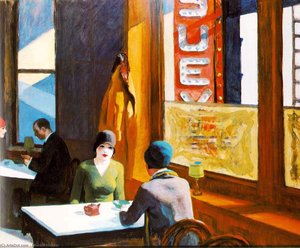
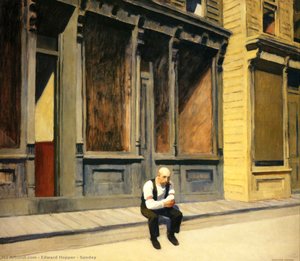
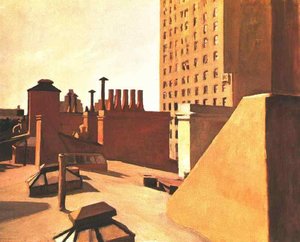
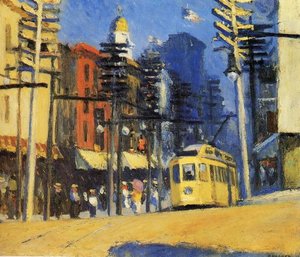
Ben Shahn’s photographs and paintings stand as poignant testaments to the human cost of the Depression. His work, often imbued with a sense of empathy and moral outrage, captured the faces and stories of those left behind by economic progress. Edward Hopper, while not strictly aligned with Social Realism, offered a similarly unflinching portrayal of American life, albeit through a more introspective lens. His paintings – *Nighthawks* being perhaps his most iconic work – depict scenes of urban isolation and alienation, reflecting the psychological toll of the Depression era. Beyond these prominent figures, artists like Thomas Hart Benton explored regional themes and celebrated the resilience of rural communities. The Precisionists, initially fascinated by industrial machinery, also shifted their focus to the human element, depicting workers and factories with a newfound sense of social awareness. These diverse voices collectively shaped the artistic landscape of the 1930s.
The Enduring Legacy: How 1930s Art Reflects Our Times
The art of the 1930s continues to resonate deeply today, offering a powerful reminder of the enduring human capacity for both suffering and resilience. The themes explored by artists during this era – economic inequality, social injustice, and the search for meaning in a chaotic world – remain strikingly relevant in the 21st century. The legacy of Social Realism can be seen in contemporary art that addresses political issues and advocates for social change. Furthermore, the WPA’s commitment to public art serves as a model for community-based initiatives aimed at democratizing cultural expression. The works created during this period are not simply historical artifacts; they are urgent calls for empathy, justice, and a more equitable society. At ArtsDot.com, we believe in the power of art to transcend time and connect us to shared human experiences. Explore our collection of 1930s masterpieces – reproductions that capture not only the aesthetic beauty but also the profound social and political context of this transformative decade, bringing these important stories into your home.