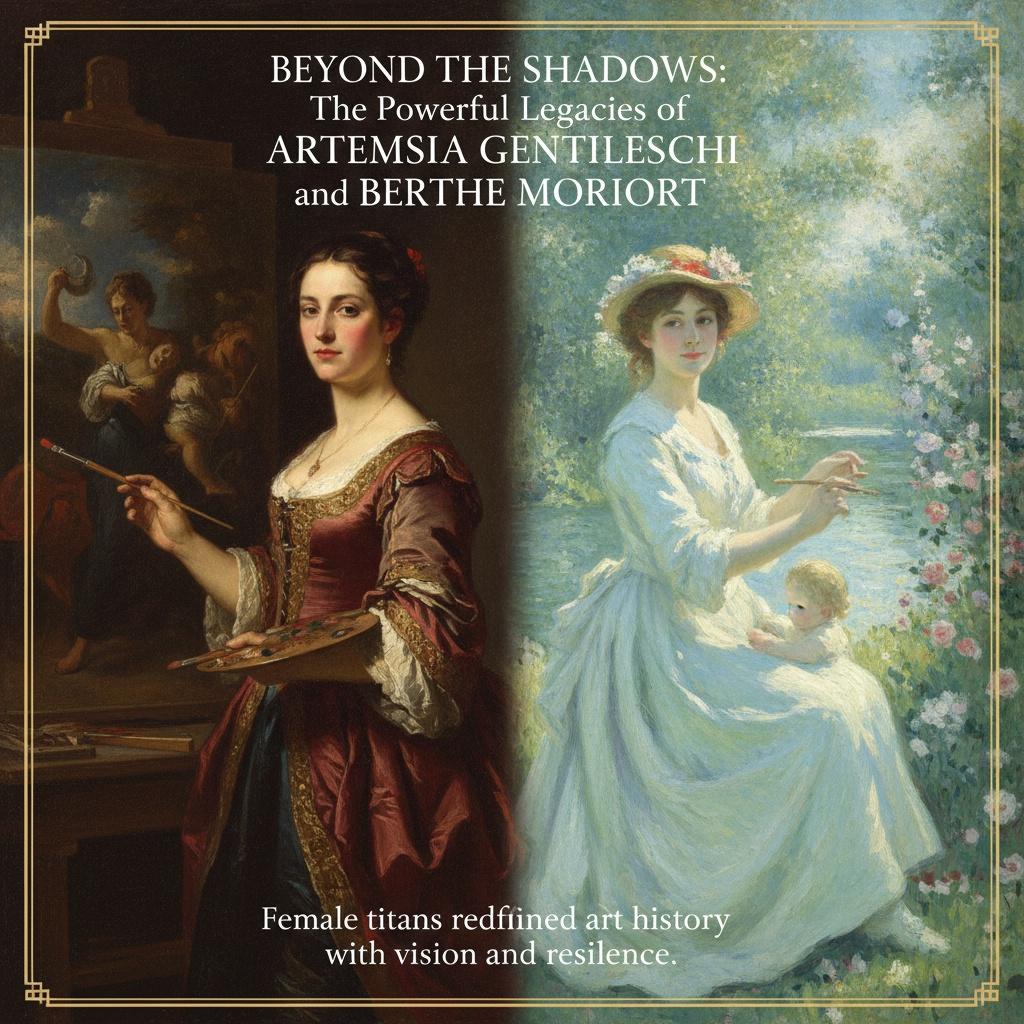
Introduction: Redefining the Canon Through Female Vision
To traverse the corridors of art history is to encounter a narrative often written by the victors, a chronicle that for centuries relegated female brilliance to the periphery of the grand canon. Yet, beneath the layers of historical dust lie the profound, unyielding legacies of women who did not merely participate in their respective movements but fundamentally redefined them. This exploration seeks to move beyond the shadows of obscurity to illuminate the lives and works of two titans: Artemisia Gentileschi and Berthe Morisot. Though separated by two centuries and vastly different aesthetic philosophies—one rooted in the dramatic, tenebristic tension of the Italian Baroque, the other in the luminous, ephemeral atmosphere of French Impressionism—both artists shared a common thread of extraordinary vision. They utilized the tools of their eras to carve out spaces for agency, truth, and an unprecedented psychological depth that continues to resonate with the modern collector and historian alike.
Artemisia Gentileschi: Chiaroscuro and the Drama of Resilience
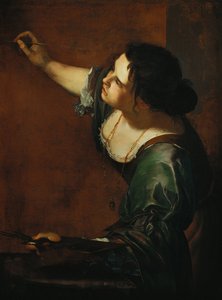 Artemisia Gentileschi
A Daughter of Rome: The Life and Art of Artemisia Gentileschi Artemisia Gentileschi’s name echoes through the halls of art history, resonating not simply as that of a painter, but as an emblem of resilience, defiance, and extraordinary artistic talen...
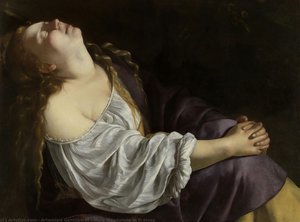
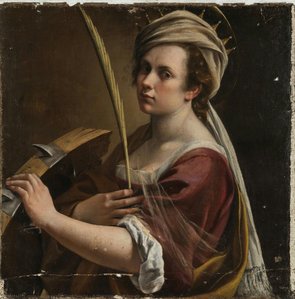
Born in Rome in 1593, Artemisia Gentileschi entered a world steeped in the revolutionary realism of Caravaggio. As the daughter of Orazio Gentileschi, she was nurtured within a workshop where the mastery of light and shadow was not merely a technique but a language of profound emotionality. Her brush possessed a rare ability to translate human resilience into pigment, utilizing chiaroscular—the stark, dramatic contrast between light and dark—to animate her canvases. In her hands, light does not simply illuminate; it contends with the darkness, creating a visceral struggle that mirrors the human condition. Her development was marked by an uncompromising commitment to anatomical accuracy and expressive power, learned through the rare opportunity to study from life models, a privilege seldom afforded to women of the 17th century.
Her work is characterized by a raw, psychological intensity that distinguishes her from her contemporaries. Where others might have sought to decorate, Artemisia sought to reveal. The shadows in her compositions are never empty voids; they are heavy with tension, pressing against the light to emphasize the physical and emotional weight of her narratives. This mastery of tenebrism allowed her to portray figures that possess a palpable sense of presence, making the viewer an intimate witness to the drama unfolding upon the canvas.
The Baroque Rebellion: Reclaiming Agency in the 17th Century
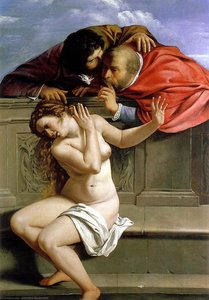
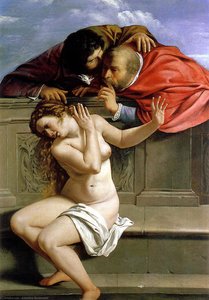 Susanna and the Elders
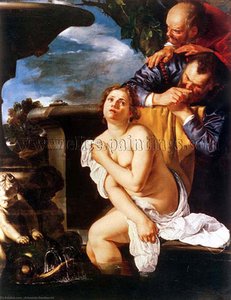
Artemisia Gentileschi's Masterpiece: A Baroque Triumph A Story of Courage and Resilience Artemisia Gentileschi's "Susanna and the Elders" (1610) is a powerful depiction of the biblical tale from the Book of Daniel. This masterpiece captures the momen...
The art of the Italian Baroque was often a tool of the Counter-Reformation, designed to inspire awe and reaffirm the authority of the Church. Within this rigid framework, Artemisia Gentileschi staged a quiet but powerful rebellion. Her interpretations of biblical and mythological subjects frequently departed from the passive, idealized female figures common in the era. In her masterpiece, Susanna and the Elders (1610), we witness a profound shift in perspective. While traditional portrayals often emphasized the vulnerability of the subject for the viewer's voyeuristic pleasure, Artemisia imbues Susanna with a quiet dignity and a sense of resistance. The painting is an exploration of moral integrity amidst corruption.
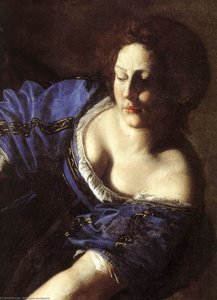
Through her lens, female subjects are granted unprecedented agency. Whether depicting the fierce determination in Judith Slaying Holiente or the nuanced strength of biblical heroines, Artemisia reclaimed the narrative of the female experience. She utilized the very techniques used to glorify the state and church to instead highlight the complexities of vulnerability and courage. Her legacy is one of defiance, forcing the art world to acknowledge a perspective that had long been relegated to the margins of history.
Berthe Morisot: The Poetics of Light and Impressionist Intimacy
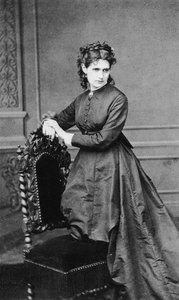 Berthe Morisot
A Life Immersed in Light and Intimacy Berthe Morisot, born in Bourges, France, in 1841, emerged as a pivotal figure within the Impressionist movement, yet her story extends far beyond simply being a “female Impressionist.” To define her solely by gen...
As we transition from the heavy, dramatic shadows of the Baroque to the luminous, ephemeral atmosphere of the late 19th century, we encounter the delicate brilliance of Berthe Morisot. Born in Bourges, France, in 1841, Morisot emerged as a pivotal figure within the Impressionist movement. Her lineage, connected to the Rococo master Jean-Honoré Fragonard, provided an artistic foundation, but it was her rigorous training and exposure to the Old Masters in the Louvre that ignited her true sensibility. Unlike the structured drama of the Baroque, Morisot’s world was one of light, air, and the fleeting impressions of modern life.
Morisot’s approach was deeply influenced by plein air painting—the practice of working outdoors to capture the shifting qualities of atmosphere. Her work embodies a profound originality, moving far beyond the label of a “female Impressionist.” She possessed an unparalleled ability to translate the intimacy of the domestic sphere and the serenity of the natural world into a language of soft brushstrokes and delicate colors. In her hands, the canvas becomes a window into a moment of quiet beauty, captured before it vanishes forever.
Capturing the Fleeting Moment: Morisot’s Modernity and Softness
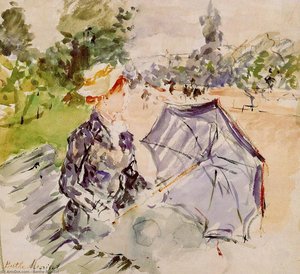 Lady with a Parasol Sitting in a Park
The painting "Lady with a Parasol Sitting in a Park" by Berthe Morisot is a beautiful example of Impressionist art. Created in 1885, this watercolor piece measures 19 x 20 cm and showcases the artist's ability to capture the essence of a sunny day at...
The essence of Morisot’s artistry lies in her dedication to the ephemeral. In works such as Lady with a Parasol Sitting in a Park (1885), she showcases an ability to capture the very soul of a sunny day. Her use of watercolor and oil allows for a sense of lightness and airiness, where blues and greens create a tranquil, serene landscape. There is a poetic softness to her technique; her brushstrokes are not rigid boundaries but fluid suggestions of form, allowing the subject to merge harmoniously with the environment.
Morisot also excelled in depicting the intimate connections of human life. In The Artist’s Sister Edma with Her Daughter Jeanne (1872), she presents a tender tableau of familial connection, set against a backdrop of diffused light. Even in her more landscape-oriented works, such as Beneath the Lilac at Maurecourt (1874), there is an emphasis on the peaceful coexistence of humanity and nature. Her modernity was found not in the depiction of industrial chaos, but in the elevated observation of the everyday, finding the extraordinary within the ordinary through a lens of profound tenderness.
A Comparative Legacy: From Baroque Shadows to Impressionist Radiance
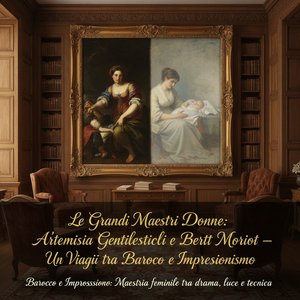 Beyond the Shadows: The Resurgence of Female Masters Artemisia Gentileschi and Berthe Morisot
The Baroque Rebellion: Artemisia Gentileschi and the Power of Chiaroscuro To step into the world of the Italian Baroque is to enter a realm where light does not merely illuminate, but actively contends with the darkness. At the heart of this dramatic...
When we place Artemisia Gentileschi and Bertiente Morisot in dialogue, we observe a fascinating evolution of the female gaze. While their technical executions were worlds apart—one utilizing the heavy, muscular shadows of chiaroscuro and the other the weightless, luminous strokes of Impressionism—their underlying purpose remains strikingly similar. Both artists utilized the prevailing styles of their time to assert a unique, unshakeable presence. They both navigated societal constraints to document the human experience with an authenticity that their male contemporaries often overlooked.
Artemisia’s work speaks to the strength found in struggle and the resilience of the spirit against oppression. Morisot’s work speaks to the beauty found in the transient and the profound depth found in intimacy. Together, they represent two different ways of seeing: one through the lens of dramatic confrontation and the other through the lens of atmospheric grace. Their combined legacies remind us that art history is not a single line of progress, but a complex tapestry of competing visions, each contributing to our understanding of what it means to be human.
Conclusion: The Enduring Impact of Female Masters on Art History
The resurgence of interest in Artemisia Gentileschi and Berthe Morisot is more than a mere academic trend; it is a necessary correction of the historical record. By studying their works, we gain a richer, more nuanced understanding of the Baroque and Impressionist eras. We learn that the shadows of the 17th century were filled with much more than just darkness, and that the light of the 19th century was shaped by hands that understood the profound weight of intimacy. Their lives serve as enduring testaments to the power of artistic vision to transcend the limitations of era and gender.
For the discerning collector, these works offer a connection to a profound human truth. At ArtsDot.com, we are dedicated to preserving this heritage by offering museum-quality, handmade oil reproductions that capture the very soul of these masterpieces. Whether it is the textured, impasto brushstrokes of a Baroque triumph or the soft, light-drenched elegance of an Impressionist moment, our artists strive to bring the weight and wonder of art history into your home. We invite you to explore our collection and rediscover the power of the masters who dared to paint beyond the shadows.