
The Post-War Rupture: Historical Context and the Birth of the New York School
Abstract expressionism in the United States emerged as a distinct art movement in the aftermath of World War II and gained mainstream acceptance in the 1950s, a shift from the American social realism of the 1930s influenced by the Great Depression an...
To understand Abstract Expressionism, one must first grasp the profound sense of dislocation that defined the mid-20th century. The movement did not emerge from a vacuum of peace, but rather from the seismic tremors of a world reeling from the unprecedented trauma of World War II. As the 1940s gave way to the 1950s, the established artistic centers of Europe—most notably Paris—found themselves eclipsed by a new, defiant energy rising from the streets of Manhattan. This was the birth of the New York School, a collective of artists who found traditional representational painting insufficient to articulate the complexities of a post-atomic age.
The transition from the American Social Realism of the 1930s, which had focused on the struggles of the Great Depression and the monumental narratives of Mexican muralists, toward a purely non-representational vocabulary was nothing short of a revolution. The term itself, first applied to this American movement by critic Robert Coates in 1946, signaled a departure from outward observation toward inward exploration. Artists were no longer seeking to document the physical world but were instead attempting to map the fractured psyche of humanity. In this era of uncertainty, the canvas became a site of resistance against the loss of certainty, establishing New York City as the new epicenter of the Western art world.
The Language of Gesture: Action Painting and the Visceral Canvas
Action, Gesture, Paint: Women Artists and Global Abstraction 1940–1970 was an art exhibition held at the Whitechapel Gallery from 9 February 2023 through 7 May 2023. The exhibit presented 150 mid-century abstract paintings by 81 women artists. The sh...
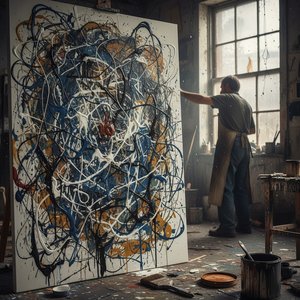
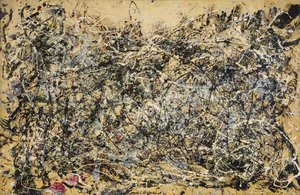
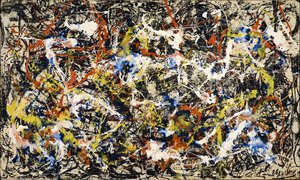
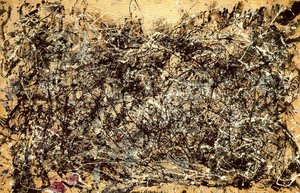
Within this movement, a specific subset of practice emerged that transformed the act of painting into a physical performance. Often referred to as Action Painting, this approach emphasized the gestural brushstroke and the raw, unbridled energy of the artist's movement. For figures like Jackson Pollock, the canvas was not merely a surface for an image but an arena in which to act. Through techniques such as dripping, pouring, and splashing paint directly onto a floor-bound canvas, the boundary between the creator and the creation began to dissolve.
This method of gestural abstraction turned every mark into a trace of an event. When we observe the works of Franz Kline or Willem de Kooning, we see more than just paint; we witness the residue of intense physical labor and spontaneous decision-making. The thick, impasto textures and aggressive, intersecting lines create a sense of controlled turbulence, where the artist’s very breath and muscle tension are embedded in the pigment. This visceral outpouring allowed for a direct connection to the human spirit, stripping away narrative constraints to reveal a more primal, authentic form of communication that resonates with viewers even decades later.
Color Field Theory: Exploring Emotion through Chromatic Immersion
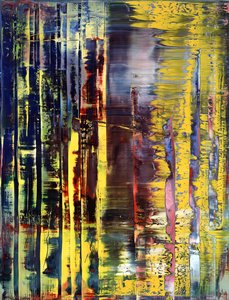 Abstract Painting 780-1
Vibrant Abstraction: A Dance of Color and Light Gerhard Richter's "Abstract Painting 780-1" is a mesmerizing exploration of color, texture, and movement. Created in 1992, this piece exemplifies Richter's mastery of abstract expressionism, offering a ...
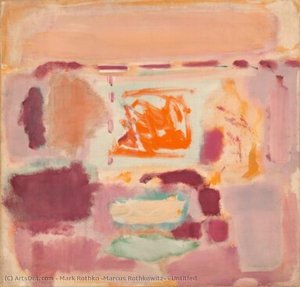
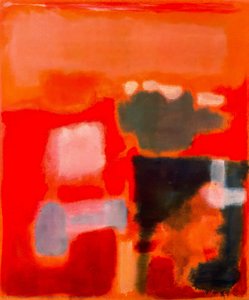
While some artists sought intensity through motion, others pursued it through stillness and scale. The Color Field painters, including masters such as Mark Rothko and Barnett Newman, moved away from the frantic energy of action painting toward a more meditative, immersive experience. Their work focused on large expanses of saturated color, designed to envelop the viewer in a profound chromatic atmosphere. In these monumental canvases, there is no focal point to anchor the eye; instead, the viewer is invited to lose themselves within the depth and vibration of the hues.
The power of Color Field painting lies in its ability to evoke existential moods through pure opticality. A Rothko canvas, with its soft-edged rectangles of luminous color, can evoke a sense of mourning, transcendence, or spiritual awe. The technique often involves layering thin washes of pigment to create a sense of internal light, making the surface appear as though it is breathing. This approach moves beyond mere decoration, utilizing color as a fundamental psychological tool to touch upon the universal human experience of grief, joy, and the infinite.
From Subconscious to Surface: The Influence of Surrealism and Psychoanalysis
 Beyond Representation: Exploring Gesturality, Emotion, and Philosophical Underpinnings of Contemporary Abstract Painting
The Genesis of Abstraction: From Modernism to Post-War Expression Abstract expressionism Abstract expressionism in the United States emerged as a distinct art movement in the aftermath of World War II and gained mainstream acceptance in the 1950s, a ...
The intellectual foundation of Abstract Expressionism was deeply rooted in the burgeoning field of psychoanalysis. The influence of Carl Jung and the exploration of the collective unconscious provided a roadmap for artists seeking to tap into deeper reservoirs of meaning. Many members of the New York School were profoundly moved by the Surrealist techniques of automatism—the practice of creating without conscious control to allow the subconscious mind to dictate form. This lineage can be traced through the early works of Arshile Gorky, whose transition from figurative elements to fluid abstraction bridged the gap between European avant-garde and American innovation.
By embracing spontaneity and intuition, these artists sought to bypass the rational intellect and access a more authentic, primal truth. The movement was not merely about making "messy" art; it was a disciplined attempt to use the canvas as a window into the psyche. This fascination with the internal landscape allowed for a radical subjectivity, where the artist's anxieties, passions, and existential questions were projected onto the surface. It was an era of profound experimentation, where the boundaries between the dream state and the waking world were blurred through the medium of oil and pigment.
The Legacy of Abstraction: From Mid-Century Masters to Contemporary Expression
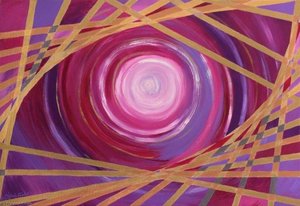 Purple and Gold Abstract
Explore 'Purple & Gold Abstract' by Michele Elizabeth Field (2005). This dynamic oil painting showcases swirling forms, impasto texture, and vibrant hues – a captivating piece of abstract expressionism.
The impact of Abstract Expressionism extends far beyond its mid-century peak. The movement redefined the possibilities of what a painting could be, paving the way for Lyrical Abstraction, Color Field painting, and even contemporary explorations of texture and materiality. We see its echoes in the work of later masters like Gerhard Richter, who utilizes complex, layered techniques to explore the tension between photography and abstraction, or in the vibrant, swirling forms of modern artists like Michele Elizabeth Field.
Today, the legacy of this movement lives on in our appreciation for the tactile beauty of a well-executed brushstroke. For the collector or the student of art history, owning a piece that captures this spirit is an invitation to engage with the very essence of human emotion. At ArtsDot.com, we honor this profound history by offering museum-quality, hand-painted reproductions of these canonical masterpieces. Our master artists, trained in the highest academic traditions, meticulously recreate the thick impasto and vibrant color depths that define the Abstract Expressionist era. Whether you seek a monumental multi-panel set to anchor a modern space or a bespoke commission that reimagines a personal moment through the lens of gestural abstraction, we provide a bridge to the enduring power of art history.