
The Great Departure: From Mimetic Reality to Pure Essence
--- title: Geometric Abstraction - The Metropolitan Museum of Art author: Magdalena Dabrowski url: https://www.metmuseum.org/essays/geometric-abstraction hostname: metmuseum.org description: Geometric abstraction, through the Cubist process of purify...
This era marked the beginning of a departure from mimesis, where the subject was no longer a window, but a canvas in its own right. The movement toward abstraction was not a rejection of reality, but rather an attempt to peel back its layers to find something more fundamental. As seen in the early explorations of Cubism, artists like Pablo Picasso and Georges Braque began to fragment the familiar, subverting traditional depiction by focusing on the inherent two-dimensional features of the painting itself. This process of purification allowed art to move away from the vestiges of visual reality and toward a language of pure form, where the essence of an object could be expressed through its structural geometry rather than its literal likeness.
The Architecture of Order: The Rise and Logic of Geometric Abstraction
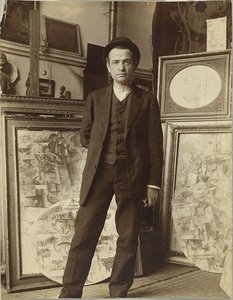 Auguste Herbin
A Pioneer of Geometric Abstraction: The Life and Art of Auguste Herbin Auguste Herbin, born in the quiet northern French town of Quiévy in 1882, emerged as a pivotal figure in the evolution of abstract art. His journey was not one of immediate revela...
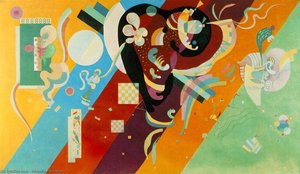
Pioneers such as Auguste Herbin exemplified this gradual unfolding of form. His journey from traditional techniques to becoming a leading proponent of geometric abstraction mirrors the broader movement's evolution. Through the use of simple geometric forms placed in non-illusionistic space, artists sought to communicate truths that were eternal and unchanging. This was not merely an aesthetic choice but a philosophical one; by utilizing the elegant simplicity of geometry, they believed they could connect with a deeper, cosmic truth. The beauty of these works lies in their balance and clarity—a quality that continues to offer a sanctuary of contemplation in our modern age. For those looking to bring this sense of structured serenity into a contemporary home, a multi-panel geometric set can transform a wide wall into a cohesive, architectural statement, where the colors and lines flow seamlessly across every canvas.
The Visceral Canvas: Abstract Expressionism and the Human Spirit
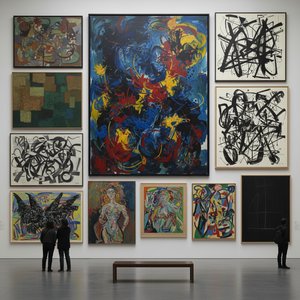 Abstract Expressionism's 10 Defining Masterpieces |
Introduction To gaze upon these ten canvases is to step into a realm where emotion reigns supreme, where the very act of painting became a visceral outpouring of the human spirit. The Abstract Expressionist movement, born in the aftermath of World Wa...
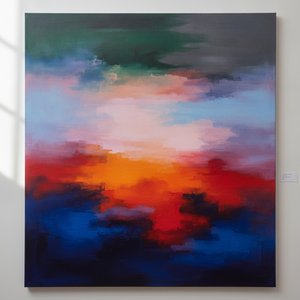
This style is defined by its intense subjectivity and the physical presence of the medium itself. It is an art of texture and energy, where the weight of the paint and the direction of the brushstroke convey a sense of urgency and trauma, or profound peace. This is precisely why a hand-painted oil reproduction holds such incomparable value compared to a mere print. In our studio, our artists—each holding degrees from prestigious Fine Arts academies—recreate this very essence. They utilize thick, impasto techniques on 100% cotton canvas, ensuring that the visible brushstrokes and deep tonal ranges of the original masters are preserved. When you touch a hand-painted work, you are not just seeing an image; you are experiencing the physical history of the artist's movement.
Decoding the Visual Language: The Psychological Power of Color and Form
 Kandinsky's Masterpieces: 25 Paintings That Define Abstract Art | ArtsDot
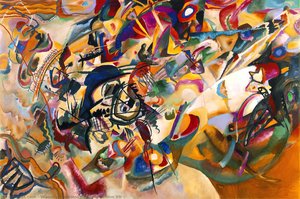
Introduction To embark on a journey through the top 25 artworks of Wassily Kandinsky is to enter a realm where color sings, form dances, and spirit takes flight. These paintings are not merely canvases adorned with pigment; they are windows into an i...
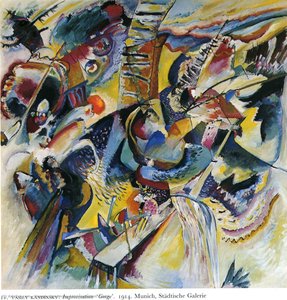
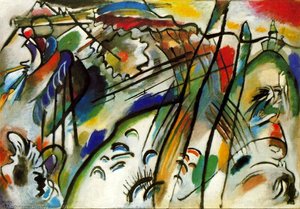
In this realm, a vibrant red might pulse with energy, while a deep blue invites profound introspection. The tension between a sharp, angular line and a soft, swirling form creates a visual rhythm that can evoke everything from anxiety to tranquility. Understanding this language allows the viewer to engage with art on an emotional level that transcends intellect. Our collectors often find that selecting art for their spaces becomes a process of color analysis, matching the psychological mood of a room to the inherent power of the artwork. Whether it is the bold, energetic strokes of an expressionist piece or the calm, balanced composition of a geometric work, the choice of abstraction allows for a deeply personalized curation of one's environment.
Curating the Modern Space: Integrating Abstract Masterpieces into the Home
 Geometric Abstraction's 10 Defining Masterpieces | Art for Your Home - ArtsDot
Introduction Imagine a world stripped bare to its essential forms – lines, colors, and shapes resonating with an almost mathematical purity. This is the realm of Geometric Abstraction, a movement that dared to abandon representational art in favor of...
For the collector who wishes to bridge the gap between history and personal memory, we offer the unique ability to "remix" art history. Through our professional services, you can request a photo of a personal milestone to be painted in the light-drenched style of Monet or even transformed into a Cubist composition using our AI-assisted design tools.
- Customization: Our Project Coordinators work with you to ensure every color and stroke meets museum-grade standards.
- Longevity: Every hand-painted oil is finished with a coat of Damar varnish, protecting the pigments from dust and moisture for generations.
- Authenticity: Unlike computer-printed posters, our oils offer a tactile depth and a rich, luminous quality that only real pigment on canvas can achieve.