
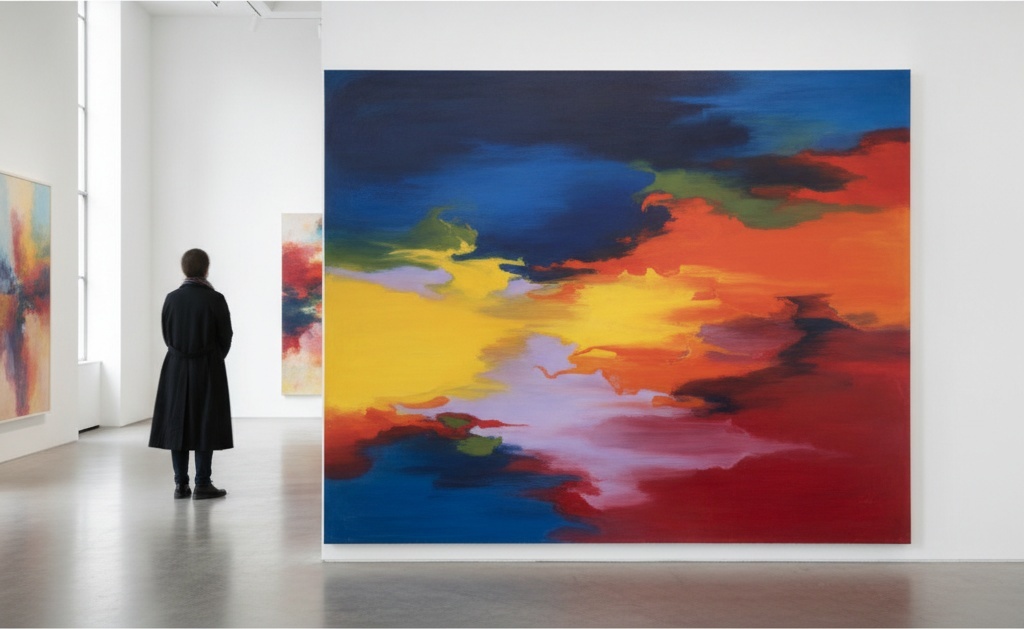
The Genesis of Abstraction: From Post-War Trauma to the Rise of Color Field
 Beyond Representation: Exploring the Emotional Landscape of Abstract Expressionism
The Genesis of Feeling: Post-War America and the Rise of Abstract Expressionism The Raw Emotion of Expressionism: A Revolution in 20th-Century Art Explore the revolutionary world of Expressionism with . Discover key artists like Kirchner & Nolde, und...
To understand the emergence of Color Field painting, one must first confront the heavy, fractured atmosphere of the mid-20th century. The aftermath of World War II left a profound scar on the collective human psyche, creating a world grappling with unprecedented trauma, existential uncertainty, and the shattering of established social norms. In this climate of disillusionment, the art world experienced a seismic rupture from tradition. The New York art scene of the 1940s and 50s became the crucible for Abstract Expressionism, a movement that rejected the representational, religious, and classical motifs that had dominated Western painting for centuries.
Initially, this revolution manifested through the visceral, spontaneous energy of Action Painting. Artists like Jackson Pollock utilized drips and energetic gestures to turn the canvas into an arena of physical event, seeking to express inner anxieties and the subconscious mind. However, as the movement matured, a distinct current began to emerge—one that sought to move away from the theatricality and self-conciousness of the gestural brushstroke. This was the birth of Color Field painting. It was not merely an abandonment of figuration but a deliberate, disciplined stripping away of all extraneous elements. Where Action Painting emphasized the act of creation, Color Field painters sought to capture the essence of being through the unmediated power of color itself.
The Architecture of Emotion: Defining Characteristics of the Movement
Color-field painting, with Action painting, is one of two major strains of the 20th-century art movement known as Abstract Expressionism
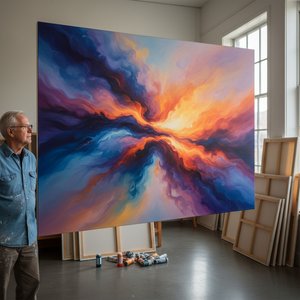
Color Field painting is characterized by its monumental scale and its reliance on large, flat areas of a single or limited palette. Unlike the intricate textures found in works like Michele Elizabeth Field’s Purple & Gold Abstract, which utilizes impasto to create swirling, dynamic forms, Color Field works often present a more serene, yet equally intense, visual experience. The movement is defined by its pursuit of a direct, almost primal connection between the viewer and the canvas. By minimizing recognizable imagery and complex compositions, these artists created "chromatic atmospheres" that invited a meditative, immersive engagement.
The architecture of these paintings relies on the tension between color boundaries and the edges of the support. Whether through the soft, bleeding edges of a wash or the sharp, decisive lines of a stripe, the way color occupies space is paramount. This approach demands a bodily engagement from the viewer; the scale of the canvases often requires one to stand close, allowing the field of color to envelop the peripheral vision. In this state, the painting ceases to be an object one looks at and becomes an environment one exists within, facilitating a profound emotional resonance that transcends linguistic or narrative constraints.
Color as Subject: The Philosophical Shift from Representation to Pure Perception
 Chromatic Atmospheres: Exploring the Philosophical Foundations of Color Field Painting
The Genesis of Abstraction: From Expressionism to Color Field Color-field painting | Abstract Expressionism, Minimalism, Post ... --- title: Color-field painting | Abstract Expressionism, Minimalism, Post-Painterly Abstraction, Artists, Mark Rothko, ...
The most revolutionary tenet of Color Field painting was the radical assertion that color was the subject. In the long history of painting, color has traditionally served a secondary role—to define the light on a portrait, the depth of a landscape, or the divinity of a religious icon. The Color Field pioneers inverted this hierarchy. They moved toward a purely abstract and conceptual approach where the emotional weight of the work was carried entirely by the chromatic frequency and its interaction with the canvas.
This shift was deeply influenced by the rise of psychoanalysis and the exploration of the unconscious. By removing the "distraction" of recognizable figures, artists believed they could evoke profound, universal emotional responses—anxieties, passions, and existential questions—directly through pure perception. This was art stripped bare, liberated from the burden of storytelling. The pursuit was for a more direct, unmediated experience, where the viewer’s reaction to a specific hue or a subtle shift in saturation became the true narrative of the piece. It was a move toward "art for art's sake," where the aesthetic experience is found in the very vibration of light and pigment.
Masters of the Chromatic Atmosphere: Analyzing Rothko, Newman, and Beyond
--- title: Colour field painting | Tate url: https://www.tate.org.uk/art/art-terms/c/colour-field-painting hostname: tate.org.uk description: Tate glossary definition for colour field painting: Term used to describe the work of abstract painters work...
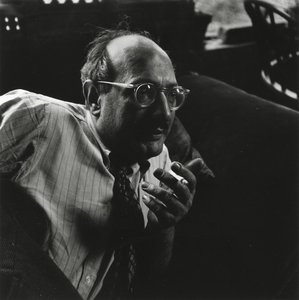
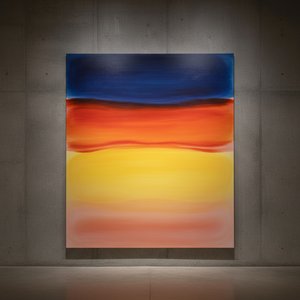
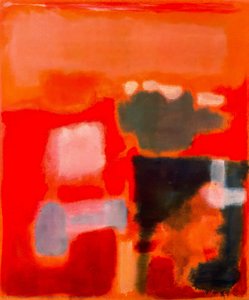
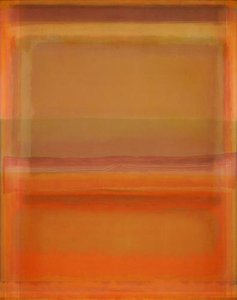
To gaze upon the masterpieces of this era is to witness the pinnacle of this philosophical pursuit. Mark Rothko remains perhaps the most iconic figure of this movement; his works, characterized by soft-edged, luminous rectangles of color stacked vertically, create a sense of profound depth and spiritual weight. His canvases act as windows into a transcendental realm, where the subtle transitions between dark and light hues evoke a sense of mourning, ecstasy, or quiet contemplation.
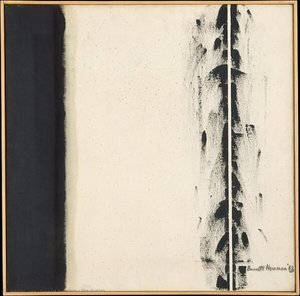
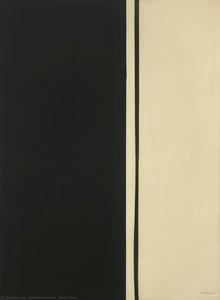
In contrast to Rothko’s soft luminosity, Barnett Newman introduced a different kind of structural intensity through his "zips"—vertical lines that traverse the canvas, defining the space and providing a sense of scale and human presence within the vast color fields. Similarly, artists like Clyfford Still utilized jagged, flame-like applications of color to create a more rugged, elemental texture. While these artists employed different techniques, they were united by a shared goal: the creation of an immersive, emotional landscape. Even in contemporary works that echo these historical textures—such as the vibrant, impasto-rich abstractions found in modern collections—one can see the enduring influence of these masters who taught us to find meaning in the spectrum itself.
The Legacy of the Field: Influence on Minimalism and Contemporary Abstraction
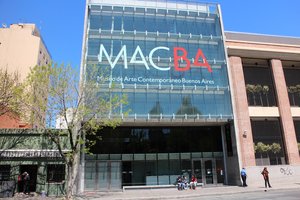 MACBA - Museum of Contemporary Art in Buenos Aires
A Window into Argentine Abstract Expressionism: Exploring MACBA’s Legacy Buenos Aires' Museum of Contemporary Art (MACBA) stands as a testament to Argentina’s artistic evolution, born from the ambitious vision of the Aldo Rubino Foundation and anchor...
The impact of Color Field painting extends far beyond its mid-century zenith. By proving that abstraction could achieve a level of emotional complexity previously reserved for narrative art, it paved the way for Minimalism and Post-Painterly Abstraction. The movement’s emphasis on flatness, scale, and the physical properties of the medium provided a foundation for subsequent generations to explore the boundaries of modernism. It challenged the very definition of what a painting could be, moving the conversation from "what is being depicted" to "how is color being experienced."
Today, the legacy of the Color Field movement continues to pulse through contemporary art. We see its echoes in large-scale installations, in the minimalist aesthetics of modern architecture, and in the way contemporary abstract artists use color to manipulate space and emotion. The movement taught us that the most profound truths are often found not in the details of a face or a landscape, but in the silent, powerful resonance of a single, perfectly placed hue. It remains a testament to the enduring power of human creativity to find infinite depth within the simplest of elements.
At ArtsDot.com, we are dedicated to preserving and sharing the profound legacy of art history. We specialize in providing museum-quality, 100% hand-painted oil reproductions of the world's most canonical masterpieces. Our master artists, holding degrees from prestigious academies, meticulously recreate the texture, depth, and soul of works by masters like Rothko and Newman on fine cotton canvas. Whether you are a student seeking to study the brushstrokes of the greats or a collector looking to bring a transformative chromatic atmosphere into your home, our professional service ensures an authentic experience. From custom sizing to our unique "Period Shift" services, we invite you to bring the power of art history into your personal space.