
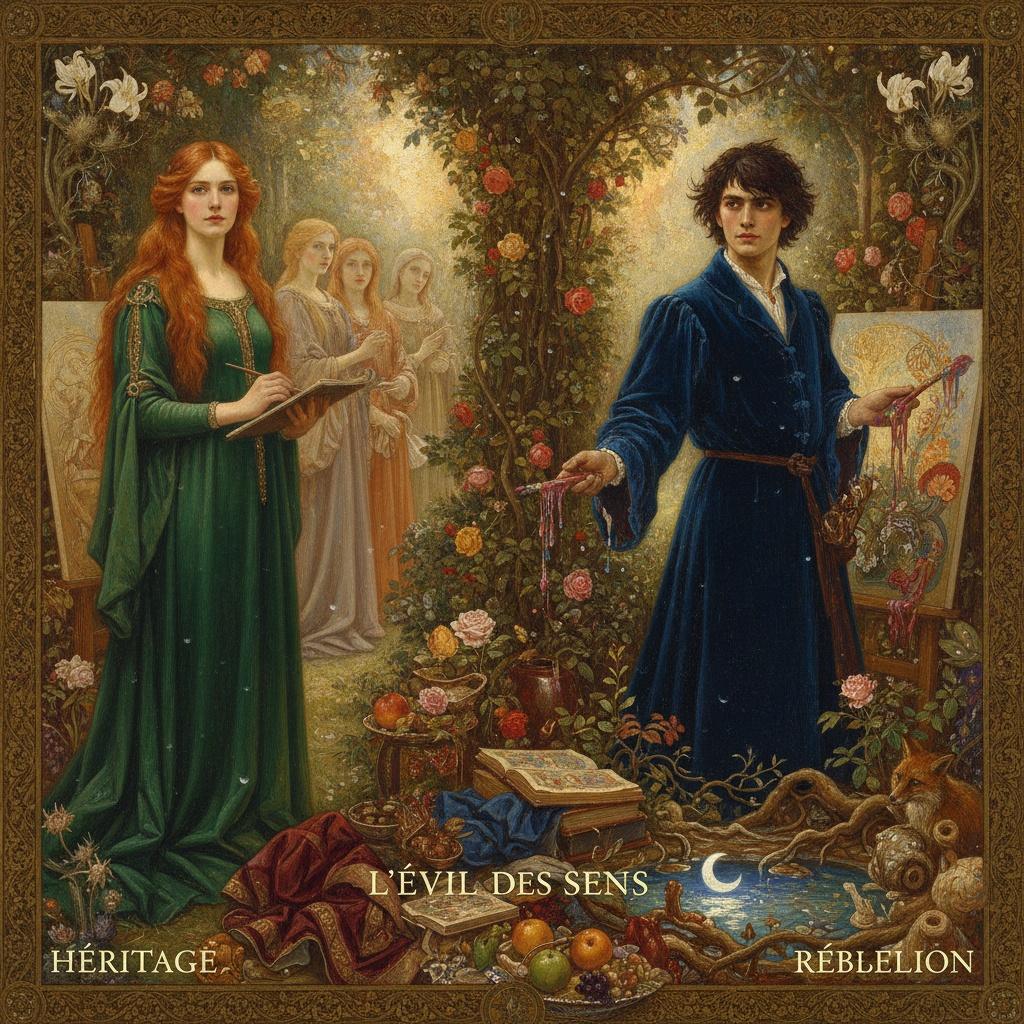
The Rebellion Against the Academy: The Birth of the Pre-Raphaelite Brotherhood
 The Pre-Raphaelite Brotherhood: Rediscovering Romanticism, Mythological Depth, and Vivid Detail in Victorian Art
The Rebellion Against Tradition: The Birth of the Pre-Raphaelite Brotherhood In the mid-19th century, the rigid corridors of the British Royal Academy felt increasingly stifling to a group of young, fervent visionaries. Driven by a profound dissatisf...
In the mid-19th century, the rigid corridors of the British Royal Academy felt increasingly stifling to a group of young, fervent visionaries. To the established art world of Victorian London, success was measured by adherence to formulaic, dark, and overly academic compositions—a style often disparagingly referred to by the rebels as "slosh." This heavy-handed technique, modeled after the idealized forms of Raphael and his successors, prioritized a certain artificiality that masked the raw textures of the real world. Driven by a profound dissatisfaction with these stagnant traditions, a small circle of artists sought to stage a revolution that would fundamentally alter the trajectory of British art.
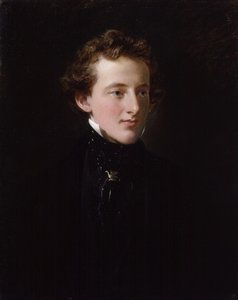
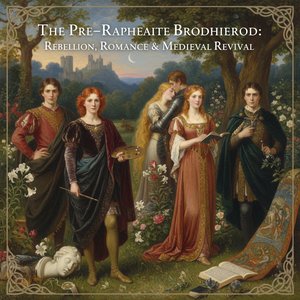
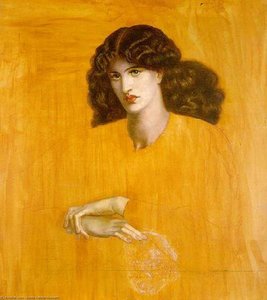
The genesis of the Pre-Raphaelite Brotherhood (PRB) in 1848 was not merely an aesthetic choice; it was a moral and social imperative. As revolutions swept across continental Europe and social reform movements like Chartism unsettled Britain, these seven members—including William Holman Hunt, John Everett Millais, and Dante Gabriel Rossetti—formed a secret society with a radical mission. They looked backward to move forward, seeking inspiration in the era before Raphael, a period they believed possessed a raw, unadulterated sincerity and spiritual purity. By rejecting the mechanistic approach of the Academy, they aimed to rediscover an art that was deeply connected to the soul and the sanctity of the natural world.
This rebellion was characterized by a commitment to truth. Figures like Frederic George Stephens, who helped found the Brotherhood, championed the idea that art should strip away the artificiality of the present to recapture the intense observation of the early Renaissance. It was a movement born of intellectual passion and a desire for artistic renewal, seeking to replace academic shadows with a clarity that had been lost to the heavy glazes of tradition.
A Vision of Truth: Meticulous Naturalism and the Pursuit of Luminous Detail
--- title: The Pre-Raphaelites - The Metropolitan Museum of Art author: Jennifer Meagher url: https://www.metmuseum.org/essays/the-pre-raphaelites hostname: metmuseum.org description: The Brotherhood at its inception strove to transmit a message of a...
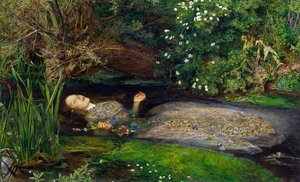
To witness a Pre-Raphaelite canvas is to experience a sudden, breathtaking clarity that defies the muted, somber palettes dominating Victorian salons. The Brotherhood embraced a luminous intensity that seemed to radiate from within the very fabric of the painting. This was achieved through a pioneering technical innovation: painting on a wet white ground. By applying pigments onto a prepared white surface, light could pass through the translucent layers of paint and reflect back, creating a brilliance reminiscent of stained glass. This method ensured that colors remained vibrant, saturated, and startlingly real.
This pursuit of naturalism demanded an almost scientific level of precision. The artists practiced a meticulous observation of the tangible world, ensuring that every leaf, every fold of heavy fabric, and every glint of light served as a testament to the divine complexity of nature. There was no room for vague or generalized forms; instead, the Brotherhood celebrated the minute details of the botanical and the physical. This commitment to "truth to nature" meant that their landscapes and still lifes were not merely backgrounds but living, breathing protagonists in their narratives.
The result was a symphony of color and texture that captivated—and at times scandalized—the public. The intense, jewel-like tones achieved through their unique layering techniques provided a stark contrast to the muddy, brownish tones favored by the Royal Academy. In their hands, the natural world was resurrected in all its vivid glory, inviting the viewer to pause and contemplate the intricate beauty of the smallest petal or the most delicate ripple on a water's surface.
Poetry in Paint: The Intertwining of Literary Symbolism and Visual Narrative
 Dante Gabriel Rossetti
A Life Immersed in Beauty: The World of Dante Gabriel Rossetti Dante Gabriel Rossetti, born May 12, 1828, in London, was a pivotal figure in the Pre-Raphaelite Brotherhood and a poet whose verses were as richly symbolic and evocative as his paintings...
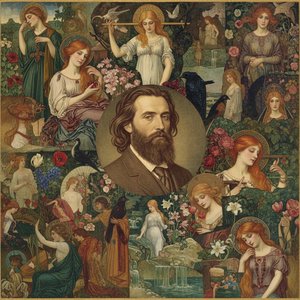
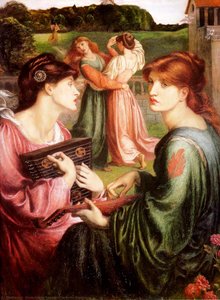
The Pre-Raphaelite movement was never solely a visual phenomenon; it was deeply intertwined with the literary soul of the age. Many of its central figures were polymaths who blurred the boundaries between disciplines. Dante Gabriel Rossetti, for instance, was as much a poet and translator as he was a painter. His verses were as richly symbolic and evocative as his canvases, often drawing from the profound influences of Dante Alibghieri, Keats, and Tennyson. This intersection of word and image created a unique form of visual storytelling where every element within a painting carried a heavy weight of symbolic meaning.
The Brotherhood’s subject matter frequently leaned into the realms of mythology, medieval legend, and Shakespearean tragedy. They utilized these historical and literary frameworks to explore complex psychological states and moral dilemmas. A single flower in a portrait might represent purity or fleeting mortality; a specific shade of blue could evoke a character's melancholy or divine connection. This layer of symbolic depth required the viewer to be an active participant, decoding the visual metaphors embedded within the composition.
This literary connection extended to other artists within their orbit as well. The works of John Keates, for example, bridged the gap between Romanticism and Symbolism through his landscapes that captured the sublime grandeur of nature. Even figures like Emma Sandys, though perhaps less overtly rebellious than the founding members, brought a quiet emotional depth and a romantic fascination with the past to their portraiture. Through this marriage of poetry and paint, the Pre-Raphaelites created an immersive world where history, myth, and reality converged in a single, evocative moment.
Beyond the Canvas: The Influence of the Movement on Aestheticism and Design
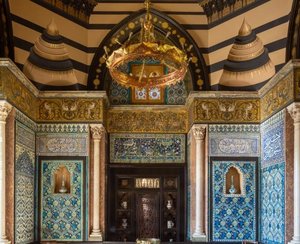 Holland Park
A Victorian Sanctuary: Discovering Leighton House Museum Leighton House Museum stands as an extraordinary testament to Victorian artistic ambition and a singular achievement in architectural design. Located amidst the tranquil expanse of Holland Park...
As the initial fervor of the Brotherhood evolved, its principles began to permeate much broader aspects of Victorian culture, eventually feeding into the Aesthetic Movement. This later movement championed the philosophy of "art for art's sake," a concept that found its roots in the Pre-Raphaelite pursuit of beauty. The emphasis on exquisite craftsmanship and the elevation of decorative arts can be seen in the works of individuals like William Morris, whose designs sought to weave aesthetic enrichment into the very fabric of daily life.
The influence of this era is perhaps most tangibly felt in the architectural and interior design movements that followed. The concept of a Gesamtkunstwerk—a total work of art—was embodied in spaces like the Leighton House Museum. Here, the convergence of painting, sculpture, and intricate decorative arts created an environment where every surface was a testament to artistic ambition. The movement’s fascination with historical motifs and exotic textures—seen in the Arab Hall's Moroccan tiles and Damascus lattice—reflects the broader cultural shift toward a more curated, aesthetically driven lifestyle.
Furthermore, the Pre-Raphaelite legacy can be traced through the philanthropic social experiments of the late 19th century, such as the model village of Port Sunlight. The idea that beauty should not be reserved for the elite but integrated into the industrial landscape is a direct descendant of the Brotherhood's original mission to reclaim truth and beauty from the artificiality of modern life. Their impact was not confined to the frame; it reshaped the visual language of an entire era.
Preserving the Legacy: Collecting Pre-Raphaelite Masterpieces for the Modern Home
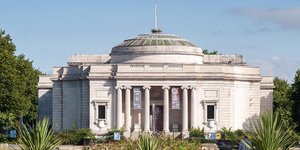 Lady Lever Art Gallery
A Victorian Vision Brought to Life: The Soul of Port Sunlight To step through the doors of the Lady Lever Art Gallery is to transcend the modern era and enter a meticulously curated dream of the nineteenth century. Nestled within the idyllic model vi...
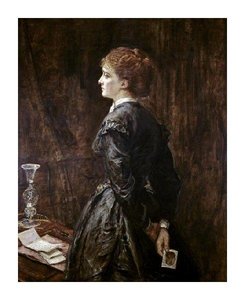
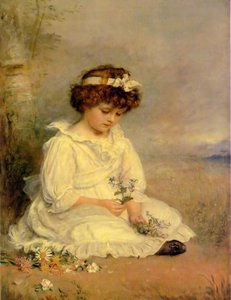
Today, the works of the Pre-Raphaelites continue to resonate with a profound emotional power, offering a sanctuary of beauty in an increasingly fast-paced world. For the modern collector or history enthusiast, owning a piece of this era is an opportunity to bring a sense of historical depth and luminous color into a contemporary space. Whether it is the hauntingly beautiful realism of John Everett Millais or the symbolic intensity of Rossetti, these paintings serve as timeless windows into a period of unparalleled creative rebellion.
At ArtsDot.com, we understand the desire to preserve this magnificent heritage. We specialize in creating museum-quality, hand-painted oil reproductions that capture the very essence of the Pre-Raphaelite style. Our artists, trained in prestigious academies, meticulously recreate the visible brushstrokes, the deep tonal ranges, and the vibrant, light-drenched surfaces that define these masterpieces. Unlike mere prints, our Handmade Oil Reproductions are painted on 100% cotton canvas, ensuring a tactile depth and texture that honors the original's soul.
We invite you to explore our collection of canonical masterpieces. Whether you seek a large-format centerpiece or a delicate portrait, our service allows you to "remix" history—offtaining custom sizes, multi-panel layouts for wide walls, and even the ability to transform personal memories into the style of these legendary masters. Bring the enduring beauty and truth of the Pre-Raphaelite Brotherhood into your home, and let the luminous legacy of the 19th century illuminate your space for generations to come.