Introduction
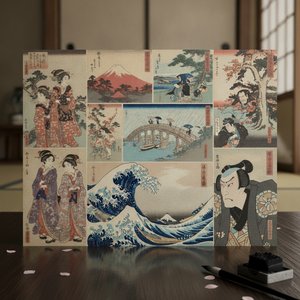
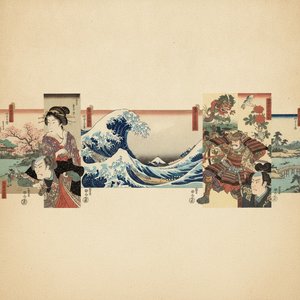
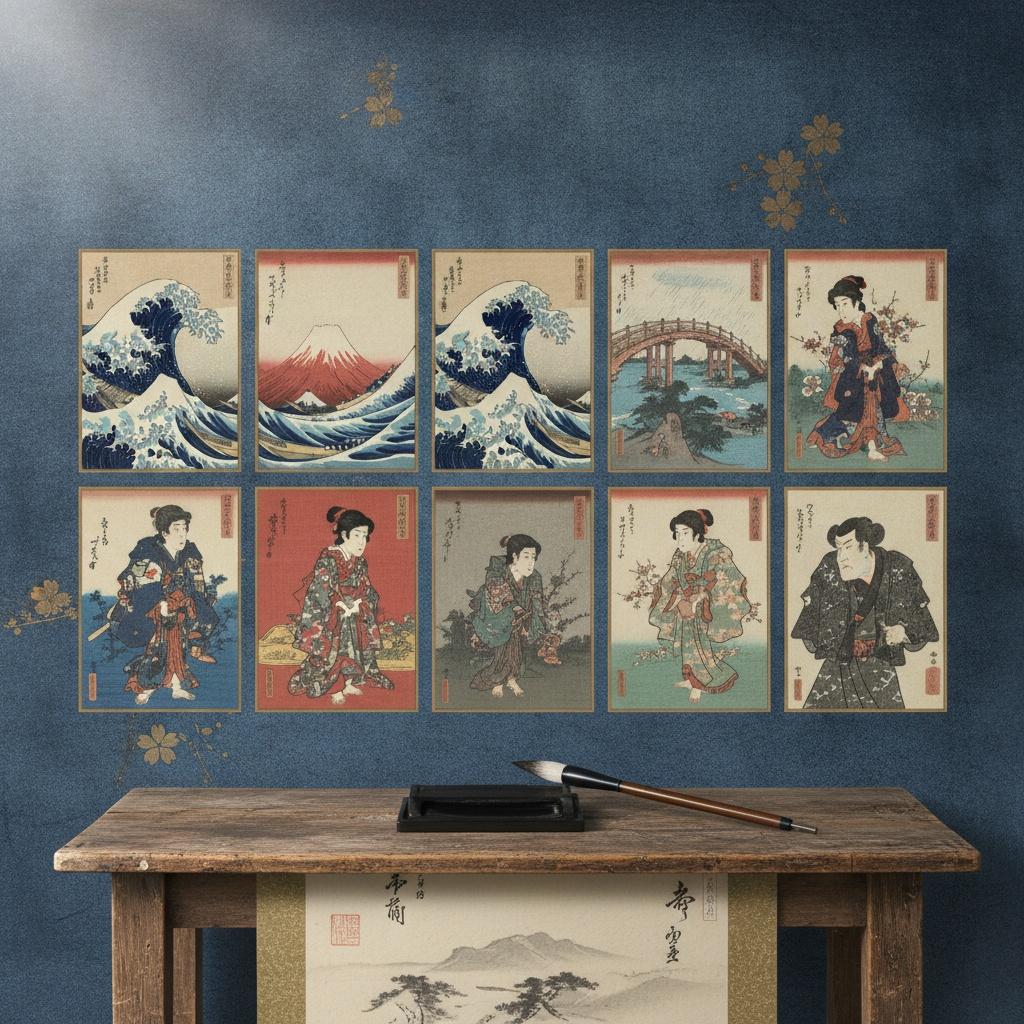
To step into the world of Ukiyo-e is to enter a realm of floating delights, where the ephemeral beauty of a passing moment is captured with eternal precision. The term itself, translating to "pictures of the floating world quite," evokes the hedonistic and transient spirit of Japan’s Edo period—a time of burgeoning urban culture, vibrant theater, and the quiet elegance of nature. These woodblock prints were not merely art; they were the pulse of a society finding joy in the fleeting: the graceful curve of a geisha’s neck, the dramatic tension of a Kabuki actor’s pose, and the rhythmic surge of a Great Wave crashing against a distant peak.
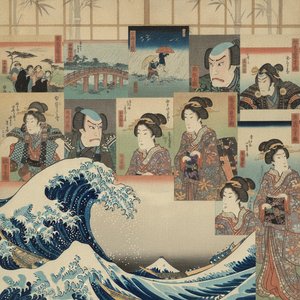
As we wander through this curated selection, we trace the evolution of a movement that defied the rigid hierarchies of classical painting. Through the meticulous layering of pigments and the sharp, decisive lines of carved wood, masters like Hokusai and Hiroshige transformed everyday scenes into profound meditations on existence. These works bridged the gap between high art and popular culture, eventually traveling across oceans to ignite the fires of Impressionism in Europe, forever altering the trajectory of Western modernism.
Today, these masterpieces remain deeply resonant. They speak to our universal desire to find stillness amidst movement and to recognize the sublime within the ordinary. In the following exploration, we will examine ten definitive works that serve as the pillars of this movement—each a window into a lost era, rendered with a technical brilliance that continues to captivate the modern eye. Whether you are a scholar of Japanese history or an admirer of fine aesthetics, these prints offer a journey through color, line, and the enduring soul of the floating world.
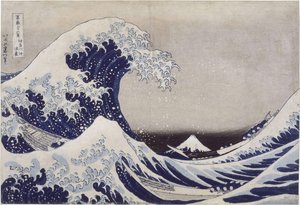
The Great Wave off Kanagawa - Katsushika Hokusai
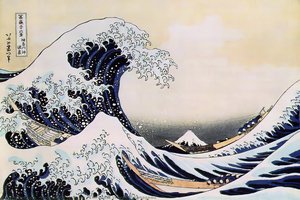
Katsushika Hokusai’s 1831 masterpiece, The Great Wave off Kanagawa , is far more than a mere depiction of a storm; it is a profound meditation on the tension between the ephemeral and the eternal. As part of his celebrated series, Thirty-six Views of Mount Fuji , this woodblock print captures a moment of breathtaking cinematic tension. The viewer is pulled into the churning depths of the Pacific, where the claw-like foam of a colossal wave threatens to swallow three vulnerable boats, leaving only the distant, snow-capped silhouette of Mount Fuji as a symbol of stoic permanence.
Hokusai’s technical brilliance shines through his pioneering use of Prussian blue, a pigment that lends the sea an unprecedented depth and intensity. The composition breathes with a rhythmic, fluid energy, where every carved line directs the eye toward the heart of the tempest. This iconic work does not just reflect the power of nature; it invites you to experience its overwhelming majesty. Bringing a museum-quality oil reproduction of this ukiyo-e legend into your home allows that striking blue palette and dramatic movement to transform any modern interior into a portal of historical wonder.
Femenine wave - Katsushika Hokusai
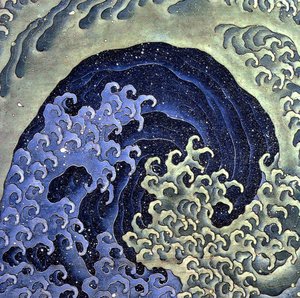 Femenine wave - Katsushika Hokusai
In Katsushika Hokusai’s Feminine Wave , the profound depth of Prussian blue dominates the visual narrative, casting a mood of both immense power and serene introspection. This specific shade, a revolutionary import to Japan during the late Edo period, provides a striking, cool-toned foundation that anchors the composition's dynamic energy. The masterful interplay between this deep pigment and the crisp, sculptural whites of the cresting foam is precisely why this work stands as a cornerstone of the Uki𝚘-e movement .
For the modern collector, integrating such a masterpiece into a contemporary interior offers a way to curate emotional lighting and atmosphere. The print's cool palette can transform a dining room or study into a space of calm focus, while its rhythmic, swirling motion provides a sophisticated focal point for wide walls. Whether you are drawn to the historical significance of Hokusai’s technique or seeking a high-quality hand-painted oil reproduction to bring this oceanic vitality into your home, this work remains an eternal study in nature's breathtaking duality.
Cranes on pine tree - Katsushika Hokusai
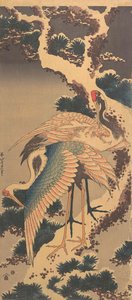 Cranes on pine tree - Katsushika Hokusai
Katsushika Hokusai’s Cranes on Pine Tree is a profound meditation on longevity and the enduring harmony of nature. Within this collection of the top 10 masterpieces that defined the Ukiyo-e movement, this work stands as a pinnacle of symbolic storytelling. The scene unfolds with a quiet grace, where the elegant silhouettes of cranes amidst a wintry landscape evoke a sense of eternal peace. Hokusai utilizes the bokashi technique—a delicate layering of sumi ink washes on washi paper—to create a misty, atmospheric depth that feels both ethereal and grounded.
The visual language of this print, characterized by fluid lines and a serene, muted palette, offers a timeless aesthetic that resonates deeply with modern minimalist interiors. The contrast between the resilient pine and the graceful birds creates a focal point of quiet prestige, perfect for adding a sense of Zen-like tranquility to a contemporary home. For those looking to bring this historical elegance into their personal space, we offer museum-quality handmade oil reproductions that capture every subtle tonal gradation and textured brushstroke of Hokusai's original vision.
The Sixth Month (Right) - Utagawa Kuniyoshi
 The Sixth Month (Right) - Utagawa Kuniyoshi
Acquiring The Sixth Month (Right) by Utagawa Kuniyoshi is an investment in a profound legacy of Japanese aesthetic taste. As a cornerstone of the ukiyo-e movement, this 1849 masterpiece exemplifies the late Edo period's transition toward complex narrative depth and atmospheric light. Kuniyoshi, a master of blending traditional motifs with Western-inspired perspective, captures a poignant autumnal tableau where a central figure, draped in rich silks, holds a seasonal pumpkin amidst a glow of lanterns and silhouetted trees. The work’s historical provenance and its ability to evoke the transient beauty of the harvest season solidify its status among the top 10 masterpieces that defined the ukiyo-e movement.
Beyond its museum significance, the print's delicate balance of warm autumnal hues and serene composition offers unparalleled aesthetic authority for modern luxury interiors. Whether displayed as a large-format canvas or a meticulously detailed study, a high-quality oil reproduction allows collectors to integrate this historical prestige into contemporary spaces, bringing the quiet elegance of 19th-century Japan to a sophisticated global audience.
Fuji, Mountains in clear Weather (Red Fuji) - Katsushika Hokusai
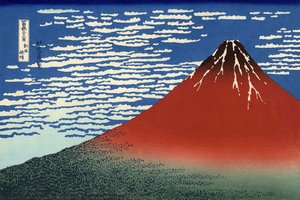 Fuji, Mountains in clear Weather (Red Fuji) - Katsushika Hokusai
Imagine standing before the horizon at dawn, where the air is crisp and the world is held in a breathless, silent pause. In 1831, Katsushika Hokusai captured this exact moment of transcendence in Fuji, Mountains in Clear Weather , popularly known as Red Fuji . As part of his seminal series, Thirty-Six Views of Mount Fuji , this woodblock print is a masterclass in the Ukiyo-e movement’s ability to distill nature into its most potent essence.
The composition is striking; the mountain’s slopes glow with a warm, vermillion hue, contrasting sharply against the cool, horizontal bands of white clouds and the deep, verdant landscape below. There is a profound sense of stability and spiritual strength in Hokusai's bold outlines and flat planes of color. This piece does more than document a landmark; it evokes a meditative stillness that can transform a modern interior into a sanctuary of reflection. Whether through a museum-quality print or a hand-painted oil reproduction, bringing this iconic symbol of endurance into your home invites a timeless sense of harmony and architectural elegance to your walls.
Akasaka, No. 37 - Utagawa Hiroshige
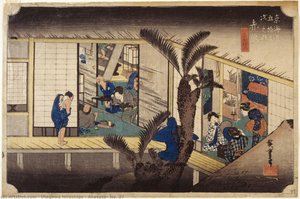 Akasaka, No. 37 - Utagawa Hiroshige
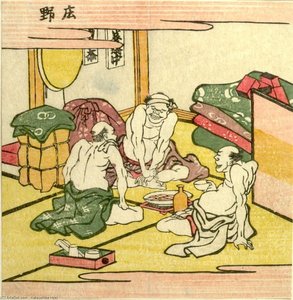
While many view the Fifty-three Stations of the Tōkaidō as mere travelogues, Utagawa Hiroshige’s Akasaka, No. 37 was a profound exercise in capturing the ephemeral. Legend suggests that Hiroshige did not merely observe the Tokaido highway; he sought to translate the very scent of autumn air and the dampness of mountain mist onto wood and paper. In this masterpiece, he achieves a technical leap through masterful tonal gradation, using subtle color layering to create an atmospheric perspective that feels almost breathable.
The composition invites us into a quiet social moment, where the placement of figures amidst lush foliage and domestic furniture creates a delicate tension between human presence and the vast, enduring landscape. The soft greens and misty blues evoke a sense of deep tranquility, a hallmark of the ukiyo-e movement's ability to find the infinite within the everyday. This same sense of focused serenity and disciplined beauty makes such a work an ideal centerpiece for a modern study or home office, fostering an environment of profound contemplation and intellectual clarity.
The Imagire Sea Ferry, Maisaka, from the series The Fifty-three Stations of the Tokaido (Gyosho edition) - Utagawa Hiroshige
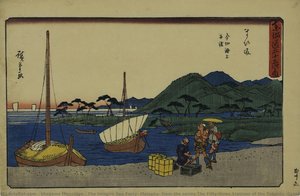 The Imagire Sea Ferry, Maisaka, from the series The Fifty-three Stations of the Tokaido (Gyosho edition) - Utagawa Hiroshige
In The Imagire Sea Ferry, Maisaka , Utagawa Hiroshige achieves a sublime synthesis of human industry and coastal tranquility, capturing the very heartbeat of the Edo period. As a cornerstone of the Top 10 Masterpieces That Defined the Ukiyo-e Art Movement , this work from the Fifty-three Stations of the Tokaido series transcends mere geography; it is a poetic meditation on the rhythm of travel. Hiroshige masterfully utilizes delicate lines and soft gradients to depict travelers clustered near the shoreline, where colorful umbrellas dot the beach like fallen petals against the vast, salt-tinged sea.
The composition’s balance of bustling activity—seen in the sturdy vessels and gathering crowds—and atmospheric stillness offers a profound emotional resonance. For the modern collector, this piece brings a sense of serene movement into the home. Its ability to evoke the humid, misty air of the Japanese coast makes it an exquisite choice for creating a sophisticated, tranquil ambiance in contemporary interiors. To possess such a work is to hold a window into the legendary 'Floating World,' where every brushstroke whispers of history and enduring grace.
Kabuki Actor Ōtani Oniji III as Yakko Edobei - toshusai sharaku
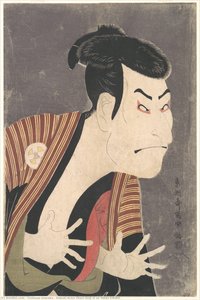 Kabuki Actor Ōtani Oniji III as Yakko Edobei - toshusai sharaku
In Kabuki Actor Ōtani Oniji III as Yakko Edobei , Tōshūsai Sharaku achieves a profound structural harmony that defines the pinnacle of the Ukiyo-e movement. The composition is anchored by a striking geometric tension; the sharp, angular lines of the actor's dramatic facial expression and the dynamic sweep of his traditional costume create a balanced yet explosive energy. This masterful use of negative space and stark tonal contrast directs the eye toward the psychological intensity of the performer, establishing a sense of timeless perfection that has captivated collectors for centuries.
This rhythmic interplay of light and shadow offers a striking parallel to modern minimalist design. The print’s ability to convey immense narrative weight through simplified forms and a focused palette allows it to ground contemporary, clean aesthetics with historical gravity. For those seeking to curate a sophisticated space, a hand-painted oil reproduction of this masterpiece provides a soulful, textured focal point. Much like the original woodblock, our meticulous recreations capture the visceral essence of Sharaku’s enigmatic genius, bringing the dramatic spirit of the Edo period into the modern home.
Early Department from a Daimyo - Utagawa Hiroshige
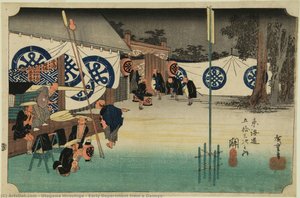 Early Department from a Daimyo - Utagawa Hiroshige
Acquiring a piece such as Early Department from a Daimyo by Utagawa Hiroshige is more than an aesthetic choice; it is an investment in the profound legacy of Japanese printmaking. As one of the definitive masterpieces of the Ukiyo-e movement, this work stands as a cornerstone for any serious collector, representing the pinnacle of Edo-period storytelling. Hiroshige masterfully orchestrates a rhythmic tapestry of human connection, where the disciplined presence of samurai engaged in archery meets the transient, hedonistic leisure of the riverside. The composition utilizes a sophisticated palette of muted greys, earthy browns, and tranquil blues, creating an atmospheric depth that has captivated scholars for centuries.
The historical significance of this print lies in its ability to freeze the 'floating world'—capturing fleeting moments of social harmony through intricate woodblock precision. For the modern connoisseur, bringing this level of cultural authority into a contemporary space is transformative. A high-quality, hand-painted oil reproduction of this masterpiece offers the same aesthetic prestige and emotional depth, serving as a sophisticated focal point that anchors luxury interiors with timeless, scholarly elegance.
Keishi (Kyoto), Capital - Utagawa Hiroshige
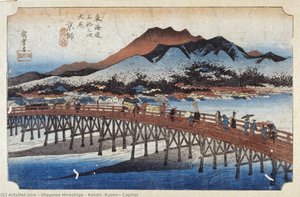 Keishi (Kyoto), Capital - Utagawa Hiroshige
In Keishi (Kyoto), Capital , Utagawa Hiroshige achieves a breathtaking mastery of atmospheric light, utilizing the bokashi technique to create soft, seamless color gradations that define the very essence of the ukiyo-e movement. The illumination in this 1834 masterpiece does not rely on harsh contrasts, but rather on a delicate, diffused glow that suggests a misty morning over the Kamo River. This subtle play of light—filtering through paper umbrellas and reflecting off the gentle ripples of the water—captures a transient, poetic moment in Japan's imperial heart. It is this ability to render the intangible, the weight of the air itself, that secured Hiroshige’s place among the top 10 masterpieces of the floating world.
For the modern collector, possessing a high-quality oil reproduction of this print allows one to bring that same sense of tranquil depth into a contemporary interior. The way our artists recreate Hiroshige's tonal transitions on canvas adds a tactile, luxurious dimension to your walls, transforming a historical window into a sophisticated focal point that breathes life and serenity into any room.
Conclusion
As the sun sets on our journey through the floating world, we are reminded that these Ukiyo-e masterpieces are far more than mere relics of Edo-period Japan; they are breathing echoes of a profound human connection to the ephemeral beauty of life. The delicate curve of a wave, the quiet dignity of a landscape, and the fleeting grace of a silken kimono continue to resonate within our modern consciousness, offering a sanctuary of stillness in an ever-accelerating world. These works do not belong solely to the archives of history; they possess a living presence that continues to shape our aesthetic sensibilities and move the human heart across centuries.
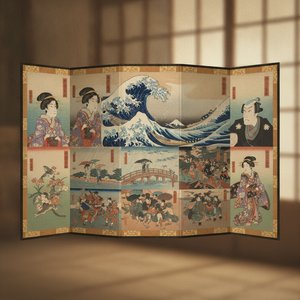
At ArtsDot.com , we believe that such timelessness deserves a permanent place in the spaces we inhabit. We serve as a dedicated creative partner for interior designers, architects, and connoisseurs of fine living—those crafting the sophisticated atmospheres of luxury hotels, private villas, and refined residential interiors. Whether you are seeking to anchor a grand hall with a sweeping multi-panel landscape or looking to integrate the delicate textures of a woodblock print into a contemporary suite, we provide the bridge between historical reverence and modern design. Through our professional digital mockup service, we allow you to visualize these masterpieces on your specific walls before a single brushstroke is applied, ensuring that every custom collection becomes a seamless artistic statement.
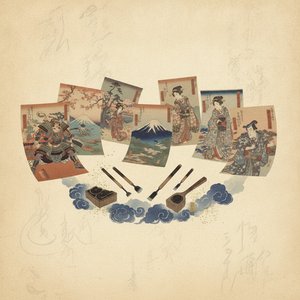
Every hand-painted oil reproduction we create is a labor of academic excellence, designed to capture the soul and tactile depth of the original movement. We invite you to explore our full collection and discover how these iconic impressions of the floating world can transform your next architectural project into an enduring legacy of beauty.