Introduction
To step into the world of Max Ernst is to abandon the safety of the rational and surrender to the beautiful, often unsettling, logic of the dream. As we prepare to journey through his top twenty-five masterpieces, we are not merely looking at canvases; we are navigating the labyrinthine corridors of the human subconscious. Ernst, a restless pioneer born in Brühl, Germany, did not simply paint images; he engineered new ways of seeing, using the fragments of reality to construct entire universes that defy the laws of physics and reason.
Emerging from the profound disillusionment of World War I, Ernst became a central architect of both the Dada and Surrealist movements. His life was a continuous rebellion against the constraints of the conscious mind. Through his revolutionary techniques—such as frottage (rubbing), grattage (scraping), and intricate collage—he sought to bypass the intellect and tap directly into the primal, the irrational, and the marvelous. His work serves as a bridge between the wreckage of a broken Europe and the infinite possibilities of the imagination.
These works remain profoundly meaningful in our contemporary era, a time when the boundaries between reality and digital artifice continue to blur. Ernst’s ability to find profound meaning in chance and texture resonates with anyone who has ever looked at a shadow or a weathered stone and seen a hidden face or a distant landscape. His legacy teaches us that truth is often found not in what is clearly visible, but in the textures of our deepest anxieties and wildest desires.
In the following selection, we will explore a curated lineage of his most impactful creations. From the haunting, textured landscapes that feel plucked from a fever dream to the startlingly clever assemblages that challenge our perception of form, this list serves as an essential guide to the enduring brilliance of a master who taught the world how to dream with open eyes.
The Elephant Celebes - Max Ernst
 The Elephant Celebes - Max Ernst
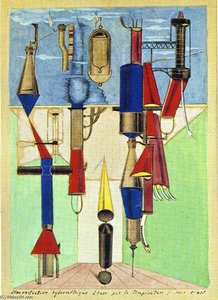
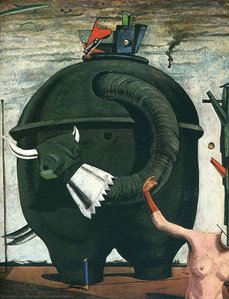
In The Elephant Celebes , the lines of Max Ernst’s imagination are not merely drawn; they are choreographed in a fever dream of Dadaist disruption and Surrealist mystery. This 1921 masterpiece functions as a dance frozen in time, where the mechanical and the organic collide with unsettling grace. At its heart sits an enigmatic, boiler-like creature—a totemic figure inspired by West African sculptural forms—topped with a surreal, metallic weight that commands the viewer's gaze.
The composition breathes a rhythmic chaos, pulling you through a landscape of muted ochres and deep, shadowed tones, punctuated by the startling presence of a red accent. As you wander through this hallucinatory scene, the juxtaposition of a headless mannequin and strange, biological forms creates a tension that is both whimsical and profoundly unsettling. It is a work that makes chaos feel like harmony. For the discerning collector, bringing a hand-painted oil reproduction of this icon into a home allows your walls to breathe rhythm, inviting the profound psychological depth of Ernst’s subconscious into your personal sanctuary.
Europe after the Rain II - Max Ernst
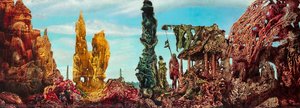 Europe after the Rain II - Max Ernst
In Europe after the Rain II , the viewer is immediately struck by the palpable, geological texture of Max Ernst’s vision. The surface of this 1942 masterpiece vibrates with a complex layering of color, where thick, organic forms in deep ochre, burnt orange, and earthy reds appear to emerge from the canvas itself. Ernst utilizes a sophisticated approach to texture that blurs the line between decaying architecture and growing flora, creating a landscape that feels both ancient and alien.
This work stands as a cornerstone of the top 25 artworks of Max Ernst because it captures the profound psychological tension of the World War II era through a surrealist lens. The way the light catches the rugged, rocky formations evokes a sense of a world being reborn from the ruins of conflict. At ArtsDot.com, our mission is to preserve this tactile, three-dimensional quality for your collection. Our handmade oil reproductions utilize authentic impasto techniques and visible brushstrokes on 100% cotton canvas, ensuring that the haunting, atmospheric depth and the physical soul of Ernst’s visionary landscape are faithfully brought into your home.
Of This Men Shall Know Nothing - Max Ernst
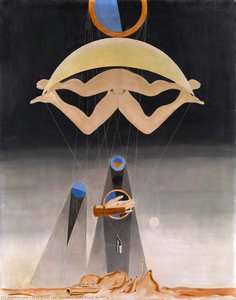 Of This Men Shall Know Nothing - Max Ernst
What secrets does the shadowed landscape of Of This Men Shall Know Nothing by Max Ernst whisper to the observer? Painted in 1923, this masterpiece emerged during a pivotal era when Ernst was transitioning from the chaotic disruptions of Dada toward the psychological depths of Surrealism. The work serves as a profound window into the subconscious, featuring elongated, nude figures suspended within a celestial, shell-like structure, all orbiting a luminous blue sphere that pierces the gloom. Through a muted palette of beige, earth tones, and somber grays, Ernst creates an atmosphere of existential tension and mystery.
This painting does more than depict a dream; it invites a sense of profound introspection. For the modern collector, such a piece offers a curated escape—a way to introduce a layer of intellectual depth and historical gravity into a contemporary living space. Whether you are drawn to its alchemical motifs or its unsettling beauty, owning a high-quality hand-made oil reproduction allows you to bring this enigmatic moment of art history into your own home, transforming a wall into a portal for contemplation.
Napoleón en el desierto - Max Ernst
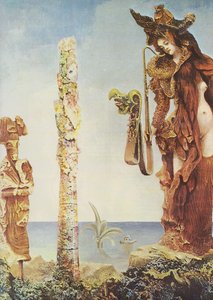 Napoleón en el desierto - Max Ernst
In Napoleón en el desierto by Max Ernst, the atmosphere is defined by a haunting, diffused light that seems to emanate from within the hazy, overcast sky itself. This masterful use of atmospheric illumination creates a soft, ethereal glow that washes over the crumbling columns and turbulent waters, blurring the lines between the physical landscape and the subconscious realm. The subtle play of light and shadow—a sophisticated command of tonal depth—is precisely what secures this piece's position among the top 25 artworks of Max Ernst . By manipulating light to suggest decay and transformation, Ernst invites a profound emotional connection to his surrealist vision.
When brought into a modern home as a high-quality oil reproduction, this painting’s muted palette of ochres and warm browns provides a sophisticated anchor for any interior. The way the light interacts with the textured, layered brushstrokes adds an unmistakable sense of luxury and historical weight to a contemporary wall, transforming a simple space into a curated gallery of psychological depth and mystery.
The Robing of the Bride - Max Ernst
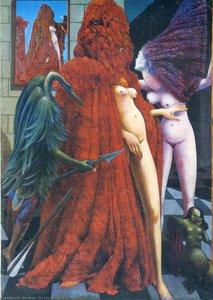 The Robing of the Bride - Max Ernst
Acquiring The Robing of the Bride by Max Ernst represents a profound investment in both artistic legacy and sophisticated taste for the discerning collector. As one of the top 25 artworks of Max Ernst, this 1940 masterpiece stands as a pillar of Surrealist history, commanding immense respect in the global art market due to its psychological depth and complex symbolism. The composition is a visceral dreamscape; intense, voluminous red drapery dominates the frame, enveloping figures in a way that evokes both primal power and societal constraint. Ernst’s masterful use of texture—from the unsettling, thick impasto of the crimson garments to the ethereal, purple-hued hair of the central figure—creates a sensory experience that is both haunting and magnificent.
The painting's interplay of light and shadow, alongside its mythic motifs like the spear-bearing bird, offers an intellectual gravity that transcends mere decoration. For those curating modern luxury interiors, a high-quality, hand-painted oil reproduction of this work brings an unparalleled aesthetic authority and a sense of quiet prestige to any space, mirroring the status of the original museum masterpiece.
Les dieux obscurs (Dark Gods) - Max Ernst
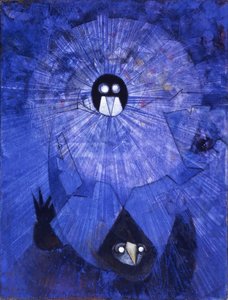 Les dieux obscurs (Dark Gods) - Max Ernst
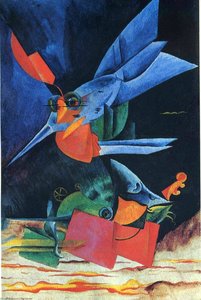
In Les dieux obscurs (Dark Gods), Max Ernst invites us into a profound psychological landscape where the boundaries between dream and reality dissolve. This masterpiece stands as a cornerstone in our collection of the top 25 artworks of Max Ernst, capturing the unsettling tension between a colossal, shadowy humanoid presence and a vulnerable, bird-like figure. The painting’s deep blues and blacks, punctuated by radiating lines, create an atmosphere of cosmic weight and existential unease that is impossible to ignore.
The work's mastery lies in its textural depth; the interplay of thick impasto and smooth transitions evokes a sense of primordial power. For the modern collector, such a piece offers more than historical significance—it provides a dramatic focal point for sophisticated interiors, bringing an element of mystery and intellectual depth to a room. Whether you are drawn to its Expressionist energy or its Surrealist symbolism, owning a hand-painted oil reproduction of this work allows you to preserve the visceral, tactile soul of Ernst’s most haunting visions within your own home.
Stratified Rocks, Nature's Gift of Gneiss Lava Iceland Moss… - Max Ernst
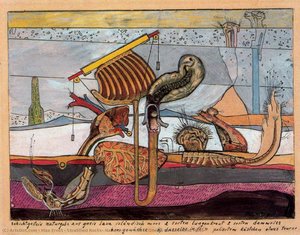 Stratified Rocks, Nature's Gift of Gneiss Lava Iceland Moss… - Max Ernst
Step into a primordial landscape where the boundaries between geology and myth dissolve. In Stratified Rocks, Nature's Gift of Gneiss Lava Iceland Moss… , Max Ernst invites us into a fever dream of post-war anxiety. The canvas vibrates with a palette of deep ochre, burnt sienna, and volcanic reds, presenting a chaotic ritual performed by distorted, animalistic figures around a central, vessel-like structure. The texture is visceral; through heavy layering and jagged, irregular lines, Ernst captures the raw, unsettling energy of Expressionism fused with the irrationality of Surrealism .
The atmosphere is thick with a sense of ancient dread and claustrophobia, yet there is an undeniable magnetic pull to its complex, organic forms. This masterpiece does more than depict a ceremony; it evokes the very pulse of the subconscious. For the discerning collector, bringing a reproduction of this work into a modern interior offers a profound focal point for reflection. Its rugged textures and deep, earthy tones can anchor a room, providing a sophisticated layer of intellectual depth and a window into the transformative power of the human imagination.
untitled (8351) - Max Ernst
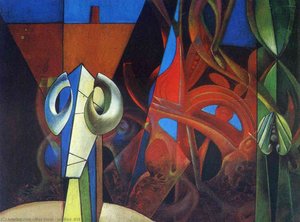 untitled (8351) - Max Ernst
In the vast landscape of 20th-century modernism, untitled (8351) by Max Ernst stands as a hauntingly beautiful testament to the power of the subconscious. This work captures an unsettling emotional depth, utilizing a palette of bruised violets and earthy ochres to render a world where logic has dissolved. As one of the most significant entries in our collection of the top 25 artworks of Max Ernst, it exemplifies his mastery of Surrealist tension, presenting a colossal, amorphous monolith that commands the viewer's gaze amidst a desolate, dreamlike plain.
The painting’s visual language—characterized by strange, bird-like figures and fragmented textures—offers a profound sense of mystery that resonates deeply with contemporary design. For the modern collector, such a piece brings an avant-garde edge to a sophisticated interior, acting as a conversation piece that evokes quiet prestige and intellectual curiosity. Whether you are drawn to its historical significance in the Dada movement or its ability to transform a room's ambiance with its psychological depth, this masterpiece remains an essential study in the beauty of the irrational.
The Forest - Max Ernst
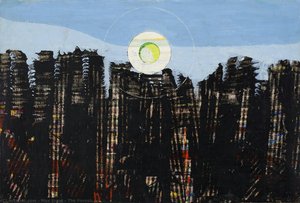 The Forest - Max Ernst
In Max Ernst’s 1927 masterpiece, The Forest , a profound sense of nocturnal mystery is established through a dominant palette of deep, cool blues and shadowy greens. These nocturnal hues create an atmosphere of quiet introspection, pulling the viewer into a dreamscape where the boundary between the natural world and the urban psyche dissolves. The stark, luminous white of the rising moon acts as a celestial anchor, casting an ethereal glow that illuminates distorted architectural monoliths and skeletal trees alike. This masterful use of light and shadow is precisely why this work remains one of the top 25 artworks of Max Ernst ; it captures the very essence of Surrealist tension.
For the discerning collector, integrating a high-quality oil reproduction of The Forest into a modern interior offers a unique opportunity to curate emotional depth. The painting’s moody, low-light aesthetic is perfect for creating a sophisticated focal point in a dimly lit study or a contemporary dining room, where its cool tones can balance warmer ambient lighting. Whether you are drawn to the historical significance of his Dadaist roots or seeking a transformative piece for your collection, this work brings a layer of psychological complexity and timeless elegance to any space.
Le Petite Tortue - Max Ernst
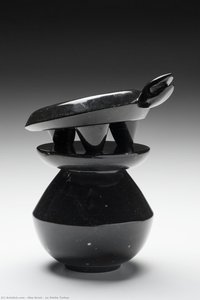 Le Petite Tortue - Max Ernst
In Max Ernst’s Le Petite Tortue , the profound depth of polished black marble dominates the viewer's perception, establishing a mood of quiet prestige and nocturnal mystery. This striking monochromatic palette is not merely a color choice but a masterclass in light manipulation; the high-sheen surfaces capture directional highlights that dance across geometric planes, creating a dynamic interplay between solid mass and void. As one of the top 25 artworks of Max Ernst, this sculpture earns its place through its ability to transform cold stone into a breathing, rhythmic composition of stability and tension.
For the discerning collector, integrating a reproduction of such a minimalist masterpiece can redefine the atmosphere of a modern living space or a sophisticated dining room. The deep, reflective blacks and sharp, architectural lines serve as an anchor for emotional lighting, allowing you to curate a room defined by mid-century elegance and contemplative stillness. Whether through a large-scale oil interpretation or a textured study, this work brings the disciplined beauty of Surrealist abstraction into the heart of the contemporary home.
Moonmad - Max Ernst
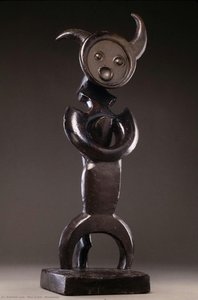 Moonmad - Max Ernst
To encounter Moonmad by Max Ernst is to stand before a profound fragment of the Surrealist psyche, an evocative sculpture that captures the very moment of psychological rupture. As one of the most arresting works in our collection of the top 25 artworks of Max Ernst, this piece transcends mere metal and form; it embodies the artist's mastery over the unsettling beauty of the unconscious mind.
The sculpture presents a stylized face, frozen in an expression of visceral shock or astonishment. Through its textured, bronze-like surface, we witness the collision of Freud’s psychoanalytic theories with Ernst’s sculptural precision. The open mouth serves as a silent scream, inviting the viewer to contemplate the vulnerability of the human condition when confronted by the irrational. For the discerning collector, Moonmad offers more than historical significance; its enigmatic presence and dark, metallic elegance provide a sophisticated focal point for modern luxury interiors, bringing a sense of intellectual depth and timeless, avant-garde prestige to any curated space.
Illustration to "A Week of Kindness" - Max Ernst
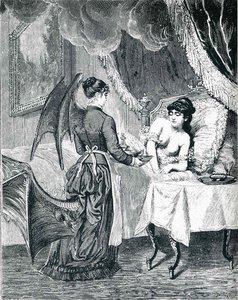 Illustration to "A Week of Kindness" - Max Ernst
What story does the shadowed, domestic landscape of Illustration to "A Week of Kindness" by Max Ernst tell? In this 1934 masterpiece, Ernst invites us into a bedroom where the boundaries of reality have begun to fray. Emerging from the height of the Surrealist movement, this work stands as a pillar in our collection of the top 25 artworks of Max Ernst because it perfectly captures the era's fascination with the unconscious mind and Freudian dream logic.
The scene is a triumph of monochromatic tension; through meticulous hatching and cross-hatching, Ernst renders a space that feels both intimately familiar and profoundly unsettling. The sudden, supernatural emergence of bat-like wings from a standing figure disrupts the mundane stillness of the room, transforming a quiet interior into a psychological threshold. For the modern collector, such a piece offers more than mere decoration; it provides a profound intellectual escape, bringing the haunting, textured depth of historical Surrealism into the contemporary home. It is an evocative conversation piece that commands attention through its masterful use of light, shadow, and symbolic mystery.
Temptation of St. Anthony - Max Ernst
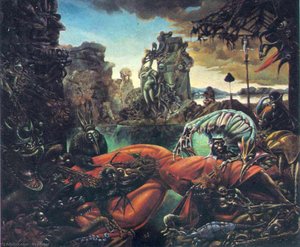 Temptation of St. Anthony - Max Ernst
In Max Ernst’s 1945 masterpiece, Temptation of St. Anthony , the viewer is met with a profound sense of psychological vulnerability. The central figure, seated upon a red cushion, appears caught in a moment of quiet, harrowing exposure to the irrational. This work stands as a cornerstone of the top 25 artworks of Max Ernst because it transcends its biblical origins, serving as a universal mirror for the internal battles between virtue and the insidious allure of our darkest impulses.
Ernst utilizes a dreamscape of unsettling beauty, where distorted perspectives and a swarm of symbolic insects—beetles and butterflies—create a palpable tension. The meticulous layering of oil paint and textured impasto invites a sensory exploration of decay and desire. Bringing such a powerful emotional resonance into your home can transform a personal sanctuary into a space for profound reflection. Whether you seek a museum-quality handmade oil reproduction to anchor a study or a striking Giclée print for a modern gallery wall, this painting offers an unparalleled gateway into the depths of the human subconscious.
Paysage avec lac et chimères - Max Ernst
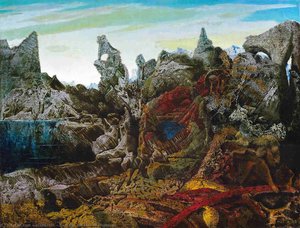 Paysage avec lac et chimères - Max Ernst
To gaze upon Paysage avec lac et chimères is to step into a fractured dream, where the boundary between the physical world and the subconscious dissolves. Created in 1940, this work captures the profound disorientation of an era gripped by war, reflecting Max Ernst’s own psychological isolation during his internment. It earns its place among the top 25 artworks of Max Ernst not merely for its technical innovation, but for its ability to evoke a universal sense of mystery and existential tension.
Ernst utilizes the transformative technique of decalcomania , pressing thinned paint to create organic, Rorschach-like textures that breathe life into jagged rocks and mythic, multi-limbed creatures. The muted earth tones and tranquil blue waters offer a deceptive serenity, masking the unsettling presence of the chimeras that haunt the landscape. This masterpiece serves as a haunting echo of history's uncertainties. At ArtsDot.com, we honor this legacy through our hand-made oil reproductions . Our artists meticulously recreate every spontaneous texture and impasto brushstroke on 100% cotton canvas, allowing you to bring the profound, tactile depth of Ernst’s surrealist vision into your own collection.
Ubu Imperator - Max Ernst
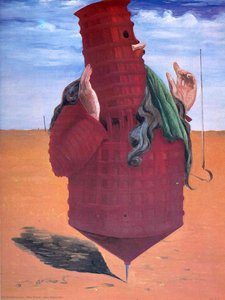 Ubu Imperator - Max Ernst
In “Ubu Imperator” , Max Ernst orchestrates a haunting interplay of light and shadow that defines the very essence of his Surrealist mastery. The illumination does not merely reveal the scene; it emerges from within the textured layers, casting a spectral glow upon the central figure and the unsettlingly perched bird. This dramatic use of chiaroscuro creates a profound sense of volume and psychological weight, pulling the viewer into a fever dream where the boundaries of reality dissolve. It is this command over light—transforming a throne of branches into a stage for the subconscious—that secures this work's prestigious place among the top 25 artworks of Max Ernst .
When captured in a high-quality handmade oil reproduction , the subtle gradations of tone and the tactile depth of his experimental techniques are preserved with breathtaking fidelity. The way light dances across the simulated textures of the canvas adds an incomparable layer of luxury and intellectual intrigue to a contemporary room. Owning such a piece allows the rhythmic shadows and dreamlike atmosphere of Ernst's vision to breathe life into your collection, offering a sophisticated focal point that invites endless contemplation.
Scène - Max Ernst
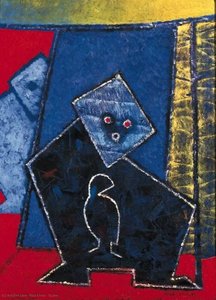 Scène - Max Ernst
In the enigmatic realm of Max Ernst’s “Scène,” the boundaries between reality and the subconscious dissolve into a hauntingly beautiful tableau. As one of the most profound entries in our collection of the top 25 artworks of Max Ernst, this piece serves as a psychological gateway, reflecting the Surrealist movement's obsession with the irrational and the dreamlike. The composition centers on an avian figure poised in predatory contemplation before a blue box trimmed in sharp red, creating a tension between containment and curiosity that remains intellectually arresting today.
Ernst’s mastery of texture—utilizing surfaces reminiscent of organic pulp and burlap—invites a tactile engagement that transcends mere visual observation. This rugged depth, achieved through his pioneering spirit, makes the work a cornerstone for any curated collection seeking to explore the depths of human perception. For the discerning collector or interior designer, bringing the essence of “Scène” into a modern environment offers more than decor; it introduces a timeless conversation about the mysteries of the mind, where deep blues and vibrant accents command the room with an aura of sophisticated mystery.
Everyone Here Speaks Latin - Max Ernst
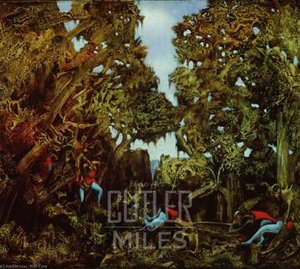 Everyone Here Speaks Latin - Max Ernst
In the pantheon of the top 25 artworks of Max Ernst, Everyone Here Speaks Latin (1943) stands as a hauntingly beautiful gateway into the subconscious. This masterpiece captures a profound emotional tension, blending the whimsical presence of figures within a dense, primordial forest with the heavy, existential anxieties of the World War II era. Through the use of automatism and thick, tactile impasto , Ernst creates a landscape where the boundaries between dream and reality dissolve into textured ridges of paint.
The painting’s visual language—featuring enigmatic elements like a solitary umbrella, a distant boat, and scattered human forms—offers a sophisticated depth that resonates with modern design. Its ability to evoke mystery and quiet prestige makes it an extraordinary focal point for contemporary interiors seeking a sense of intellectual intrigue and atmospheric storytelling. Whether you are drawn to its historical weight or its surrealist beauty, owning a hand-painted reproduction allows you to bring this profound dialogue between nature and the human psyche into your own space, preserving the artist's visceral, textured legacy.
Dibujo al natural - Max Ernst
 Dibujo al natural - Max Ernst
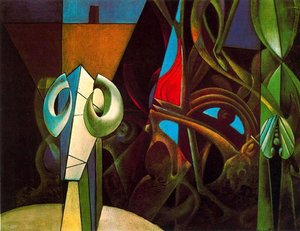
In the enigmatic realm of Max Ernst’s Dibujo al natural , the boundaries between reality and the subconscious dissolve into a hauntingly beautiful tapestry of surrealist imagery. This work serves as a profound window into the artist's psyche, where the familiar is stripped away to reveal a world of unsettling wonder. The composition draws the eye through a labyrinth of strange, symbolic objects: a large, long-necked avian creature dominates the canvas, its presence both majestic and predatory, while a solitary clock and a watchful eye emerge from the shadows, suggesting the inescapable flow of time and the omnipresence of perception.
To possess a reproduction of this masterpiece is to invite a sense of profound mystery into your home. The interplay of light and shadow within Ernst's vision creates a texture of deep psychological intrigue, transforming any room into a gallery of the soul. Whether you are drawn to the intricate details of his dreamlike landscapes or the heavy, symbolic weight of his creatures, this piece offers a transformative experience for the discerning collector.
Barbarians Marching to the West - Max Ernst
 Barbarians Marching to the West - Max Ernst
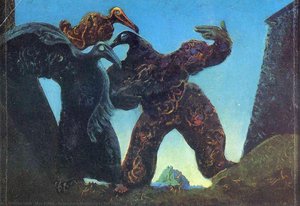
Step into the fractured psyche of 1937 with Max Ernst’s Barbarians Marching to the West , a visual fever dream that captures the tremors of a world on the brink of catastrophe. The atmosphere is thick with cosmic dread, as two colossal, predatory birds dominate a desolate, otherworldly terrain, locked in an unsettling dance of instinct and aggression. Through his pioneering use of grattage —a technique of scraping paint to reveal geological textures—Ernst creates a surface that feels unearthed from the very depths of the subconscious. The rugged, scarred landscape mimics weathered bone and ancient earth, pulling the viewer into a realm where reality dissolves.
This masterpiece does more than depict chaos; it invites profound reflection on human vulnerability. For the modern collector, bringing such a powerful Surrealist work into a home offers a striking focal point for intellectual inquiry and creative inspiration. Whether displayed as a large-scale oil reproduction or a textured canvas, its deep tonal range and tactile complexity serve to elevate any sophisticated space, turning a wall into a window onto the sublime and the mysterious.
Pieta or Revolution by Night - Max Ernst
 Pieta or Revolution by Night - Max Ernst
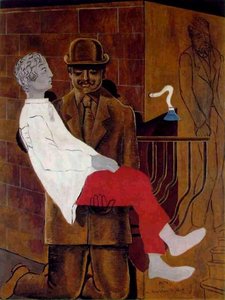
In Pieta or Revolution by Night by Max Ernst, a heavy, obsidian darkness dominates the canvas, casting an atmosphere of profound existential dread and somber stillness. This mastery of shadow is precisely why this work stands as one the top 25 artworks of Max Ernst; he does not merely use black as a color, but as a psychological weight that anchors the viewer in a world on the precipice of collapse. The palette, characterized by deep, nocturnal tones and muted, ghostly highlights, creates a visceral tension between the formal attire of the figures and the encroaching void.
For the sophisticated collector or interior designer, integrating a high-quality oil reproduction of this piece into a modern living space offers an unparalleled opportunity to curate emotional depth. The painting’s dark, dramatic tonality serves as a powerful anchor for rooms featuring moody, low-light aesthetics or minimalist, monochromatic decor. By placing such a commanding work in a dining room or study, one introduces a layer of intellectual gravity and historical resonance, transforming a contemporary setting into a space of profound contemplation and curated mystery.
It's a Highway to Heaven - Max Ernst
 It's a Highway to Heaven - Max Ernst
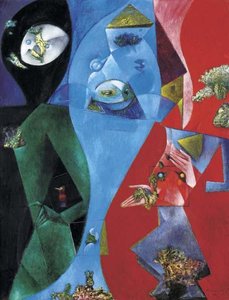
To gaze upon "It's a Highway to Heaven" by Max Ernst is to step through a portal where the boundaries of the self begin to dissolve into a dreamscape. In this arresting masterpiece, Ernst presents a visual paradox that defies the logic of the waking world. The viewer is confronted by a monumental figure, yet upon closer inspection, this central presence reveals itself as a complex tapestry of superimposed faces—a profound exploration of fragmentation and the subconscious mind.
As a quintessential exemplar of Surrealism , the work utilizes a sophisticated mixed-media approach, bridging the gap between painting and collage. The interplay of textures, where smooth oil transitions meet raw, disrupted edges, creates a multidimensional surface that breathes with unsettling energy. Scattered birds and vibrant, contrasting hues add a rhythmic, psychological depth to the composition. This piece remains essential among the top 25 artworks of Max Ernst because it does not merely sit upon a wall; it challenges the observer to contemplate the layers of their own existence, offering a transformative presence that continues to anchor and evoke emotion in any modern space.
Fleurs-écaille - Max Ernst
 Fleurs-écaille - Max Ernst
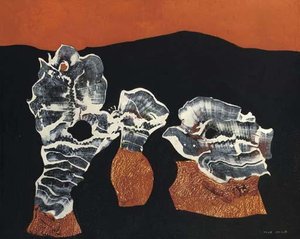
While many associate Surrealism with chaotic dreamscapes, Max Ernst’s Fleurs-écaille reveals the movement's capacity for profound, meditative stillness. In this monochrome masterpiece, Ernst achieves a technical feat that defies traditional painting; by meticulously layering textured papers and utilizing a delicate dry brush method, he transforms a flat canvas into a tactile topography of weathered rocks and ethereal seashells. This piece stands as one of the top 25 artworks of Max Ernst because it captures the exact moment where the geological meets the psychological, blurring the line between organic matter and the subconscious mind.
The composition acts as a visual anchor, where the heavy, rhythmic placement of stones creates a sense of permanence against an infinite, colorless void. For the discerning collector, bringing such a work into a modern study or home office provides more than mere decoration; it introduces a focal point of intellectual depth and quietude. The rugged, textured surfaces of a hand-made oil reproduction of this piece can inspire a focused, sophisticated atmosphere, inviting deep contemplation and a disciplined, creative mindset within any professional workspace.
Forêt et soleil - Max Ernst
 Forêt et soleil - Max Ernst
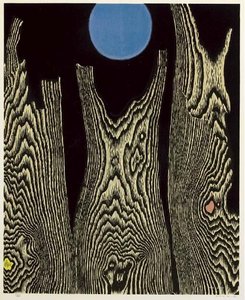
In Forêt et soleil , Max Ernst orchestrates a breathtaking masterclass in chiaroscuro, where the luminous moon acts as a celestial spotlight piercing through the dense, psychological thicket of the subconscious. The way the silvery light clings to the distorted, textured bark of the trees creates a hauntingly beautiful interplay between brilliance and deep, velvety shadow. This command over illumination is precisely what secures this work's place among the top 25 artworks of Max Ernst ; it transforms a mere nocturnal landscape into a profound, breathing dreamscape that captures the viewer in a state of surreal reverie.
The dramatic contrast between the glowing lunar orb and the dark, labyrinthine forest offers a sense of quiet prestige and mystery. When captured in a handmade oil reproduction , these intricate textures and the subtle, radiant glow are preserved with remarkable depth. Such a piece does more than decorate; it introduces a layer of sophisticated, atmospheric luxury to a contemporary wall, inviting guests to lose themselves in the luminous, enigmatic world of a true Surrealist pioneer.
Landscape with Wheatgerm - Max Ernst
 Landscape with Wheatgerm - Max Ernst
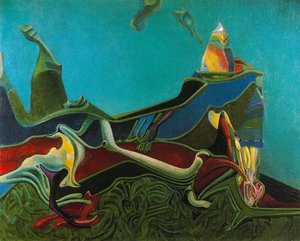
In Landscape with Wheatgerm , Max Ernst invites the viewer into a dreamscape where the boundaries of reality dissolve into a profound psychological inquiry. The painting captures an unsettling yet mesmerizing emotion, as if one is peering directly into the fragmented layers of the subconscious. As one of the most significant entries in our collection of the top 25 artworks of Max Ernst , this 1936 masterpiece utilizes a complex layering of oil and collage to evoke the tension between fertility and decay. The presence of the wheatgerm—a symbol of embryonic potential—contrasted with solitary, vulnerable birds creates a visual poem about the fragility of existence.
For the discerning collector, bringing this surrealist vision into a home offers more than mere decoration; it provides a focal point for deep contemplation. Displaying such a powerful emotional resonance can transform a personal sanctuary into a space for profound reflection, where the interplay of light and shadow encourages a quiet, intellectual calm. Whether you seek a hand-painted oil reproduction to anchor a modern gallery wall or a textured piece that mirrors the complexity of thought, this work remains an eternal cornerstone of Surrealist history.
Les prunes - Max Ernst
 Les prunes - Max Ernst
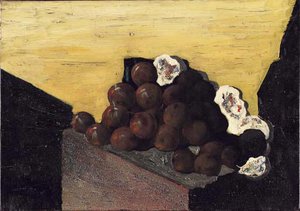
In Les prunes , Max Ernst invites us into a quiet, dreamlike corner of the subconscious. This is not merely a still life of chocolate pralines and delicate white flowers; it is a masterful distillation of Surrealist thought. Through his pioneering use of frottage —a technique of transferring textures to create an ethereal, grainy atmosphere—Ernst transforms commonplace objects into symbols of hidden psychological truths. The vibrant, yet unsettling, yellow background creates a tension between light and decay, making the composition feel as though it is vibrating with unspoken anxieties.
There is a gaze in Les prunes that follows you—not with judgment, but with understanding . It does not demand your attention through grand narratives; instead, it acts as a mirror to your own internal landscape of desire and unease. As one of the most profound entries in our collection of the top 25 artworks of Max Ernst, this piece offers a chance to bring that sense of mystery into your home. Imagine this textured, dreamlike world hanging in your space, not just as decor, but as a quiet reminder: you are seen, and you are part of the surreal story of art history.
Conclusion
To wander through the visual landscape of Max Ernst is to traverse the delicate boundary between the waking world and the profound mysteries of the subconscious. These twenty-five masterpieces are far more than mere historical artifacts or relics of the Dada and Surrealist movements; they are living, breathing presences that continue to challenge our perceptions and stir the human spirit. Each texture, each unexpected juxtaposition, and each dreamlike silhouette serves as a window into the infinite complexity of our own inner lives, offering a timeless connection that transcends the era in which they were first conceived.
As we close this exploration, we invite you to consider how these evocative visions can transcend the museum walls to become part of your own sanctuary. At ArtsDot.com , we serve as a dedicated creative partner for architects, interior designers, and collectors who seek to infuse hotels, private villas, and refined residential spaces with the soul of art history. Whether you are curating a cohesive multi-panel installation for a grand hallway or seeking a singular, striking focal point for a contemporary study, our studio specializes in bringing these canonical works into the modern era through museum-quality, hand-painted oil reproductions.
We understand that integrating Surrealism into a sophisticated interior requires more than just placement; it requires vision. Through our professional digital mockup services, we allow you to witness how the intricate layers of an Ernst masterpiece interact with your specific lighting and color palette before a single brushstroke touches the canvas. From bespoke architectural murals to custom-sized commissions that mirror the scale of your project, our mission is to transform every space into a profound artistic statement. We invite you to explore the full collection and discover how the enduring magic of Max Ernst can breathe new life and intellectual depth into your next design endeavor.