Early Life & Training: From Tuscan Roots to Roman Apprenticeship
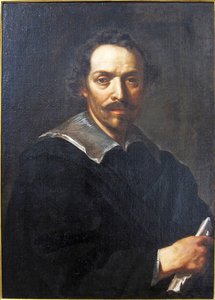 Pietro da Cortona
Pietro Berrettini, known as Pietro da Cortona, was a defining figure of the Italian Baroque. Born in Cortona, he mastered illusionistic painting & architecture in Rome, rivaling Bernini and Borromini. His frescoes, like those at Palazzo Barberini, sh...
Pietro Berrettini, as he was born in 1596 (or perhaps 1597) in the charming hilltop town of Cortona, Tuscany, possessed a lineage steeped in artistic tradition. His father and grandfather were both builders, instilling in him an early appreciation for form, structure, and the tangible beauty of craftsmanship. However, it was painting that truly captured young Pietro’s imagination. Initial training under local artists provided a foundational skill set, but Cortona quickly recognized the limitations of provincial instruction. Florence beckoned – a city brimming with Renaissance masterpieces, offering a crucial education in balance, harmony, and the established canons of artistic excellence. Yet, even amidst the glories of Florentine painting, a certain restlessness persisted within him; he sought something more dynamic, more theatrical, than the classical restraint he encountered.
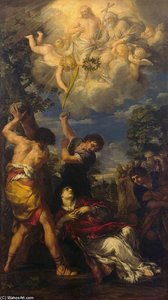
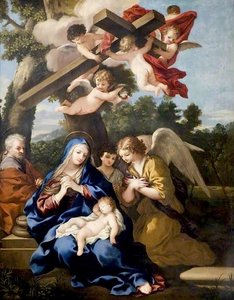
The decisive move came around 1612 or 1613 when Cortona journeyed to Rome. This was not merely a relocation but a transformation. The city pulsed with artistic energy, a crucible where the seeds of Baroque were beginning to sprout. He entered the workshop of Baccio Ciarpi, absorbing techniques and gaining practical experience. More importantly, he became immersed in the evolving aesthetic landscape, encountering the works of the Carracci brothers – Annibale, Agostino, and Ludovico – whose emphasis on naturalism and dramatic composition proved profoundly influential. Early commissions, such as those for the Mattei family palace around 1622-3, allowed him to hone his skills while navigating the complex world of Roman patronage. A pivotal moment arrived with an *Adoration of the Shepherds* (circa 1626) commissioned for San Salvatore in Lauro, showcasing a burgeoning talent and attracting attention from discerning collectors.
The Rise of a Baroque Master: Patronage, Style, and Early Commissions
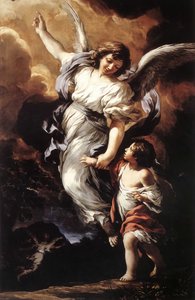
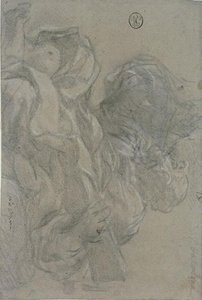 Man sitting, looking up at the sky, a book in hand. prophet
Experience Pietro da Cortona’s ‘Man sitting…’, a captivating Baroque masterpiece. Explore this prophet figure gazing at the sky – a stunning example of illusionistic art.
Cortona’s ascent was not solely due to his artistic abilities; it was inextricably linked to the powerful patrons he cultivated. His gifted copy of Raphael’s *Galatea* fresco brought him to the notice of Marcello Sacchetti, papal treasurer under Pope Urban VIII. This connection opened doors to significant opportunities, including a series of frescoes for the Villa Sacchetti at Castelfusano near Ostia, undertaken around 1626-9. These early works reveal Cortona’s evolving style – a departure from the classicism favored by his former teacher Andrea Sacchi towards a more dynamic and emotionally charged approach. He embraced complexity, favoring crowded compositions filled with movement and vibrant color.
The true catalyst for Cortona's fame arrived through his association with Cardinal Francesco Barberini, nephew of Pope Urban VIII. The Barberini family’s ambition was matched only by their patronage of the arts, and they recognized in Cortona a painter capable of expressing their power and prestige on a monumental scale. This relationship would culminate in his most celebrated work – the frescoes adorning the Palazzo Barberini. His style, increasingly characterized by illusionistic techniques and dramatic perspective, perfectly suited the Baroque sensibility that was sweeping Rome. He wasn’t merely decorating spaces; he was creating immersive experiences, blurring the boundaries between reality and artifice.
Palazzo Barberini’s Triumph: Cortona's Illusionistic Frescoes and Allegorical Power
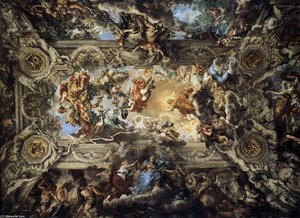
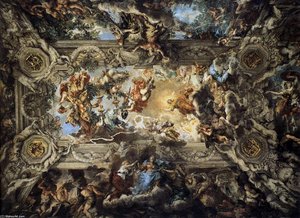 The Triumph of Divine Providence
Experience Pietro da Cortona’s ‘The Triumph of Divine Providence’ (1633). A monumental Baroque fresco depicting Divine Providence, rich in symbolism & allegory. Hand-painted reproductions available.
The commission for the main salon ceiling of Palazzo Barberini in 1633 represented a watershed moment. Pope Urban VIII tasked Cortona with creating a fresco that would celebrate his reign and, by extension, the glory of the Barberini family. The resulting *Allegory of Divine Providence and Barberini Power* (completed over six years) is nothing short of breathtaking – a monumental testament to Baroque illusionism. Before embarking on this ambitious project, Cortona undertook a journey through northern Italy, studying the works of Paolo Veronese and Titian, absorbing their mastery of color and perspective.
The fresco itself is a complex tapestry of religious allegory, mythological figures, and heraldic symbols. Divine Providence reigns supreme, sending forth angels to guide the Barberini family towards earthly power and spiritual fulfillment. The composition is structured around five interconnected compartments, each teeming with activity and symbolism. Cortona employed *quadratura* – a technique that creates the illusion of architectural extension beyond the physical walls – seamlessly blending painting and architecture. Figures appear to float in mid-air, reaching out from the ceiling into the viewer’s space, creating an overwhelming sense of grandeur and awe. The ubiquitous presence of Barberini bees subtly reinforces the family's legitimacy and influence. It wasn’t simply a decoration; it was a carefully constructed narrative designed to project power and divine sanction.
Beyond the Ceiling: Cortona’s Architectural Designs & Canvas Paintings
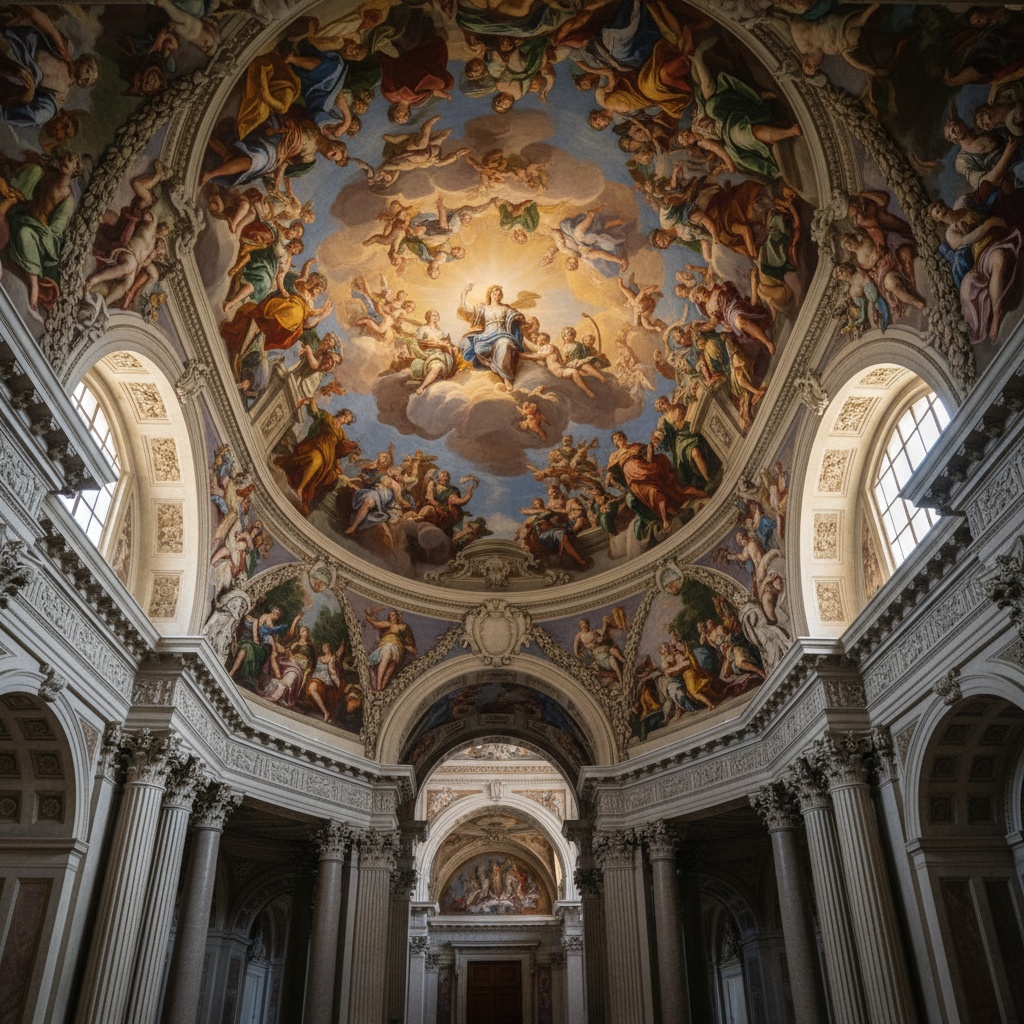
Illusionistic ceiling painting, which includes the techniques of perspective di sotto in sù and quadratura, is the tradition in Renaissance, Baroque and Rococo art in which trompe-l'œil, perspective tools such as foreshortening, and other spatial eff...
While celebrated primarily as a painter of frescoes, Pietro da Cortona was also a gifted architect. Though fewer of his architectural projects were realized compared to his paintings, those that did come to fruition – such as Santa Maria in Vallicella and the church of San Carlo alle Quattro Fontane – demonstrate an equally inventive spirit. He approached architecture with the same dynamism and theatricality that characterized his frescoes, employing curved facades, elaborate ornamentation, and dramatic spatial effects.
Beyond the grand salon at Palazzo Barberini, Cortona produced a substantial body of canvas paintings. *The Sacrifice of Polyxena* (1640s), now housed in the Museo Nazionale di Palazzo Venezia, exemplifies his mastery of mythological narrative. The scene is rendered with dramatic lighting and emotional intensity, showcasing sculptural figures arranged in a swirling composition that draws the viewer into the heart of the tragedy. He also undertook numerous commissions for the Medici family in Florence, leaving his mark on the Pitti Palace. These canvases, while often overshadowed by his frescoes, reveal a painter equally adept at capturing intimate emotions and grand historical narratives.
Cortona’s Legacy: Influence on Roman Baroque & Artistic Synthesis
Pietro da Cortona’s impact on Roman Baroque art is undeniable. He stood alongside Gian Lorenzo Bernini and Francesco Borromini as one of the key figures in shaping the aesthetic landscape of 17th-century Rome. His emphasis on illusionistic techniques, dramatic perspective, and opulent detail set a new standard for decorative painting, influencing generations of artists to come.
Cortona’s genius lay not only in his technical skill but also in his ability to synthesize diverse artistic traditions. He seamlessly blended the naturalism of the Carracci brothers with the theatricality of Caravaggio and the classical ideals of the Renaissance. His work represents a culmination of these influences, forging a unique Baroque style that was both dynamic and sophisticated. He wasn’t merely imitating past masters; he was transforming them, creating something entirely new. Today, his frescoes at Palazzo Barberini remain a testament to his enduring legacy – a breathtaking example of artistic innovation and the power of art to convey meaning, emotion, and dynastic ambition. Explore these masterpieces and countless others with ArtsDot, bringing the grandeur of the Baroque era into your home.