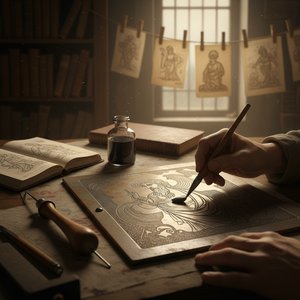
The Planographic Revolution: Understanding the Essence of Lithography
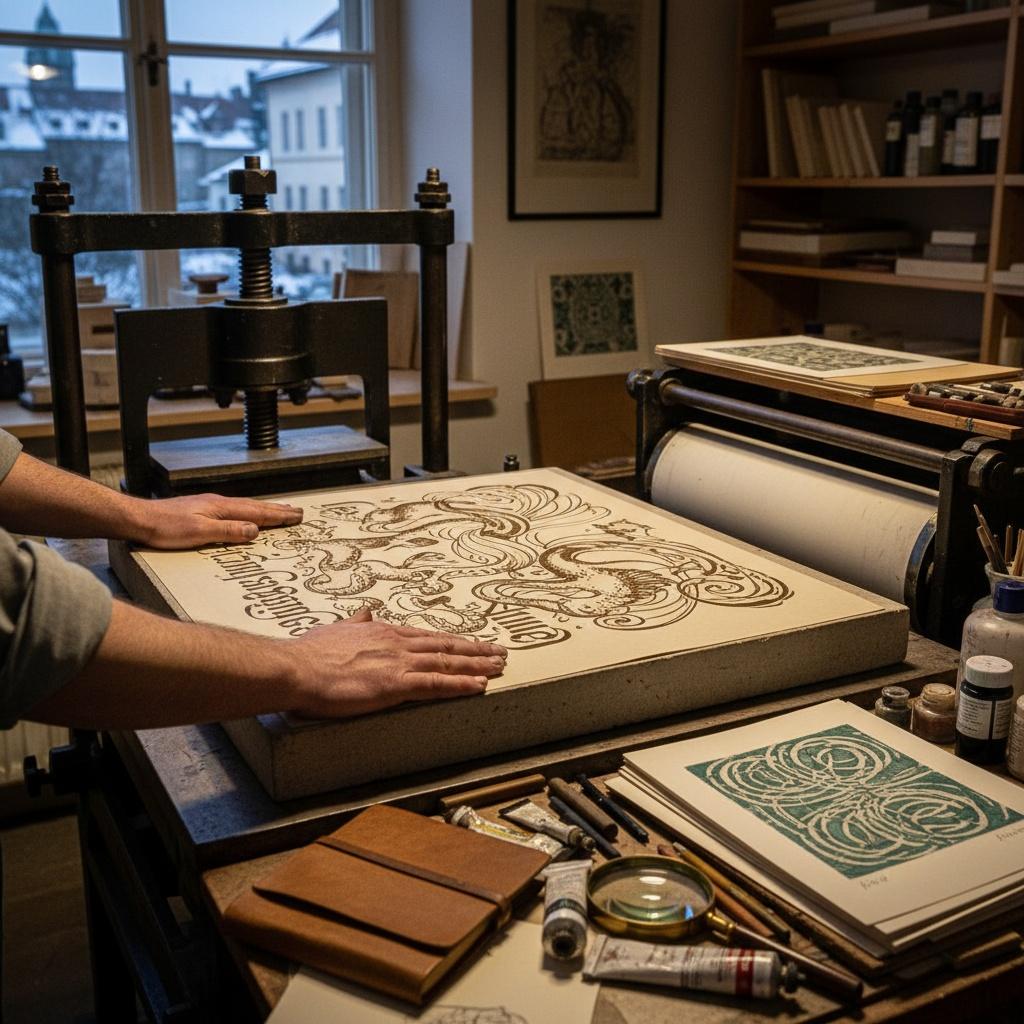
Lithography stands apart from the ancestral traditions of relief and intaglio printing, offering a profound departure from the physical labor of carving wood or incising metal. In the venerable lineage of printmaking, where the artist’s hand once struggled against the resistance of the block, lithography introduced the concept of the plano—the flat surface. This is not a medium of depth or carved trenches, but one of surface tension and chemical equilibrium. To understand lithography is to embrace the beauty of the two-dimensional plane, where the artist’s original gesture, whether rendered in crayon or fluid ink, is preserved with an unparalleled fidelity that mimics the very breath of the drawing itself. It is a revolution of lightness, moving away from the structural struggle of the matrix toward a more lyrical and immediate expression of the artist's soul.
From Senefelder to the Salon: A Historical Odyssey of Printmaking
The genesis of this transformative medium can be traced back to the late eighteenth century, specifically to the ingenious mind of Johann Alois Senefelder. A German actor and playwright by trade, Senefelder stumbled upon the potential of lithographic printing in the 1790s, inadvertently creating a tool that would forever alter the landscape of visual culture. What began as a commercial endeavor for mass-reproducible text soon ascended to the heights of the fine art salon. As the nineteenth century unfolded, lithography acted as a powerful engine of democratization, allowing the aesthetic triumphs of the era to permeate far beyond the gilded walls of private estates. This historical odyssey saw the medium evolve from a utilitarian printing method into a sophisticated vehicle for social commentary and artistic experimentation, bridging the gap between the ephemeral printed broadside and the enduring museum masterpiece.
The Chemical Symbiosis: Deciphering the Interplay of Oil and Water
At the heart of lithography lies a delicate, almost mystical, chemical symbiosis—an alchemy where the fundamental repulsion between oil and water dictates the creation of art. The process begins upon a polished slab of limestone, or perhaps a prepared metal plate of zinc or aluminum, which serves as the silent stage for this elemental dance. The artist applies an oil-based lithographic crayon or ink directly to the stone, embedding their vision within its porous structure. To fix this ephemeral drawing, the stone undergoes a rigorous ritual: a layer of powdered rosin and talc is applied, followed by the application of gum arabic, often blended with a mild acid solution. This chemical intervention ensures that the blank areas of the stone become hydrophilic, absorbing water and repelling ink, while the drawn areas remain oleophilic, capturing the dark richness of the pigment. It is through this precise management of moisture and grease that the image is etched into the very memory of the stone, ready to be transferred to paper in a moment of profound technical triumph.
Masters of the Impression: Iconic Artists Who Defined the Medium
The history of lithography is written by the hands of masters who recognized the medium's capacity for both exquisite detail and atmospheric breadth. One cannot contemplate this era without acknowledging the profound impact of artists like Honoré Daumier, whose nineteenth-century French realism utilized the lithographic stone to weave powerful narratives of social satire and human emotion. The medium allowed for a unique textural depth, where the grain of the stone could simulate the softest shadows or the sharpest contours. From the delicate, light-drenched impressions that prefigured the arrival of Impressionism to the bold, graphic interventions of later modernists, lithography provided a playground for those seeking to capture the fleeting nuances of light and life. These artists did not merely print images; they utilized the chemical properties of the medium to breathe texture, movement, and psychological depth into every impression.
The Connoisseur’s Eye: Evaluating Technique, Rarity, and Provenance
For the discerning collector, the acquisition of a lithograph requires an eye trained in the nuances of technique, edition rarity, and historical provenance. One must look beyond the surface to evaluate the quality of the stone's impression—noting whether the blacks retain their velvety depth or if the finer lines have suffered from over-etching. The rarity of the edition is paramount; a small, carefully controlled print run holds a prestige that mass-produced iterations can never claim. Furthermore, the provenance of a piece—its documented journey through esteemed collections and galleries—serves as the ultimate testament to its authenticity and value. As you navigate the complex and rewarding world of fine art acquisitions, platforms such as ArtsDot.com offer unparalleled expertise, providing access to high-quality reproductions and curated masterpieces that honor the enduring legacy of this magnificent medium. Whether seeking a singular historical treasure or a beautifully rendered tribute to the Old Masters, the journey of the collector is one of continuous discovery and profound aesthetic reverence.