The Alchemical Revolution: From Tempera to the Luminous Depth of Oil
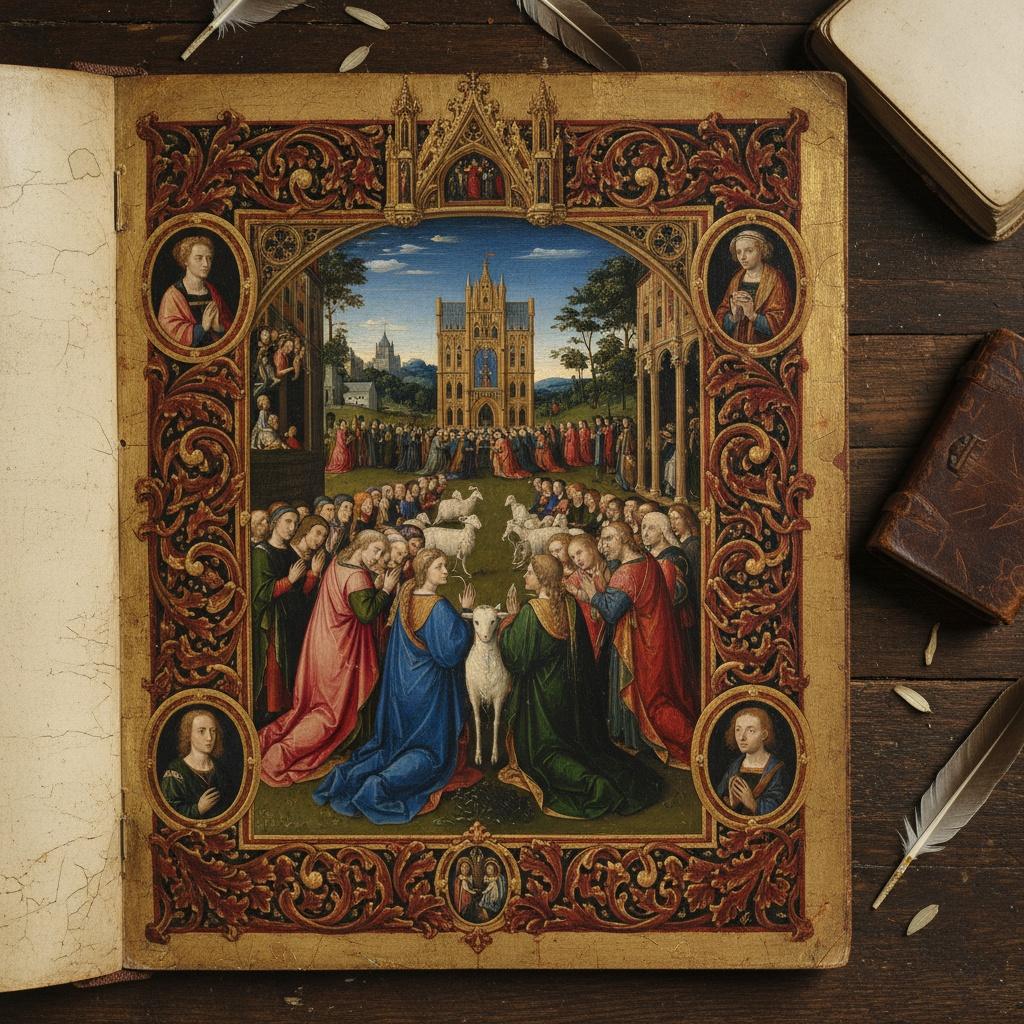
In the quiet, shadowed studios of the fifteenth century, a profound transformation was underway, one that would forever alter the sensory experience of Western art. Before this era, the artist’s palette was largely dominated by egg tempera—a medium characterized by its rapid drying time and an inherent opacity that, while beautiful, lacked the ability to capture the ephemeral dance of light. The true revolution, however, lay in what many historians describe as an alchemical breakthrough: the refinement of oil painting. By utilizing linseed or walnut oils as a vehicle for pigments, Flemish masters unlocked a new dimension of translucency. Through the meticulous application of thin, transparent glazes, they could build layers of color that allowed light to penetrate the surface and reflect back from within the paint itself. This technique did not merely depict objects; it breathed life into them, creating a depth and a glow that seemed almost supernatural, turning every canvas into a vessel for captured radiance.
Jan van Eyck and the Architecture of Light: Defining a New Visual Language
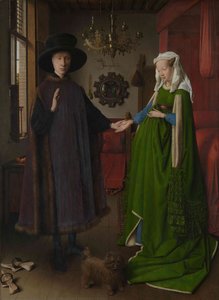
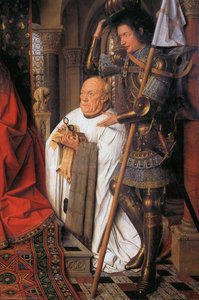
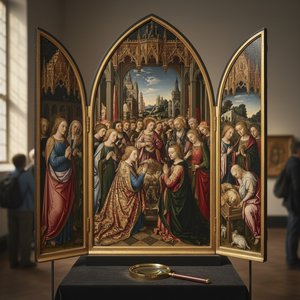
At the heart of this luminous movement stood Jan van Eyck, an artist whose name has become synonymous with the very pinnacle of Northern Renaissance mastery. Van Eyck did not simply paint; he constructed an architecture of light. His ability to manipulate the new medium allowed for a level of microscopic detail that had previously been unimaginable. One could observe the precise glint of a single pearl, the heavy texture of a velvet robe, or the way moisture clung to a petal in a still life. In works such as the detailed studies found within The Madonna with Canon van der Paele, we see a mastery of specular highlights and soft shadows that suggest a profound understanding of optics. This was not merely about realism; it was about using light to define space and presence, creating a visual language where every surface—be it cold metal or warm skin—possessed its own unique, tactile identity.
Sacred Symbolism and Meticulous Realism: The Narrative Power of Flemish Artistry
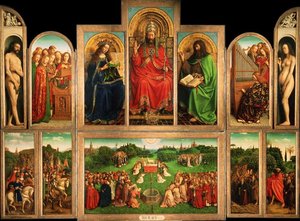
The brilliance of the Early Netherlandish period lies in its seamless marriage of breathtaking realism and profound spiritual narrative. To the modern eye, a painting from this era might appear to be a simple, hyper-realistic depiction of everyday life, yet every element was imbued with a hidden, sacred meaning—a concept often referred to as disguised symbolism. A single sphere held by Christ, set against a serene landscape, could represent the universe under His dominion; a common flower might whisper of the Virgin's purity. This meticulous attention to detail served a higher purpose: it sought to find the divine within the mundane. By rendering the physical world with such absolute precision, these artists invited the viewer to contemplate the spiritual truths hidden within the very fabric of existence, making the act of looking a form of quiet, meditative prayer.
The Lineage of Mastery: From the Eyckian Foundation to Hans Memling’s Serenity
As the techniques pioneered by Van Eyck matured, they flowed into the hands of subsequent masters, each adding their own unique nuance to the Flemish tradition. The heavy, dramatic intensity of the early period gradually evolved into a more polished and serene aesthetic. A quintessential figure in this lineage is Hans Memling, whose work represents the graceful culmination of these traditions. In his captivating works, such as the St John & Veronica Diptych or his evocative Untitled landscapes from 1480, we see a shift toward a softer, more lyrical beauty. While he maintained the profound depth and luminous detail of his predecessors, Memling introduced a sense of tranquility and emotional poise. His ability to blend Christological themes with peaceful, atmospheric landscapes demonstrates how the foundational innovations of oil painting allowed for an endless expansion of artistic expression and emotional range.
A Lasting Radiance: How Early Netherlandish Innovation Reshaped Western Art
The legacy of the Early Netherlandish masters is not confined to the museum galleries of Europe; it is etched into the very DNA of Western art history. The transition from tempera to oil, the invention of complex glazing, and the integration of profound symbolism all provided the essential tools for the centuries of artistic evolution that followed. These masters taught us how to see light, how to value texture, and how to find meaning in the smallest details. At ArtsDot.com, we hold a deep reverence for this enduring brilliance. Our mission is to preserve and share this magnificent heritage by offering meticulously handcrafted oil reproductions and museum-quality prints that capture the true spirit of these Old Masters. Through our dedication to academic excellence and technical precision, we strive to bring the luminous, transformative power of the Flemish Renaissance into the homes and collections of art enthusiasts worldwide, ensuring that this radiant legacy never fades.