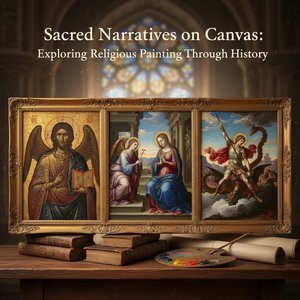
A Portal to the Divine: Entering the Luminous World of Byzantium
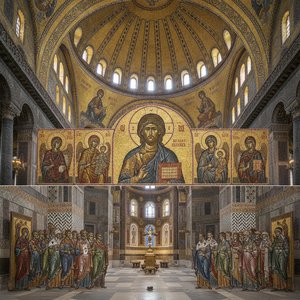 Byzantine Art: The Golden Era of Bold Icons, Divine Mosaics, and Imperial Grandeur
The Golden Standard: Gold, Light, and the Visual Power of Byzantine Mosaics To step into a Byzantine space is to abandon the mundane world and enter a realm of pure, unadulterated radiance. This was not merely an aesthetic choice; it was a high-impac...
To step into a Byzantine space is to perform an act of transcendence, leaving the heavy, mundane world behind to enter a realm of pure, unadulterated radiance. This was not merely an aesthetic preference but a profound visual strategy designed to overwhelm the senses and transport the soul. The Byzantine era, emerging from the decline of western Rome and flourishing until the fall of Constantinople in 1453, created a body of art that served as a bridge between the earthly and the divine. It was a world steeped in incense, shimmering gold leaf, and a deep, spiritual contemplation that sought to capture the eternal.
As we look back through the lens of history, we see an empire that preserved the essence of its culture through much of the Middle Ages, influencing even the burgeoning traditions of Russia and the Islamic states of the eastern Mediterranean. The art of this period was never intended for mere decoration; it was a sacred language. Whether through the grand scale of imperial architecture or the intimate touch of a hand-painted icon, every element was crafted to facilitate a direct connection with the holy. It is a legacy that continues to resonate, offering us a window into a lost world of devotion and artistic mastery.
The Alchemy of Light: Decoding the Golden Splendor of Glass Tesserae
 Monreale Cathedral mosaics
The Monreale Cathedral Mosaics are the main internal feature of Monreale Cathedral in the city of Palermo, Sicily, Italy; the mosaics cover 6,500 m2. The mosaics are made up of glass tesserae in the Byzantine style at the orders of King William II. T...
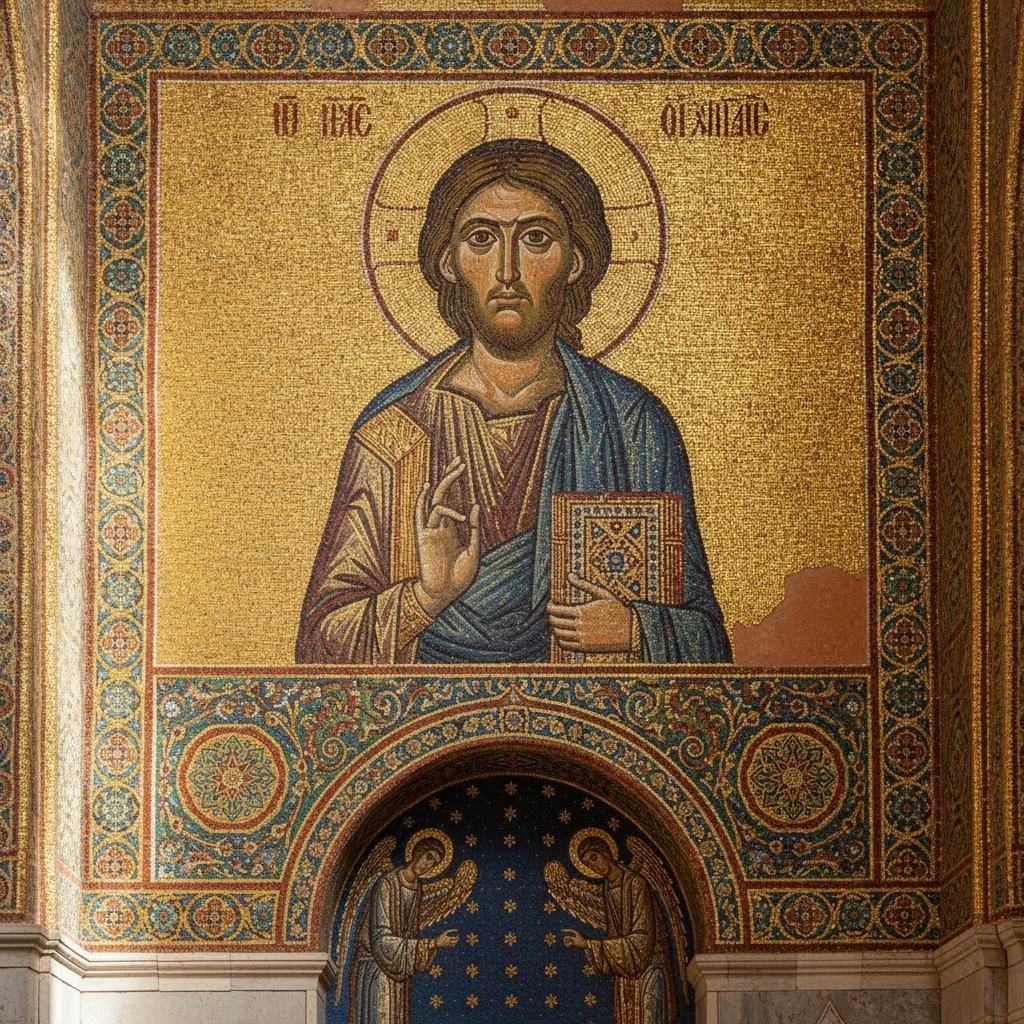
The most defining characteristic of Byzantine artistry is undoubtedly its masterful use of gold, a material that functioned as much more than a luxury pigment. In the hands of skilled artisans, gold became a medium of light itself. When sunlight or the flickering glow of candlelight hit the uneven surfaces of glass
tesserae, the walls did not simply reflect the light—they seemed to breathe with it. This created a shimmering, supernatural atmosphere that felt disconnected from earthly gravity, making the very architecture appear to vibrate with spiritual energy.
This brilliance is nowhere more evident than in the intricate mosaics that adorned the ceilings and apses of sacred structures. Unlike the flat surfaces we encounter in modern prints, these mosaics utilized depth and texture to manipulate human perception. The use of rich blues and deep, saturated tones provided a cosmic backdrop, allowing golden figures to emerge with a
three-dimensional intensity. We see this breathtaking technique in the massive mosaic cycles of the Monreale Cathedral in Sicily, where over 6,500 square meters of glass tesserae cover the interior walls, creating one of the largest and most conceptually unified mosaic displays in the world. It is a testament to an era where material texture was used to command a room’s entire visual identity, turning stone and glass into a celestial vision.
Windows to Eternity: The Sacred Language and Symbolism of Byzantine Icons
 Halo (religious iconography)
A halo (from Ancient Greek ἅλως, hálōs, 'threshing floor, disk'), also called a nimbus, aureole, glory or gloriole (Latin: gloriola, lit. 'little glory'), is a crown of light rays, circle or disk of light that surrounds a person in works of art. The ...
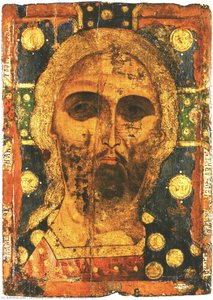
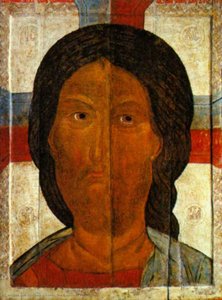
Beyond the sheer spectacle of gold lies a complex, coded language of symbols where every line, color, and posture tells a sacred story. Byzantine iconography was not concerned with realism in the modern sense; rather, it sought to capture the
eternal essence of its subjects. The figures within these icons—often characterized by large, soulful eyes and elongated forms—were designed to act as portals. To gaze upon an icon is to look through a window into the divine, where the art serves as a conduit for prayer and reflection.
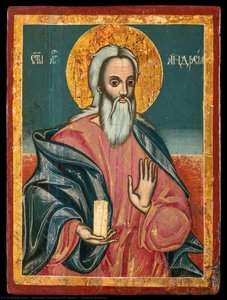
A central element in this visual vocabulary is the
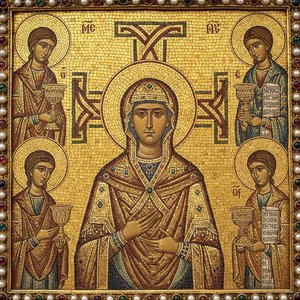
halo, or nimbus, a crown of light that surrounds holy figures to indicate their sacred status. This circular glow, often depicted in gold or white, symbolizes the divine radiance emanating from within. The mastery of this technique is seen in the works of luminaries like
Theophanes the Greek, whose life bridged the final flourishing of Byzantine art with the traditions of Russia. His ability to infuse icons with psychological depth and a sense of movement helped transform religious painting into a spiritual architecture. Through these meticulously crafted images, the complex theological narratives of the era were made accessible, turning every brushstroke into a testament of faith.
Celestial Architecture: The Immeersive Grandeur of Domes and Cathedrals
The grandeur of Byzantine art is inseparable from the architecture that housed it. The style was built upon a foundation of arches, vaults, and massive domes, designed to create an immersive environment of awe. These structures were not merely buildings but were engineered to be much more than a backdrop; they were atmospheric sanctuaries where the weight of stone met the lightness of spirit. When one wanders through the elegant halls of a space like the Byzantine and Christian Museum in Athens, the transition from the modern bustle into a contemplative era is immediate and profound.
The scale of these architectural achievements provided the perfect canvas for the empire's artistic ambitions. In places like the Cathedral of St. Vladimir in Kiev, the view of the apse reveals a breathtaking interplay of gold, mosaics, and iconography that captures a glimpse into the very heart of religious history. The architecture worked in harmony with the art; the soaring heights of the domes allowed light to descend upon the mosaics, while the rhythmic vitality of frescoes breathed life into biblical scenes. It was an era where the built environment and the decorated surface were one single, cohesive expression of imperial and divine power.
An Eternal Glow: The Lasting Legacy of Byzantine Mastery in the Modern Soul
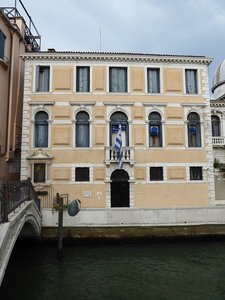 Hellenic Institute of Byzantine and Post-Byzantine Studies
A Jewel of Venetian Byzantine Scholarship The Hellenic Institute of Byzantine and Post-Byzantine Studies in Venice stands as a singular testament to the enduring legacy of cultural exchange between Greece and Italy—a beacon illuminating the complexit...
Though the political empire of Byzantium eventually fell, its artistic soul has proven to be immortal. The techniques developed by ancient masters—the precision of the mosaicist, the spiritual depth of the iconographer, and the structural genius of the architect—continue to inspire the modern eye. We see echoes of this golden era in the way we still seek beauty that transcends the superficial, looking for art that possesses a certain
soulful luminosity.
The legacy of Byzantium lives on in our continued fascination with light, texture, and the power of symbolism. It reminds us that art can be more than an object of beauty; it can be a vessel for meaning and a bridge to the infinite. As we explore these ancient masterpieces, we find that the "golden standard" set centuries ago still holds the power to overwhelm our senses and stir our deepest emotions, proving that true artistic mastery is indeed timeless.


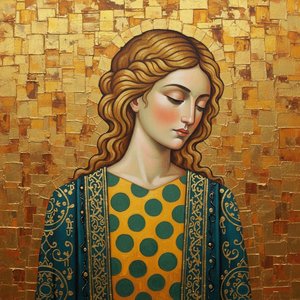
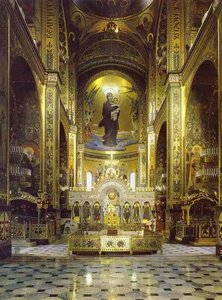 Interior of the Cathedral of St. Vladimir, Kiev, View of the apse