The Great Shift: From Renaissance Harmony to Baroque Emotion
 The Visceral Stage: Exploring Dramatic Narratives & Emotional Intensity in Baroque Art
The Baroque Embrace of Emotion: A Shift from Renaissance Rationality Wikipedia: Baroque painting Baroque painting is the painting associated with the Baroque cultural movement. The movement is often identified with Absolutism, the Counter Reformation...
To understand the profound impact of the Baroque era, one must first recall the serene, almost mathematical perfection of the Renaissance. For centuries, the art world was guided by a pursuit of idealized beauty, where balance, proportion, and a rational clarity reigned supreme. Artists like Raphael sought to capture a sense of eternal stability, presenting a world that felt harmonious and intellectually composed. However, as the 17th century dawned, this measured tranquility began to dissolve, replaced by an aesthetic earthquake that favored the visceral over the cerebral.
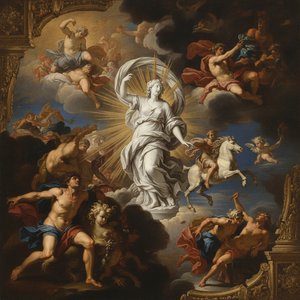
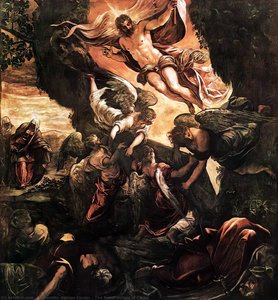
The transition into the Baroque was not merely a change in brushwork; it was a fundamental shift in how humanity perceived its place in the universe. The stability of the Renaissance gave way to a new sensibility—one that embraced movement, tension, and the unpredictable nature of human emotion. Where the previous era celebrated the intellect, the Baroque sought to capture the soul. It moved away from the calm, symmetrical compositions of the past toward dynamic diagonals and swirling forms that seem to spill out of the frame, inviting the viewer not just to observe, but to participate in a moment of profound psychological or spiritual crisis.
Chiaroscuro and Tenebrism: The Language of Light and Shadow
In art, chiaroscuro (English: kee-AR-ə-SKOOR-oh, -SKURE-, Italian: [ˌkjaroˈskuːro]; lit. 'light-dark') is the use of strong contrasts between light and dark, usually bold contrasts affecting a whole composition. It is also a technical term used by a...
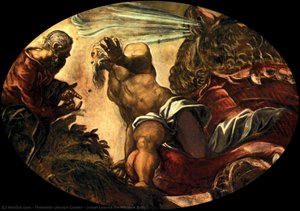
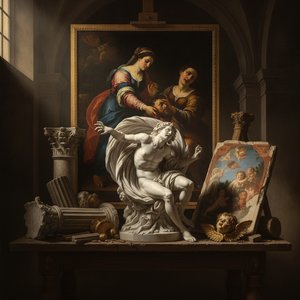
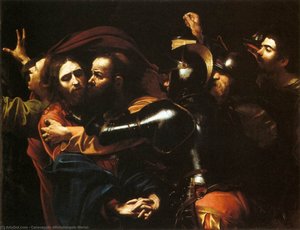
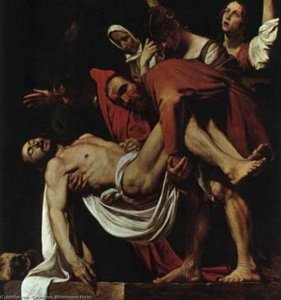
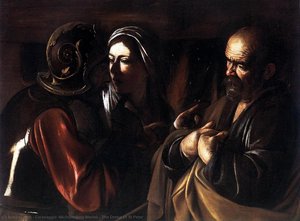
If the Renaissance was defined by even, luminous clarity, then the Baroque is defined by its shadows. At the heart of this movement lies the masterful use of chiaroscuro—the dramatic interplay between light and dark. This technique, while having roots in the late 15th century, reached its most potent and evocative heights during the Baroque period. By using strong contrasts to model three-dimensional forms, artists were able to achieve a sense of volume and weight that made figures appear almost tangible within their painted environments.
Taking this technique to its most extreme, we encounter tenebrism, a method where darkness becomes the dominant force of the composition. In tenebristic works, figures are often plunged into deep, impenetrable shadows, only to be suddenly struck by a piercing, radiant light. This creates an atmosphere of palpable tension and theatricality. This manipulation of light serves a purpose far beyond mere aesthetics; it acts as a spotlight, directing the eye to the most emotionally charged elements of the narrative—a weeping face, a wounded hand, or a divine revelation—while leaving the rest of the world in mysterious obscurity.
A Stage for the Divine: Art as a Tool of the Counter-Reformation
 The Dramatic Flourish: Exploring the Baroque Movement's Enduring Legacy in Art History
The Genesis of Grandeur: Historical Context & The Counter-Reformation Wikipedia: Counter-Reformation The Counter-Reformation (Latin: Contrareformatio), also sometimes called the Catholic Revival, was the period of Catholic resurgence that was initiat...
The dramatic flourishes of Baroque art were deeply intertwined with the turbulent religious and political landscape of Europe. The era was shaped by the Counter-Reformation, the Catholic Church's powerful response to the Protestant Reformation. In an age of profound upheaval, the Church recognized that art could serve as a potent visual counter-offensive. It needed a medium that could re-engage the faithful, not through complex theological debate, but through overwhelming spectacle and emotional resonance.
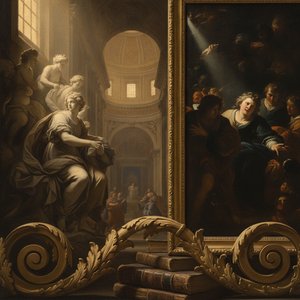
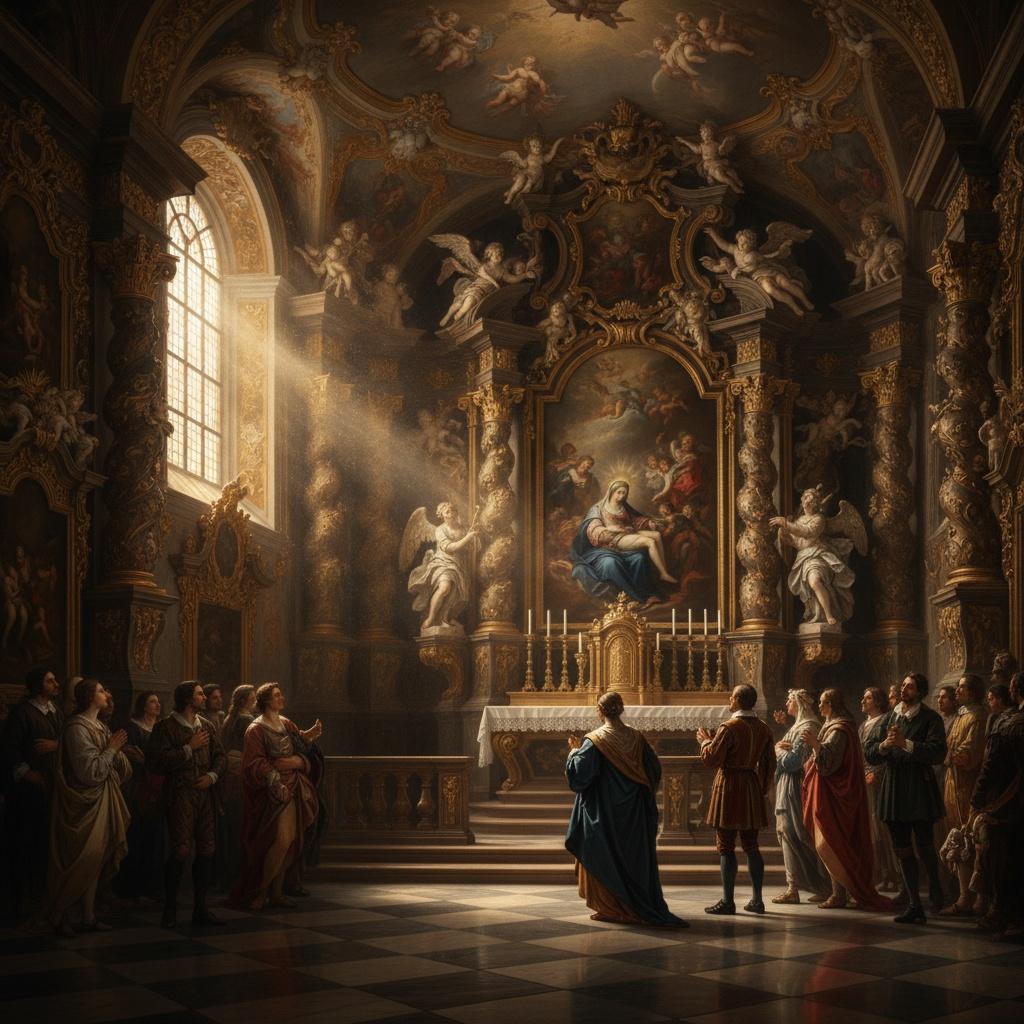
This period saw churches transformed into theatrical stages for the divine. Architectural marvels like I Gesuiti in Venice or the St. Ignatius of Loyola Church in Győr were designed to bridge the gap between the earthly and the celestial. Every curve of a façade, every flicker of candlelight against intricate stucco work, and every monumental painting was intended to inspire awe, piety, and even a sense of divine terror. Art became a tool for reaffirming authority and devotion, using grandeur and opulence to communicate the majesty of faith to a wide, often illiterate, audience.
Masters of the Dramatic Brush: Exploring Reiner, De Lairesse, and Beyond
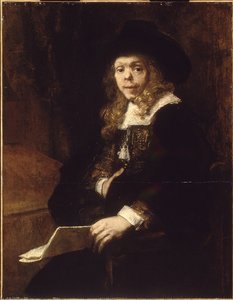 gérard de lairesse
Gérard de Lairesse: A Leading Figure of Belgian Baroque Art Gérard de Lairesse (1640-1711) was a prominent Belgian painter who significantly contributed to the development and flourishing of Baroque art during the 17th century. Born in Liège, Belgium...
Across the European landscape, individual masters emerged, each contributing their unique voice to this era of grandiosity. In Prague, Václav Vavřinec Reiner stood as a visionary, his canvases pulsating with spiritual fervor. His work, particularly his depictions of religious suffering, exemplifies the Baroque ability to convey profound psychological depth through intense chiaroscuro and expressive brushstrokes. Similarly, in the Belgian tradition, Gérard de Lairesse demonstrated how the influences of giants like Caravaggio and Rembrandt could be synthesized into a style marked by dramatic composition and masterful light.
The movement also found strength in regional variations, from the Spanish Baroque landscapes of Lorentz Pasch the Younger to the sculptural intensity found in the works of Italian masters. Whether it was the meticulous detail of drapery or the heavy, emotional weight of a martyr's expression, these artists shared a common goal: to move the viewer. They moved away from the intellectual contemplation of the Renaissance and toward an immediate, visceral impact that remains as captivating today as it was four centuries ago.
The Eternal Echo: How Baroque Grandeur Inspires Modern Collecting
 Baroque Masterpieces: 10 Paintings That Defined an Era |
Introduction To gaze upon the masterpieces of the Baroque is to step into a world ablaze with drama, emotion, and an almost overwhelming sense of grandeur. This wasn’t merely a style; it was a cultural earthquake, reshaping art, architecture, music, ...
Though the Baroque period eventually gave way to the lighter elegance of the Rococo, its legacy remains an indelible part of our cultural fabric. Today, for the discerning collector, the allure of Baroque art lies in its ability to command a room and stir the emotions. The era's emphasis on storytelling, texture, and the dramatic use of light continues to offer a profound sense of luxury and historical depth to any interior space.
In an age often characterized by digital fleetingness, there is a deep, soulful connection to be found in the heavy oils and rich pigments of this era. Whether through the acquisition of museum-quality prints or the commissioning of a hand-painted oil reproduction, bringing the spirit of the Baroque into a modern home allows us to touch the pulse of history. It is an invitation to surround ourselves with works that do not merely decorate, but truly inhabit our lives, reminding us of the enduring power of drama, light, and the human spirit.
At ArtsDot.com, we celebrate this enduring legacy by making the grandeur of the Old Masters accessible to all. Our master artists specialize in recreating the tactile depth and emotional intensity of these historical masterpieces on 100% cotton canvas. From custom portraits that undergo a "Period Shift" into the style of Rembrandt to large-scale murals that transform architectural spaces, we are dedicated to preserving the artistry of the past for the collectors of the future.