

The Divine Ascent: From Romanesque Shadows to Gothic Light
 The Shadow of Faith: Exploring Gothic Art's Spiritual Intensity & Architectural Innovation
The Birth of Gothic: From Romanesque Roots to a New Spiritual Vision Wikipedia: Gothic architecture Gothic architecture is an architectural style that was prevalent in Europe from the late 12th to the 16th century, during the High and Late Middle Age...
To understand the profound shift that occurred during the twelfth century, one must first envision the world as it was before—a landscape defined by the heavy, earth-bound silhouettes of the Romanesque. In those earlier centuries, European art and architecture were characterized by a sense of somber permanence; thick walls, rounded arches, and small windows created interiors of profound shadow, where the divine was felt through weight and impenetrable strength. It was an era of protection and monastic seclusion, where the soul sought refuge within stone fortresses.
However, as we move into the High Middle Ages, a radical transformation began to stir in the heart of Europe, particularly within the Île-de-France. This was not merely a change in masonry, but a fundamental shift in human consciousness. The heavy shadows of the Romanesque gave way to a new spiritual vision—one that sought to bridge the gap between the earthly and the eternal through the medium of light. As scholastic philosophy flourished, so did an architectural ambition to reach upward, replacing the squat, defensive structures of the past with soaring, skeletal frameworks that seemed to defy gravity itself.
This transition was a deliberate reaching for something beyond the tangible world. Where the Romanesque conveyed divine power through sheer mass, the Gothic era introduced a luminous theology. The goal was no longer just to shelter the faithful, but to transport them. Through the innovative use of pointed arches and increased window space, architects began to dissolve the boundaries of the wall, allowing light to become a primary protagonist in the sacred narrative—a shimmering, celestial presence that transformed stone into spirit.
Architectural Alchemy: The Engineering of Heaven on Earth
--- title: Gothic by Design: The Dawn of Architectural Draftsmanship - The Metropolitan Museum of Art url: https://www.metmuseum.org/exhibitions/gothic-by-design-the-dawn-of-architectural-draftsmanship hostname: metmuseum.org description: Gothic by D...
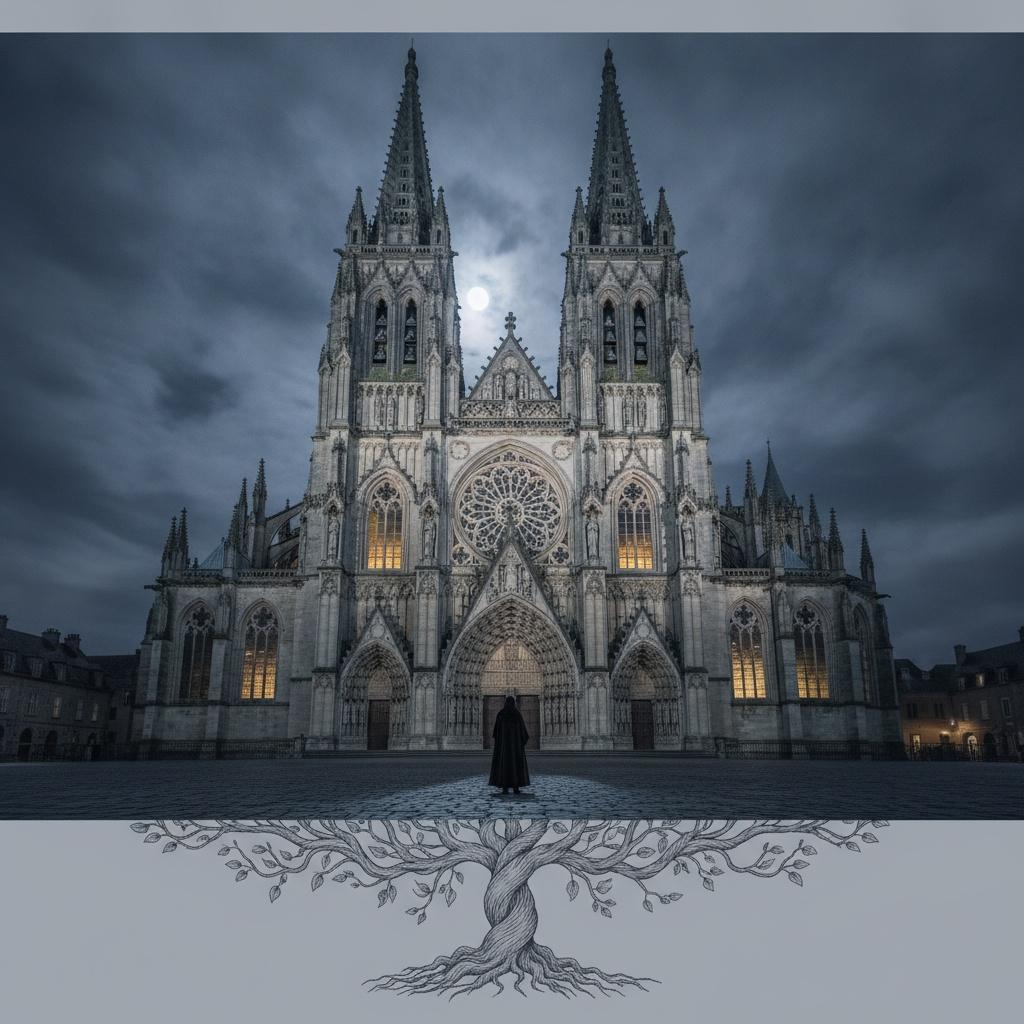
The majesty of a Gothic cathedral is a triumph of engineering disguised as an act of devotion. To the untrained eye, the soaring spires and delicate tracery appear almost weightless, yet they are supported by a complex system of structural alchemy. The introduction of the pointed arch was the catalyst for this revolution; unlike its rounded predecessor, which distributed weight outward, the pointed arch directed pressure more efficiently toward the ground. This allowed for much taller structures and wider spans, creating an interior volume that felt as though it were breathing.
Yet, the true magic lies in the flying buttress—those elegant, external stone ribs that leap from the cathedral walls like frozen arcs of grace. These supports took the immense lateral thrust of the heavy vaulted ceilings and channeled it away from the walls, permitting the masonry to become thinner and more delicate. This structural liberation enabled the creation of the ribbed vault, a rhythmic, flowing canopy that guides the viewer’s gaze upward in a continuous motion of ascent. When one stands beneath the magnificent, uninterrupted stone vaults of Exeter Cathedral, the sensation is not one of being crushed by weight, but of being lifted by an architectural prayer.
This era also saw the dawn of true architectural draftsmanship. Master masons began to visualize and communicate these complex, celestial ideas through intricate drawings and prints, a precursor to the modern understanding of design. The result was a built environment that functioned as a living organism—a structural symphony where every finial, pinnacle, and pier worked in concert to manifest the grandeur of the heavens within the reach of human hands.
A Tapestry of Stone and Spirit: Masterpieces of Medieval Sculpture
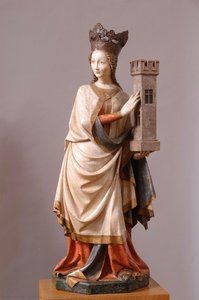 ptujska gora workshop
The Legacy of Ptujska Gora Workshop The Ptujska Gora workshop, also known as the Ptuj's Hill Workshop, stands as a singular testament to the artistic fervor of 15th-century Slovenia—a beacon of Gothic sculpture that continues to inspire awe and schol...
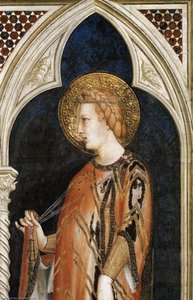
While the architecture provided the skeletal framework for this spiritual journey, it was sculpture that breathed emotion and narrative into the stone. Gothic sculpture represents a pivotal moment in European history where the rigid, stylized forms of the early medieval period began to soften into a profound naturalism. We see this evolution clearly in the works of the Ptujska Gora workshop in 15th-century Slovenia, where the influence of the International Gothic style brought a new level of refinement and emotional depth to Slavic art.
The artisans of this era were masters of texture and expression. Using sandstone and other workable mediums, they sculpted figures that possessed a serene dignity and a palpable sense of contemplation. Consider the group of sculptures featuring St. Barbara and St. Catherine; these are not merely decorative elements but are imbued with a spiritual intensity that invites the viewer into a state of prayerful reflection. The movement toward naturalism allowed for more nuanced facial expressions and more fluid drapery, capturing the subtle interplay of light and shadow across the folds of stone garments.
In other regions, such as Catalonia, figures like Pere Oller contributed to this landscape of "stone and sorrow," creating works that resonated with the political and religious shifts of the 14th and 15th centuries. These sculptures served as a visual liturgy for a largely illiterate population, where every carved saint and every emotive gesture told a story of faith, resilience, and the enduring human connection to the divine. The stone was no longer just a building material; it had become a vessel for the soul.
Luminous Narratives: The Theological Power of Stained Glass
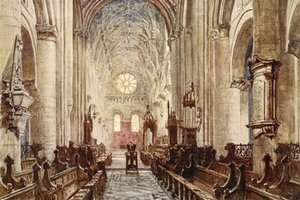 Interior Of The Cathedral Of Christ Church
Admire John Fulleylove’s "Interior of the Cathedral of Christ Church." A stunning Gothic masterpiece showcasing ribbed arches & stained glass. Explore religious art history!
If the architecture is the body of the Gothic cathedral, then the stained glass is its soul. In the medieval mind, light was not merely a physical phenomenon but a direct manifestation of the Divine—a shimmering bridge between the earthly realm and the eternal. This theological concept, championed by figures like Abbot Suger during the reconstruction of the Basilica of Saint-demnis, transformed the cathedral interior into a kaleidoscope of sacred light.
The windows of the great cathedrals, such as those found in Tours or Chartres, act as luminous manuscripts. As sunlight passes through these vibrant panes of cobalt, ruby, and emerald, it is filtered and transformed into an ethereal glow that bathes the nave in otherworldly hues. Each window tells a story, depicting biblical scenes and lives of the saints with astonishing clarity and color blending. These windows did more than illuminate; they educated and enchanted, turning the passage of time and the movement of the sun into a continuous, silent sermon.
The technical skill required to create these masterpieces was immense. The layering of glass and the use of intricate lead cames allowed for complex imagery that could withstand the elements while maintaining a delicate translucency. When we gaze upon the works of later artists who were inspired by this light—such as Claude Monet’s Impressionist interpretations of Rouen Cathedral—we see how the Gothic legacy of "light as divinity" lived on, influencing how subsequent generations would perceive the atmospheric power of color and luminescence.
The Romantic Echo: How the Gothic Soul Inspired Later Eras
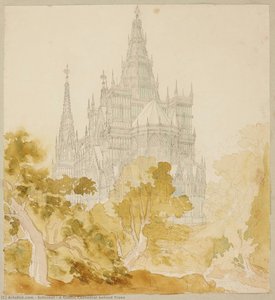 A Gothic Cathedral behind Trees
A Vision of Eternal Grandeur In the delicate interplay of light and shadow captured within Karl Friedrich Schinkel’s A Gothic Cathedral behind Trees , we encounter a profound meditation on the relationship between human ambition and the enduring natu...
The influence of the Gothic era did not vanish with the arrival of the Renaissance; instead, it retreated into the shadows, only to emerge with renewed passion during the 18th and 19th centuries. The Gothic Revival movement was a profound reaction against the perceived coldness of Neoclassicism. Architects and artists sought to reclaim the emotional depth, the mystery, and the spiritual intensity that characterized the medieval period.
This resurgence was deeply intertwined with the Romantic movement, which found beauty in the sublime, the ancient, and the slightly melancholic. We see this reflected in the delicate watercolors of Karl Friedrich Schinkel, whose 1813 work, A Gothic Cathedral behind Trees, captures a profound meditation on the relationship between human ambition and the enduring natural world. Schinkel’s ability to use light and shadow to evoke a sense of discovery—as if stumbling upon a sacred relic in a forgotten woodland—is a direct descendant of the Gothic spirit.
Even the Impressionists, though focused on the fleeting effects of modern light, could not escape the architectural gravity of the Gothic. Monet’s series on Rouen Cathedral demonstrates how the grand, historic forms of the past can be reimagined through a lens of pure color and atmosphere. The Gothic legacy provided a foundation of structural grandeur and symbolic depth that allowed later movements to explore new frontiers of perception, ensuring that the "shadows and splendor" of the Middle Ages would continue to haunt and inspire the modern imagination.
Preserving the Eternal: Bringing Gothic Grandeur into the Modern Home
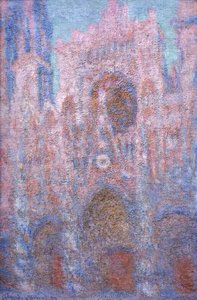 Rouen Cathedral, Symphony in Grey and Rose
The Majesty of Rouen Cathedral Captured in Impressionist Brilliance Claude Monet's "Rouen Cathedral, Symphony in Grey and Rose" is a masterful representation of his renowned series dedicated to the iconic Gothic cathedral. This artwork exemplifies Mo...
In our fast-paced, digital age, there is a growing desire to reconnect with the timelessness and weight of history. The aesthetic of the Gothic—its emphasis on texture, drama, and the interplay of light—offers a profound sense of stability and sophistication for the contemporary collector. Bringing elements of this era into a modern space does not require the construction of a cathedral, but rather an appreciation for the "soul" of its artistry.
Whether through the acquisition of a high-quality oil reproduction that captures the heavy impasto of a medieval master, or through the use of large-format murals that recreate the soaring feeling of a vaulted ceiling, the Gothic style can transform a room into a sanctuary. The key lies in the details: the richness of a deep color palette, the tactile presence of visible brushstrokes, and the way light interacts with the surfaces of the art.
At ArtsDot.com, we believe that fine art should be an accessible window into these historical wonders. We specialize in creating museum-quality, hand-painted reproductions that honor the academic excellence of the masters. From custom commissions that allow you to "remix" history—perhaps painting a modern memory in the luminous style of a Gothic master—to exquisite prints that capture the architectural majesty of the past, our mission is to help you preserve human creativity and bring the eternal grandeur of the Gothic era into your personal sanctuary.