Beyond the Gilded Age: The Emergence of a New American Vision
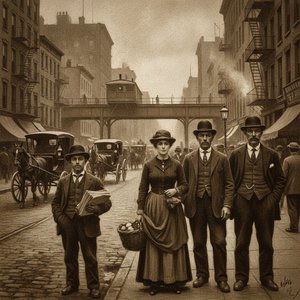
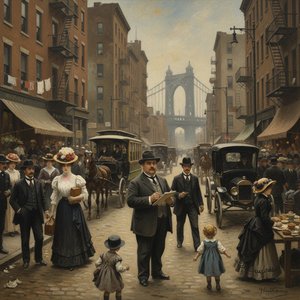
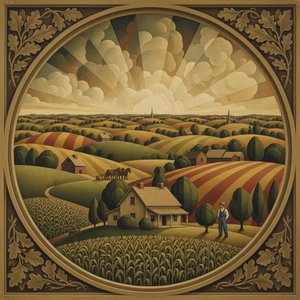
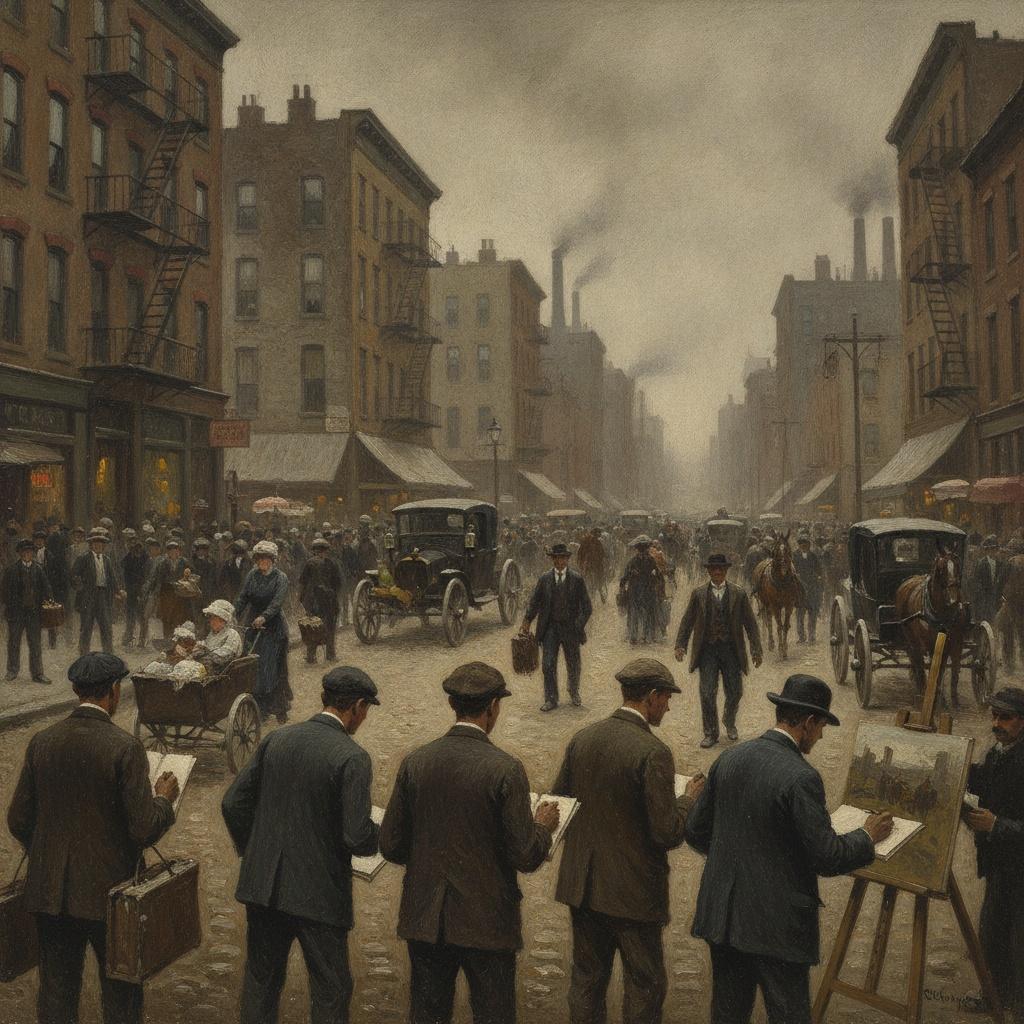
To understand the profound shift brought about by the Ashcan School, one must first recall the gilded splendor that preceded it. At the turn of the 20th century, the American art scene was largely enamored with the polished, idealized aesthetics of European traditions and the refined, often escapist, subjects of the upper class. There was a certain expectation of beauty—a requirement for grace, light, and a sanitized view of existence. However, as the century dawned, a group of rebellious, observant artists began to turn their gaze away from the manicured gardens and toward the soot-stained streets of a rapidly expanding New York City.
This was not merely a change in subject matter, but a fundamental revolution in the American spirit. These artists sought to strip away the artifice of the Gilded Age, looking instead for a truth that resided in the shadows, the alleys, and the crowded tenements. They were driven by a desire to democratize art, moving it from the exclusive salons of the elite into the very heart of the public experience. It was a movement born of a need to document the pulse of a nation in transition, finding a new kind of majesty in the unvarnished reality of the modern metropolis.
The Pulse of the Pavement: Capturing Urban Vitality and Grit
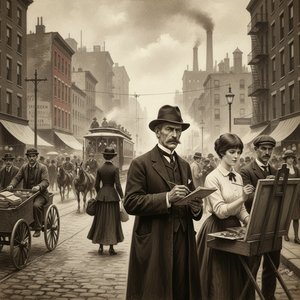
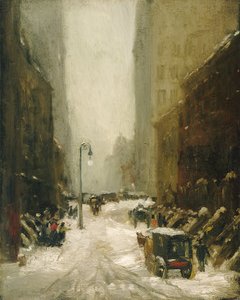
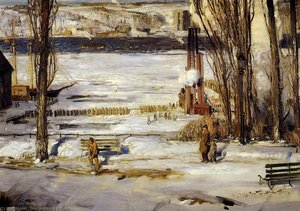
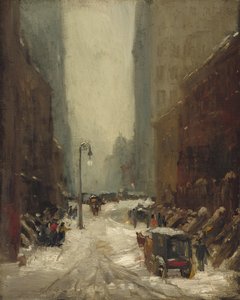
There is a certain magic found in the mundane, a rhythm that beats within the chaos of a crowded sidewalk. The Ashcan School artists possessed an almost supernatural ability to find this cadence. They did not seek the picturesque; they sought the visceral. In their works, one can almost hear the clatter of horse-drawn carriages, the distant cries of street vendors, and the low hum of conversation in a bustling tavern. They embraced the grit—the smoke, the grime, and the heavy atmosphere of an industrializing world—and transformed it into a profound narrative of human endurance.
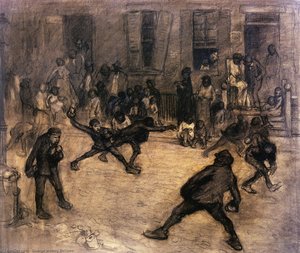
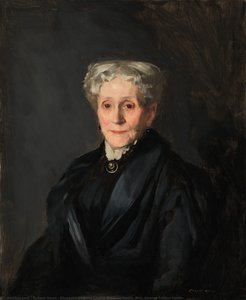
Their canvases served as windows into the lives of the often-overlooked: the immigrants navigating the labyrinthine streets of Hester Street, the laborers resting in the twilight, and the children playing amidst the urban decay. In pieces like George Luks’ Hester Street, we see a vibrant energy that is both chaotic and deeply human. This was an art of presence, capturing the fleeting moments of urban Bohemia—a roller-skating girl in Washington Square or the quiet dignity of a mother in a portrait by Bellows. They captured the soul of the city not by ignoring its hardships, but by illuminating the resilience found within them.
Masters of the Metropolis: The Visionary Artists of the Ashcan School
The movement was anchored by a circle of painters whose individual voices, while united in purpose, offered a diverse spectrum of realism. At the helm stood Robert Henri, the intellectual provocateur and mentor, whose work like Paris Night demonstrated an ability to infuse even the nocturnal streets with a striking, emotive realism. Henri encouraged his peers to look at the world with unblinking eyes, to find the poetic potential in the everyday.
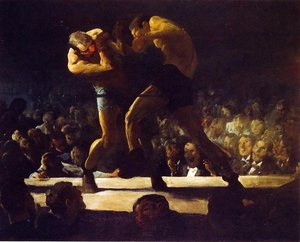
Following this lineage were artists such as John Sloan, who captured the quiet, intimate moments of city life, seen in the evocative Pigeons, and William Glackens, whose work often shimmered with a light-drenched influence reminiscent of Renoir, yet remained firmly rooted in the American experience. We see the theatrical flair of Everett Shinn, who brought the dazzling, often seedy, allure of the New York stage to life through his pastels, and the empathetic eye of George Bellows, whose powerful compositions captured both the raw strength of urban life and the tender intimacy of familial bonds. Together, these masters wove a complex tapestry of a city in motion.
A Symphony of Realism: Technique, Texture, and Social Commentary
The brilliance of the Ashcan School lies not only in what they chose to paint, but in how they chose to apply the pigment. Their technique was often characterized by a bold, gestural application of paint—a departure from the smooth, invisible brushwork of academic traditions. There is a tactile quality to their work; one can sense the weight of the oil, the deliberate movement of the hand, and the textured layers that create a sense of depth and atmosphere. This impasto-like approach allowed them to mimic the very textures of the city: the roughness of brick, the heaviness of fog, and the flickering light on wet cobblestones.
This stylistic choice was inextricably linked to their social commentary. The heavy shadows and dark, earthy palettes were not merely aesthetic choices; they were tools used to evoke the weight of urban existence. By utilizing a more rugged, expressive technique, they mirrored the struggles and the unrefined beauty of their subjects. Their art functioned as a form of visual journalism, documenting the socio-economic shifts of the era and providing a voice to the immigrant communities and working classes that were the true engine of the American dream.
From the Streets to the Studio: Preserving the Legacy of Urban Realism
Though the height of the Ashcan movement has passed into history, its impact on the trajectory of American art remains indelible. They broke the shackles of tradition, paving the way for future generations of realists and expressionists to explore the complexities of the modern condition. The legacy of their work lives on in our appreciation for art that dares to be honest, art that finds beauty in the struggle and dignity in the everyday.
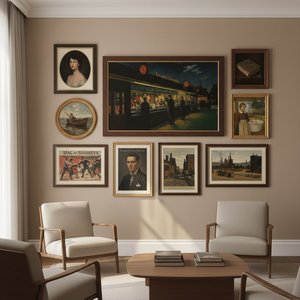
For the contemporary collector, these works offer more than just historical interest; they provide a profound emotional connection to a pivotal era of human history. To bring an Ashcan-inspired piece into one's home is to invite that raw, unfiltered spirit into your space—to celebrate the enduring strength of the human spirit amidst the ebb and flow of time. It is a reminder that even in the most shadowed corners of our world, there is a light waiting to be discovered by those with the courage to look.
At ArtsDot.com, we hold a deep reverence for these masters of realism. Our mission is to ensure that the profound textures and emotive power of such historical movements remain accessible to all. Whether you are seeking a museum-quality reproduction of a Bellows masterpiece or wish to transform a personal memory into a work of art through our custom oil painting services, we invite you to explore the enduring beauty of art history with us.