The Roots of Observation: From Ancient Herbals to Scientific Precision
 The Flourishing Canvas: A Historical Journey Through Botanical Illustration
From Herbals to Healing: The Earliest Roots of Botanical Depiction Wikipedia: Botanical illustration Botanical illustration is the art of depicting the form, color, and details of plant species. They are generally meant to be scientifically descripti...
To wander through the annals of art history is to witness a profound, ancient dialogue between humanity and the verdant world. Long before the advent of the camera lens or the sophisticated microscope, our understanding of the plant kingdom was inextricably linked to the artist's steady hand. The earliest glimpses of this relationship are not found in sterile textbooks, but in the sacred and symbolic depictions adorning ancient tombs and temples. In these primordial works, flora served as a cosmological language, where a single leaf could represent the breath of life or the cycle of rebirth.
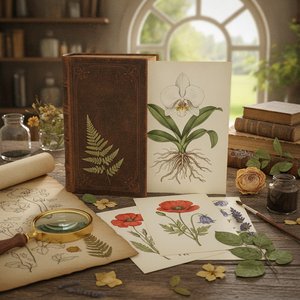
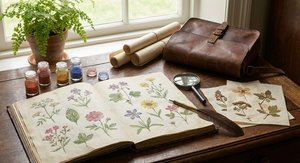
As centuries unfolded, this symbolic reverence transitioned into a more structured pursuit of knowledge. During the medieval period, monasteries became the quiet sanctuaries of botanical preservation. Within cloistered gardens, monks cultivated medicinal herbs not merely for sustenance, and their herbals—meticulously illustrated compendiums—became vital lifelines for healing. While works like the Pseudo-Apuleius Herbarius often prioritized symbolic meaning over strict realism, they laid the groundwork for a growing human desire to document the natural world with greater fidelity. This evolution reached a pivotal moment in the 6th century with manuscripts such as the Vienna Dioscurides, marking a shift toward a more disciplined, though still developing, approach to botanical representation.
By the time the Renaissance and Enlightenment eras dawned, the artist’s role had expanded from storyteller to scientist. The necessity of survival and the expansion of global exploration demanded an unprecedented level of accuracy. This era birthed the true botanical illustration, a discipline where the rigor of the laboratory began to dissolve into the soft light of the gallery. It was no longer enough to suggest a flower; one had to capture its morphology, its texture, and its very essence to aid in the burgeoning field of taxonomy.
The Master's Eye: Blending Botanical Accuracy with Artistic Grace
 johann simon von kerner
Johann Simon von Kerner: A Pioneer of Botanical Illustration Born in Kirchheim bei Teck, Germany, in 1755, Johann Simon von Kerner’s life was inextricably linked to the burgeoning world of botany and scientific illustration. His legacy rests primaril...
There exists a rare and exquisite intersection where scientific precision meets profound aesthetic grace. This is perhaps most beautifully realized in the works of masters like Johann Simon von Kerner, whose monumental Hortus Sempervirens stands as a testament to this harmonious duality. For artists like Kerner, the task was twofold: to serve as a scholar documenting the complexity of plant life and to act as an artist capturing its soul. His twelve-volume masterpiece reflects a dedication to meticulous observation that transcends mere documentation, offering instead a window into a world of unparalleled botanical elegance.
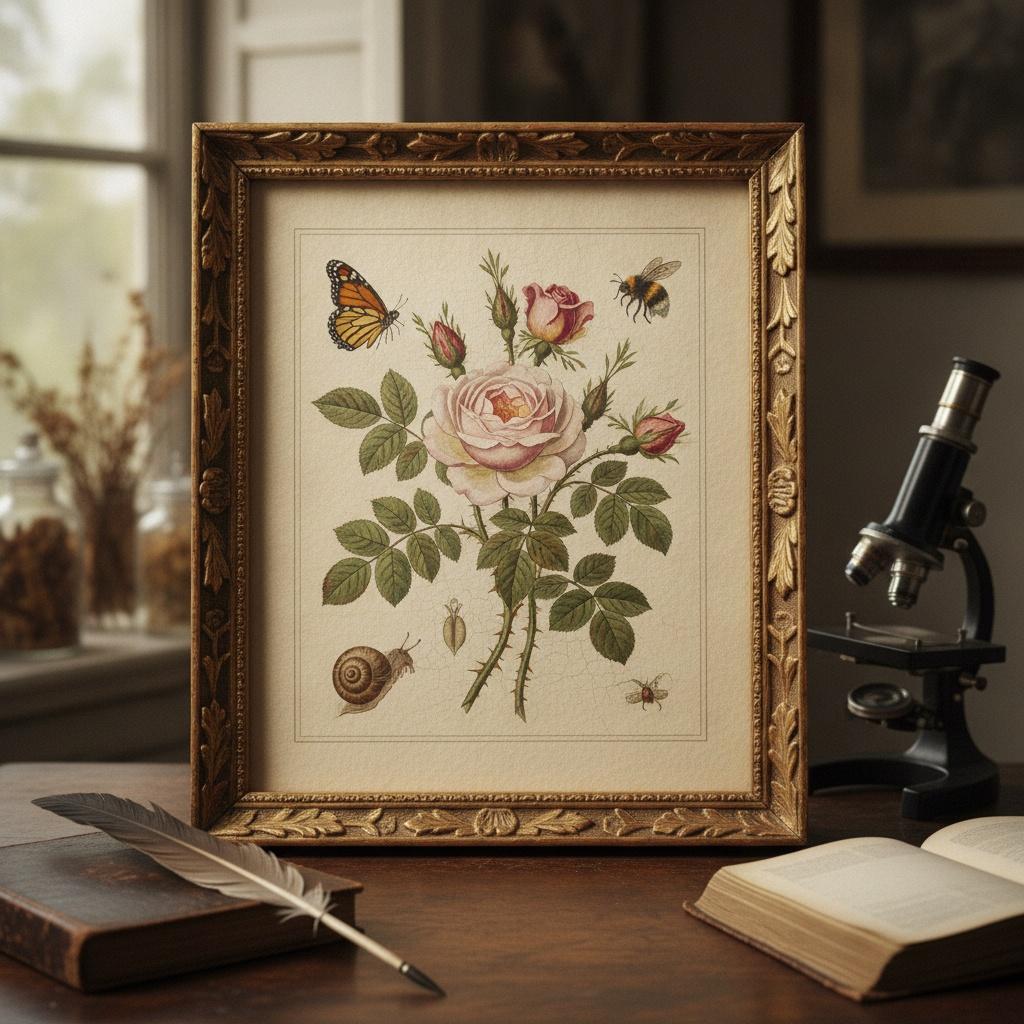
This pursuit of truth is echoed in the 19th-century works of Robert Havell Jr., particularly his study of Lilium candidum. In such pieces, we see the technical mastery of fine, precise lines used to define the delicate architecture of petals and stems. Through the expert use of hatching and cross-hatching, these artists created an illusion of three-dimensionality on a flat surface, allowing the viewer to almost feel the smooth, waxy texture of a lily petal or the subtle veining of a leaf. The color palettes were often restrained—whites balanced by deep, earthy greens—prioritizing a naturalistic approach that honored the specimen's true form over dramatic, artificial expression.
Even in the 18th century, figures like Jacopo Ligozzi demonstrated how muted tones and meticulous detail could elevate a scientific subject to the status of high art. These illustrators were often working in close consultation with botanists, ensuring that every bud, seed, and root system was rendered with anatomical correctness. This era of botanical realism reminds us that true beauty does not require exaggeration; rather, it is found in the quiet, faithful rendering of nature's most intricate details.
A Symphony of Petals and Light: The Impressionist Connection to Nature
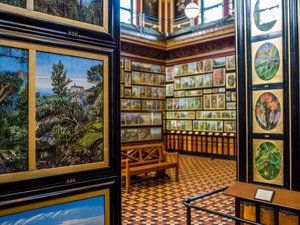 Marianne North Gallery
A Victorian World Captured in Bloom: The Marianne North Gallery Stepping into the Marianne North Gallery at Kew Gardens is akin to entering a forgotten world—a vibrant, immersive cabinet of curiosities brought to life through the meticulous brushstro...
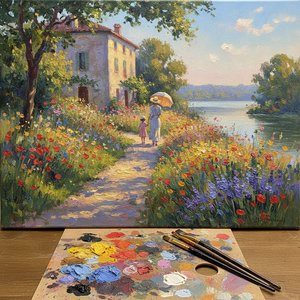
As we move from the structured precision of scientific illustration into the luminous era of Impressionism, the way we perceive botanical beauty undergoes a breathtaking transformation. While the earlier masters sought to isolate the specimen for scrutiny, the Impressionists sought to immerse the viewer within the living, breathing environment of the plant. They moved away from the white background of the scientific plate and toward the dappled sunlight of the garden path.
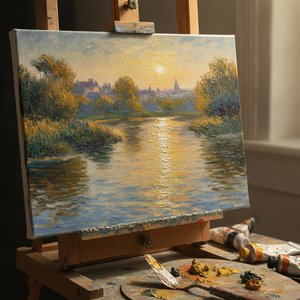
For an admirer of Monet, Renoir, or Pissarro, the fascination lies in the movement of light across a petal. The Impressionist approach is less about the anatomical structure of a flower and more about the sensory experience of its presence. They captured the way a breeze stirs a field of poppies or how the setting sun turns a water lily into a glowing orb of pink and gold. This was not a departure from nature, but a deeper immersion into its ephemeral truth—the truth that nature is never static, but a constant flux of light, shadow, and atmosphere.
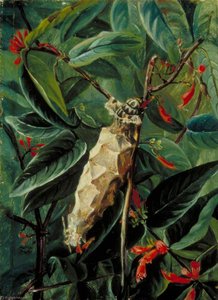
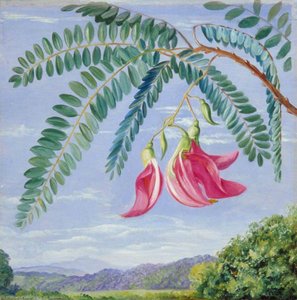
We see a beautiful parallel in the work of Marianne North, whose Victorian paintings exploded with the energy of untamed habitats. Unlike the formal studies of her contemporaries, North’s work captured plants flourishing within their natural ecosystems, bringing a sense of wild, vibrant life to the canvas. This connection between the botanical and the atmospheric creates a symphony where color and light act as the primary instruments, inviting us to feel the warmth of the sun and the humidity of the jungle through the mere movement of a brushstroke.
The Living Canvas: Exploring Historic Botanical Gardens and Their Legacy
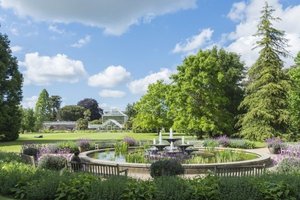 Cambridge University Botanic Garden
A Living Chronicle of Botanical Artistry Nestled within the historic heart of Cambridge, the Cambridge University Botanic Garden serves as much more than a mere horticultural display; it is a living, breathing masterpiece where scientific inquiry mee...
To truly understand the legacy of botanical art, one must walk through the living chronicles that inspired it. Places like the Cambridge University Botanic Garden serve as more than just horticultural displays; they are sprawling, breathing masterpieces of natural history. Since its inception in 1762, this sanctuary has been a site where scientific inquiry meets profound aesthetic grace, providing the very landscapes that nurtured the ideas of giants like Charles Darwin.
Walking through such gardens is akin to tracing the footsteps of history. The deliberate arrangement of species—grouping them by evolutionary relationships rather than mere decoration—creates a rhythmic flow of texture and color that educates the mind while soothing the spirit. Similarly, the Museo Botanico of Florence, founded by Cosimo I de’ Medici, reflects the Renaissance ideal of blending scientific curiosity with artistic patronage. These gardens are architectural triumphs, where formal pathways, shaded grottos, and historic greenhouses create a curated experience of the natural world.
These spaces act as a bridge between the laboratory and the gallery. The greenhouses, filled with the intoxicating fragrance of medicinal herbs and the breathtaking profusion of orchids, provide the living specimens that once fueled the imaginations of illustrators. They remind us that botanical art is not merely a study of dead specimens, but a celebration of life in all its diverse, flourishing glory.
Preserving the Bloom: The Enduring Allure of Botanical Realism in Modern Interiors
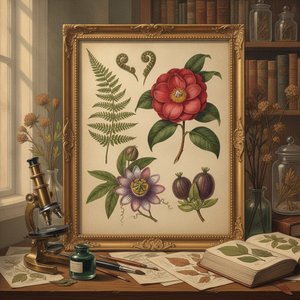 The Timeless Elegance of Victorian Botanical Painting: A Journey Through Nature's Intricate Detail and Scientific Artistry
The Victorian Soul: Where Scientific Inquiry Meets Aesthetic Grace Victorian Botanical Painting: Science, Art & Aesthetic Sensibility The Rise of Botanical Fascination: Victorian Society & the Natural World Wikipedia: Botany Botany, also called phyto...
In our fast-paced, digital age, there is a profound, nostalgic longing for the stillness and permanence found in botanical realism. Bringing the essence of nature into the home through fine art offers a sense of tranquility and a connection to the timeless cycles of the earth. Whether it is a meticulously detailed oil reproduction of a white lily or an Impressionist-inspired landscape of a sun-drenched garden, these works serve as windows to a more contemplative existence.
For the discerning collector, the choice between a Handmade Oil Reproduction and a print is a choice of soul. A hand-painted work on cotton canvas, with its visible impasto brushstrokes and deep tonal range, possesses a tactile depth that a flat print simply cannot replicate. It carries the weight of the artist's hand and the physical presence of the medium, much like the original masterpieces of the 19th century.
Integrating these botanical treasures into modern architecture allows us to recreate the elegance of historical spaces. From large-format murals that transform a room into a verdant sanctuary to multi-panel sets that bring a sense of movement to a wide wall, botanical art remains a cornerstone of sophisticated interior design. It is an invitation to pause, to observe, and to find beauty in the delicate, enduring truth of the natural world.
At ArtsDot.com, we are dedicated to preserving this legacy of human creativity. We specialize in high-quality, hand-painted oil reproductions that bring the masters of botanical realism and Impressionism into your home. Our artists, trained in the finest academies, use traditional techniques to ensure every petal and every light-drenched stroke is captured with museum-grade excellence. Whether you wish to commission a custom portrait from a photo or reimagine a classic landscape in the style of Monet, our mission is to make the profound beauty of art history accessible to all.