
The Radiant Dusk: Defining the International Gothic Aesthetic
 The Radiant Dusk of Medieval Vision: Exploring Late Gothic Art's Synthesis of Faith, Form & Emotionality (c. 1300-1500)
Introduction: The Twilight of Gothic – A New Aesthetic Sensibility The Late Gothic period, spanning roughly from 1300 to 1500, represents a fascinating transition in the history of art—a moment where the soaring spiritual ambitions of earlier Gothic ...
As the sun began to set on the medieval era, a profound transformation took hold of the European consciousness, manifesting in an artistic movement that was as much about grace as it was about gravity. This period, known as the Late Gothic, represents a delicate equilibrium—a moment in time where the heavy, monumental structures and somber shadows of the Romanesque period began to yield to a newfound sense of fluidity and light. It was not a sudden rupture with the past, but rather a refined evolution, an era where the soaring spiritual ambitions of earlier centuries began to subtly embrace a more humanistic and emotionally nuanced aesthetic.
To gaze upon International Gothic art is to witness the radiant dusk of medieval vision. The rigid, often intimidating iconography of the early Middle Ages gave way to an art that embraced elegance, intricate detail, and a soft, lyrical beauty. This shift reflected a fundamental change in how humanity perceived both the divine and the earthly; the heavens were no longer merely a distant, terrifying realm, but a space capable of being depicted with breathtaking luminosity. It was a period defined by a synthesis of faith, form, and emotionality, setting a stage where the spiritual could be rendered with a delicate, almost tactile tenderness.
A Tapestry of Courts: The Convergence of European Cultures and Patronage
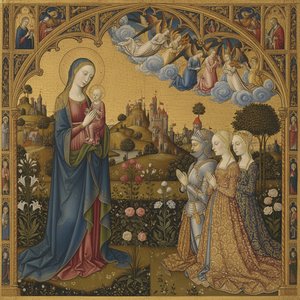 Beyond Borders: The Spiritual & Stylistic Innovations of International Gothic Art
The Dawn of an International Style: Origins & Influences The late fourteenth century witnessed a remarkable shift in European art, one that moved beyond the regional variations of earlier Gothic styles and blossomed into what we now recognize as Inte...
The term International Gothic, famously introduced by the art historian Louis Courajod, aptly describes the widespread dissemination of artistic ideas that flowed across the borders of Europe. This was not a unified style imposed from a single center, but rather a beautiful convergence of influences emanating from Burgundy, northern Italy, and Prague. It was an era fueled by increased trade, diplomatic marriages, and the remarkable mobility of artists themselves, which allowed for a consensus in artistic language that significantly reduced regional variations.
At the heart of this movement lay the royal courts, which became pivotal centers of artistic production and sophisticated taste. Rulers such as Charles IV in Bohemia and the Valois dukes in Burgundy were not merely patrons; they were active participants in shaping the aesthetic landscape, commissioning works that showcased their immense wealth, power, and refined sensibilities. Through royal alliances—such as the marriage between Richard II of England and Anne of Bohemia—the style spread like a delicate vine across the continent. While initially a hallmark of courtly sophistication, more robust versions of this aesthetic eventually reached the emerging mercantile classes and the smaller nobility, weaving a shared visual culture throughout Western Europe.
Gilded Devotion: The Art of Manuscript Illumination and Gold Leaf
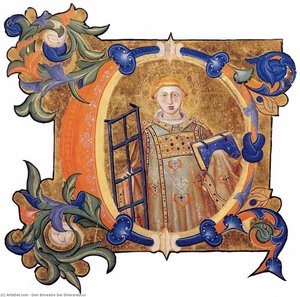 Gradual from Santa Maria degli Angeli (Folio 134)
A Window into Medieval Faith: Don Silvestro’s “Gradual from Santa Maria degli Angeli” The year is 1370. Within the serene confines of a Florentine monastery, a master craftsman meticulously brought to life a fragment of divine wisdom – folio 134 from...
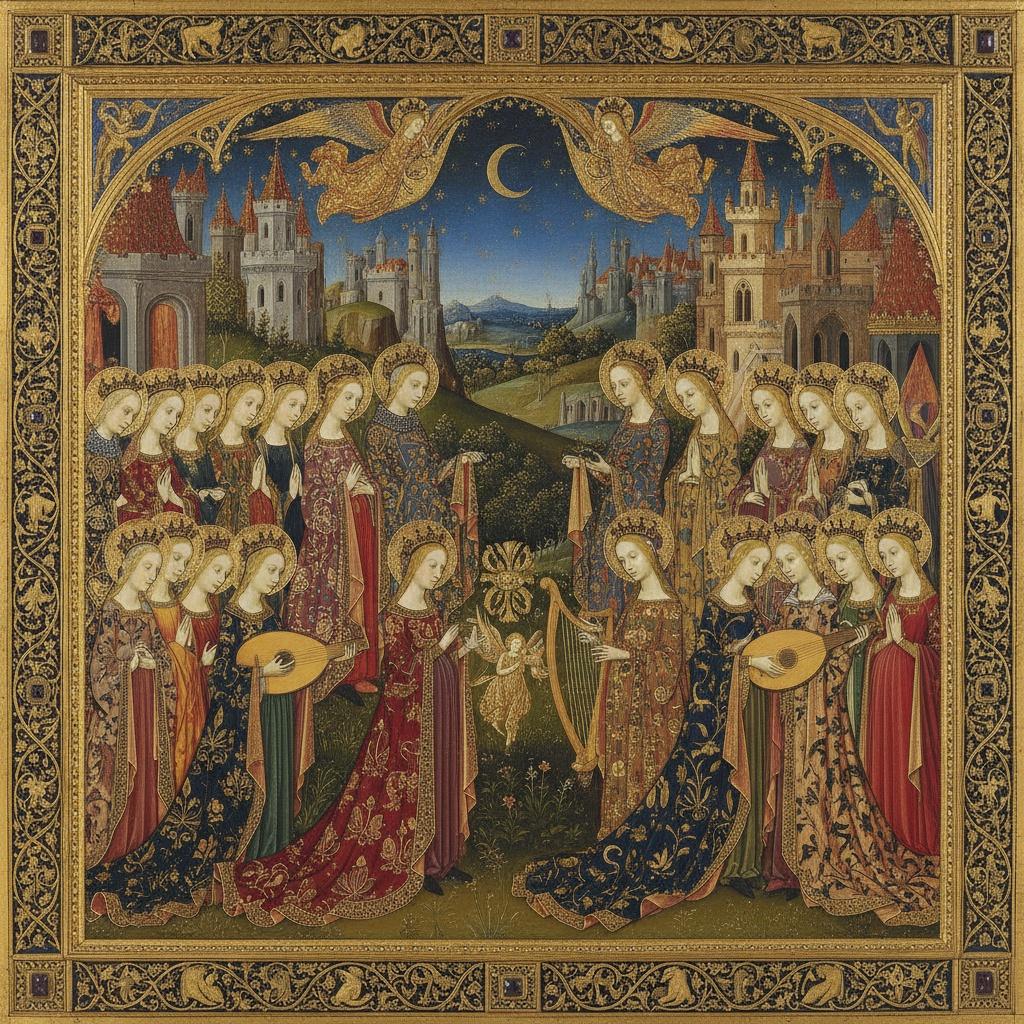
Perhaps nowhere is the magic of this era more palpable than in the hallowed atmosphere of the monastic scriptorium. Here, master craftsmen meticulously brought divine wisdom to life upon parchment and vellum. The art of illumination was a true symphony of color and form, where the use of tempera pigments was layered with shimmering gold leaf to create an effect of luminous, heavenly depth. These manuscripts were not merely books; they were tangible embodiments of faith and intellect, rendered with a breathtaking attention to detail that invited prolonged contemplation.
Consider the exquisite work found within the Gradual from Santa Maria degli Angeli by Don Silvestro dei Gherarducci. Within these illuminated pages, one finds a sacred moment captured in gold and silk. The artist’s hand skillfully employed a palette that danced between warmth and cool, dominated by rich oranges, reds, and golds contrasted against the serene blues of foliage. Every swirling vine and stylized floral motif contributed to a sense of organic abundance, while the application of precious metals ensured that the light of the physical world would reflect the eternal light of the divine. This devotion to detail extended even to the most intimate corners of the page, where every letter was an opportunity for artistic transcendence.
From Symbolism to Naturalism: The Eve of the Renaissance
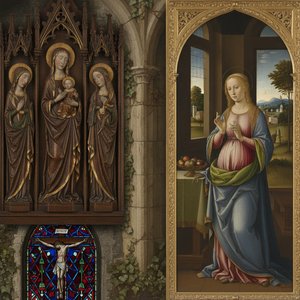 Late Gothic Art: The Divine Transition from Medieval Symbolism to Renaissance Naturalism
The Twilight of Medieval Vision: Defining the Late Gothic Aesthetic The Beauty of Late Gothic Art: Elegance, Intricate Detail, and the Dawn of the Renaissance The Twilight of the Middle Ages: Defining the Late Gothic Aesthetic As the sun began to set...
As we move through the late fourteenth and early fifteenth centuries, we observe a fascinating transition in the history of art—a movement from medieval symbolism toward the dawn of Renaissance naturalism. This era witnessed a shift in patronage that moved beyond solely ecclesiastical commissions toward the courts of burgeoning European powers, fostering a taste for luxury and increasingly individualized representation. The art began to move away from the purely symbolic, seeking instead to capture the complexities of human experience and the subtle nuances of the natural world.
This transition was characterized by an infusion of psychological depth and a new sense of realism. While the spiritual foundations remained unshakable, the artists began to imbue their figures with a more humanistic grace. The heavy, static icons of the past were being replaced by forms that possessed a newfound fluidity and light. This period served as the essential bridge, where the intricate, decorative beauty of the Gothic tradition met the burgeoning interest in observation and naturalism, ultimately paving the way for the monumental shifts of the Renaissance.
Masterpieces of the Era: Exploring the Works of Theodoric and the Limbourg Brothers
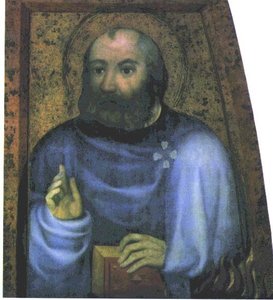 master theodoric
A Courtly Vision: The Life and Art of Master Theodoric Master Theodoric, or Magister Theodoricus as he was known in Latin inscriptions, stands as the most thoroughly documented painter of Bohemian Gothic art. Born sometime before 1328 – his precise o...
To truly understand the splendor of this period, one must look to the masters who defined its visual language. Master Theodoric, or Magister Theodoricus, stands as a monumental figure of Bohemian Gothic art. As the favored court artist of Holy Roman Emperor Charles IV, Theodoric’s work was instrumental in elevating Prague as a cultural center. His decoration of the Chapel of the Holy Cross at Karlštejn Castle remains a breathtaking ensemble of devotion, where his unique ability to blend a static, hieratic approach with refined elegance created a lasting legacy of imperial splendor.
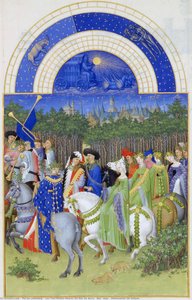
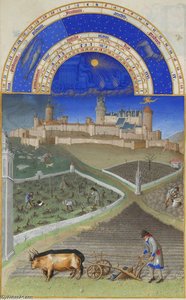
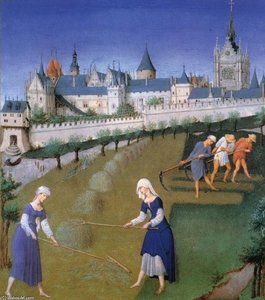
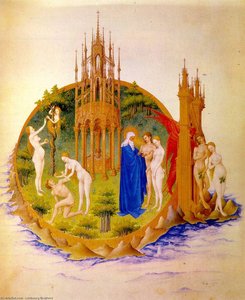
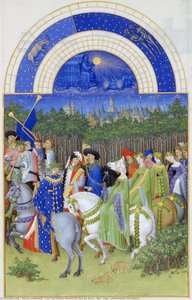
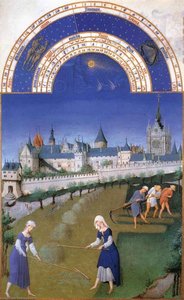
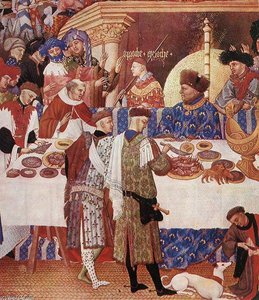
In contrast to the more monumental works, the Limbourg Brothers offered a window into a world of unparalleled miniature perfection. Their masterpiece, The Exaltation of the Cross, showcases the pinnacle of Gothic detail and the opulent use of gold leaf. Their work represents the height of International Gothic book art, where every meticulously painted figure and every glint of gold serves to transport the viewer into a realm of courtly elegance. Through the hands of these masters—and others like the enigmatic Boucicaut Master or the talented Belbello da Pavia—the International Gothic period remains etched in history as a radiant era of unparalleled beauty and artistic devotion.
At ArtsDot.com, we celebrate this enduring legacy of human creativity. Our mission is to make these timeless masterpieces accessible to all through exquisite, hand-painted reproductions that honor the original techniques of the masters. Whether you are drawn to the gilded splendor of a medieval manuscript or the delicate grace of a courtly painting, our artists work with passion to bring the soul of art history into your home.