The Poetry of Light: Understanding the Impressionist Vision
 Claude Monet
A Life Immersed in Light: The World of Claude Monet Oscar-Claude Monet, a name synonymous with Impressionism, wasn't merely a painter of landscapes; he was a chronicler of fleeting moments, a poet of light and color. Born in Paris on November 14, 184...
To step into the world of Impressionism is to abandon the rigid, often heavy constraints of academic tradition and instead embrace a soft, luminous dance of perception. For those of us who have spent decades admiring these canvases, we know that an Impressionist masterpiece is never merely a depiction of a subject; it is a captured heartbeat, a fleeting moment where light and color converge to create a sensory experience. This revolutionary movement, born in the vibrant, changing landscape of 19th-century France, sought to break free from the meticulous, often sterile details favored by the Salon. Instead, artists like Claude Monet, Renoir, and Pissarro turned their gaze toward the ephemeral, focusing on how light interacts with the atmosphere to produce a visual sensation that is as much about feeling as it is about sight.
The true essence of this movement lies in its rebellion against permanence. While the masters of old sought to immortalize historical or mythological grandeur through precise lines, the Impressionists found divinity in the transient. They understood that a landscape is never the same from one minute to the even, as shadows lengthen and the sun shifts its weight across the sky. This dedication to capturing the impression—the immediate, emotional response to a scene—allowed them to paint not just what they saw, but how they felt in the presence of beauty. It is a philosophy that invites us to slow down, to breathe deeply, and to find wonder in the subtle shifts of a summer afternoon or the quiet arrival of a morning mist.
Ephemeral Skies: Capturing the Transient Beauty of Rain and Mist
 Capturing Ephemeral Light: Plein Air Painting from Impressionism to Today
The Genesis of 'En Plein Air': From Studio Tradition to Landscape Portraiture Wikipedia: En plein air En plein air (pronounced [ɑ̃ plɛ.n‿ɛʁ]; French for 'outdoors'), or plein-air painting, is the act of painting outdoors. This method contrasts with s...
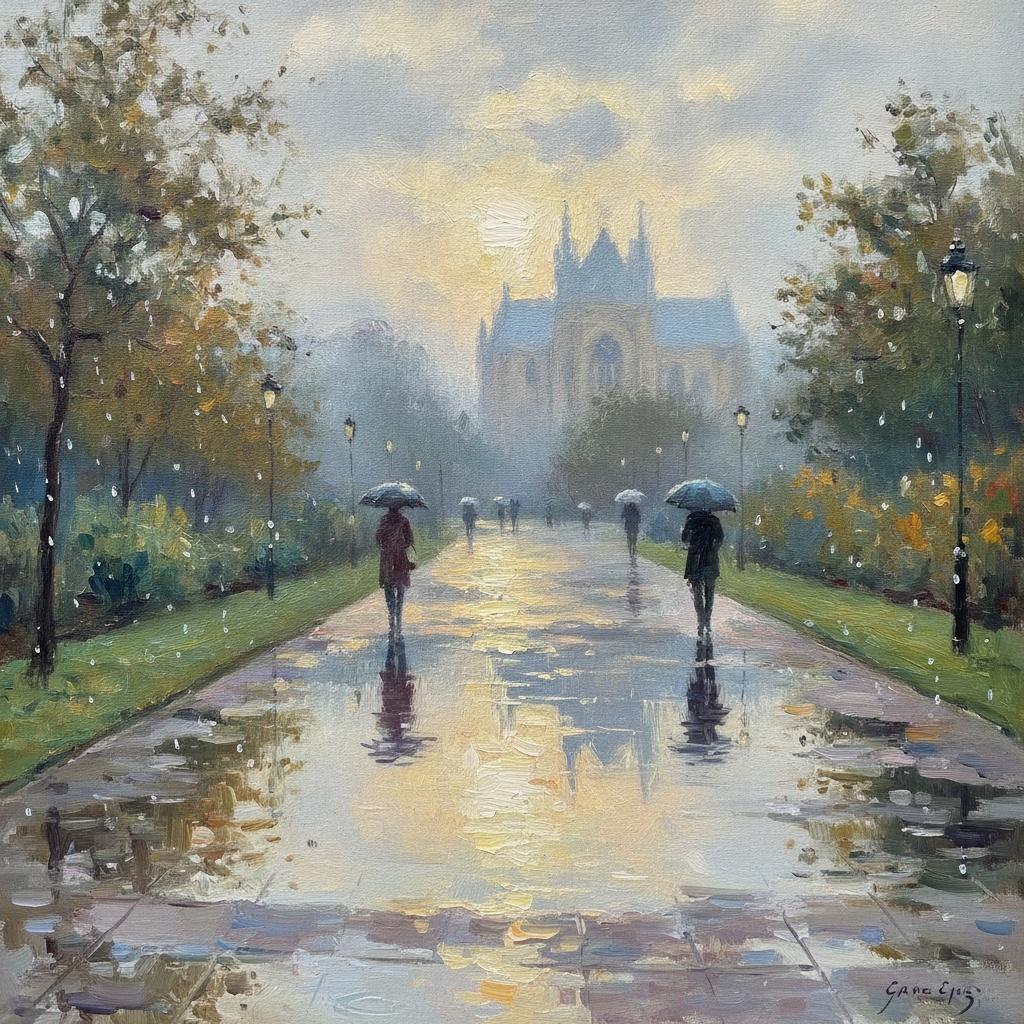
There is a particular melancholy, a gentle whisper of emotion, found when an Impressionist painter turns their brush toward the rain. Unlike the dramatic, stormy tempests of Romanticism, the Impressionist approach to weather is one of subtlety and atmosphere. Imagine a world softened by a light drizzle, where the sharp edges of the horizon dissolve into a dreamlike haze. In these works, rain is not an obstacle but a transformative medium. It acts as a veil, diffusing the sunlight and creating a palette of muted silvvers, soft greys, and pearlescent blues that evoke a profound sense of introspection.
The technique required to render such atmospheric phenomena is nothing short of miraculous. Through the use of en plein air painting—working directly outdoors amidst the elements—artists were able to observe the true behavior of light through moisture-laden air. They utilized loose, expressive brushstrokes that suggest movement and shimmer, allowing the viewer’s eye to complete the image. When we gaze upon a canvas depicting a misty morning or a rain-drenched garden, we are not just looking at water; we are experiencing the way dampness clings to leaves and how light refracts through a single falling drop. It is this ability to capture the weightless, the unseen, and the fleeting that gives these works their enduring emotional resonance.
Giverny’s Liquid Canvas: Monet and the Soul of the Water Lily
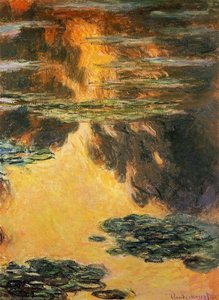
 Water Lilies
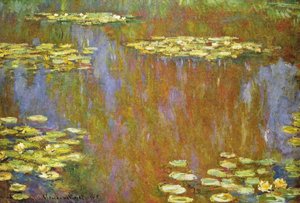
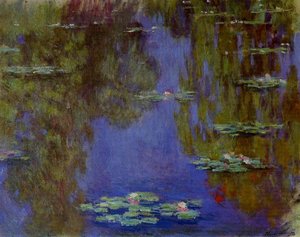
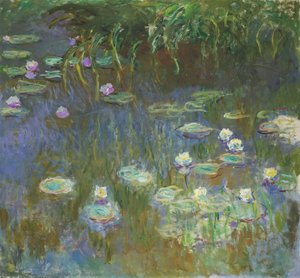
Captivating Subject and Natural Beauty This exquisite painting captures a tranquil pond adorned with delicate water lilies, a quintessential motif in Monet’s oeuvre that celebrates the ephemeral beauty of nature. The lush, floating blooms in various ...
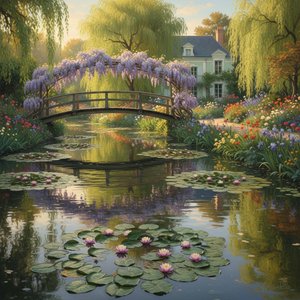
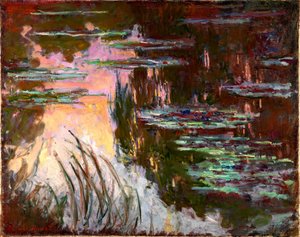
Perhaps no subject embodies the soul of Impressionism more intimately than Claude Monet’s water lilies. In his beloved garden at Giverny, Monet did not simply paint a pond; he cultivated a living, breathing canvas. His Nymphéas series represents the pinnacle of his lifelong pursuit to embody the very feeling of being immersed within nature. These works, created during the later decades of his life, transcend traditional landscape painting to become almost abstract explorations of color and reflection. The water lily, a symbol of purity and renewal, serves as the anchor for a sea of floating blooms, where the distinction between the surface of the water and the sky above becomes beautifully blurred.
In these masterpieces, we see the culmination of Monet’s mastery over light and texture. Using layered, textured strokes of oil paint, he built a luminous surface that allows light to dance across the canvas, much like it does upon the actual pond. The interplay of deep greens, vibrant purples, and soft pinks creates a balanced yet dynamic visual rhythm. To look into a Monet water lily painting is to enter a sanctuary of peace—a place where the frantic pace of the modern world falls away, replaced by the quiet elegance of a natural retreat. It is a testament to his ability to transform personal observation into universal visual poetry, inviting every viewer into a state of meditative contemplation.
Beyond the Brush: The Emotional Resonance of Atmospheric Landscapes
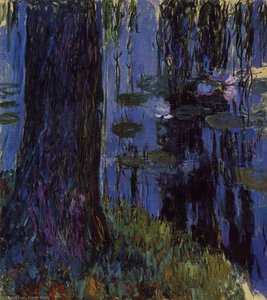
 Weeping Willow (Monet)
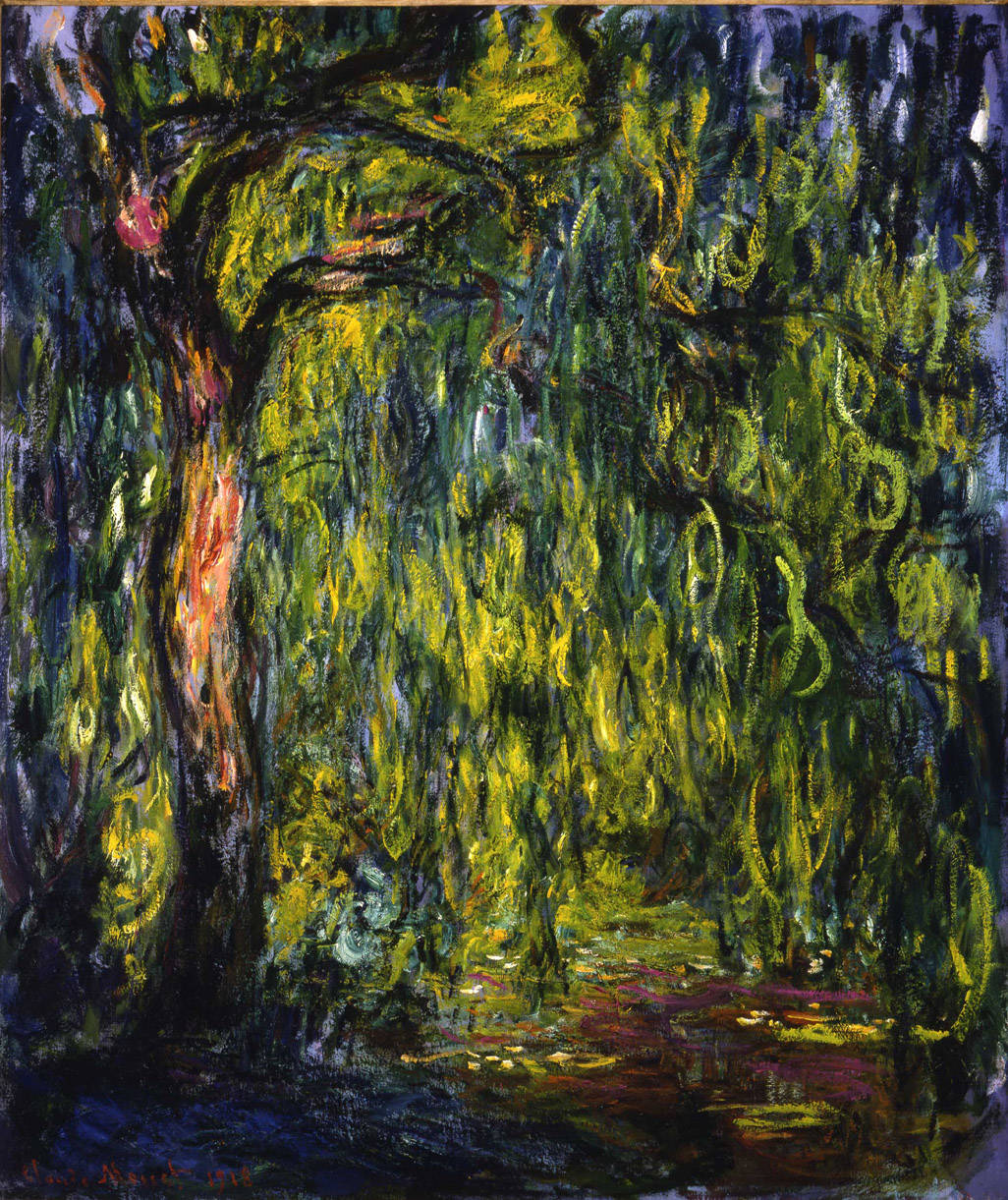
Weeping Willow is a 1918 oil painting by Claude Monet which depicts a weeping willow tree growing at the edge of his water garden pond in Giverny, France. It is exhibited at the Columbus Museum of Art in Columbus, Ohio. The painting is one of a serie...
The true power of an Impressionist landscape lies in its capacity for emotional resonance. While the subject matter may be a simple willow tree or a sun-drenched field of poppies, the underlying theme is often one of deep human connection to the natural world. There is a profound intimacy in the way these artists captured the changing seasons and the subtle moods of the earth. When we observe a work like Monet’s Weeping Willow, we sense more than just botanical accuracy; we feel the weight of the drooping branches and the quiet solitude of the water’s edge. The landscape becomes a mirror for our own internal landscapes—our joys, our sorrows, and our moments of quiet reflection.
This emotional depth is achieved through a sophisticated use of color temperature and light. A warm, golden glow can evoke feelings of nostalgia and comfort, while the cool, blue-toned shadows of twilight can stir a sense of longing or mystery. The Impressionists understood that color is a language of its own, capable of communicating complex sentiments without the need for explicit narrative. By focusing on the sensory experience—the scent of rain, the warmth of the sun, the coolness of the shade—they created works that resonate with something deeply human: our innate capacity for wonder and our eternal search for solace in the beauty of the natural world.
Preserving the Moment: Bringing Impressionist Serenity into the Modern Home
 Impressionist Landscapes: 10 Masterpieces for Your Home | ArtsDot
Introduction Imagine stepping into a world bathed in dappled sunlight, where colors dance and shimmer with an ethereal quality. This is the realm of Impressionism – a revolutionary art movement that forever altered how we perceive light, color, and t...
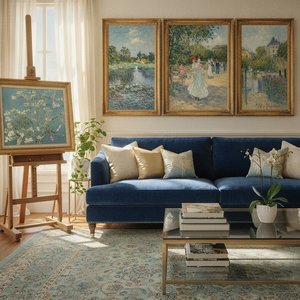
In an era defined by rapid technological change and constant digital noise, there is a growing desire to surround ourselves with art that encourages stillness. Bringing an Impressionist-inspired piece into your living space is more than a decorative choice; it is an invitation to cultivate a sanctuary of calm. Whether it is a large-scale multi-panel work that spans a grand wall or a delicate study of light, these paintings possess the unique ability to transform the atmosphere of a room, infusing it with a sense of timeless elegance and tranquility.
For the discerning collector, the beauty of Impressionism lies in its tactile reality. While modern prints may offer accuracy, nothing compares to the soul of a hand-painted oil reproduction. The visible brushstrokes, the depth of the impasto, and the subtle variations in pigment create a living texture that breathes within a home. At ArtsDot.com, we celebrate this legacy by offering meticulously crafted reproductions that honor the academic excellence of the masters. Our artists, trained in the finest traditions, work on 100% cotton canvas to ensure that every shimmer of light and every whisper of rain is preserved with the utmost fidelity. We invite you to explore our curated collection and find the piece that speaks to your own heart, allowing the enduring beauty of Impressionism to become a permanent part of your personal story.