Introduction
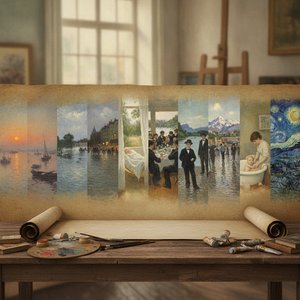
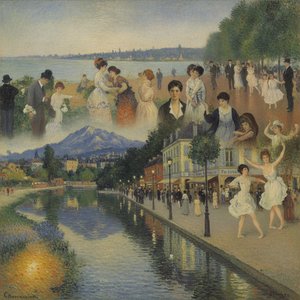
Close your eyes for a moment and imagine the scent of damp earth after a summer rain, or the way the golden light of a setting sun dissolves the sharp edges of a distant forest into a soft, amber haze. To gaze upon a landscape is to do more than simply look at scenery; it is to witness a conversation between the earth and the sky, a silent dialogue that has captivated the human soul since we first learned to translate our surroundings onto canvas.
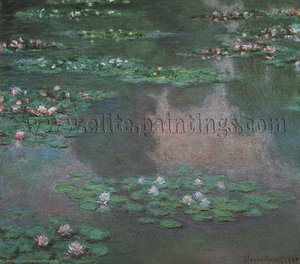
Throughout the history of Impressionism and Post-Impressionism, the landscape has served as much more than a mere backdrop. For masters like Claude Monet , the landscape was a living, breathing entity, shifting with every passing cloud and every change in temperature. It became a vessel for capturing the ephemeral—the fleeting moment of light that can never be repeated. From the tranquil, water-lily-drenched ponds of Giverny to the swirling, emotive skies of Vincent van Gogh , these artists moved away from rigid, photographic realism to embrace a more sensory truth. They taught us that a landscape is not just what we see with our eyes, but what we feel with our hearts.
<In our modern, often hurried world, these works remain profoundly meaningful. They offer us a sanctuary of stillness, inviting us to reconnect with the rhythms of nature that persist far beyond the noise of technology. To revisit these landscapes is to find a sense of peace and a reminder of the enduring beauty found in a single blade of grass or a sweeping horizon.
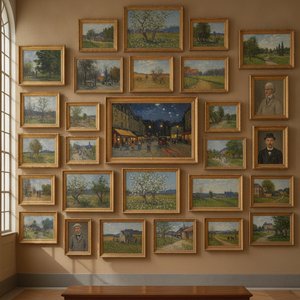
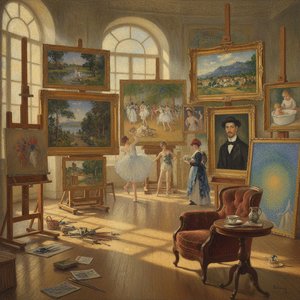
In the following pages, we shall wander together through a curated selection of ten extraordinary works. Each piece has been chosen for its ability to transport us—to move us beyond the frame and into a world where light, color, and emotion converge to celebrate the magnificent spirit of the natural world.
Mona Lisa (La Gioconda) - Leonardo da Vinci
 Mona Lisa (La Gioconda) - Leonardo da Vinci
While the Mona Lisa is celebrated globally for her enigmatic smile, she serves as a profound gateway into the theme of landscape through Leonardo da Vinci’s mastery of atmospheric perspective . Behind the sitter, the world dissolves into a dreamlike realm of winding paths and jagged mountains, rendered with a soft, smoky sfumato that blurs the boundary between humanity and the earth.
Leonardo does not merely paint a backdrop; he invites us to witness the very breath of nature. The distant, hazy blue peaks and the winding waterways evoke a sense of geological time and eternal movement, suggesting a deep, spiritual harmony between the subject and the wild, primordial landscape. To possess such a work is to invite a moment of quiet contemplation into your home—a transformation where your walls no longer hold mere pigment, but a window into the infinite. In this masterpiece, the landscape is not just scenery; it is the silent, breathing soul of the portrait itself.
Starry Night (New York, MoMA) - vincent willem van gogh
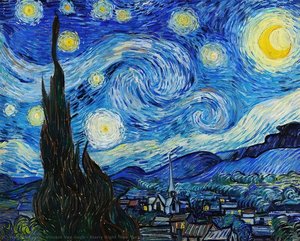 Starry Night (New York, MoMA) - vincent willem van gogh
In Starry Night , Vincent van Gogh does not merely paint a nocturnal landscape; he captures the very pulse of the cosmos through a breathtaking command of light. The celestial bodies—the radiant crescent moon and the swirling, luminous stars—act as brilliant beacons of gold against a deep, turbulent sea of ultramarine and cobalt. This dramatic interplay of light and shadow, a masterful use of chiaroscuro within a Post-Impressionist framework, creates a rhythmic energy that feels almost alive.
The thick, tactile impasto brushstrokes catch the light physically, adding a sculptural depth that a mere print could never replicate. For the discerning collector, bringing this masterpiece into a home offers more than just a view of a landscape; it introduces a sense of quiet prestige and emotional movement. When reproduced on 100% cotton canvas, the vibrant yellows and velvety blues create a luminous focal point, adding layers of soulful texture and a timeless, luxurious glow to any contemporary wall.
The Scream - Edvard Munch
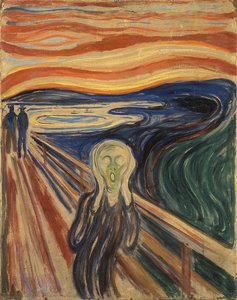 The Scream - Edvard Munch
In The Scream by Edvard Munch, the landscape is not merely a setting but a living, breathing participant in a moment of profound existential crisis. The brilliance of this work lies in its unsettling mastery of light; a fiery, blood-orange glow erupts from the horizon, casting a dramatic, almost supernatural illumination across the swirling sky. This intense, warm light clashes violently with the deep, melancholic blues of the fjord, creating a visual tension that mirrors the protagonist's internal turmoil. Munch’s command over this chromatic friction—where light feels heavy and shadows feel liquid—is precisely what secured its place among the most impactful landscapes in art history.
When brought into a modern home as a hand-painted oil reproduction, the textured brushstrokes and vibrant interplay of light offer more than just a striking image; they provide a soulful, atmospheric depth. The way the sunset's glow interacts with the darker, turbulent waters creates a sophisticated focal point, adding a layer of emotional complexity and a sense of historical grandeur to any contemporary wall.
The Blue Boy (Jonathan Buttall) - Thomas Gainsborough
 The Blue Boy (Jonathan Buttall) - Thomas Gainsborough
In the quiet presence of The Blue Boy by Thomas Gainsborough, time seems to hold its breath, suspended between a shimmering silk luster and the soft, breathing atmosphere of the English countryside. While celebrated as a pinnacle of portraiture, this masterpiece earns its place among the greatest landscapes through its profound dialogue with the natural world. Gainsborough does not merely place his subject against a backdrop; he weaves the boy into the very fabric of the earth, where the dramatic, cloudy sky and rugged, rocky terrain mirror the youthful intensity of the sitter.
The painting is a sensory symphony: the vibrant, luminous blues of the satin attire contrast exquisitely with the muted, earthy textures of the receding landscape. This masterful use of atmospheric perspective creates a sense of infinite depth, inviting the viewer to wander through the shadows of the distant ruins. In a modern home, such a work brings a sophisticated layer of storytelling, offering a tranquil focal point where the elegance of the Rococo era meets the untamed beauty of the natural landscape.
Joan Miró- Catalan Landscape (The Hunter) - Joan Miró
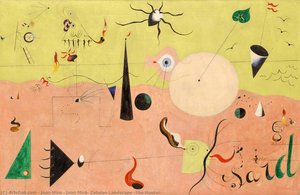 Joan Miró- Catalan Landscape (The Hunter) - Joan Miró
In Joan Miró’s Catalan Landscape (The Hunter) , a warm, sun-drenched ochre anchors the composition, casting a nostalgic and tranquil glow that feels like a summer afternoon in Catalonia. This mastery of a warm, earthy palette—intertwined with delicate terracotta, olive greens, and sudden bursts of celestial pink—is precisely why this piece earns its place among the top 10 artworks exploring the theme of landscape . Miró does not merely paint the land; he captures the very pulse of it through a dreamlike, surrealist lens.
For the discerning collector, integrating such a vibrant, symbolic landscape into a modern interior offers a profound opportunity to curate emotional depth. The painting’s rhythmic, biomorphic shapes and soft, diffuse light can serve as a focal point in a dining room, providing a sense of organic movement and mystery. By pairing this work with natural textures, one can recreate the piece's unique atmosphere—a delicate dance between the tangible earth and the boundless subconscious, bringing a soulful, storied light into your home.
Haystacks in Provence - vincent willem van gogh
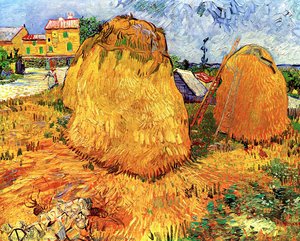 Haystacks in Provence - vincent willem van gogh
To stand before Haystacks in Provence is to feel the warmth of a summer afternoon in Arles radiating from the canvas itself. In this 1888 masterpiece, Vincent van Gogh does not merely depict a harvest; he captures the very pulse of the earth. As one of our most cherished selections in this exploration of landscape art , these haystacks serve as profound symbols of abundance and the eternal, cyclical nature of life.
Van Gogh’s signature impasto technique transforms the scene into a tactile experience; the thick, rhythmic brushstrokes create a sculptural depth that invites you to trace the golden textures with your eyes. While the vibrant yellows and sun-drenched fields evoke joy, there is an underlying emotional intensity—a soulful, swirling energy that speaks to our modern longing for connection with the natural world. In today's curated interiors, such a piece acts as a window to tranquility, bringing a sense of organic movement and historical depth to any space. It remains a timeless testament to how a simple rural vista can hold the weight of the human spirit.
Portrait of Patience Escalier - vincent willem van gogh
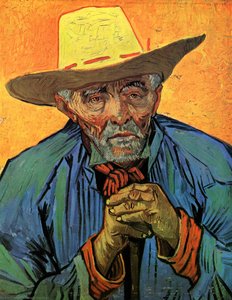 Portrait of Patience Escalier - vincent willem van gogh
To encounter the Portrait of Patience Escalier by Vincent van Gogh is to step into the sun-drenched soul of Arles. While often celebrated for his sweeping vistas, Van Gogh’s genius in this work lies in how he weaves the landscape into the very skin of his subject. This masterpiece earns its place among the world's greatest explorations of landscape because the Provençal earth is not merely a backdrop; it is embodied in the weathered textures and ochre tones of the shepherd himself.
Through a masterful use of impasto , Van Gogh applies paint with a sculptural intensity, where swirling oranges and yellows evoke a setting sun that seems to vibrate against the sitter's quiet dignity. For the discerning collector, this piece offers more than historical significance; it brings a profound emotional depth and a tactile, luminous energy to a refined interior. It is a timeless study of resilience, where the rugged spirit of the French countryside meets the intimate, soulful gaze of a man shaped by the land.
The Walk. Lady with a Parasol - Claude Monet
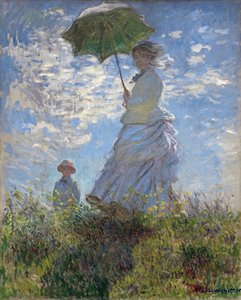 The Walk. Lady with a Parasol - Claude Monet
Imagine a gentle breeze brushing against your cheek, carrying the scent of sun-warmed wildflowers and the soft whisper of swaying grass. In Claude Monet’s 1875 masterpiece, The Walk. Lady with a Parasol , we are not merely observers of a landscape; we are guests within a fleeting, luminous moment. As the setting sun casts a tender glow across the sky—blending delicate pinks into ethereal blues—we witness a quiet stroll that feels as intimate as a cherished memory.
This painting earns its place among the greatest landscapes for its profound ability to capture the soul of nature through light and movement. Monet’s visible, rhythmic brushstrokes breathe life into the billowing fabric of the woman's dress and the dancing clouds above, reminding us of the beauty found in life's transient breaths. To bring such a work into your home is to invite a permanent sense of serenity and grace, transforming a modern room into a sanctuary of light-drenched peace and timeless connection to the natural world.
Impression, Sunrise - Claude Monet
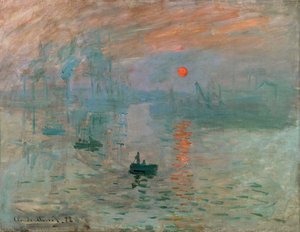 Impression, Sunrise - Claude Monet
To possess a tribute to Impression, Sunrise by Claude Monet is to invest in a profound legacy of taste and an enduring piece of art history. As the very work that gave the Impressionist movement its name, this 1873 masterpiece stands as a cornerstone of landscape art, commanding immense reverence in the global art market for its revolutionary approach to light and atmosphere. Monet does not merely paint a harbor; he captures the fleeting, ephemeral soul of a morning mist, where cool blues and hazy purples meet the sudden, vibrant pulse of an orange sun reflecting upon the water.
The painting’s influence is immeasurable, shifting the focus from precise detail to the sensory experience of color and movement. Its loose, expressive brushstrokes create a shimmering, dreamlike quality that remains as captivating today as it was during its first exhibition in Paris. For the discerning collector, a high-quality oil reproduction of this work brings an unparalleled aesthetic authority to modern luxury interiors. It serves as a luminous focal point, infusing contemporary spaces with a sense of timeless tranquility and the sophisticated prestige of a true historical landmark.
Idle Hours - William Merritt Chase
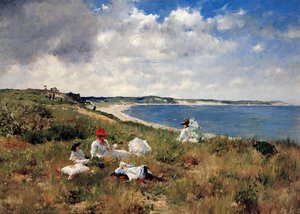 Idle Hours - William Merritt Chase
In Idle Hours , William Merritt Chase invites us into a sun-drenched sanctuary where the boundaries between humanity and the natural world softly dissolve. As a cornerstone of our exploration into landscape art, this 1894 masterpiece transcends mere scenery; it captures the very breath of a summer afternoon on Long Island. Through his masterful American Impressionist technique, Chase employs broken, rhythmic brushstrokes to weave a tapestry of earthy greens, sandy beiges, and the ethereal whites of billowing clouds.
The composition breathes with a quiet vitality, anchored by the gentle presence of figures nestled within the dunes, their leisure punctuated by a singular, vibrant red hat that draws the eye like a heartbeat against the serene coastal palette. For the modern collector, this painting offers more than historical significance; it brings an atmosphere of profound tranquility and light-drenched elegance to any interior. It is a timeless reminder of the beauty found in stillness, making it an exquisite choice for those seeking to infuse their homes with the soft, luminous soul of the Impressionist movement.
Conclusion
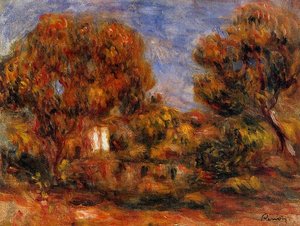
As the light fades on our journey through these storied landscapes, we find that these masterpieces are far more than mere relics of a bygone era or static images preserved in museum halls. They are living, breathing presences—whispers of wind through a Monet garden, the rhythmic pulse of a Van Gogh sky, and the quiet, sun-drenched stillness of a Renoir afternoon. These works do not simply exist in the past; they reside within our present, continuing to shape the very way we perceive the world around us and the spaces we call home.
To bring one of these vistas into your own sanctuary is to invite an eternal dialogue between nature and the soul. Whether it is the soft, dappled light dancing across a canvas in your study or the profound depth of a distant horizon gracing your living room, these paintings act as windows to a more emotive reality. They remind us that even in our most modern moments, we remain deeply connected to the elemental beauty of the earth and the fleeting, luminous impressions of life itself.
We invite you to continue this exploration and find the piece that speaks to your own heart's landscape by wandering through our full collection . May you find a window into beauty that stays with you, much like the soft glow of dusk, long after the sun has set.