Introduction
Close your eyes for a moment and imagine the scent of damp earth after a summer rain, the rhythmic, heavy breathing of laborers under a golden sun, and the profound, quiet dignity of a life lived in harmony with the seasons. To step into the world of Jean-François Millet is to leave behind the frantic pace of modernity and enter a sanctuary of stillness and soul. His canvases do not merely depict scenes; they breathe with the very pulse of the French countryside.
Born in the small village of Gruchy, Millet was a child of the soil. Unlike many of his contemporaries who approached the landscape through the polished lens of academic perfection, Millet brought the grit, the sweat, and the sacredness of farm life directly to his palette. As a cornerstone of the Barbizon school , he moved away from the idealized, romanticized peasants of the past, choosing instead to honor the unvarnished truth of the rural working class. His work sits at that beautiful, poignant intersection where Realism meets a deeply spiritual reverence for nature.
In an era of rapid industrialization and shifting social tides, Millet’s art served as a profound meditation on human resilience. Today, these works remain deeply meaningful because they speak to the universal truths of our existence: the dignity of labor, our inextricable connection to the earth, and the quiet beauty found in the most humble of moments. There is a weight to his brushstrokes—a tactile, emotional depth that reminds us of what it means to be grounded.
As we wander through this curated selection of his top 25 masterpieces , I invite you to look beyond the surface of the paint. Notice the way the light clings to a bent back, or how the vastness of a field can evoke both solitude and strength. We shall journey from his most iconic, soul-stirring compositions to those intimate, often overlooked studies of light and shadow, tracing the legacy of a man who found the divine in the dirt.
The Angelus - Jean-François Millet
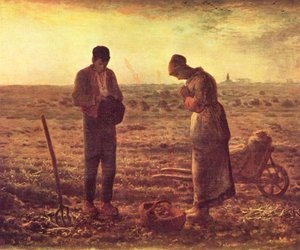
To stand before The Angelus by Jean-François Millet is to feel the very weight of the earth and the softness of the twilight air. One’s eyes are immediately drawn to the tactile richness of the foreground, where Millet’s masterful use of impasto brings a physical presence to the weathered textures of the peasants' clothing and the heavy, harvested potatoes. The brushwork here is not merely descriptive; it is sculptural, capturing the grit of the soil and the profound dignity of manual labor through layered, organic strokes that catch the light.
This masterpiece defines Millet’s place among the top 25 artworks of his career by transforming a simple moment of rural devotion into a universal meditation on faith and resilience. At ArtsDot.com, our mission is to preserve this three-dimensional quality for your own collection. Our hand-painted oil reproductions meticulously recreate these visible brushstrokes and the luminous, golden atmosphere of the Barbizon School, ensuring that the soulful, tactile essence of Millet’s realism lives on within the walls of your home.
Man With A Hoe - Jean-François Millet
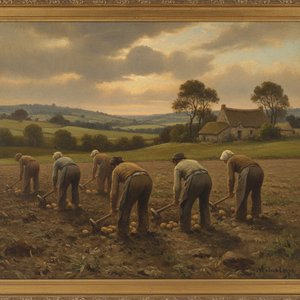
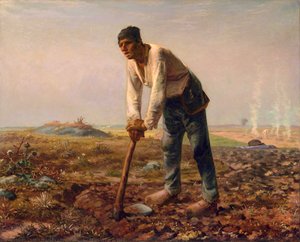
In the profound stillness of Man With A Hoe , Jean-François Millet captures a moment of raw, unvarnished humanity that remains one of the most poignant entries in his legacy. This 1862 masterpiece transcends mere documentation; it is an emotional landscape where the weight of the earth meets the exhaustion of the soul. Through a somber palette of ochres, deep browns, and muted umbers, Millet invites us into the heavy atmosphere of rural toil, using thick, textured brushstrokes to render the very grit of the soil.
The figure, positioned with a wearying, rhythmic posture, serves as a universal symbol of resilience and the quiet dignity found in hardship. For the modern collector, this work offers a grounding presence; its earthy tones and contemplative mood bring a sense of historical depth and organic warmth to any sophisticated interior. As a cornerstone of his top works, it reminds us that true beauty often resides in the most humble of struggles, offering a timeless connection to the rhythms of nature and the enduring strength of the human spirit.
Harvesters Resting - Jean-François Millet
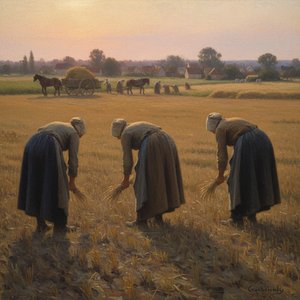
In Harvesters Resting , the lines of labor are not merely painted; they are choreographed . This 1853 masterpiece does not simply depict a break in the workday; it is a dance frozen in time , where the heavy fatigue of the harvest meets a profound, quiet harmony. As you gaze upon the figures, you feel the weight of the sun-drenched afternoon and the earthy scent of trampled grain.
Millet uses a palette of soulful browns, muted greens, and soft beiges to ground us in the very soil he loved so dearly. The composition flows with an organic rhythm—the curve of a resting back, the gentle cradle of a mother holding her child, and the communal presence of a loyal dog. It is a scene that captures the essence of rural life through a masterclass in Realism. What if your own home could hold this same balance? What if your walls could breathe rhythm and evoke such timeless resilience? This work remains a cornerstone of the Barbizon School, inviting us to find beauty in the shared strength of the human spirit.
Woman Sewing by Lamplight - Jean-François Millet
 Woman Sewing by Lamplight - Jean-François Millet
In the quiet, amber-hued intimacy of Woman Sewing by Lamplight , Jean-François Millet invites us to pause and breathe in the stillness of a bygone era. This masterpiece is far more than a domestic scene; it is a profound meditation on the dignity found within humble labor. As we stand before this work, the soft, flickering glow of the lamp draws our eyes toward the central figure, whose focused silhouette is draped in a warm red shawl, creating a striking focal point amidst the muted ochres and deep shadows of the room.
Millet masterfully employs sfumato to blur the edges of reality, making the presence of the sleeping infant and the surrounding figures feel like a tender, shared breath. There is a palpable texture to the scene—the rough-hewn walls and worn wooden surfaces speak to a life rooted deeply in the earth. To possess such a work is to bring a piece of this quiet resilience into your own home, transforming a mere wall into a sanctuary of historical soul and emotional depth.
Priory at Vauville, Normandy - Jean-François Millet
 Priory at Vauville, Normandy - Jean-François Millet
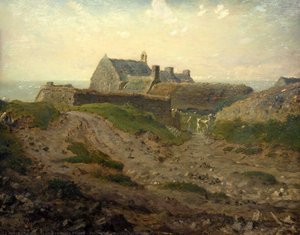
To possess a reproduction of Priory at Vauville, Normandy by Jean-François Millet is to invest in a profound legacy of quietude and timeless taste. As one of the most evocative works within the top 25 artworks of Jean-François Millet, this piece stands as a cornerstone of the Barbizon school, celebrated for its ability to transform a humble Norman landscape into a spiritual sanctuary. The painting captures a weathered stone priory nestled amidst earthy ochres and muted grays, where a winding path and a reflective pond invite the viewer into a state of deep contemplation.
Millet’s mastery of light and texture—the tactile roughness of stone against the soft, overcast sky—creates an atmospheric depth that has long captivated collectors. Its presence in prestigious institutions like the Museum of Fine Arts, Boston, underscores its immense historical and market significance. For the discerning decorator, a high-quality, hand-painted oil reproduction of this masterpiece brings an unparalleled aesthetic authority to modern luxury interiors, offering a soulful, grounded elegance that resonates within any sophisticated architectural space.
Peasant-Girls with Brushwood - Jean-François Millet
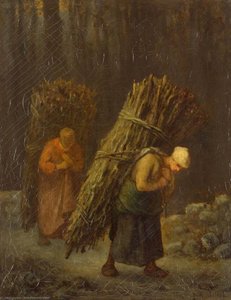
To encounter Peasant-Girls with Brushwood by Jean-François Millet is to step into a quiet, sacred moment of human endurance, as if discovering a hidden gem within the archives of the Barbizon School. This masterpiece earns its place among the top 25 artworks of Jean-François Millet through its profound emotional intelligence; it does not merely depict labor, but elevates the heavy, rhythmic struggle of rural life into something monumental and poetic.
Millet utilizes a palette of earthy browns and deep, forest greens to ground the two figures, whose silhouettes emerge from the soft, fading light of dusk. The tactile weight of the bundles lashed to their backs serves as a powerful symbol of resilience, rendered with brushstrokes that feel as textured as the very wood they carry. For the sophisticated collector, this painting brings an unparalleled sense of groundedness and timeless strength to a room. Its somber, dignified atmosphere offers a soulful anchor for modern luxury interiors, providing a window into a world where beauty is found in the honest, unyielding spirit of the earth.
La précaution maternelle - Jean-François Millet
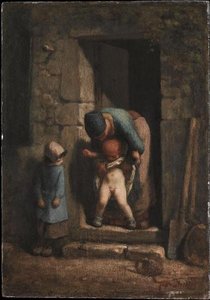 La précaution maternelle - Jean-François Millet
In La Précaution Maternelle by Jean-François Millet, a palette of earthy umbers and muted, weathered ochre dominates the canvas, casting a mood of profound, grounded tranquility. This mastery of tonal modulation—where the warmth of sun-drenched brick meets the soft shadows of rural life—is precisely why this work stands as one of the top 25 artworks of Jean-François Millet . The way Millet captures the diffused, ethereal light filtering through a doorway creates a sense of sacred intimacy, elevating a simple moment of nursing into a monumental celebration of maternal devotion.
For the discerning collector, integrating this piece into a modern home offers a way to anchor a room with emotional depth. The painting’s organic, warm color scheme is perfect for creating a serene atmosphere in a dining room or a quiet reading nook, providing a soulful counterpoint to contemporary minimalism. By bringing these soft, light-drenched textures into your space, you invite the timeless dignity of the Barbizon School into your daily life, turning a wall into a window of historical grace.
Le fendeur de bois - Jean-François Millet
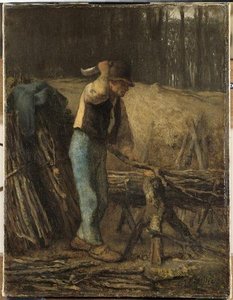 Le fendeur de bois - Jean-François Millet
Before the world knew him as a master of the Barbizon school, Jean-François Millet lived the very hardships he would later immortalize; his hands understood the grit of the earth long before his brushes touched the canvas. In Le Fendeur de bois , created around 1850, we witness this profound connection to the soil. This work is a cornerstone among the top 25 artworks of Jean-François Millet , stripping away the romanticized illusions of the era to reveal the raw, rhythmic pulse of manual labor.
The scene is bathed in a muted, earthy palette of deep browns and mossy greens, where the heavy scent of damp wood and sawdust seems almost palpable. Through masterful tonal shading, Millet captures the solitary strength of the wood splitter, his silhouette anchored by the quiet presence of a working horse. There is no superficial flourish here—only the honest, textured reality of perseverance. To hang such a piece in a modern study is to invite a sense of grounded focus and enduring fortitude, transforming a workspace into a sanctuary of quiet prestige and soulful productivity.
Brushwood collectors - Jean-François Millet
 Brushwood collectors - Jean-François Millet
Long before the world recognized him as a master of the Barbizon School, Millet lived the very hardships he painted, often finding himself more connected to the soil of Gruchy than the salons of Paris. In Brushwood Collectors , this visceral connection reaches a breathtaking crescendo. This masterpiece does not merely depict laborers gathering twigs; it captures the very breath of the forest. Through a technical leap that bridges Realism with an almost Impressionistic sensitivity, Millet uses loose, textured brushstrokes to orchestrate a symphony of dappled light and deep, earthy shadows.
The scene is a profound meditation on human resilience , where the weight of the wood and the quiet movement of figures through the dense canopy create a palpable sense of atmosphere. The air in the painting feels heavy with the scent of damp earth and ancient trees. For those seeking to curate a space of deep focus, bringing a reproduction of this work into a modern study or home office provides an emotional anchor. Its grounded composition and organic textures foster an environment of quiet strength and intellectual serenity, perfect for moments of profound contemplation.
Paul François Collot - Jean-François Millet
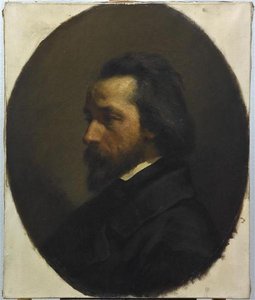 Paul François Collot - Jean-François Millet
There is a gaze in Paul François Collot by Jean-François Millet that follows you—not with judgment, but with a profound, quiet understanding . In this masterful portrait, Millet moves away from the sweeping landscapes of the Barbizon School to focus on the weight of an individual soul. The subject, distinguished by his thoughtful beard and formal black attire, sits within a soft, circular frame that draws your eyes directly into his steady, serious expression.
This isn’t merely a portrait; it is a mirror . Through a muted palette of earthy browns and creamy highlights, Millet captures a sense of contemplative stillness that feels remarkably modern. The loose, expressive brushstrokes evoke the very texture of the earth he loved so dearly, bringing a tactile depth to the canvas. Its spot in our collection of the top 25 artworks of Jean-François Millet is a testament to its power to make the invisible visible. Now, imagine that gaze in your own home. Not watching you, but reminding you : you are seen. You are part of this enduring story of dignity and grace.
Spring - Jean-François Millet
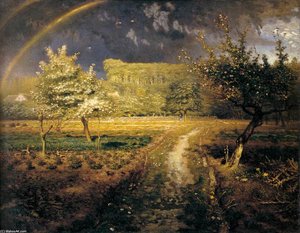 Spring - Jean-François Millet
What story does the awakening earth tell in Spring by Jean-François Millet? In this luminous 1868 masterpiece, Millet invites us into a sacred moment of renewal, where the damp, fertile scent of a world emerging from winter seems almost palpable. As one of the most profound works within the top 25 artworks of Jean-François Millet, this painting transcends simple pastoral scenery to capture the very soul of the Barbizon School's Realist movement. Through a muted palette of rich ochres and deep, mossy greens, Millet weaves a tapestry where human toil and natural rhythm exist in perfect, spiritual equilibrium.
The presence of a rainbow arching across the sky serves as a breathtaking symbol of hope and divine grace, providing a celestial counterpoint to the grounded, earthy textures of the field. For the modern collector, bringing this piece into a home offers more than mere decoration; it provides a curated escape into a landscape of peace and continuity. It is an invitation to pause and breathe in the kinetic vitality of birds in flight and the soft promise of new growth, making it a timeless cornerstone for any collection of fine art.
Shepherds of Arcadia - Jean-François Millet
 Shepherds of Arcadia - Jean-François Millet
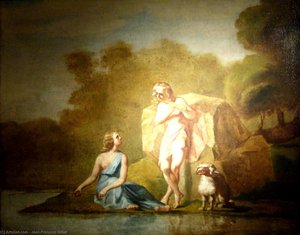
Owning Shepherds of Arcadia by Jean-François Millet isn’t merely a purchase; it is an inheritance of profound emotion. In this 1843 masterpiece, Millet invites us into a pastoral meditation that transcends the simple beauty of the French countryside. As we gaze upon the two shepherds and their companion, seated amidst the soft, rolling hills, there is a palpable sense of tranquility—the gentle presence of a resting dog and a grazing sheep grounding us in the earth.
Yet, for the discerning collector, the true soul of this work lies in its haunting shadow. Beneath the lush foliage, a weathered tomb bears the chilling inscription, “Et in Arcadia ego” —reminding us that even in moments of idyllic bliss, mortality lingers. This is Millet at his most evocative, blending the burgeoning Realist style with a deep, classical allegory. To hang such a piece is to bring a lineage of taste into your home, where the textures of worn fabric and weathered stone serve as a continuous, silent dialogue with the masters of the Barbizon School.
Trussing Hay - Jean-François Millet
 Trussing Hay - Jean-François Millet
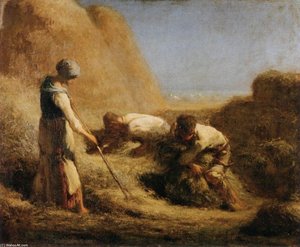
In Trussing Hay , Jean-François Millet invites us into a quiet, sacred moment of agricultural rhythm that transcends mere labor. Completed in 1850, this masterpiece is a profound testament to the dignity of the human spirit amidst the earth's toil. As you gaze upon the canvas, you feel the weight of the task; the thick, tactile impasto brings a palpable texture to the hay, mirroring the physical grit of the Normandy countryside. The muted, earthy palette and diffused sunlight create an atmosphere of deep contemplation, where the figures are not merely workers, but symbols of resilience.
Millet’s genius lies in his ability to find the monumental within the mundane. The presence of the birds perched atop the hay and the distant plow serves as a subtle reminder of the interconnectedness of all life. To possess a reproduction of this work is to bring more than just a landscape into your home; it is to invite a gallery of the soul , transforming your space into a sanctuary of historical truth and enduring grace.
Peasant Spreading Manure (Paysan répandant du fumier) - Jean-François Millet
 Peasant Spreading Manure (Paysan répandant du fumier) - Jean-François Millet
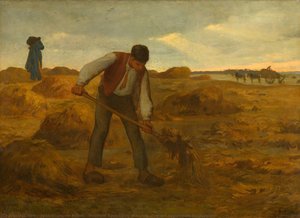
There is a profound, quiet gravity in witnessing the rhythmic toil of Peasant Spreading Manure , a work that captures the very heartbeat of the earth. In this masterpiece, Jean-François Millet transcends a mere agricultural task, transforming the heavy labor of a solitary figure into an epic poem of human resilience. The striking splash of scarlet from the worker's vest serves as a soulful pulse against a landscape of muted ochres and deep, fertile browns, reminding us of the dignity found in even the most humble moments of existence.
As one of the top 25 artworks of Jean-François Millet, this painting stands as a cornerstone of the Realist movement, celebrated for its unflinching honesty and its ability to find beauty in the unvarnished truth of rural life. At ArtsDot.com, we strive to preserve this tactile soul. Our hand-painted oil reproductions utilize thick, visible brushstrokes and layered textures to ensure that the weight of the shovel and the soft, hazy light of the French countryside are felt in your own home, bringing the timeless strength of Millet’s vision to your walls.
The Knitter, The Seated Shepherdess - Jean-François Millet
 The Knitter, The Seated Shepherdess - Jean-François Millet
In the quietude of a mid-19th-century French landscape, The Knitter, The Seated Shepherdess by Jean-François Millet captures more than just a pastoral scene; it captures the very soul of human resilience. As one of the most profound entries in our collection of the top 25 artworks of Jean-François Millet , this piece stands as a masterclass in the Barbizon School's commitment to truth. There is a sacred stillness here, where the rhythmic motion of knitting needles and the steady presence of a loyal dog invite us into a world where time slows to the pace of nature.
Millet’s mastery lies in his earthy palette—deep mossy greens and warm ochres that feel as though they were pulled directly from the soil. Through textured, tactile brushwork, he elevates a humble moment of toil into an ode to dignity. For the modern collector, bringing this work into a home offers more than mere decoration; it provides a visual anchor of groundedness and peace. It is a timeless conversation between the rugged beauty of historical Realism and the refined serenity of a contemporary sanctuary.
La lessiveuse - Jean-François Millet
 La lessiveuse - Jean-François Millet
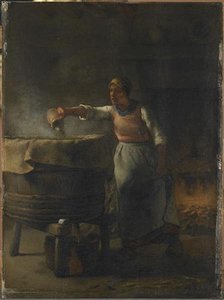
In La Lessiveuse , Jean-François Millet invites us into a quiet, sacred corner of 19th-century domesticity, where the weight of labor meets the grace of human resilience. This masterpiece stands as a cornerstone in our collection of the top 25 artworks of Jean-François Millet because it transcends mere genre painting; it is a profound meditation on dignity. As we gaze upon the woman tending to her task, the flickering warmth of the hearth and the earthy, muted tones of the kitchen create an atmosphere of deep, soulful intimacy.
Millet’s mastery of light—the way it catches the rim of a wooden barrel or softens the texture of a worn apron—offers a sensory experience that remains breathtakingly relevant. For the modern collector, this piece brings a sense of grounded tranquility and organic warmth to a home. Its palette of deep umbers and soft, glowing highlights integrates beautifully into contemporary interiors, providing an anchor of historical depth and emotional stillness amidst the rush of modern life.
Cliffs of Gréville - Jean-François Millet
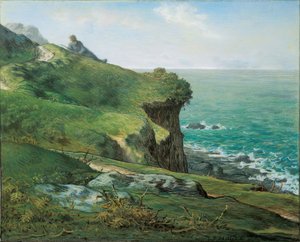 Cliffs of Gréville - Jean-François Millet
In Cliffs of Gréville , Jean-François Millet achieves a breathtaking structural harmony that anchors this masterpiece within the top 25 artworks of his storied career. The composition is a masterclass in organic geometry; the rugged, vertical ascent of the textured cliffs creates a powerful counterpoint to the fluid, horizontal expanse of the sea and the soft, undulating lines of the grassy slopes. This delicate balance between the enduring strength of the earth and the ephemeral movement of the waves evokes a sense of timeless perfection.
As you gaze upon the luminous interplay of sunset pinks and deep oceanic blues, there is a profound stillness that resonates with the soul. Much like the principles of modern minimalist design , the painting’s ability to find beauty in raw, essential forms allows it to ground a contemporary space with quiet prestige. The solitary figure perched on the hillside invites a moment of deep introspection, making this work not just a landscape, but an emotional sanctuary of light and shadow that remains eternally captivating.
Laundress - Jean-François Millet
 Laundress - Jean-François Millet
Step into the quiet, rhythmic pulse of a 19th-century French kitchen with Laundress , a masterpiece from 1861 that captures the very soul of Jean-François Millet’s Realism. As you stand before this canvas, you can almost feel the warmth radiating from the hearth and hear the soft splash of water against fabric. The scene is intimate and grounded; there is no theatrical drama here, only the profound dignity found in humble, repetitive labor.
Millet employs a masterful palette of earthy tones and subtle light to illuminate the woman’s focused posture. Notice how the light catches the folds of her apron and the rustic textures of the earthenware pots, creating a sense of tangible reality that feels remarkably present. The atmosphere is one of peaceful perseverance, a sanctuary of domestic stability amidst a changing world. Bringing such a piece into your home offers more than mere decoration; it introduces a meditative stillness and a deep respect for life's simple, beautiful moments, serving as a timeless anchor of calm and reflection in any modern living space.
Landscape with Two Peasant Women - Jean-François Millet
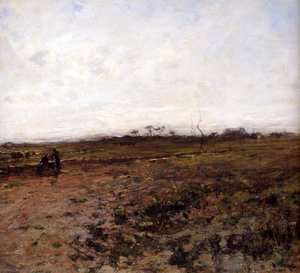 Landscape with Two Peasant Women - Jean-François Millet
In Landscape with Two Peasant Women , the lines of the French countryside aren’t merely painted; they are choreographed . This is not a simple pastoral scene; it is a dance frozen in time , where the rhythmic movement of the figures mirrors the eternal pulse of the earth itself. As you gaze upon the two women traversing the foreground, you feel the weight of the heavy, clouded sky and the moody, atmospheric light that defines Millet’s profound Realist vision.
The composition achieves a rare, breathtaking equilibrium—a moment where the scattered figures and the grazing horse find harmony within the vast, open fields. It is a masterpiece of balance, making the quiet chaos of rural life feel like a structured symphony. What if your own living room could hold that same sense of grounded peace? What if your walls could breathe rhythm and invite the soulful, earthy textures of the Barbizon school into your home? This work stands as a vital entry in our collection of the top 25 artworks of Jean-François Millet , reminding us that there is immense dignity in the simplest of movements.
Manor farm Cousin in Greville - Jean-François Millet
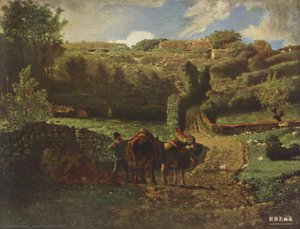 Manor farm Cousin in Greville - Jean-François Millet
In Manor Farm Cousin in Greville , the lines of the Normandy landscape aren’t merely painted; they are choreographed . This 1855 masterpiece is not just a composition of earth and sky, but a dance frozen in time , where the rhythmic movement of a man leading horses down a sun-baked road creates a profound sense of harmony amidst the toil of rural life. Millet invites us into a world where the heavy textures of weathered stone and the muted, earthy palette of browns and greens allow the very atmosphere to breathe rhythm .
As you wander through this pivotal work of the Barbizon School, you feel the palpable weight of the plow and the quiet vitality of birds drifting in the sky. It is a soulful rejection of academic grandeur, finding divinity in the simple placement of a bottle or the steady gait of a carriage. What if your own walls could hold this same balance? To bring this piece into your home is to invite a window into the dignity of the human spirit, transforming a modern space into a sanctuary of historical truth and quiet, rustic grace.
L'Angélus, Musée d'Orsay - Jean-François Millet
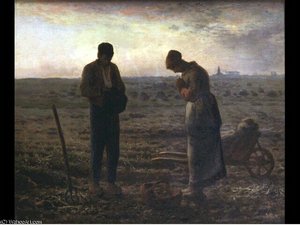 L'Angélus, Musée d'Orsay - Jean-François Millet
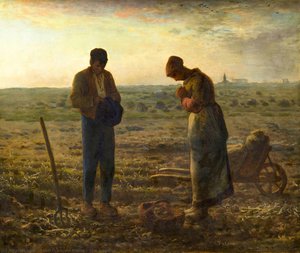
In L'Angélus , the heavy, tactile presence of the earth is felt through Millet’s masterful use of muted ochres and deep, organic shadows. To touch a true reproduction of this masterpiece is to feel the soul of the Barbizon School; the thick, rhythmic application of paint captures the weathered textures of the peasants' clothing and the rugged weight of the plow resting in the soil. This painting stands as one of the top 25 artworks of Jean-François Millet because it transcends mere realism, capturing a sacred, breathless pause where the divine meets the dirt.
At ArtsDot.com, we believe such profound stillness deserves more than a flat print. Our hand-painted oil reproductions honor this materiality, utilizing visible, impasto brushstrokes on 100% cotton canvas to recreate the light-drenched, three-dimensional atmosphere of the original. We strive to bring that same sense of reverence and grounded peace into your home, preserving the luminous, soulful depth that makes Millet’s vision an eternal sanctuary for the modern collector.
untitled (648) - Jean-François Millet
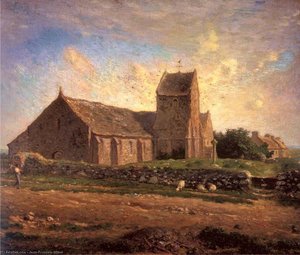 untitled (648) - Jean-François Millet
In untitled (648) by Jean-François Millet, a profound sense of earthy ochre and weathered umber dominates the canvas, setting a mood of quiet, grounded contemplation. This muted palette does not merely depict a French church; it breathes with the very soil of Normandy that shaped the artist’s soul. As one of the top 25 artworks of Jean-François Millet , this piece earns its place through a masterful command of light and texture, where soft, diffused tones evoke the sacred stillness of a rural afternoon. The subtle integration of a grazing sheep and birds in flight adds a delicate layer of life to the architectural weight of the steeple.
For the discerning collector, bringing this work into a modern home offers a unique opportunity to curate emotional depth. The painting’s organic, desaturated tones are perfect for anchoring a dining room or study, providing a serene, historical focal point that complements contemporary minimalist or rustic interiors. It invites a sense of timelessness, transforming a living space into a sanctuary of peace and pastoral dignity.
Farmer Inserting a Graft on a Tree - Jean-François Millet
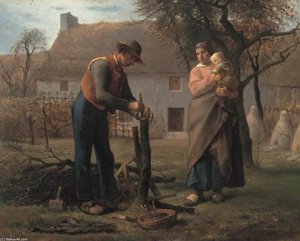 Farmer Inserting a Graft on a Tree - Jean-François Millet
To behold Farmer Inserting a Graft on a Tree by Jean-François Millet is to witness a sacred ritual of the earth. Painted in 1865, this masterpiece transcends mere agricultural documentation; it is a profound meditation on the continuity of life and the quiet dignity of labor. Within this muted, earthy tableau, we find a family bound to the soil—a man focused intently on the delicate graft, a woman watching with steady grace, and a child held close, representing the next generation of this ancestral lineage.
Millet employs a palette of deep mossy greens and weathered browns, using coarse, textured brushstrokes that mirror the rugged bark of the tree and the calloused hands of the workers. There is a palpable sense of presence in the scene, from the simple outdoor table to the scattered vessels of daily life. Owning this work isn’t merely a purchase; it is an inheritance . It brings the soulful, unyielding spirit of the Barbizon School into your home, allowing you to carry a piece of history's most honest lineage upon your own walls.
Hunting Birds at Night - Jean-François Millet
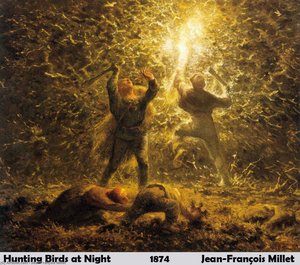 Hunting Birds at Night - Jean-François Millet
To possess Hunting Birds at Night by Jean-François Millet is to invest in a profound legacy of taste, securing a piece of the very soul of the Barbizon School for your private collection. As one of the top 25 artworks of Jean-François Millet, this 1874 masterpiece stands as a cornerstone of Realism, commanding immense respect in the art market for its unflinching portrayal of rural dignity. The painting captures a nocturnal rhythm, where figures emerge from the velvety shadows, their silhouettes poised with quiet determination against a darkened sky. Through masterful impasto and a rich, tactile depth, Millet transforms a simple moment of nocturnal labor into something sublime.
The composition, featuring hunters amidst the flight of birds, uses light and shadow to evoke a sense of vigilance and the cyclical nature of life. For the discerning collector, a high-quality, hand-painted oil reproduction of this work offers more than mere decoration; it brings an unmatched aesthetic authority to modern luxury interiors. The painting’s deep tonal range and emotional weight provide a sophisticated focal point, ensuring that the timeless prestige of Millet’s vision continues to resonate within the contemporary home.
Bergère avec son troupeau Bergère gardant ses moutons ou la grande bergère (autre titre) - Jean-François Millet
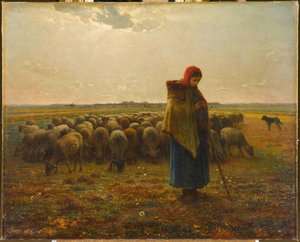 Bergère avec son troupeau Bergère gardant ses moutons ou la grande bergère (autre titre) - Jean-François Millet
In Bergère avec son troupeau , Jean-François Millet masterfully orchestrates a soft, diffused light that seems to emanate from the very earth of Normandy itself. There is no dramatic spotlight here; instead, a gentle, atmospheric glow settles over the shepherdess and her flock, blurring the lines between the figures and the landscape. This subtle command of illumination creates a profound sense of stillness, capturing a moment where time feels suspended amidst the muted ochres and deep greens of the pasture. It was this quiet, honest light that challenged the era's preference for theatricality, securing this work's place among the top 25 artworks of Jean-François Millet .
To possess a hand-painted reproduction of this masterpiece is to invite a sense of tranquil dignity into your home. The way the light plays across the textured brushstrokes—recreated with meticulous care on cotton canvas—adds an incomparable layer of depth and soulful luxury to any contemporary wall. It serves not merely as decor, but as a window into a world of enduring grace and pastoral peace.
Conclusion
As the golden light of dusk settles over the canvas, much like the soft, twilight hues that Millet so masterfully captured in the fields of Barbizon, we find ourselves leaving more than just an exhibition; we leave a profound encounter with the soul of humanity. To wander through these twenty-five masterpieces is to realize that Millet’s work is not a silent relic of a bygone era, but a breathing, rhythmic pulse that continues to beat within our modern lives. His brushstrokes do not merely depict the toil of the past; they whisper of the eternal dignity found in labor, the quiet strength of resilience, and the sacred bond between the human spirit and the earth beneath our feet.
These paintings remain living presences, capable of transforming a contemporary room into a sanctuary of reflection and peace. Whether it is the heavy, tactile texture of an impasto sky or the gentle, somber grace of a seated figure, Millet invites us to slow our pace and rediscover the beauty in the humble and the overlooked. His legacy is a gift that transcends time, offering a sense of groundedness in an increasingly hurried world. We invite you to carry this quiet inspiration home with you and continue your journey through his evocative landscapes by exploring our full collection . May these works serve as a perennial reminder that even in the simplest moments, there is a profound and enduring majesty waiting to be seen.