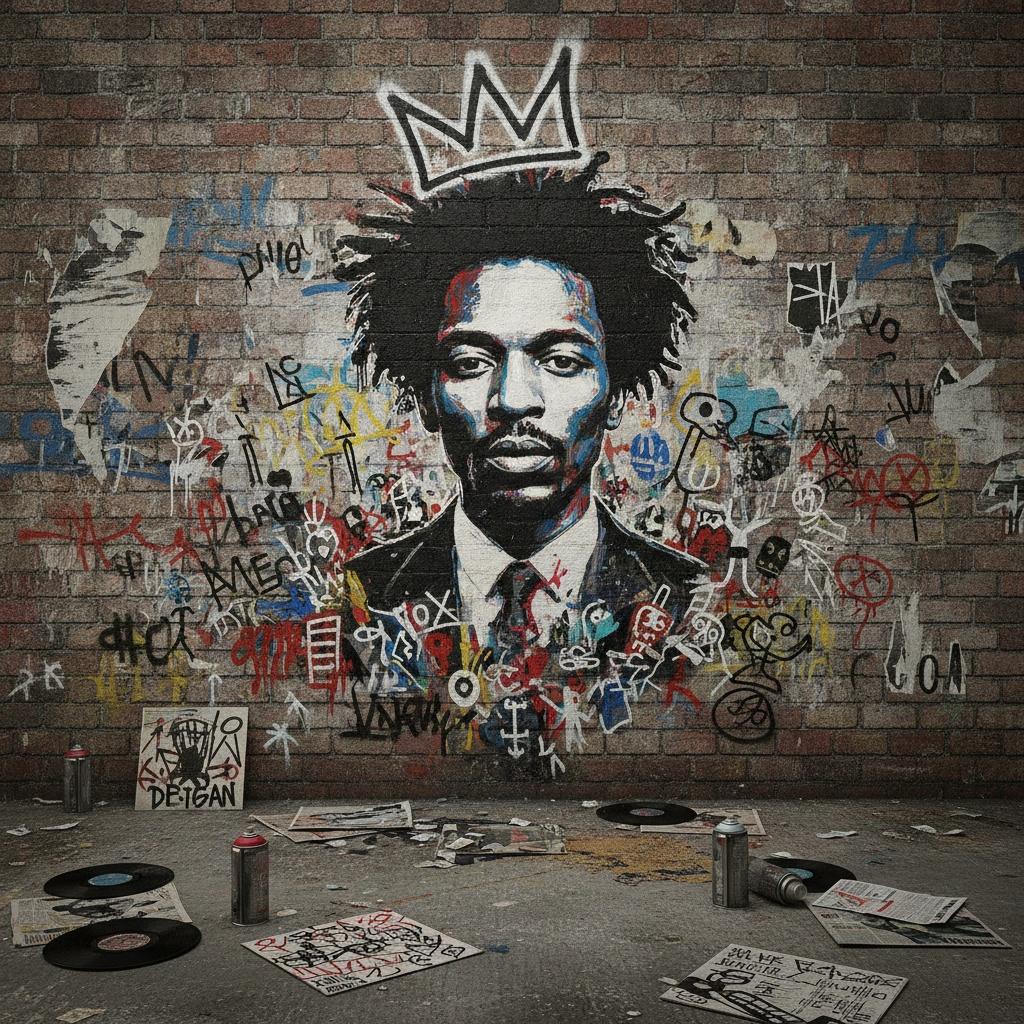
The Genesis of Chaos: From SAMO© to the Streets of New York
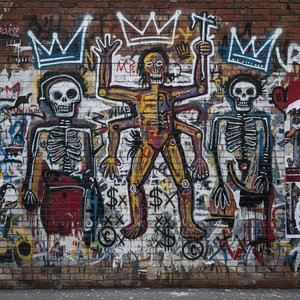 Jean-Michel Basquiat: Deconstructing Identity & Power Through Neo-Expressionist Graffiti
The Rise of SAMO: Basquiat’s Early Provocations & New York Roots Jean-Michel Basquiat Explore the raw energy & social commentary of Jean-Michel Basquiat's neo-expressionist paintings. From NYC graffiti to museum masterpieces, discover his iconic styl...
To understand the seismic shift that occurred in the late twentieth century, one must look past the polished galleries and listen to the rhythmic, chaotic heartbeat of the city streets. Before Jean-Michel Basquiat became a titan of the international art market, his voice was etched into the very skin of Manhattan. Emerging from the vibrant, often turbulent landscape of 1970s New York, Basquiat did not seek permission from the hallowed halls of academia; instead, he found his medium in the urban sprawl. Alongside Al Diaz, he operated under the enigmatic pseudonym SAMO©, a collaborative project that functioned less as traditional graffiti and as a poetic intervention. These were not mere tags, but cryptic, thought-provoking epigrams scrawled across Lower Manhattan, designed to challenge societal norms and question established power structures.
This early period was a crucible of creativity, where the energies of disco, punk, and the nascent hip-hop culture converged. Basquiat’s upbringing—a rich tapestry of Haitian and Puerto Rican heritage—infused his work with a multilingual and multicultural depth that would later define his visual vocabulary. The streets provided a raw, unfiltered classroom where language, symbol, and social commentary could be tested in real-time. As the boundaries between high culture and street rebellion began to dissolve, Basquiat transitioned from the ephemeral nature of the wall to the permanence of the canvas, carrying with him the grit, the noise, and the unvarnished truth of a city in transition.
Neo-Expressionism Defined: The Rejection of Minimalist Restraint
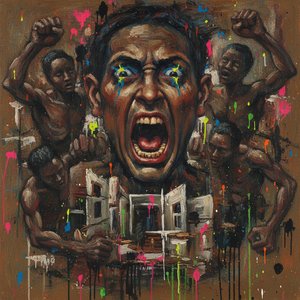 Neo-Expressionism Unleashed: The Raw, High-Impact Art Movement Redefining Modern Walls
The Death of Minimalism: Why Raw Energy is Dominating Modern Interiors For years, the design world has been held hostage by the sterile grip of minimalism. We have lived through an era of muted beige, clean lines, and a clinical lack of personality t...
For years, the art world had been enamored with the cool, detached intellectualism of Minimalism—a movement characterized by sterile lines, muted palettes, and a clinical lack of personality. However, as the 1970s gave way to the 1980s, a visceral hunger for visual maximalism began to surge through the veins of the art community. This was the birth of Neo-Expressionism, a movement that rejected the sterile and embraced the primal. It was a deliberate departure from the intellectual detachment of previous decades, seeking instead to reclaim the human experience through a return to figurative imagery and intense emotionality.
Neo-Expressionism did not merely observe reality; it collided with it. The brushstrokes were no longer delicate or controlled; they were aggressive, thick with impasto, and laden with an almost desperate urgency. Artists sought to scrape the very essence of urban life onto the canvas, capturing the friction of existence. This era saw a rejection of formal restraint in favor of an emotive intensity that felt both ancient and urgently modern. For the collector, this movement represents a profound shift toward art that breathes, screams, and demands attention—a move away from the "less is more" philosophy toward a celebration of the textured, the layered, and the profoundly human.
A Visual Lexicon: Deconstructing Identity, Power, and Symbolism in Basquiat’s Oeuvre
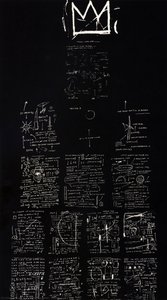 Tuxedo
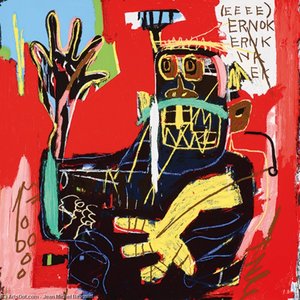
Jean-Michel Basquiat’s “Tuxedo”: A Chronicle of Urban Noise “Tuxedo,” painted in 1982, is more than just an image; it's a visceral eruption of raw energy and fragmented thought – a quintessential work by the tragically short-lived genius that was Jea...
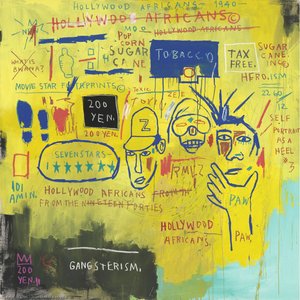
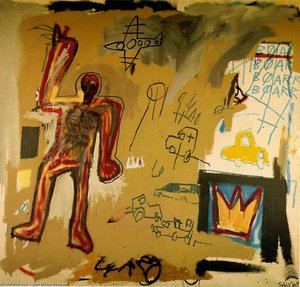
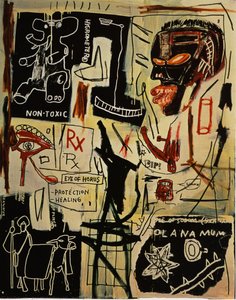
To gaze upon a work by Basquiat is to enter a labyrinth of meaning where text and symbol dance in a state of perpetual tension. His canvases are not merely paintings; they are complex, layered manuscripts of identity. He did not simply paint; he inscribed. A recurring motif throughout his oeuvre is the crown, an iconic symbol that evokes notions of royalty, achievement, and the reclamation of power. Yet, this imagery is often juxtaposed with anatomical sketches—a fascination born from a childhood encounter with Gray’s Anatomy—and cryptic text fragments that demand the viewer’s active participation.
The act of crossing out a word in his work was a deliberate strategy; by striking through a term, Basquiat drew even more attention to it, forcing an encounter with themes of race, class, and authority. His visual language is a synthesis of diverse influences, ranging from Abstract Expressionism and tribal art to comic books and historical painting. In works such as Tuxedo, one finds a chaotic symphony of black and white markings and geometric shapes that reflect the overwhelming influx of information in urban life. This deconstruction of power through imagery allows his work to function as a profound interrogation of vulnerability, wealth versus poverty, and the very weight of existence.
The 1982 Phenomenon: Analyzing the Peak of Basquiat's Creative Intensity
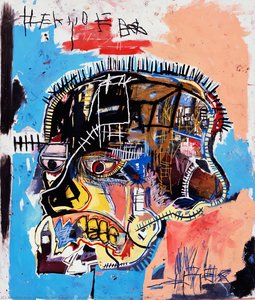
Untitled is a painting created by American artist Jean-Michel Basquiat in 1982. The artwork, which depicts a skull, is among the most expensive paintings ever. In May 2017, it sold for $110.5 million at Sotheby's, the highest price ever paid at aucti...
In the history of contemporary art, few years possess the concentrated brilliance of 1982. For Basquiat, this period represented a zenith of creative output and market recognition, producing some of his most valuable and enduring masterpieces. It was during this year that his work achieved a level of visceral intensity that would later command record-breaking prices at auction, such as the Untitled (1982 skull painting), which stands as one of the most expensive paintings ever sold. The works from this era are characterized by a frantic, electric energy, often utilizing bold primary colors—red, blue, and yellow—against stark black or deep blue backgrounds to create a visually arresting effect.
The compositions from 1982 often feature a heightened sense of movement and disarray. Whether through the use of dynamic lines that intersect and overlap or the layering of organic forms against rigid geometric shapes, the artwork captures a sense of "vibrant chaos." This was a moment when his personal struggle for recognition within the art world met a global fascination with the raw energy of New York. The paintings from this period are not merely depictions of subjects; they are chronicles of urban noise and the artist's own intensely personal navigation of fame, identity, and the complexities of the modern era.
The Enduring Legacy: How Urban Rebellion Redefined Modern Art Collections
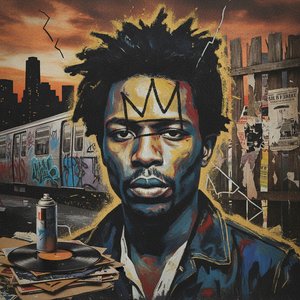 Basquiat & Raw Pop: The Electric Energy of Neo-Expressionism and the Legacy of Urban Rebellion
The Pulse of the Street: Defining Neo-Expressionism's Raw Rebellion To understand the seismic shift that occurred in the late twentieth century, one must look past the polished galleries and listen to the rhythmic, chaotic heartbeat of the city stree...
The legacy of Jean-Michel Basquiat and the Neo-Expressionist movement continues to resonate profoundly within the halls of prestigious museums and private collections alike. He fundamentally altered the trajectory of contemporary art by proving that the energy of the street could possess the intellectual depth required for the highest levels of fine art. His ability to bridge the chasm between street rebellion and museum-grade mastery has paved the way for a new generation of artists who find inspiration in the intersection of high culture and urban grit.
For the modern collector, Basquiat’s influence is seen in the growing demand for art that possesses "soul"—works that offer a deeper tonal range and tactile presence than mere prints. The movement's emphasis on raw emotion and social commentary continues to inform the curation of contemporary spaces, where collectors seek pieces that act as focal points of conversation and reflection. As we continue to navigate an increasingly digital and often detached world, the unfiltered energy of Neo-Expressionism remains a vital, breathing force, reminding us of the power of art to confront, to provoke, and to endure.
About ArtsDot.com
ArtsDot.com is a global leader in premium art reproductions and custom commissions. Since 2004, we have been dedicated to making the grandeur of fine art accessible to discerning collectors worldwide. Our master artists, holding degrees from prestigious academies, specialize in creating breathtaking oil reproductions on 100% cotton canvas, capturing every visible brushstroke and textural nuance of history's greatest movements. Whether you seek a bespoke "remix" of a masterpiece or wish to transform a personal photograph into a neo-expressionist treasure through our Professional Digital Mockup Service, ArtsDot provides an unparalleled experience backed by a 100% satisfaction guarantee. From large-scale architectural murals for luxury hotels to intimate custom portraits, we preserve the heritage of human creativity for the modern era.