

The Dawn of Biedermeier: Post-Napoleonic Europe and the Rise of the Middle Class
To understand the soul of the Biedermeier era, one must look to the shifting tides of 19th-century Europe following the tumultuous conclusion of the Napoleonic Wars. As the dust settled over the German Confederation in 1815, a profound social transformation began to take root. The grand, sweeping gestures of imperial conquest gave way to a more introspective period, marked by the burgeoning influence of the middle class. This was an era where the political sphere was often restricted, leading the citizenry to turn their gaze inward, seeking solace and expression within the private, domestic sphere.
This cultural pivot created a unique vacuum that the Biedermeier movement moved to fill. Unlike the aristocratic grandeur of the preceding Empire style, which sought to project power and conquest, Biedermeier celebrated the attainable, the intimate, and the local. It was a period defined by a retreat into the home, where the growing bourgeoisie found beauty in the familiar. The rise of this class brought with it a new set of sensibilities—a desire for art and design that reflected their own values of stability, family, and modest prosperity, rather than the intimidating opulence of a bygone monarchical age.
As these social structures solidified between 1815 and 1848, the Biedermeier spirit became the heartbeat of Central European life. It was not merely a decorative trend but a psychological response to a changing world, fostering an environment where the quiet joys of everyday existence were elevated to the status of high art.
Aesthetic Principles: The Harmony of Simplicity and Functional Elegance
The aesthetic language of Biedermeier is characterized by a remarkable tension between restraint and refinement. At its core, the movement rejected the heavy, gilded ornamentation that had long defined European luxury. Instead, it embraced a philosophy of clarity and geometric purity. The beauty of a Biedermeier object lies not in what is added to it, but in the inherent quality of its form and the natural splendor of its materials.
This pursuit of simplicity was never synonymous with austerity. Rather, it was an exercise in functional elegance. Designers focused on clean lines, smooth surfaces, and a sense of proportion that felt both balanced and organic. There was a profound respect for the grain of the wood—often light-colored species like cherry, pear, or maple—which allowed the natural patterns to serve as the primary decoration. This emphasis on the "honesty" of materials created an atmosphere of warmth and approachability, making the art of the period deeply relatable to the common man.
< SebbederBy stripping away the superfluous, Biedermeier artists achieved a timelessness that resonates even in the modern age. The movement taught us that true sophistication does not require loud proclamations of wealth; instead, it is found in the subtle interplay of light on a polished surface and the graceful curve of a well-crafted chair leg. It was an art of quiet confidence, where every element served both a practical purpose and an aesthetic ideal.
Interior Design and Furniture: Crafting the Cozy Bourgeois Sanctuary
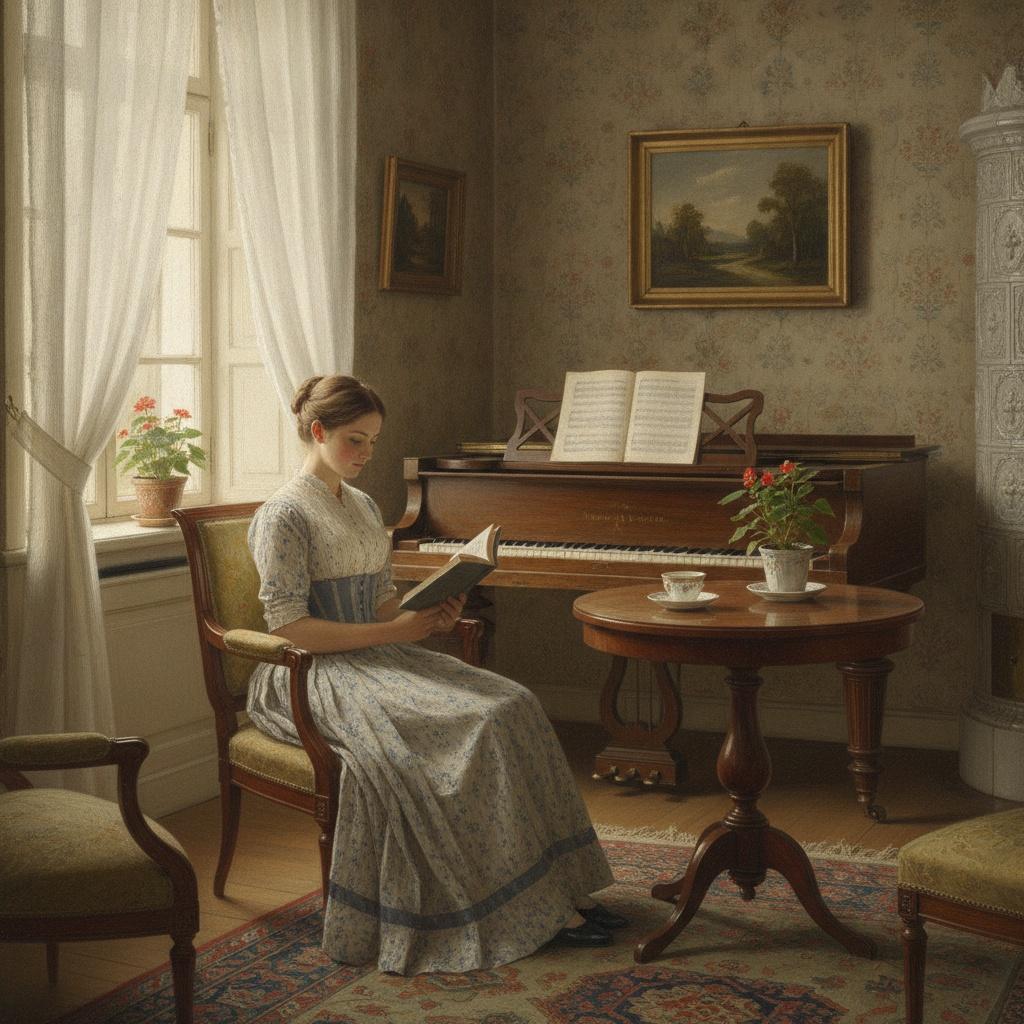
In the Biedermeier home, furniture was more than mere utility; it was the architecture of comfort. The interior design of this period sought to create a sanctuary—a space that felt protective, cozy, and deeply personal. This led to the development of specialized furniture pieces designed for specific domestic rituals, such as the writing desk for correspondence, the comfortable armchair for reading, and the circular dining table for family gatherings.
The craftsmanship of Biedermeier furniture is legendary for its ability to transform simple woods into sculptural masterpieces. Designers utilized techniques like veneer work to highlight dramatic, swirling patterns in the timber, creating a sense of movement within a static object. The silhouettes were often characterized by:
- Curvilinear forms: Soft, rounded edges that invited touch and suggested comfort.
- Structural clarity: A visible logic in construction that emphasized stability. and
- Minimalist ornamentation: Using subtle marquetry or contrasting wood types instead of heavy carvings.
This focus on the "home as a refuge" transformed the domestic landscape into a curated gallery of personal taste. The furniture was arranged to foster intimacy, creating small pockets of space for conversation and reflection. Through this careful orchestration of form and function, Biedermeier interiors became the ultimate expression of the bourgeois ideal: a life well-lived within the boundaries of a beautiful, orderly, and peaceful domestic world.
Biedermeier in Fine Arts: Romanticism, Domesticity, and Intimate Portraiture
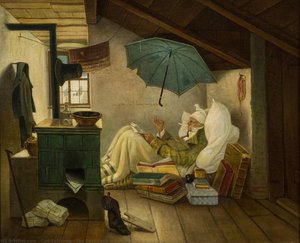
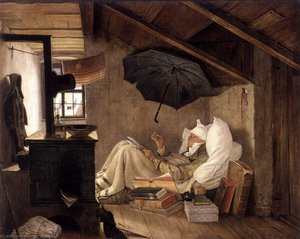
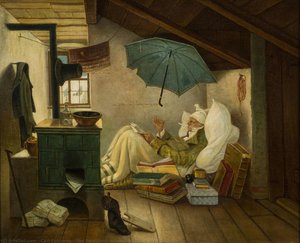
While furniture defined the physical space, the fine arts of the Biedermeier period provided its emotional depth. This era saw a fascinating intersection between the broader movement of Romanticism and a new, localized focus on domesticity. While Romantic painters in other parts of Europe were exploring the sublime terrors of nature and epic legends, Biedermeier artists found the "sublime" within the small, the quiet, and the everyday.
The subject matter shifted toward the intimate. Portraiture became a cornerstone of the era, but with a distinct departure from the heroic or aristocratic tradition. These were portraits of families, children, and individuals captured in moments of quiet contemplation or gentle interaction. The goal was not to idealize the sitter as a figure of historical importance, but to capture their character and humanity. There is a palpable sense of tenderness in these works, an emphasis on the emotional bonds that tie a family together.
Landscape painting also underwent a transformation. Instead of vast, untamed wildernesses, Biedermeier landscapes often depicted the cultivated, peaceful countryside—gardens, local forests, and idyllic village scenes. These paintings served as extensions of the home, bringing the beauty of the controlled natural world into the living room. Through this lens, art became a medium for celebrating the stability and serenity of the private life, reinforcing the era's devotion to the sanctity of the domestic sphere.
The Enduring Legacy: How Biedermeier Influenced Modern Minimalism
Though the Biedermeier period drew to a close with the political upheavals of 1848, its aesthetic DNA continues to pulse through the veins of modern design. The movement’s fundamental principles—the celebration of material honesty, the reduction of ornament, and the prioritization of functional beauty—find their most direct descendants in the Modernist and Minimalist movements of the 20th and 21st centuries.
When we look at contemporary furniture that emphasizes clean lines and natural textures, or interior spaces that prioritize "clutter-free" living, we are seeing the echoes of Biedermeier thought. The movement pioneered the idea that a space could be both highly sophisticated and profoundly comfortable without the need for ostentatious display. It taught the design world that simplicity is not an absence of style, but the ultimate refinement of it.
Today, as we navigate an increasingly complex and digital world, the Biedermeier ethos offers a timeless lesson in the value of the tangible and the intimate. Its legacy reminds us that true luxury lies in the quality of our surroundings and the ability to find profound meaning in the simple, well-crafted objects that populate our lives. In every clean-lined modern home, there remains a small, enduring piece of the Biedermeier spirit.
At ArtsDot.com, we celebrate this timeless pursuit of beauty. Whether you are looking to adorn your home with the textured depth of a handmade oil reproduction or seeking the precision of a museum-quality Giclée print, our collection is curated to bring the grandeur and elegance of art history into your modern sanctuary. From custom portraits that capture your family's unique story to breathtaking recreations of the Old Masters, we provide the bridge between historical inspiration and contemporary living.