The Revolution of Perception: Breaking from Academic Tradition
 First Impressionist Exhibition
The First Impressionist Exhibition was an art exhibition held by the Société anonyme des artistes peintres, sculpteurs, graveurs, etc., a group of nineteenth-century artists who had been rejected by the official Paris Salon and pursued their own venu...
To understand the profound impact of Impressionism, one must first envision the rigid, somber atmosphere of the nineteenth-century Parisian Salon. For decades, the art world was governed by a strict hierarchy of genres and an academic standard that demanded photographic precision, muted tones, and historical gravity. The masters of the era were expected to render subjects with a polished, almost invisible brushwork that left no trace of the artist’s hand. However, a group of defiant visionaries—artists who would later be derided by critics as mere "impressionists"—chose to reject these stifling constraints. They sought not to document the world as a static object, but to capture it as a living, breathing experience.
This rebellion was more than a stylistic shift; it was a fundamental change in the philosophy of sight. By moving their easels outdoors, or
en plein air, artists like Claude Monet and Pierre-Auguste Renoir abandoned the controlled lighting of the studio for the unpredictable brilliance of the natural world. They embraced the visible brushstroke, the unblended color, and the spontaneous composition. This movement, which found its first controversial stage at 35 Boulevard des Capucines in 1874, dared to suggest that reality is not a fixed entity but a subjective, shimmering perception. For the modern collector, this era represents the birth of true artistic freedom, where the artist's immediate sensory response becomes the very soul of the canvas.
The Alchemy of Light: Mastering Atmosphere and Ephemeral Moments
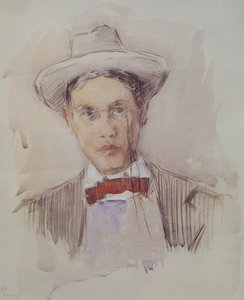 Frederick Carl Frieseke
A Life Bathed in Sunlight: The Artistic Journey of Frederick Carl Frieseke Born in the small Michigan town of Owosso on April 7, 1874, Frederick Carl Frieseke embarked on a path that would lead him to become a pivotal figure in American Impressionism...
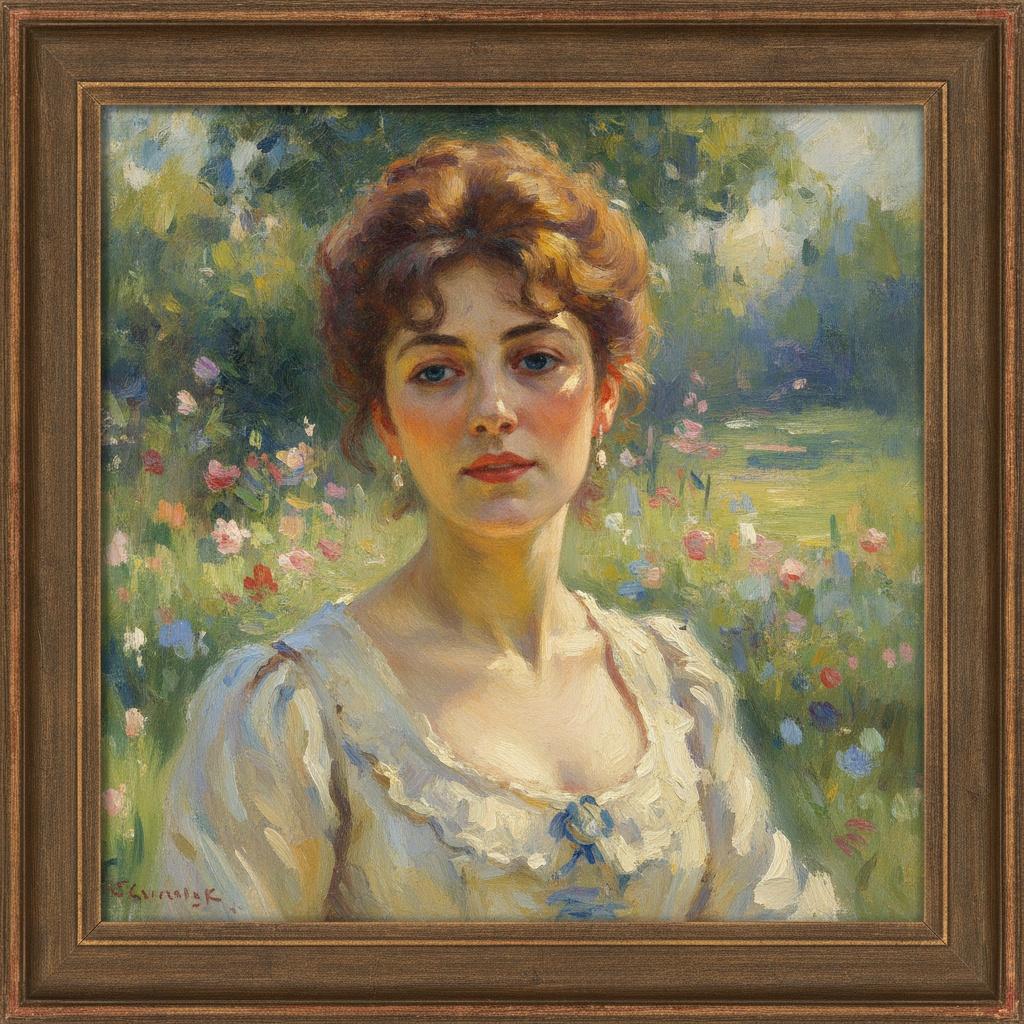
At the heart of the Impressionist mastery lies an almost scientific obsession with the behavior of light. These artists understood that light is never constant; it is a transient force that redefines form every second of the day. Through the use of broken color and dappled sunlight, they achieved an ethereal glow that seems to vibrate upon the canvas. This technique, often characterized by short, thick strokes of pure pigment, allows the eye of the viewer to optically mix colors, creating a luminosity that traditional glazing could never replicate. One can almost feel the warmth of the sun filtering through foliage in the works of Frederick Carl Frieseke, whose "decorative impressionism" brought a refined elegance to the play of light and shadow.
This pursuit of the ephemeral extends beyond landscapes into the realm of portraiture, where light serves as a sculptor of the human countenance. The interplay of shadow and brilliance does not merely illuminate a face; it imbues it with atmosphere. Whether it is the soft, morning mist clinging to a figure or the sharp, midday glare reflecting off water, the Impressionist painter uses light to dictate the emotional temperature of the piece. It is an alchemy of pigment and perception, transforming a simple depiction of a subject into a profound meditation on the passing of time and the fleeting nature of beauty.
Beyond the Surface: The Emotional Resonance of Impressionistic Portraiture
 Impressionism's Masterpieces: 10 Paintings That Defined a Movement | ArtsDot
Introduction To gaze upon an Impressionist painting is to step into a fleeting moment, captured not with photographic precision, but with the vibrant pulse of light and emotion. It’s a journey back to a time when artists dared to break from tradition...
While the technical brilliance of Impressionism is undeniable, its true enduring power lies in its ability to capture the human spirit. Unlike the formal, often detached portraits of the classical era, Impressionistic portraiture invites an intimate connection between the subject and the observer. There is a palpable sense of life within these works—a breath, a glance, a momentary hesitation. The artists did not merely paint faces; they painted moods. In the swirling, emotive textures reminiscent of the Post-Impressionist evolution, one finds a raw vulnerability that speaks to the universal human condition.
This emotional depth is achieved through a delicate balance of form and feeling. A portrait may utilize the structural brilliance seen in Cézanne’s studies of form, yet remain anchored in the subjective experience of the moment. The subject is often caught in a state of repose or quiet contemplation, surrounded by an environment that mirrors their inner state. This creates a psychological landscape where the boundaries between the individual and their surroundings begin to blur. For the discerning collector, acquiring such a piece is not merely about decorating a space; it is about bringing a profound emotional resonance into one's private sanctuary, a window into a soul captured in a single, breathless moment.
Curating the Impression: Integrating Masterpieces into Luxury Interiors
 Impressionistic Landscapes: 10 Masterpieces That Changed Art & Decor
Introduction To gaze upon these ten canvases is to step directly into a world transformed by light, color, and an unprecedented embrace of the fleeting moment. The Impressionistic Landscape movement wasn’t merely a shift in painting technique; it was...
For the sophisticated interior designer or the affluent homeowner, integrating Impressionistic works into a contemporary space requires a nuanced understanding of composition and light. These paintings are not mere ornaments; they are transformative elements capable of altering the very energy of a room. An expansive, multi-panel Impressionist landscape can serve as a breathtaking focal point for a grand hallway or a wide architectural feature, with colors and brushstrokes flowing seamlessly across the canvas to create a sense of continuous movement.
When curating such a collection, one must consider the dialogue between the artwork and the surrounding architecture. The luminous, light-drenched quality of an Impressionist oil reproduction can brighten a room characterized by darker, more somber tones, providing a much-needed sense of airiness and depth. Furthermore, the tactile nature of hand-painted oils—with their visible impasto and rich textures—adds a layer of material luxury that flat prints simply cannot achieve. Whether placed within a neoclassical setting or a sleek, modern penthouse, these masterpieces act as anchors of heritage, bridging the gap between historical grandeur and contemporary elegance.
The Art of the Remix: Customizing Historical Styles for Modern Legacies
 Cézanne's Masterpieces: 25 Iconic Artworks to Transform Your Space
Introduction There’s a quiet intensity that clings to Paul Cézanne's work, an almost palpable sense of searching—a relentless pursuit of capturing the essence of light and form. To assemble a ‘Top 25’ is, in itself, a somewhat reductive act; it feels...
In the modern era, the boundaries of art history continue to expand through the concept of the "artistic remix." We no longer live in a world where one is limited to the preservation of the past; rather, we have the extraordinary opportunity to reimagine it. This evolution allows collectors to bridge personal history with classical mastery. Imagine the profound impact of a custom commission that transforms a cherished family photograph into a work of art rendered in the light-drenched, delicate style of Monet, or perhaps a portrait reimagined through the vibrant, swirling energy of Van Gogh.
This personalized approach to fine art allows for a unique form of legacy building. Through advanced digital mockups and professional coordination, it is now possible to request "period shifts," where modern subjects are translated into the aesthetic language of the 19th century. This intersection of technology and traditional craftsmanship ensures that the essence of Impressionism remains a living, breathing medium. It allows the collector to participate in the tradition of the masters, not just as an observer, but as a patron of a new, personalized era of artistic expression.
At ArtsDot.com, we specialize in bringing this vision to life. As a global leader in premium art reproductions, we offer an unparalleled collection of hand-painted oil masterpieces and bespoke services. From transforming personal milestones into museum-quality portraits to providing large-scale murals for luxury hospitality projects, our mission is to preserve the soul of human creativity. Whether you are seeking a meticulously crafted reproduction of an Old Master or a custom-designed "remix" of your own history, our master artists deliver excellence backed by a 100% satisfaction guarantee.