
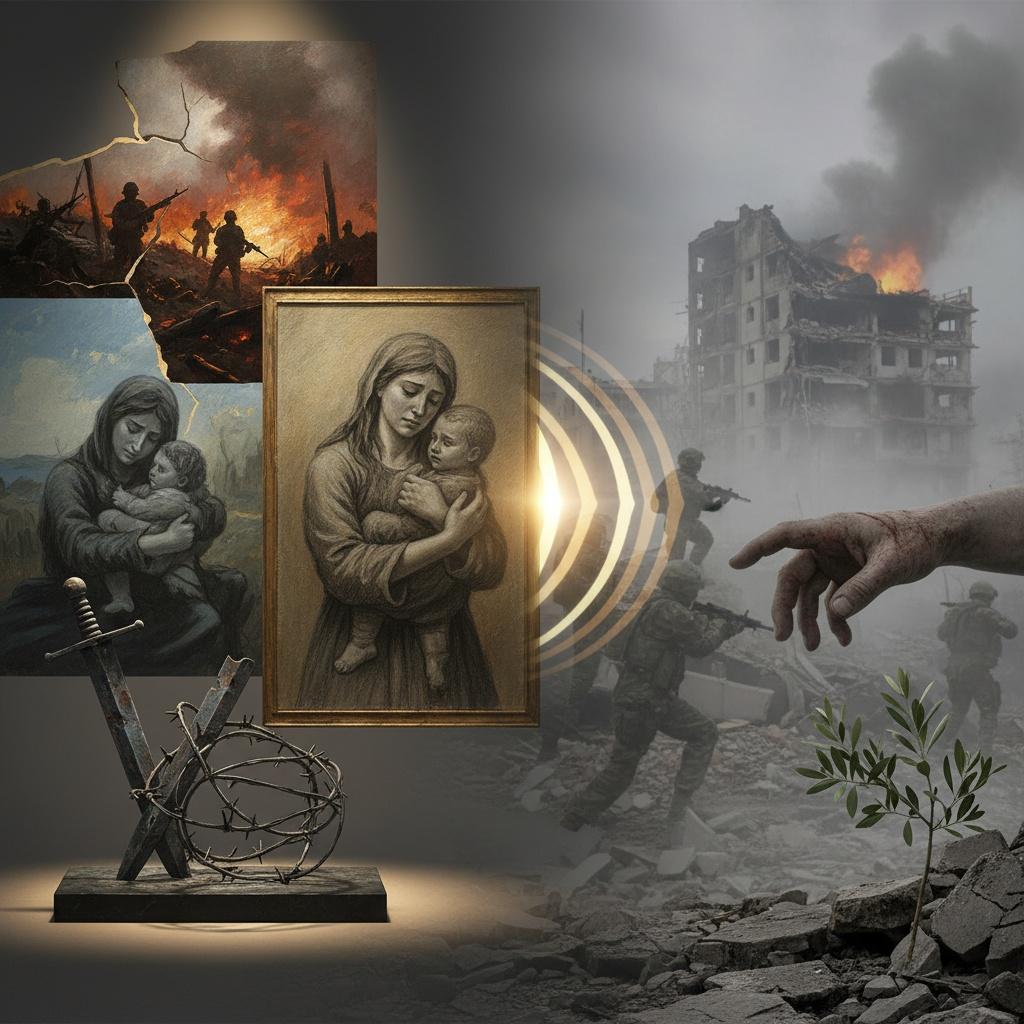
The Canvas of Chaos: Understanding Art as a Witness to History
To gaze upon a canvas depicting the theater of war is to engage in a silent dialogue with the past. For the discerning collector, art has never been merely an aesthetic pursuit; it is a profound medium of record, a way to freeze the fleeting, often terrifying moments of human upheaval into something permanent and contemplative. Throughout history, the artist has functioned as a primary witness, standing amidst the smoke and the clamor to translate the incomprehensible scale of conflict into the intimate language of color, light, and form. These works do not merely document dates and battles; they capture the psychological weight of era-defining shifts.
The power of such art lies in its ability to transcend mere reportage. While a historian might provide the cold facts of a campaign, the painter provides the atmosphere—the heavy, sulfurous scent of gunpowder or the chilling stillness of a deserted trench. By examining these masterpieces, we find that they serve as emotional anchors, preventing the tragedies of the past from drifting into the obscurity of forgotten footnotes. They demand that we confront the visceral reality of our shared human condition, making the historical experience palpable and deeply personal.
Visceral Realism: Capturing the Rawness of Combat and Casualty
In the realm of conflict art, realism serves as a bridge between the viewer and the battlefield. There is a specific, haunting intensity found in works that refuse to look away from the physical toll of combat. Artists like Christian Sell have mastered this narrative, utilizing a meticulous approach to depict the grim realities of the Franco-Prussian War and the narratives of soldiers with an unflinching eye. Through the careful application of pigment and the deliberate use of shadow, these painters recreate the grit, the mud, and the sudden, violent ruptures in the fabric of daily life.
This style of painting relies heavily on technical precision to evoke a sense of presence. The weight of a soldier's gear, the texture of a torn uniform, and the starkness of a wound are rendered with such fidelity that the viewer is transported into the very heart of the fray. It is this commitment to the tangible—the impasto textures and the dramatic chiaroscary—that allows the chaos of battle to be felt rather than just seen. In these moments, the brushstroke becomes an echo of the strike, and the canvas becomes a site of profound, heavy truth.
Shadows of Suffering: The Poignant Depiction of War's Aftermath
Beyond the immediate thunder of artillery lies a more quiet, perhaps even more devastating, aspect of conflict: the lingering shadow of suffering. Some of the most enduring works in art history are those that focus not on the triumph of arms, but on the endurance of the human spirit amidst deprivation. Lesley Cole’s Orderly on His Rounds in X Ward, Changi Gaol serves as a heartbreaking example, documenting the starvation and disease faced by prisoners of war with a somber, social commentary that resonates long after the viewer has turned away.
These paintings often utilize a more muted palette, reflecting the exhaustion and loss of vitality inherent in wartime deprivation. The focus shifts from the grand movement of armies to the individual face—the hollowed cheek, the weary eye, the slumped shoulder. In these depictions, the tragedy is found in the stillness. By capturing the aftermath, artists allow us to contemplate the long-term scars that conflict leaves upon both the body and the landscape, ensuring that the quietest victims of war are given a voice through the enduring medium of oil on canvas.
Compassion Amidst Carnage: The Role of Humanitarianism in Conflict Art
Yet, even within the darkest compositions, there exists a persistent light: the impulse toward compassion. Art often serves to highlight the extraordinary courage of those who move toward danger to provide relief. Cyrus Cuneo’s First World War - The Red Cross In The Trenches is a masterful study in this duality, capturing the chaotic environment of the trenches while simultaneously focusing on the profound act of care. Here, the artist balances the expressive, almost frantic energy of war with the steady, purposeful presence of humanitarian aid.
This intersection of violence and mercy provides a necessary tension within the collection of conflict art. It reminds the observer that even in the most dehumanizing circumstances, the capacity for empathy remains a fundamental human trait. The use of light in these works often centers on the figures of healers or rescuers, casting them as beacons of hope against a backdrop of desolation. To collect such works is to curate a testament to resilience, celebrating the enduring strength of our collective conscience.
The Collector’s Perspective: Preserving the Emotional Legacy of War through Masterpieces
For the serious collector, acquiring works that touch upon these themes is an act of stewardship. To hold a piece that captures the intensity of conflict is to take responsibility for the preservation of human memory. Whether it is the vivid historical scenes of Pavel Osipovich Kovalevsky or the detailed narratives of German soldiers, these paintings are more than decor; they are intellectual and emotional investments in our global heritage.
As we navigate an era of rapid change, the value of these "living" textures—the tactile brushstrokes and the depth of layered oils—becomes even more significant. They offer a sense of permanence and weight that digital imagery cannot replicate. By surrounding ourselves with these echoes of conflict, we ensure that the lessons of history, the beauty of resilience, and the profound gravity of human struggle remain ever-present in our cultural consciousness.
ArtsDot.com remains dedicated to this mission of preservation and accessibility. From meticulously handcrafted oil reproductions that honor the techniques of the Old Masters to custom commissions that allow you to reimagine history, we provide a bridge between the museum and the home. Our commitment to academic excellence ensures that every piece—whether a Giclée print or a multi-layered oil masterpiece—retains the soul and the historical integrity required by the most discerning collectors worldwide.