The Essence of the Floating World: Defining Ukiyo-e Artistry
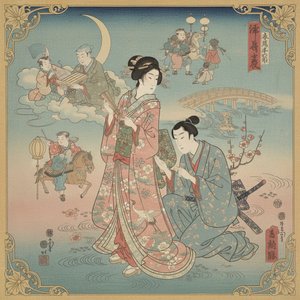
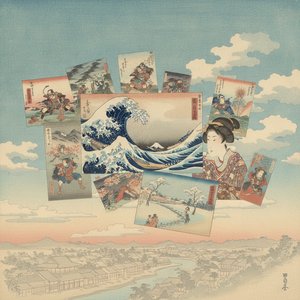
To understand Ukiyo-e is to step into a realm where the ephemeral meets the eternal. The term itself, translating literally to \"pictures of the floating world quite,\" evokes a profound sense of transient beauty—a philosophy born from the hedonistic yet deeply spiritual atmosphere of Japan's Edo period. It was an era defined by a burgeoning urban culture, where the fleeting pleasures of life—the theater, the tea house, the seasonal blossoms—were captured not as mere snapshots, but as poetic meditations on the passing moment. This art form did not seek to document the grand, unchanging monuments of history, but rather the pulse of the streets, the grace of a courtesan’s movement, and the quiet drama of a rain-swept landscape.
The concept of the ukiyo was originally rooted in Buddhist thought, representing the sorrowful, transient nature of human existence. However, as the merchant classes rose to prominence in Edo, this melancholy transformed into a celebration of the present. The art became a mirror for a society finding joy in the temporary. Through delicate lines and unexpected color palettes, Ukiyo-e artists invited viewers to linger within these fleeting scenes, turning the momentary into something monumental. It is this very tension between the passing second and the lasting print that gives the genre its haunting, captivating allure.
Masters of the Woodblock: The Visionary Artists of the Edo Period
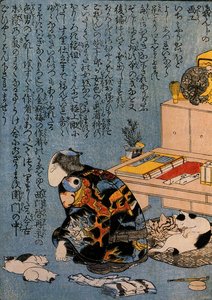
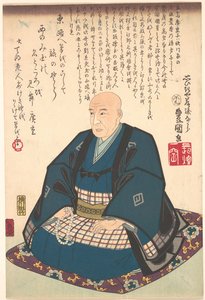
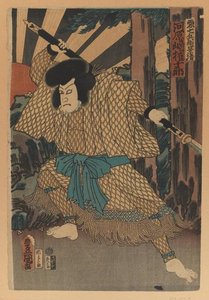
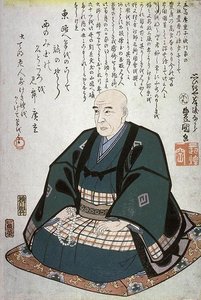
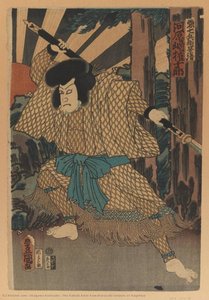
The brilliance of Ukiyo-e lies in the collaborative alchemy between the artist, the carver, and the printer. While many names have faded into the mists of time, certain masters emerge with a clarity that continues to command reverence in modern collections. Consider the legendary Utagawa Kuniyoshi, a visionary whose work transcends simple depiction. His 1848 masterpiece, Hara Gôemon Mototoki, serves as a breathtaking example of his ability to infuse woodblock prints with cinematic tension. In his hands, warriors are not merely figures on paper; they are embodiments of dynamic action and profound symbolism, their muscles taut and spirits soaring amidst intricate Edo-period details.
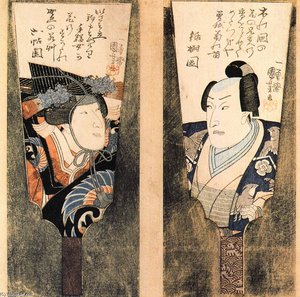
In contrast to the high drama of Kuniyoshi, artists like Okumura Toshinobu offered a more intimate window into the Genbun era. Renowned for his beni-e (crimson prints) and urushi-e (lacquer-style prints), Toshinobu possessed a singular talent for capturing the subtle nuances of romance and the quiet rhythms of everyday life. His portraits of Kabuki actors and scenes of urban courtship provide a soft, luminous counterpoint to the more aggressive compositions of his contemporaries. To study these masters is to witness a spectrum of human emotion, ranging from the explosive energy of battle to the tender whispers of a moonlit stroll.
Vibrant Narratives: From Kabuki Theater to Everyday Splendor
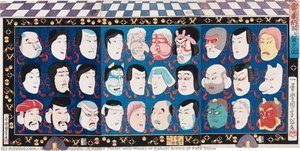
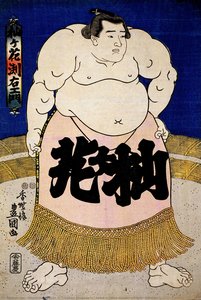
Ukiyo-e functioned as the vibrant media of its day, acting much like the contemporary magazine or cinema. One of its most enduring subjects was the Kabuki theater, a world of stylized movement and larger-than-life personas. The works of Utagawa Kunisada II exemplify this fascination; his powerful depictions of sumo wrestlers, draped in opulent red and gold kimonos, capture the raw strength and cultural prestige of the sport. These prints were not merely art; they were icons of celebrity, allowing fans to possess a piece of the theatrical magic that defined their social lives.
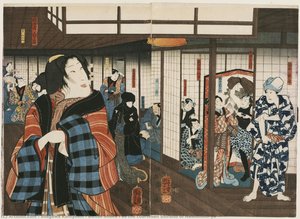
'This narrative thread extends into the grander scale of communal celebrations. The Shintomiza Joruri triptych by Utagawa Kunimasa illustrates how artists utilized the multi-panel format to create immersive, panoramic experiences. Through these expansive compositions, viewers were transported into the heart of festival scenes, surrounded by the vibrant energy of the crowd and the intricate costumes of the performers. Whether it was the celebrated beauty of a landscape or the intense drama of a stage performance, Ukiyo-e artists mastered the art of storytelling, weaving together threads of celebrity, tradition, and daily life into a cohesive visual tapestry.
Technique and Texture: The Intricate Craft of Woodblock Printing
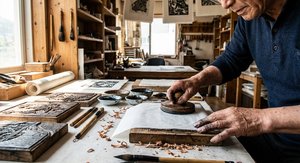
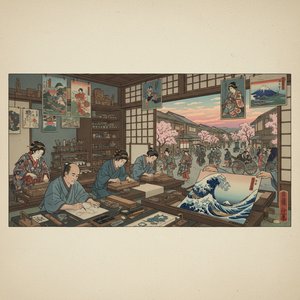
The physical creation of a Ukiyo-e print is a testament to human patience and technical precision. It begins with the artist's brushstroke on paper, but the true magic occurs during the carving process. Each color in a multi-colored print requires its own separate woodblock, meticulously carved from cherry wood to ensure the finest possible detail. This labor-intensive method demands an extraordinary level of coordination; even a millimeter of error in the registration of the blocks could ruin the entire composition.
Ukiyo-e’s Global Legacy: Influencing Modern Aesthetics and Impressionism
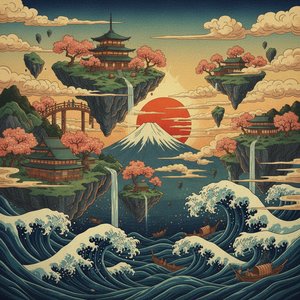
The influence of Ukiyo-e far outlived the Edo period, eventually crossing oceans to fundamentally reshape Western art. When Japanese prints began arriving in Europe in the 19th century, they acted as a catalyst for the Impressionist and Post-Impressionist movements. The bold use of flat color, the unconventional cropping of subjects, and the emphasis on everyday life provided a radical departure from the rigid academic traditions of the West. Masters like Monet and Van Gogh found profound inspiration in the "floating" perspectives and rhythmic compositions of these Japanese prints.
Today, the legacy of Ukiyo-e persists in everything from graphic design and manga to contemporary fine art. Its ability to distill complex emotions into striking, simplified forms remains a cornerstone of visual communication. For the modern collector, Ukiyo-e offers more than just historical interest; it provides a window into a way of seeing that celebrates the beauty of the transient. It reminds us that even in a world of constant change, there is profound meaning to be found in the fleeting moments we choose to capture and cherish.
At ArtsDot.com, we are dedicated to preserving the spirit of such historical masterpieces. Whether you are seeking a museum-quality reproduction of a Japanese woodblock print or wish to transform a personal memory into a hand-painted oil masterpiece, our mission is to make fine art accessible to all. From our meticulous six-step painting process to our professional digital mockup services, we ensure that every piece we create honors the legacy of the Old Masters and the vibrant traditions of global art history.